
Painting
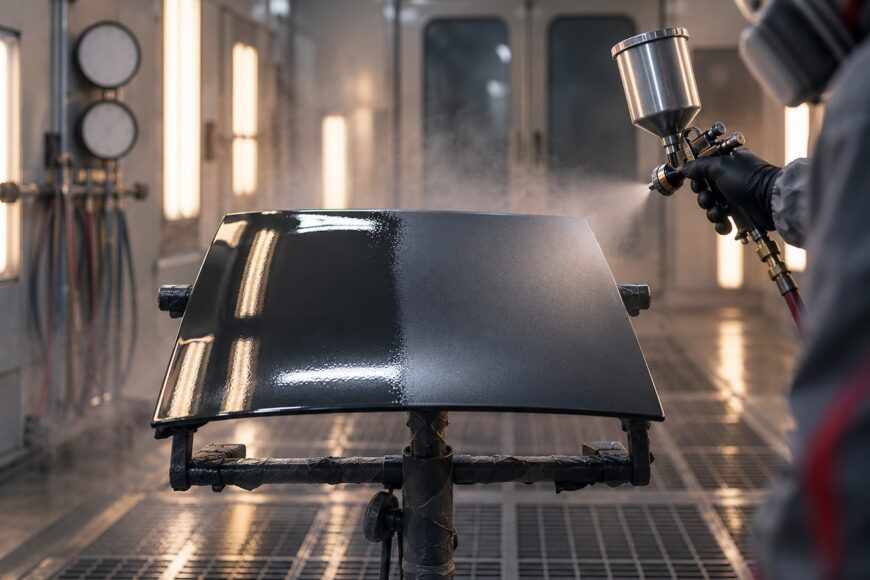
A surface can feel dry while the film underneath still contains solvent. Recoating at that point may soften, drag, or lift the lower layer.
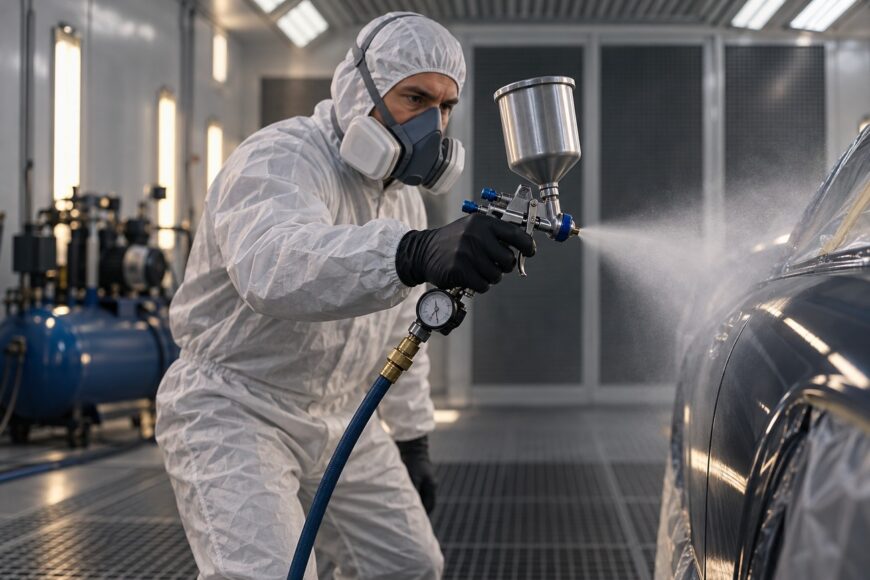
The pressure shown at the compressor or wall regulator may be higher than the pressure reaching the spray gun while air is flowing. A static gauge reading
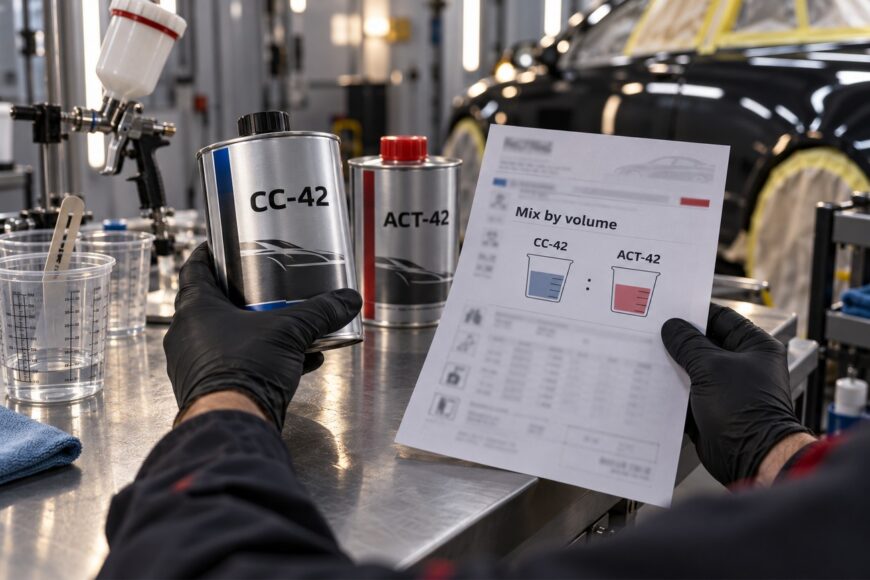
A paint mix can pass through the spray gun and look acceptable at first, then cure slowly or leave a soft film. The problem may be an incorrect ratio
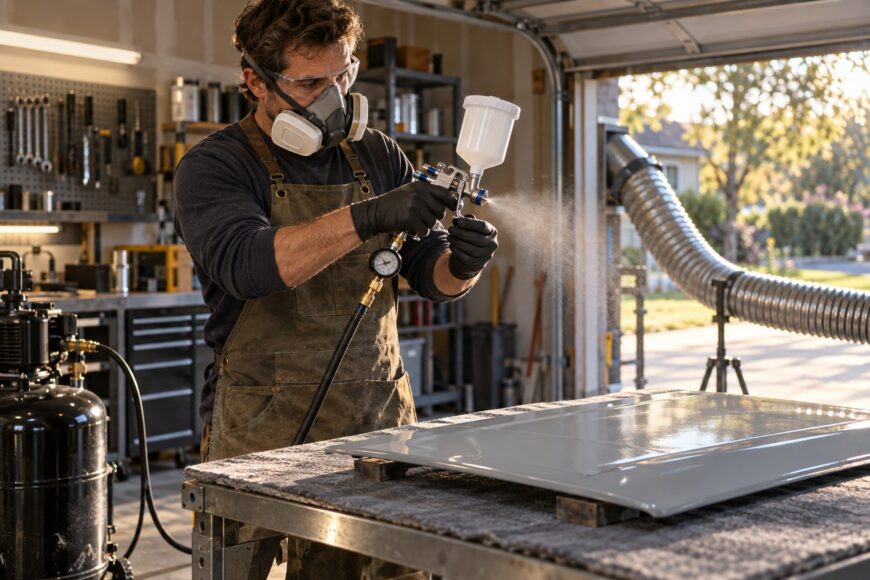
A pressure gauge can show the expected PSI while the spray weakens, spits, or leaves orange peel. The reading may be static, the compressor may be running

A freshly repainted car can look ready for protection the day it leaves the body shop. The surface may even feel dry, while the paint beneath is still
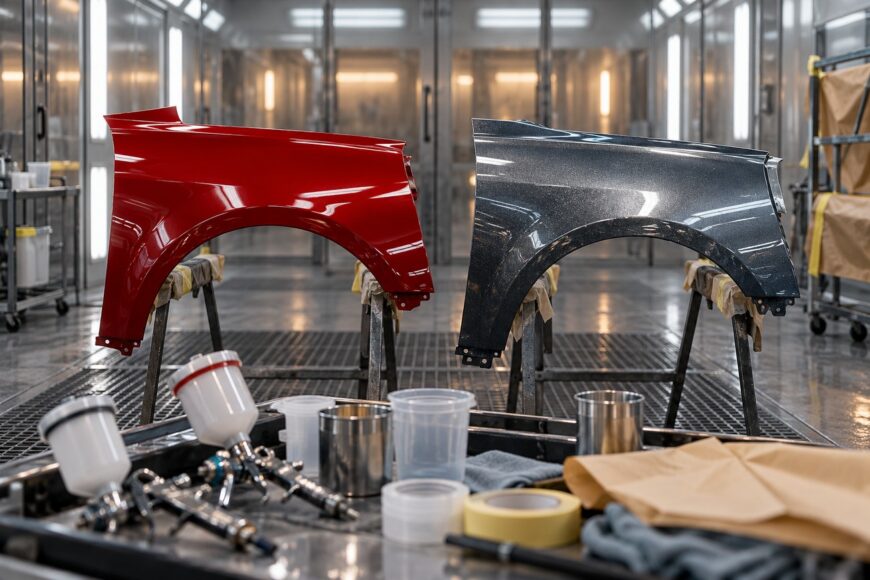
Choosing between a single-stage and a two-stage paint system is a decision about process control as much as appearance. Single-stage may reduce operations
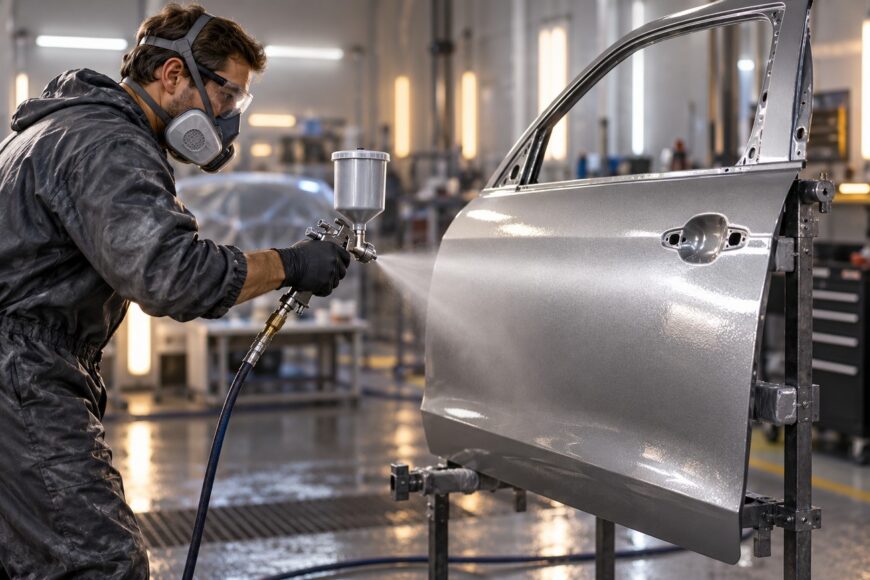
Metallic paint can stripe, cloud, or change appearance by angle even when the material itself is suitable for the job. The visible defect often comes from
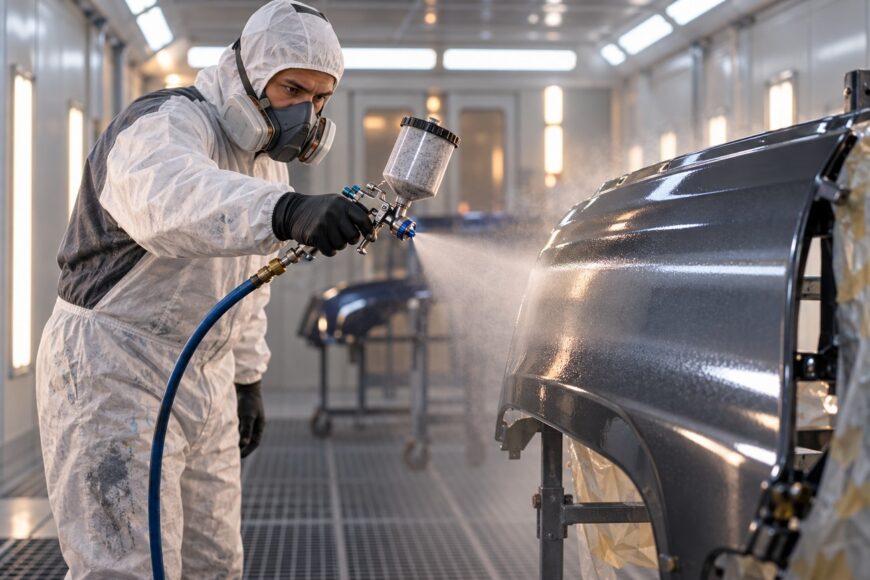
Working too close produces a concentrated, wet fan that can overload edges, create runs, and leave heavy transfer in the center. Working too far away allows
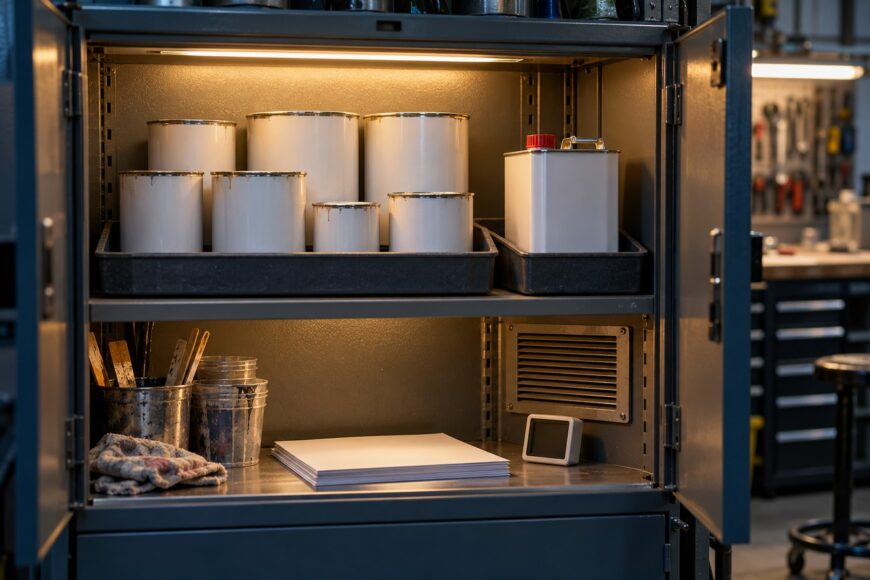
A sealed can may still be ruined by freezing, heat, moisture, contamination, or a failed closure. Hardener adds further concerns: vapor exposure, packaging
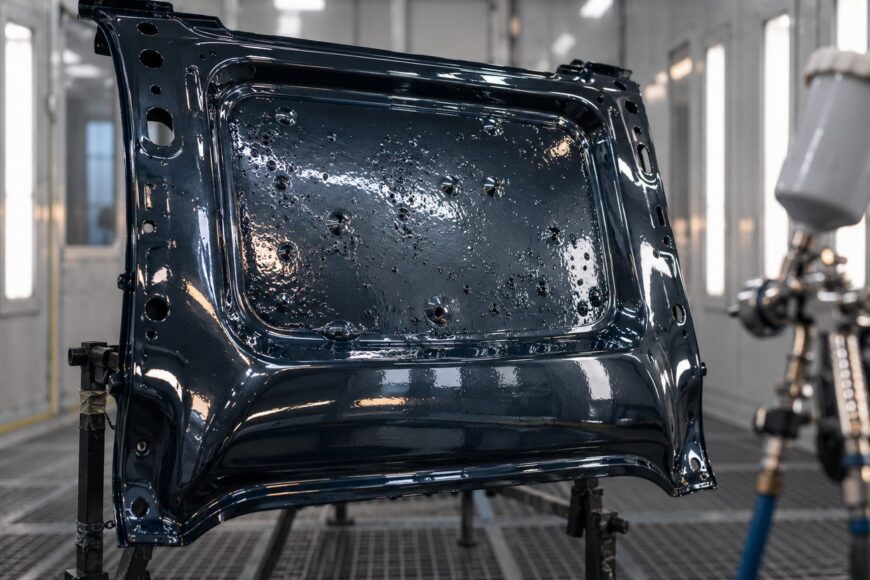
A thick coat can look dry and still develop bubbles, pinholes, or craters after overnight curing or baking. The defect appears late because the surface