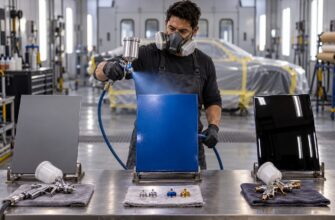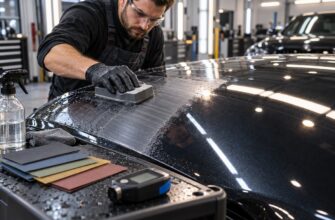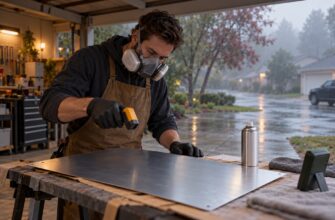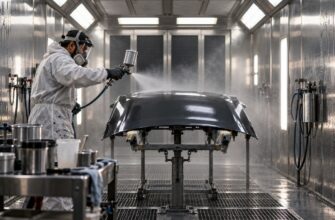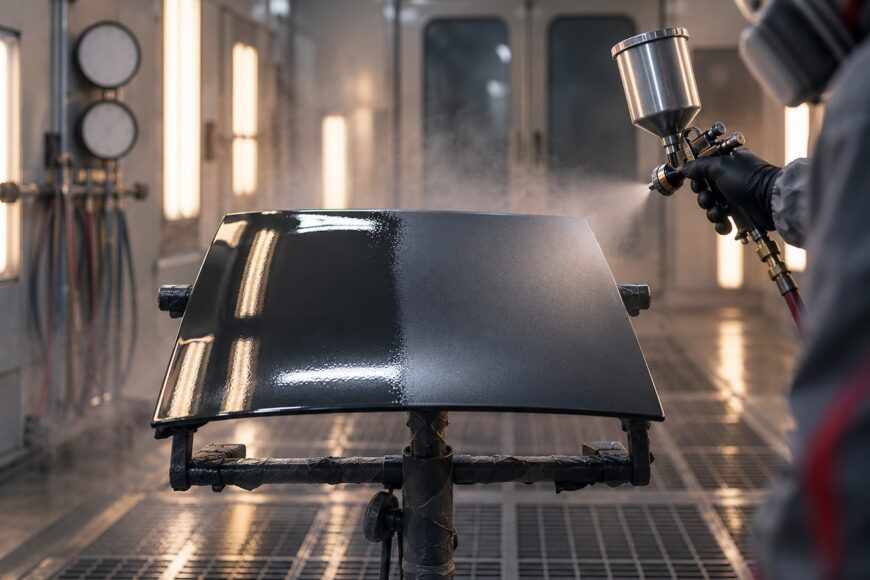
A surface can feel dry while the film underneath still contains solvent. Recoating at that point may soften, drag, or lift the lower layer. Waiting too long creates a different problem: some systems have a maximum recoat window, after which the surface may need abrasion or matting for reliable adhesion.
Flash time is therefore a product- and condition-specific window, not a universal 10–15-minute rule. The interval depends on the formulation, wet-film thickness, temperature, relative humidity, and airflow. Guessing can lead to runs, solvent-related bubbles, pinholes, blistering, craters, or a coating that fails to bond properly.
- What Flash Time Between Coats Actually Means
- Why There Is No Universal Flash-Time Number
- How to Tell Whether the Film Is Ready for the Next Coat
- What Goes Wrong When Flash Time Is Misjudged
- Touch-Dry, Recoat, and Cure: Do Not Confuse the Windows
- A Safer Process for Choosing the Next-Coat Interval
- Frequently asked questions
- What should I do if the product’s TDS does not list a flash time?
- How does a cold panel change the flash time when the air feels warm?
- What should I do if I exceed the maximum recoat window?
What Flash Time Between Coats Actually Means
Flash time is the interval between coats that allows sufficient solvent or carrier to leave the applied film before the next coat. The film does not need to be fully cured during this pause. It needs to reach a condition where the next application will not excessively re-dissolve, move, or overload the layer below.
The term describes a process stage rather than a simple touch test. Touch-dry means the surface no longer feels wet or transfers readily to a finger. Recoat readiness describes whether another coat can be applied without damaging the lower film. Sanding time, handling time, and full cure describe later stages with different requirements.
A coating can form a dry skin while solvent remains trapped below it. The upper surface then feels firm even though the underlying layer is soft or solvent-rich. A second wet coat can reactivate that lower layer, causing movement, lifting, runs, or prolonged drying.
Flash time also differs from the time required before sanding or normal use. Some coatings allow recoating after hours or only after 24 hours, even though they feel dry sooner. Fast flash does not imply fast final cure; handling, sanding, and full cure may occur hours or days apart.
Why There Is No Universal Flash-Time Number
Manufacturer instructions may specify anything from 0–5 minutes to 15 minutes or more, depending on the product and process. The formulation determines how quickly the solvent or carrier leaves the film, while the applied thickness determines how far that material must travel before it can escape.
Product examples show why a generic timer is unreliable. At approximately 21 °C, Sikkens Autoclear PC lists 0–7 minutes. SEM Trim Paint examples list 3–5 minutes or 5–10 minutes, depending on the product. These figures describe particular materials under their stated process conditions; they do not establish a general rule for other coatings.
Rust-Oleum timing is based on approximately 21 °C and 50% relative humidity. Lower temperatures require more time. High humidity can slow evaporation, while weak airflow reduces the movement of solvent-laden air away from the surface. Air movement can assist evaporation, although it does not replace the manufacturer’s process requirements.
Thickness is a common source of error. A light, even coat may flash within the listed range, while a heavy wet coat can remain loaded with solvent after the same number of minutes. Adding the factory interval to a thick application without allowing extra time is a common reason a second pass appears to make the first layer flow again.
The temperature of the material matters alongside the room conditions. A cold panel can lag behind the surrounding air, especially after storage in an unheated area or during work on a large metal part. The product’s TDS, or technical data sheet, takes priority over generic advice and should be read together with the stated temperature, humidity, film thickness, and drying method.
How to Tell Whether the Film Is Ready for the Next Coat
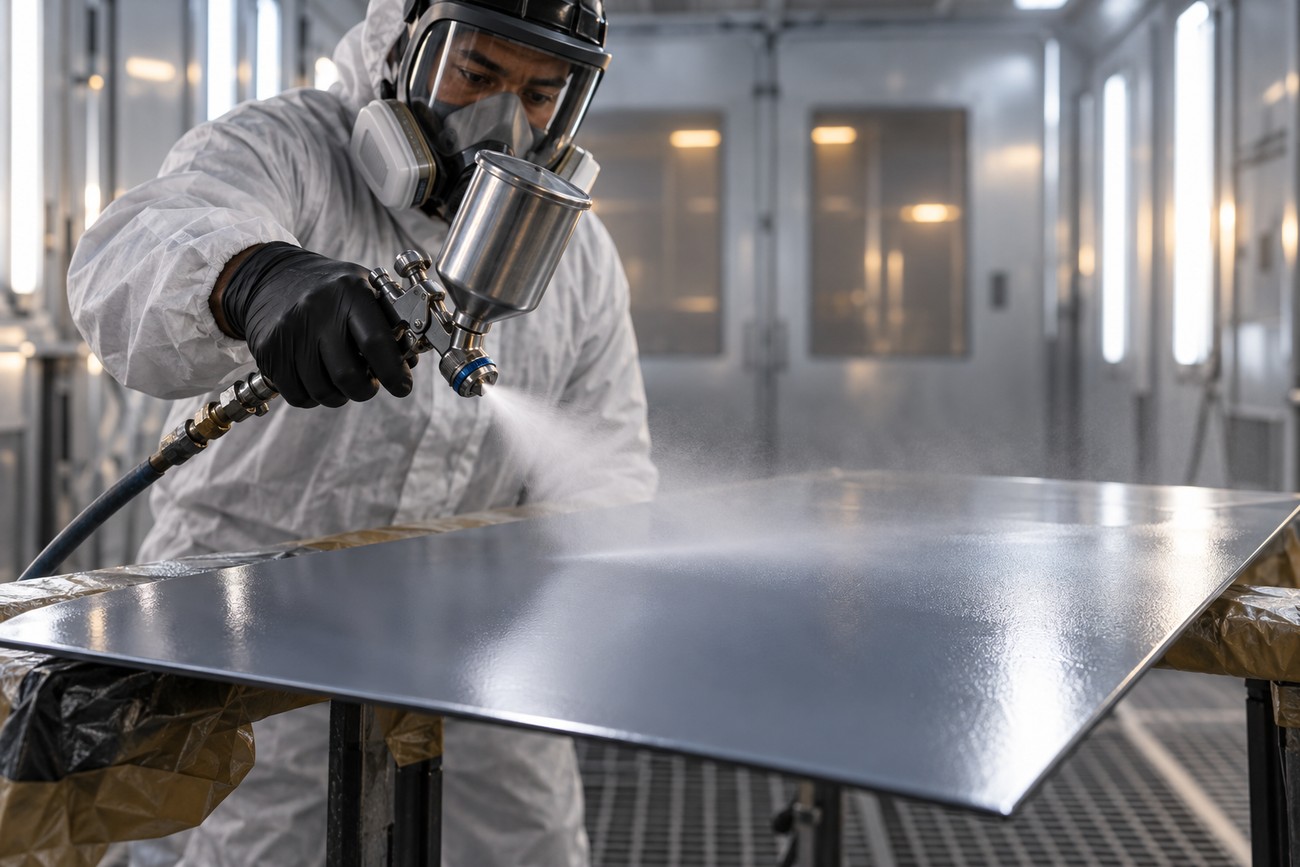
Start with the manufacturer’s minimum flash interval. Use that value as the baseline, then consider whether the actual application was heavier, colder, more humid, or less ventilated than the conditions used for the product guidance. A timer helps control the process, but it cannot compensate for a different film thickness or substrate temperature.
The practical test is the behavior of the film. The next pass should not visibly disturb, dissolve, or drag the previous coat. If the lower layer wrinkles, shifts, becomes unusually glossy in a localized area, or shows movement under the spray pattern, it has not released enough solvent for that application method and thickness.
The panel can tell a different story from the room thermometer. After a heavy wet coat, checking the actual part and its response to the next controlled pass is more reliable than assuming the air temperature or timer represents the film temperature.
Use observation as a confirmation, not as permission to ignore the TDS. A thick wet coat needs more time than a thin coat under otherwise similar conditions. If the surface remains soft, solvent-sensitive, or visibly mobile after the stated minimum, extend the interval and review the application conditions before continuing.
What Goes Wrong When Flash Time Is Misjudged
Recoating too early can make the previous layer flow again. The added solvent and wet material may produce runs, lifting, or a soft lower layer beneath a surface that later appears dry. This often explains why a job seems stable immediately after the second coat but develops movement or extended drying afterward.
A dry skin over a soft layer creates a misleading result. The upper film resists a light touch, while solvent remains below and continues to migrate. Sanding, masking, handling, or applying heat at this stage can expose the difference between surface dryness and internal stability.
Direct heat is not a risk-free shortcut. Heating before adequate flash-off can rapidly disturb solvent release from the lower film, contributing to bubbles, pinholes, blistering, or craters. The same risk can arise when a spray booth or heat source is used aggressively before the coating has reached the separate flash interval required before forced drying.
Waiting beyond the minimum can also become a problem. Industrial coatings may have an intercoat window measured in hours, with a maximum limit. After that limit is exceeded, some systems require abrasive preparation or matting before recoating so the new film can bond to the older surface.
The correct response depends on the product system. Do not solve a flash problem by adding heat, increasing the next coat’s thickness, or relying on the word “dry” alone. Check whether the defect came from insufficient flash, excessive film build, unsuitable conditions, or an exceeded recoat window before deciding on repair.
Touch-Dry, Recoat, and Cure: Do Not Confuse the Windows
These terms describe different stages of film development. The table separates what each stage tells you and why one stage cannot safely substitute for another.
| Stage | What it describes | Why it matters |
|---|---|---|
| Touch-dry | The surface feels dry or has stopped transferring readily on light contact. | It does not prove that the lower film has released sufficient solvent or can accept another wet coat. |
| Flash or recoat readiness | The film has released enough solvent or carrier for the next coat to be applied without excessive movement or re-dissolution. | This is the relevant stage between coats. The TDS defines the minimum interval and, in some systems, the maximum window. |
| Handling | The coating can tolerate specified movement, contact, or installation activity. | A coating may be ready for limited handling while remaining unsuitable for sanding, heavy contact, or another wet application. |
| Sanding or preparation | The film has developed enough hardness for sanding or the preparation method specified by the manufacturer. | Sanding readiness can occur later than recoat readiness and may require a separate time or surface condition. |
| Final cure | The coating has reached its intended level of chemical and mechanical resistance. | Fast flash does not mean fast final cure. Full cure can take hours or days, depending on the system and conditions. |
Some coatings permit recoating after hours or only after 24 hours, even when the surface feels dry sooner. Industrial coating recoat windows may last hours and can have a maximum limit, so both the earliest and latest permitted application times matter.
Use the term stated in the TDS for the task you are about to perform. A flash interval before another coat cannot be substituted for the time before sanding, handling, service, or full cure.
A Safer Process for Choosing the Next-Coat Interval

Identify the exact product, mixture, hardener or activator, and application method first. Different versions of one coating family can have different intervals, and a change in mix or curing speed can alter the film’s behavior. Product-specific instructions override generic 10–15-minute rules.
Read the TDS for the stated temperature, relative humidity, film thickness, number of coats, and drying method. Compare those conditions with the actual panel, material, and workspace. Allow additional time when the application is thicker, the panel is colder, humidity is higher, or airflow is weaker than the reference conditions.
Keep the interval between coats separate from the flash period before forced drying. A product may require a pause after the final coat before heat is introduced, even when the intervals between earlier coats were shorter. Follow the manufacturer’s drying sequence rather than applying heat as soon as the surface feels dry.
Airflow can assist evaporation, but it does not replace the stated process. If the TDS gives no clear flash instruction, obtain the manufacturer’s technical guidance. Do not transfer a timing value from a similar-looking aerosol, paint, or coating system.
Frequently asked questions
These decisions often depend on information that a basic timer cannot provide. Use the product documentation and the actual panel condition together.
What should I do if the product’s TDS does not list a flash time?
Obtain technical guidance from the manufacturer or the authorized technical-support channel before establishing the interval. Provide the exact product name, version, mixture, application method, and working conditions so the recommendation applies to the system you are using.
A similar aerosol or paint may use a different solvent package, film build, or curing mechanism. Copying its timing can create an unreliable process, even if both products are marketed for the same type of surface.
How does a cold panel change the flash time when the air feels warm?
A cold panel can slow evaporation at the film-substrate interface and remain behind the surrounding air temperature. The room may feel warm while the coated metal is still cold, so the listed interval may be insufficient for the actual film.
Allow the part to reach the product’s stated working conditions where the manufacturer permits it, and assess the film before recoating. A thick coat on a cold panel generally needs more time than a thin coat on a panel at the reference temperature.
What should I do if I exceed the maximum recoat window?
Stop and check the TDS for the required corrective preparation. Some systems require abrasion or matting after the maximum window so the next coat can form a reliable mechanical bond.
Do not assume that simply cleaning the surface or applying another coat will restore adhesion. The correct preparation depends on the coating system, its age, and the manufacturer’s specified recoat procedure.