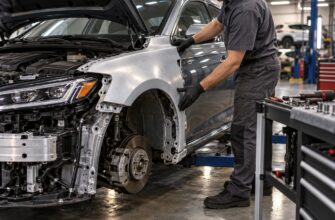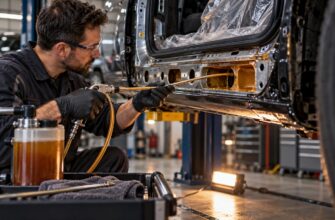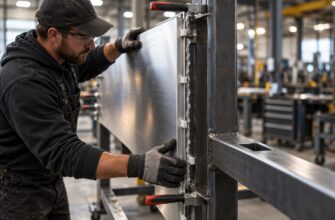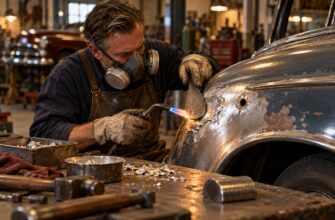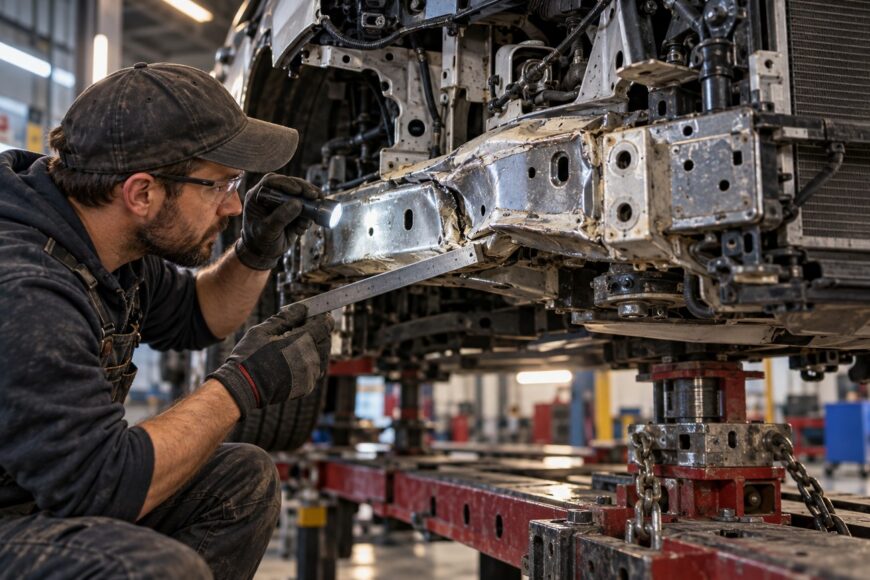
A car can look straight, track normally on a short drive, and still have structural damage hidden behind panels or under a fresh coating. A damaged frame rail may also leave obvious clues that are easy to dismiss as a tire or alignment problem. Neither appearance nor road feel can establish the condition of a load-bearing rail.
The useful distinction is between a repair measured against the vehicle manufacturer’s specifications and a cosmetic fix that merely makes the damage harder to see. If you own a car after a collision or are considering a used one, start with observable signs and repair records. Treat them as reasons to investigate, rather than as a checklist that can certify the structure.
- What Frame Rail Damage Means—and What It Can Affect
- How to Inspect for Frame Rail Damage
- What a Proper Structural Measurement Must Check
- Repair, Section Replacement, or No Safe Repair?
- How Controlled Repair Avoids Creating New Damage
- How to Verify the Repair and Choose a Shop
- Frequently asked questions
- What is the $3,000 rule for car repairs, and does it apply to frame damage?
- What are the five types of frame damage?
- How do you inspect for frame damage?
- What is the $3,000 rule for car repairs?
What Frame Rail Damage Means—and What It Can Affect
A rail is a load-bearing longitudinal member. On a unibody car, the front or rear rails are part of the integral body structure; on a body-on-frame vehicle, longitudinal rails form the separate ladder frame. Both can be damaged, but their materials, joints, and permitted repair methods differ. A procedure for one construction cannot be assumed safe for the other.
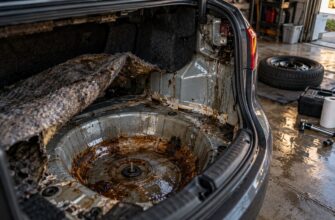
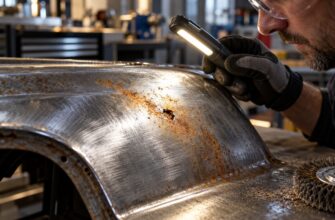
Impact damage can leave a rail bent, kinked, or displaced at a mounting point even when the outer panels have been replaced. Corrosion can weaken metal hidden beneath a coating, while a crack associated with repeated loading calls for a different assessment from a fresh collision bend. The source and location of the defect matter as much as its visible shape.
Rail geometry helps establish where suspension and subframe components sit. Displacement can contribute to pulling, uneven tire wear, or an off-center steering wheel, although those symptoms have other possible causes. A change in the rail’s shape, material, or joining can also affect how a designed crush zone manages crash energy.
A scrape on an exposed rail is not automatically structural damage. The question is whether the load-bearing member, its connections, or its specified position has been affected. That distinction requires closer examination when there is a credible impact history or evidence of deformation.
How to Inspect for Frame Rail Damage
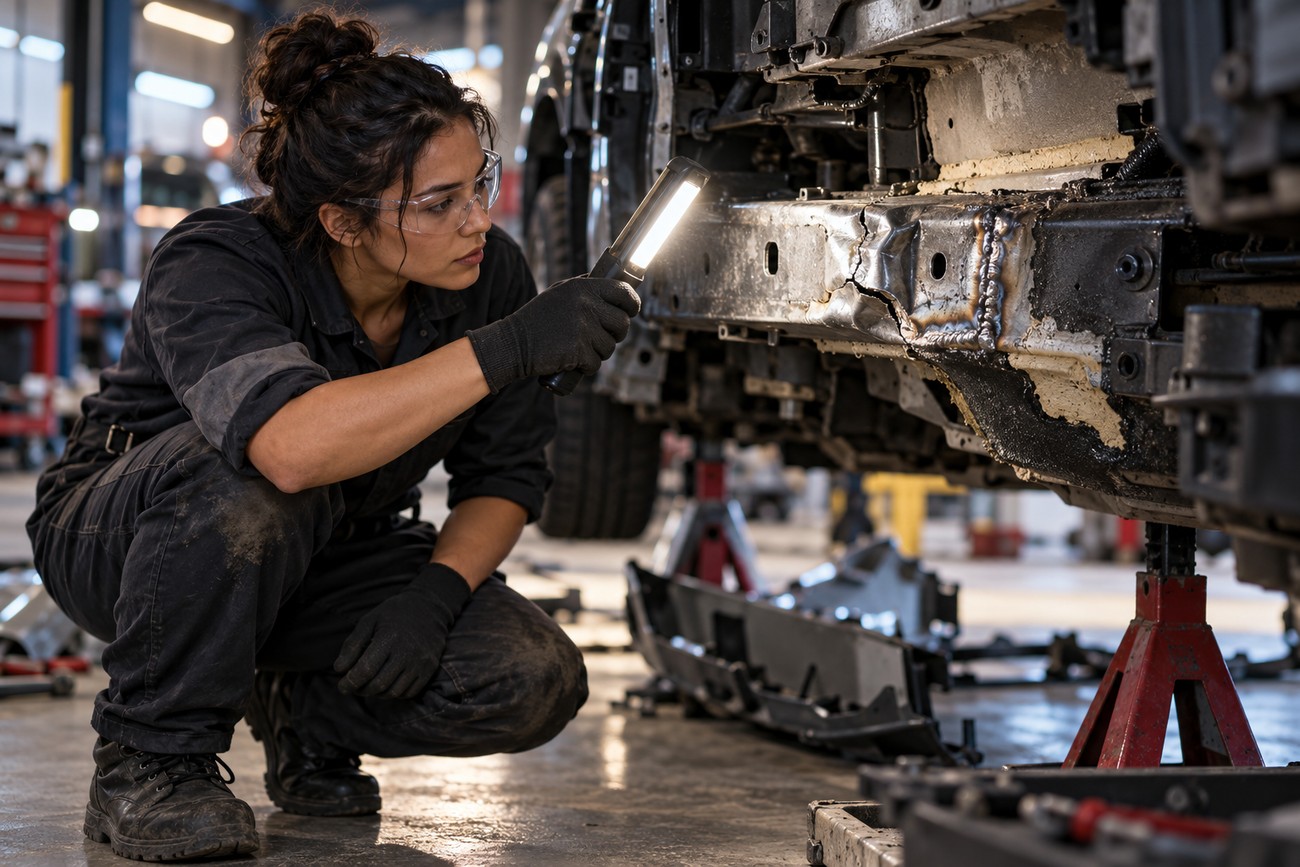
Begin with the vehicle’s history. Ask where it was struck, which parts were replaced, and whether structural measurements were taken before and after repair. Repair photographs can help identify areas now concealed by trim, underbody panels, or coating. A vehicle-history report may provide leads, but it cannot independently establish the present condition of the rails.
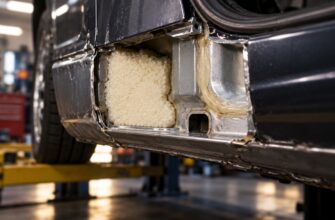
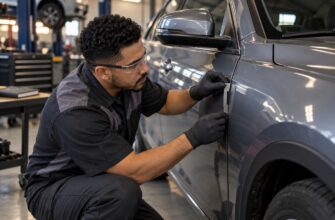
With the vehicle safely accessible, look along the exposed rails and nearby joints for folds, abrupt changes in shape, cracked seam sealer, corrosion, fresh welds, or coatings that differ from the surrounding area. Compare the left and right sides without assuming they must be visually identical. Uneven panel gaps or doors that close differently can add to the concern, particularly near the reported impact area.
On a drive, note pulling, an off-center steering wheel, or a car that appears to travel slightly sideways, sometimes called crab-walking. Uneven tire wear can suggest a persistent geometry problem. These signs also occur with damaged suspension parts, tires, or poor alignment, so they identify a need for diagnosis rather than confirm rail damage.
Fresh underbody coating deserves attention because it can obscure folds, welds, and corrosion; its presence alone proves none of them. Likewise, a car that drives straight may have had its wheel alignment adjusted around displaced structure. If several clues point to the same corner of the vehicle, arrange a professional structural inspection before relying on a seller’s description of the damage as cosmetic.
What a Proper Structural Measurement Must Check
A qualified shop secures the vehicle as required by its measuring system and obtains the dimensions and reference-point information for that specific vehicle. It then compares measured points with the applicable manufacturer’s specifications. Looking down the length of a rail can reveal a severe bend, but it cannot show whether the structure meets its specified dimensions.
The relevant checks may include length, height, diagonals, control holes, and suspension or subframe mounting points. Comparing diagonal measurements helps expose lateral displacement that a side view can miss; checking height can reveal a rail or mount that has moved vertically. The shop must use the reference points and tolerances specified for the vehicle, rather than a universal allowable deviation.
Wheel alignment answers a narrower question about wheel angles. Adjustable suspension components may allow acceptable readings even while a rail or mounting point remains displaced. For the same reason, even panel gaps do not establish that structural geometry is correct.
Ask for a measurement report that identifies the vehicle, the reference points checked, and the findings against OEM specifications. If damage is found, initial readings give the repairer a baseline and make the final result verifiable. Post-repair acceptance depends on the relevant measurements meeting the applicable manufacturer’s tolerances.
Repair, Section Replacement, or No Safe Repair?
The ability to pull a rail into a straight-looking line does not determine whether it is repairable. The decision starts with vehicle-specific OEM procedures and considers the damage’s cause, extent, location, and material. A bend away from a critical joint may present a different repair case from a kink in a crush zone or displacement at a suspension mounting point.
Where the manufacturer permits it, controlled correction may restore specified geometry without replacing the member. Other damage may call for replacement of an approved section, using the designated locations and joining methods. Those locations cannot be chosen simply because a cut would be easy to reach or hide.
Extensive corrosion, fatigue cracking, and evidence of repeated damage can rule out an otherwise plausible correction or section repair. Prior repairs also matter: old welds, added plates, or altered metal may change what the current procedure can safely achieve. A shop should identify those conditions before committing to a repair plan.
Crush zones are designed to deform in particular ways during an impact. A rail can look straight while its intended behavior remains uncertain if it has been overheated, joined incorrectly, or repaired outside an approved area. An added reinforcement plate may conceal a bend and redirect loads into adjoining structure; it is no substitute for specified geometry and an authorized repair method.
How Controlled Repair Avoids Creating New Damage
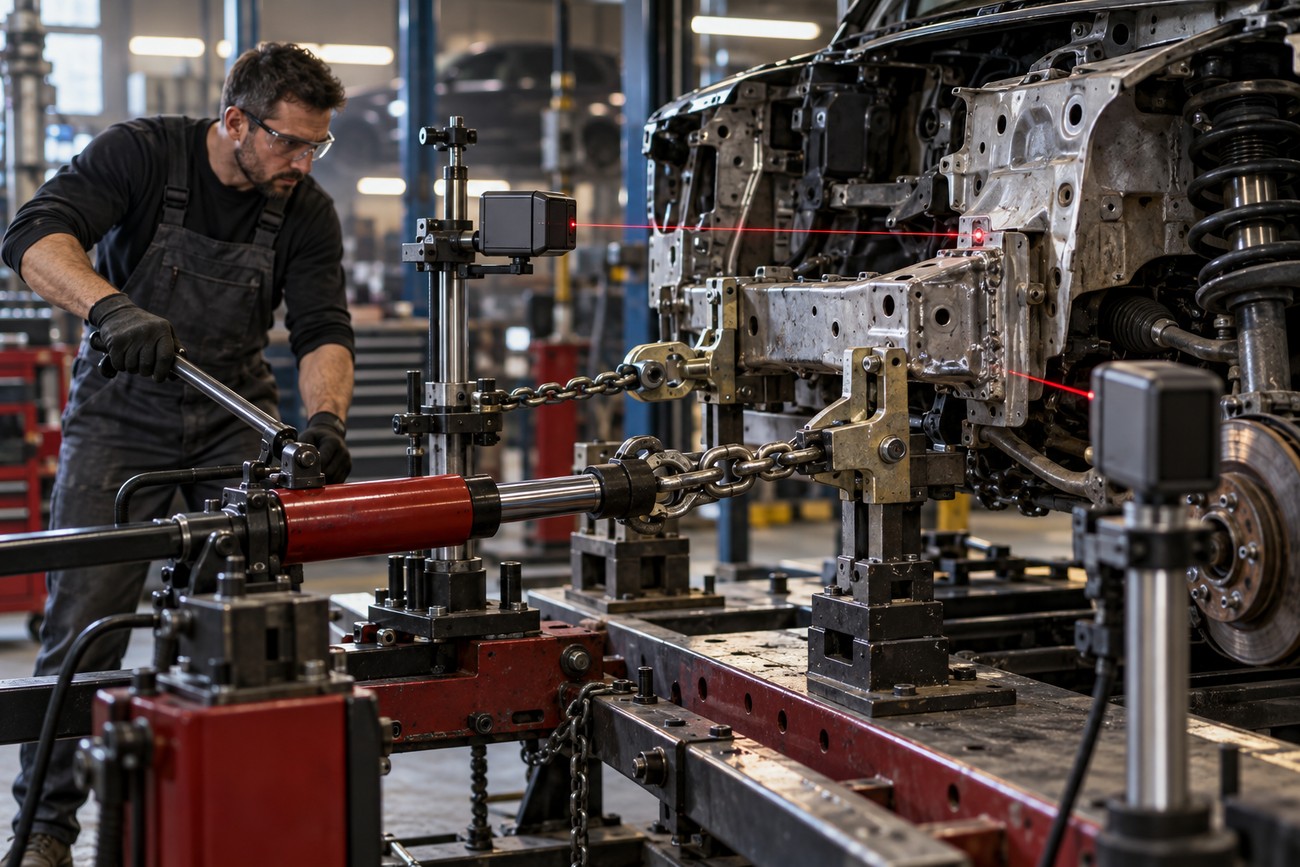
Structural correction begins with securing the vehicle at the points required for the repair and measuring system. The technician then applies controlled force while checking how the affected rail and nearby structure move. The aim is to return the specified points to position without transferring the distortion elsewhere.
Anchoring multiple points and remeasuring after small pulls can reveal movement on the opposite side before it becomes a second repair problem. One forceful pull may leave an S-shaped distortion even when the visibly damaged area looks straighter.
Repeated measurements guide incremental correction and indicate when further pulling is inappropriate. Chains or jacks used without suitable restraint and measurement can shift mounting points or create new bends. A rail that has been overpulled should not be treated as repaired merely because a later adjustment improves its outline.
If section replacement is permitted, cutting, joining, and corrosion protection must follow the vehicle-specific procedure. Weld placement, heat input, and protection of closed sections matter because poor joining or excessive heat can compromise metal that appears sound from outside. The shop should also account for adjacent components and mounting points affected by the repair.
Some repairable ladder-frame cracks may have a permitted procedure involving crack preparation, stop-drilling, and multipass welding. Those steps are not general instructions for a cracked rail, and they do not transfer to unibody front or rear rails. A crack needs an assessment of its cause and the applicable manufacturer’s repair limits before any welding is considered.
How to Verify the Repair and Choose a Shop

Choose a shop that can explain which OEM procedure applies and how it will measure the vehicle. Request the initial and final measurement records, tied to the specified reference points, along with repair-stage photographs. Records of section joining and corrosion protection are especially useful where the finished work will be hidden by panels or coatings.
Final checks should cover the relevant rail dimensions, control holes, and suspension or subframe mounting points against the manufacturer’s tolerances. The shop should also check affected components and perform wheel alignment as appropriate. An alignment printout is useful for assessing road behavior, but it does not replace a structural measurement report.
Geometry measurement and examination of a crack or weld address different risks. A rail can be correctly positioned yet contain a joining defect; a sound-looking weld cannot prove that its mounting points are in place. Nondestructive examination may be specified by the OEM procedure or warranted by the defect and joining method, without being a universal requirement for every passenger-car rail repair.
If panel gaps remain uneven or alignment repeatedly drifts after an undocumented pull, ask for reassessment of the structure and related mounting components. Repeatedly adjusting wheel angles may mask the symptom while leaving its cause unresolved. A shop willing to provide the procedure, measurements, and repair records gives you a sounder basis for judging the work than a promise that the car now drives straight.
Frequently asked questions
Repair cost and structural safety are separate questions. Common descriptions of frame damage can help explain what has been observed, but they do not determine the repair method. Inspection and vehicle-specific measurements provide a better basis for assessing the structure.
What is the $3,000 rule for car repairs, and does it apply to frame damage?
There is no universal $3,000 rule that makes a structural repair safe or unsafe. Repairability depends on the vehicle’s OEM procedures and the actual damage, while a total-loss decision can also depend on the vehicle’s value, policy terms, and local rules. A repair estimate is a financial document, not proof that the proposed method will restore the structure.
What are the five types of frame damage?
An informal shorthand lists bending or kinking, twisting, lateral sway, sagging, and cracking. These descriptions help communicate what has been observed; they are not a universal OEM classification or a repair decision. Corrosion can coexist with any of them, and the manufacturer’s procedures and measured condition remain decisive.
How do you inspect for frame damage?
Start by identifying the area of any reported impact and asking for repair photographs and structural measurement records. Examine accessible rails and adjoining mounts for deformation, corrosion, or previous work, without crawling under an unsupported vehicle or removing protective coatings yourself. If the history and visible evidence do not agree, have a qualified shop measure the specified reference points before buying or returning the car to service.
What is the $3,000 rule for car repairs?
It is a cost shortcut sometimes repeated in discussions about whether to repair a car, not an industry-wide safety or total-loss threshold. If an estimate is being used to justify a frame-rail repair, ask which OEM procedure supports the proposed work and whether its measurements and required operations are included. Insurance and economic decisions should then be considered separately under the applicable policy and local rules.