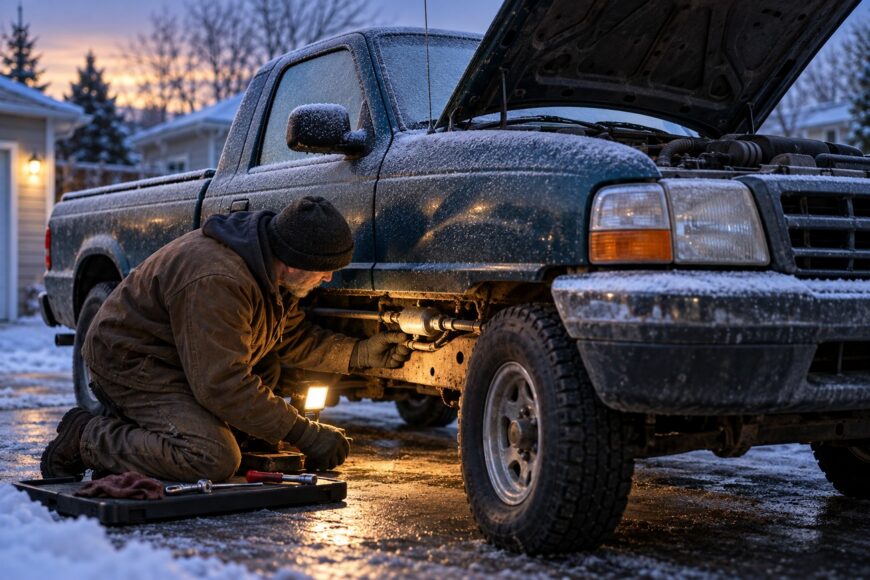
On a cold morning, an old Ford Ranger may crank without starting. Another may start normally, then hesitate and lose power after setting off. Both can feel like a frozen fuel line, but heating the engine alone may leave a restriction at the fuel filter or elsewhere in the fuel path untouched. Replacing the pump on a hunch can miss the same problem.
Before choosing a remedy, identify whether your Ranger runs on gasoline or diesel. Water can freeze in either fuel system; diesel wax gelling is a separate, diesel-specific restriction. That distinction determines what to check, what fuel treatment may help, and whether a cold no-start is likely to involve fuel at all.
- First, identify what could actually be freezing
- Cold-start clues: fuel restriction or another fault?
- How to thaw the system without creating another problem
- Why it starts after warming, then stalls again
- Why a new filter or anti-gel may not solve it
- Prevent the next cold-weather no-start
- Frequently asked questions
- At what temperature can a Ranger fuel line freeze?
- What common fuel pump problems can resemble a frozen line?
- What happens if a fuel line freezes?
- What are some common fuel pump problems in Ford Rangers?
- At what temperature do car fuel lines freeze?
First, identify what could actually be freezing
Check the truck’s fuel type before treating the line as frozen. In either a gasoline or diesel Ranger, water contamination can turn to ice and obstruct a filter, fitting, or other narrow passage. A gasoline truck does not need diesel anti-gel, and diesel-specific advice will not address its starting fault.
In a diesel Ranger, cold weather can cause wax in the fuel to form crystals and restrict flow. Wax often restricts the filter before the fuel in the tank appears solid. A tank that still contains liquid fuel therefore does not rule out a cold-weather restriction.
Fuel is only one part of the cold-start picture. A weak battery may turn the engine too slowly, inadequate diesel preheating can hinder ignition, and an air leak can interrupt fuel delivery. Each can mimic a fuel restriction, so note whether the starter turns briskly and whether the engine briefly catches before assuming a line has frozen.
There is no single freezing temperature that applies to every Ranger fuel system. Water contamination, diesel grade, filter condition, and the exposure of individual components all affect when trouble appears. The useful evidence is the truck’s behavior and the condition of its fuel system, rather than a temperature reading alone.
Cold-start clues: fuel restriction or another fault?
Use these clues to choose a safe next check, rather than to declare a failed part. If the truck loses power in traffic or you cannot inspect it safely, stop in a safe place and arrange help.
| Observable clue | Plausible causes | Next safe check |
|---|---|---|
| Cranks normally but will not start | Ice or a blocked filter; on a diesel, wax gelling or inadequate preheating. An air leak is another possibility. | Confirm the fuel type, observe whether the cranking speed is normal, and check any accessible filter or water-separator indicator according to the truck’s instructions. |
| Starts, then stalls | Restricted fuel flow, air entering a connection, or another intermittent delivery fault. | Note whether it happens only after a cold soak or also after warming; avoid repeated attempts that drain the battery. |
| Loses power while driving | Partial diesel gelling may allow a start but cause power loss or a later stall; a dirty filter or other delivery fault can also limit flow. | Pull over safely. Do not rely on a successful restart as proof the truck can complete the trip. |
| Cranks slowly | A weak battery, poor electrical connections, or a starting-system problem. | Check battery charge and visible connections before pursuing a fuel-system repair. |
| Pump can be heard, but the engine lacks fuel | A clogged filter can imitate pump failure; the pump or its electrical supply may also be faulty. | Have fuel delivery and electrical supply tested by a qualified technician. Pump noise alone does not confirm adequate fuel delivery. |
How to thaw the system without creating another problem
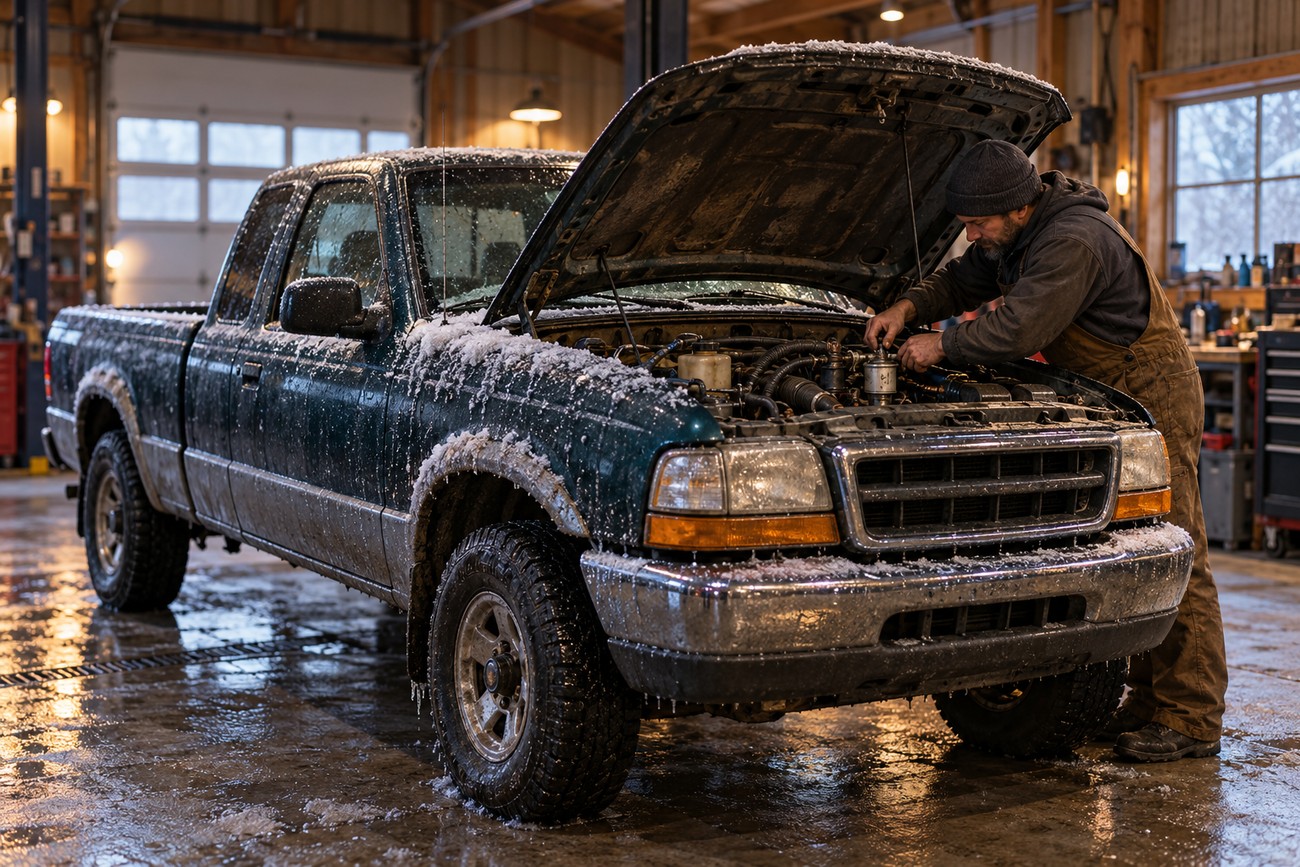
Stop repeated cranking once it is clear the engine will not start. Prolonged attempts can run down the battery and make a separate starting problem harder to assess. If you can move the Ranger without starting it, place it in a safely heated garage or workshop and give the fuel system time to warm gradually.
Allow the filter and accessible fuel-system areas to warm, as well as the engine. A restriction may sit at the filter or elsewhere in the fuel path, so warming only the engine may not restore flow. Do not use an open flame, a torch, or improvised high heat near the tank, filter, or lines.
Once the system has warmed, reassess how the truck cranks, starts, idles, and responds to gentle demand while stationary. A diesel that starts can still have limited flow: partial gelling may cause power loss or a later stall. Avoid a road test if it hesitates, runs unevenly, or cannot maintain idle.
Do not loosen fuel lines to look for flow, especially on a system that may remain pressurized. Thawing may temporarily restore operation without removing water, contaminated fuel, or another underlying fault. If safe warming is unavailable, the truck still will not run properly, or the source of the restriction is unclear, arrange professional diagnosis.
Why it starts after warming, then stalls again
A warm garage can restore enough flow for a normal-sounding start. Once the truck returns to the cold, ice may form again at a narrow passage, or diesel wax may restrict the filter as it cools. Higher fuel demand after setting off can expose a partial blockage that was less noticeable at idle.
This pattern also occurs without frozen fuel. Aging hoses and connections can admit air and mimic a cold-weather fuel restriction; a leak may be difficult to spot without a visible fuel drip. If the fault disappears indoors, tell the technician what happened before warming, rather than reporting only that the truck now starts.
A return of the problem after a short cold soak is a reason to inspect the filter, fuel condition, and connections, rather than repeat the same warming routine indefinitely.
If the Ranger hesitates or loses power on the road, pull over where it is safe. A successful restart does not establish that continued driving is safe.
Why a new filter or anti-gel may not solve it
A replacement filter can restore flow when the old one is blocked, yet the improvement may be brief. Replacing a blocked filter does not remove water, debris, or an air leak elsewhere in the system. If the truck fails again after another cold night, the cause of the blockage still needs attention.
Water found in a filter or separator points toward contamination that may also remain elsewhere in the system. Older fuel pickups may contain debris whose effect becomes more apparent when fuel flow is restricted. A suitable new filter matters, but repeated blockage calls for checking what is reaching it.
On a diesel, fuel intended for milder weather can become difficult to move through the filter in colder conditions. Diesel anti-gel may reduce gelling risk when correctly dosed before gelling; it is not a reliable remedy after fuel has gelled. Follow the product and fuel supplier’s directions rather than assuming an additive can reverse an existing blockage.
An additive will not repair a cracked hose, remove debris from a pickup, or correct weak cranking. Diesel anti-gel also has no role in a gasoline Ranger. Match the repair to the evidence before replacing more parts.
Prevent the next cold-weather no-start
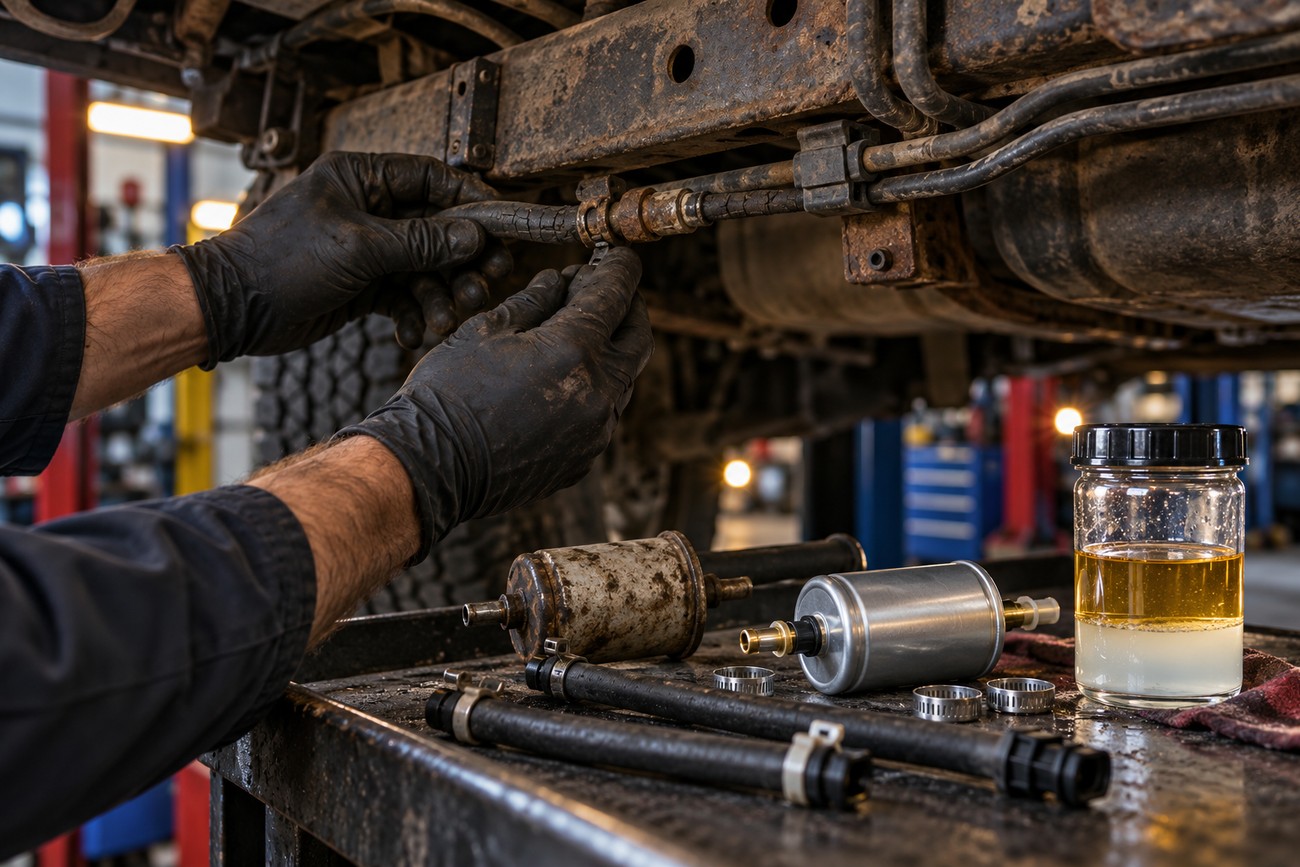
For either fuel type, keep hoses and connections in sound condition and use a filter suitable for the truck’s fuel system. If water or debris appears during service, investigate its source instead of repeatedly thawing the truck.
For a diesel Ranger, use fuel suited to the expected season and location. If using diesel anti-gel, follow the product and fuel supplier’s directions before gelling occurs. Fuel condition and the filter still matter.
Cold-weather preparation should also include the starting system. A weak battery, inadequate diesel preheating, or an air leak can mimic a fuel restriction even when fuel flows. Check those possibilities if warming the truck produces little change or if cranking remains slow.
No maintenance step eliminates every cold-weather failure. Keeping a record of whether the truck cranks slowly, starts then stalls, or loses power after setting off will make the next diagnosis more focused.
Frequently asked questions
Cold-weather symptoms do not identify a failed part on their own. Fuel type, cranking speed, and whether the truck runs after warming help narrow the possibilities. The answers below distinguish freezing and gelling from pump and starting-system faults.
At what temperature can a Ranger fuel line freeze?
There is no single freezing temperature that applies to every Ranger fuel system. Water contamination, diesel grade, filter condition, and the exposure of individual components all affect when trouble appears. A thermometer reading alone cannot confirm or dismiss a restriction.
What common fuel pump problems can resemble a frozen line?
A worn pump may deliver too little fuel, while a fault in its wiring, relay, or power supply may prevent consistent operation. A clogged filter can imitate pump failure, and pump noise alone does not confirm adequate fuel delivery. Testing fuel delivery and electrical supply is more useful than replacing the pump based on sound.
What happens if a fuel line freezes?
Ice can reduce or stop fuel flow through a narrow part of the system, causing a no-start, a stall, or poor running. The exact symptom depends on how much flow remains and where the obstruction sits. Avoid repeated cranking if the engine will not catch, and do not open a pressurized line to check it.
What are some common fuel pump problems in Ford Rangers?
A Ranger’s pump may wear, deliver inconsistent pressure, or lose electrical power through a connection or control-circuit fault. Symptoms alone cannot distinguish those problems from a restricted filter or contaminated fuel, so confirm the relevant delivery and electrical checks before replacing parts.
At what temperature do car fuel lines freeze?
Car fuel lines do not share one freezing threshold. Water in a gasoline or diesel system can form ice, while diesel wax gelling is a different cold-weather restriction governed partly by the fuel’s seasonal suitability. The filter’s condition and each component’s exposure influence when symptoms appear.