
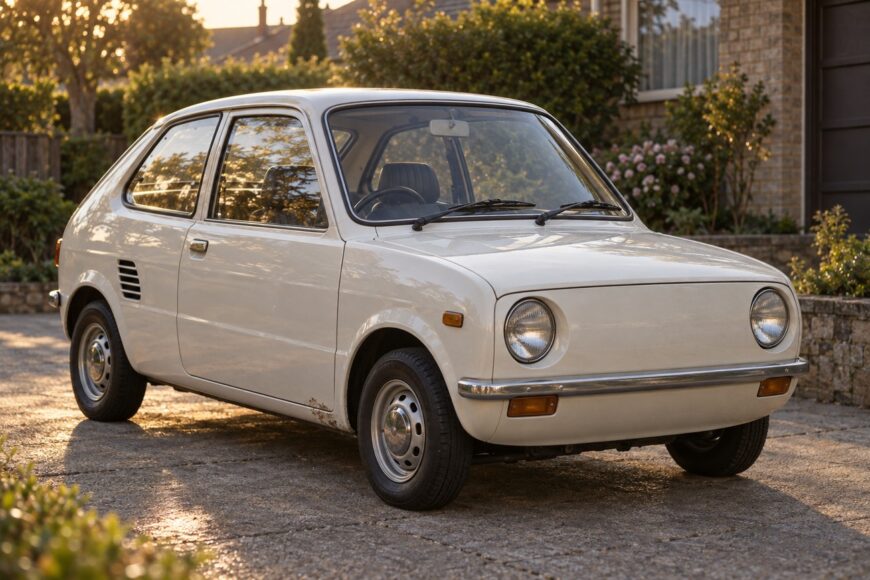
The Suzuki SC100 Whizzkid looks as though someone squeezed a coupe until only its grin remained. Its low roof, short body, and tidy three-door shape still draw a crowd. Living with one today is less effortless: the rear seats are cramped, faster roads demand patience, and finding the right replacement part may take longer than the repair itself.
Its charm needs little defending. The more useful question is whether you enjoy a small classic that asks you to work with its limitations, rather than a small car that makes daily life easy. That distinction begins with the Whizzkid’s origins as a distinctive export Suzuki, built around an unusual layout for such a compact car.
- What the Whizzkid Actually Was
- Tiny Body, Proper Rear-Drive Engineering
- The Fun Is in the Response, Not the Stopwatch
- Living With a Coupe This Small
- Buying One: Condition Before Romance
- Why the Whizzkid Still Earns Its Following
- Frequently asked questions
- Why do SC100 power figures range from 46 to 48 hp?
- How can I check whether an advertised car matches a British-market Whizzkid?
- What should I pay attention to on a first test drive?
What the Whizzkid Actually Was
The SC100 was a Cervo-related export car sold in Europe and Britain approximately from 1978 to 1982. In Britain, it became associated with the name Whizzkid, a fitting label for its cheeky shape and lively manner. The name describes a market identity, however, rather than a separate mechanical model.
That distinction matters when researching an advertised car. A listing may use SC100, Cervo, GX, or Whizzkid, sometimes loosely, while later Cervo generations are different cars. Establish the identity and specification of the individual example before using another model’s photographs or parts listings as a guide.
The SC100 belonged to a period when an inexpensive small car could have considerable visual character. A British new-car price of approximately £2,400 is reported for the period, though it says nothing reliable about what an example should cost now. Condition and completeness have become far more relevant than its original position in the showroom.
Scarcity is part of the appeal, provided the numbers are handled carefully. One database lists 4,696 SC100 GX examples; that figure should not be treated as a verified production total for every SC100 variant and market. The useful conclusion is simpler: a buyer may have little choice locally and should judge each available car on its merits.
Tiny Body, Proper Rear-Drive Engineering
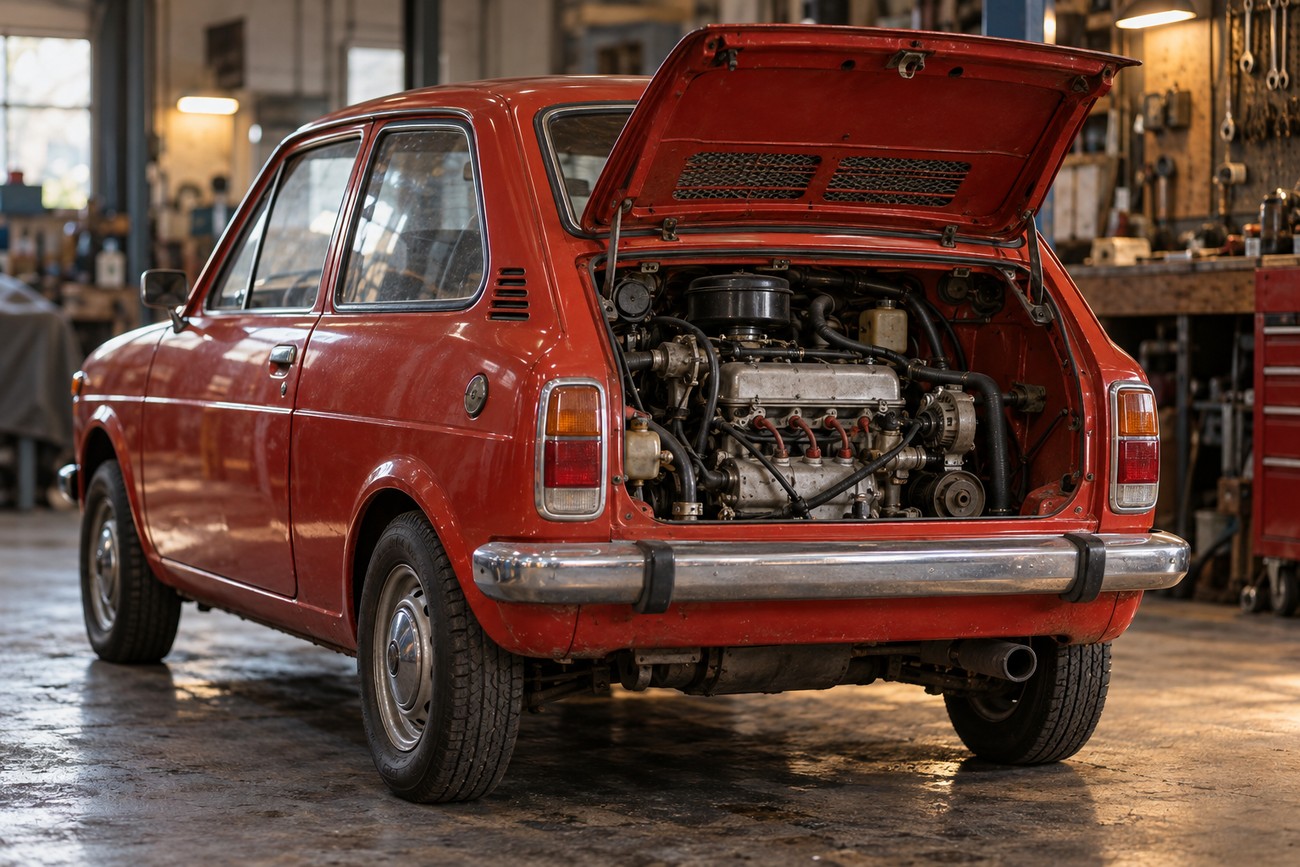
The SC100 measures approximately 3,190 × 1,395 × 1,220–1,230 mm. Its three-door hatchback body has a coupe-like roofline and a compact footprint that makes the whole car look almost improbably neat. Those exterior dimensions also place firm limits on cabin space; clever proportions cannot create a generous rear passenger compartment.
Kerb weight is commonly reported around 625–660 kg, often rounded to 630 kg. Behind the cabin sits a 970 cc F10A overhead-cam inline-four, commonly quoted at 47 hp (35 kW). Published output figures vary slightly, so the precise number is best tied to the market and documentation of a particular car.
Power goes through a four-speed manual gearbox to the rear wheels. For something this small, that rear-mounted engine and rear-wheel-drive layout give the SC100 a mechanical personality quite unlike the front-engine hatchback a modern buyer might expect. Calling it a toy overlooks the fact that it is a complete road car with its own considered packaging.
The layout is interesting for practical reasons, too. A light body asks relatively little of a modest engine at ordinary speeds, while the position of the mechanical components shapes how the car feels and how a garage approaches it. Neither point turns the Whizzkid into a sports car, but both help explain why it remains more memorable than its modest figures suggest.
The Fun Is in the Response, Not the Stopwatch
The Whizzkid’s appeal becomes clearer once it is moving. With commonly reported kerb weight around 625–660 kg, small inputs can feel meaningful, and the rear-mounted 970 cc engine gives the car a distinctive sense of activity. You can enjoy working through the four-speed manual without needing dramatic road speeds.
That eagerness should not be confused with strong acceleration. The F10A is commonly quoted at 47 hp (35 kW), though published figures differ, and reported performance is about 16.5 seconds from 0–62 mph. A reported top speed around 87–89 mph describes what the car may reach, not a relaxed pace with ample power left in reserve.
On faster roads, overtaking needs planning, and maintaining speed can mean more engine noise and effort than a brief drive around town reveals. A prospective owner who enjoys an involved machine may accept that exchange. Someone expecting quiet, effortless progress will notice the shortage of reserve much sooner than the low weight’s charm.
The rear-engine, rear-wheel-drive arrangement is another reason to approach the car on its own terms. It contributes to the unusual driving character, but tires, condition, and the individual car all affect its behavior. An enthusiastic test drive is useful; assuming modern sports-car handling from the layout alone is not.
Living With a Coupe This Small
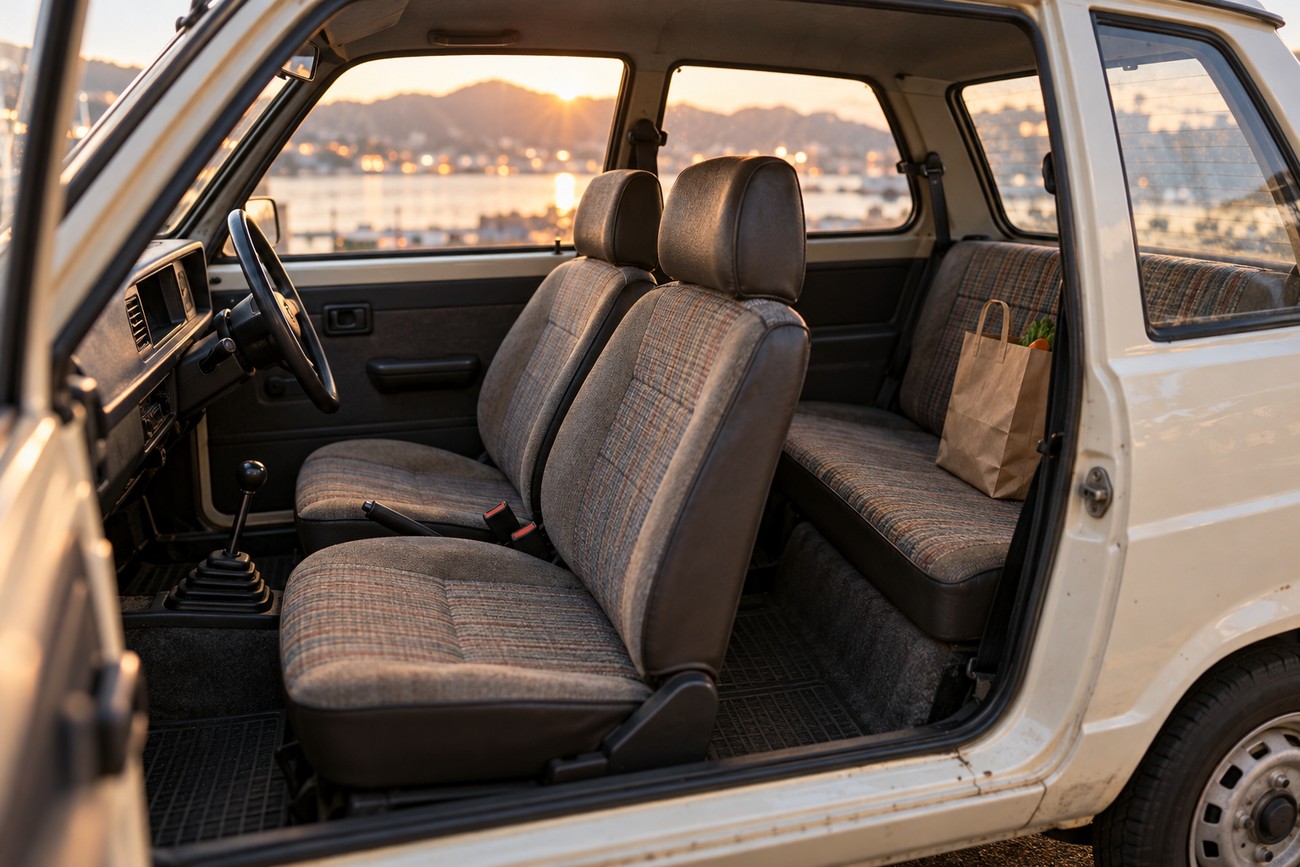
From the front seats, the Whizzkid makes a persuasive case for itself as a small pleasure car. Its compact body keeps the experience immediate, and its coupe-like shape gives even a modest trip some occasion. The trade-off becomes obvious when you ask it to carry more than the people and belongings that fit comfortably.
The rear seats are nominal rather than a full-size passenger row. They may serve for a short journey, but treating the SC100 as a dependable four-person car invites frustration. Its tiny footprint is an advantage where space is scarce outside the car; inside, it requires you to be candid about how often you need genuine passenger flexibility.
Noise is part of the calculation. The engine can feel busy at higher road speeds, just when limited acceleration reserve makes a driver wish for more power. A pleasant short outing therefore tells you only part of the ownership story; a route resembling your intended regular use will reveal much more.
Comfort, braking feel, and safety expectations should also be set by the car’s late-1970s to early-1980s origins, not by a modern small hatchback. That does not make every journey an ordeal. It does make the SC100 a more convincing occasional classic for an owner who welcomes period-car involvement than an automatic choice for a demanding daily commute.
Buying One: Condition Before Romance
Start with the individual car rather than the story attached to it. Inspect underneath, around the arches, and in less visible areas for corrosion, previous welding, and the quality of any repairs. These are sensible checks on an aging SC100, not a claim that every example has the same defects.
Look carefully at what is missing as well as what is damaged. Model-specific body panels and interior trim may be harder to find than routine mechanical items, although availability must be verified part by part. A tidy-looking car with absent or improvised details can be a more complicated project than its modest engine suggests.
Price structural repairs, questionable welding, and missing model-specific trim before estimating straightforward mechanical work. A running engine is reassuring, but it cannot tell you whether the body is an economical foundation for a restoration.
Documentation adds context that an attractive asking price or low mileage cannot supply alone. Compare photographs, registration records, and maintenance paperwork with the car in front of you, especially if originality matters. With relatively few examples to compare, evidence of careful ownership helps distinguish a complete car from one assembled around whatever parts were available.
Finally, discuss servicing with anyone who may maintain it. The rear-mounted engine can be less familiar to a garage accustomed to front-engine hatchbacks, and claimed parts interchangeability should be checked before ordering. Buy with a clear plan for the particular car, rather than assuming its small size will make every job small.
Why the Whizzkid Still Earns Its Following
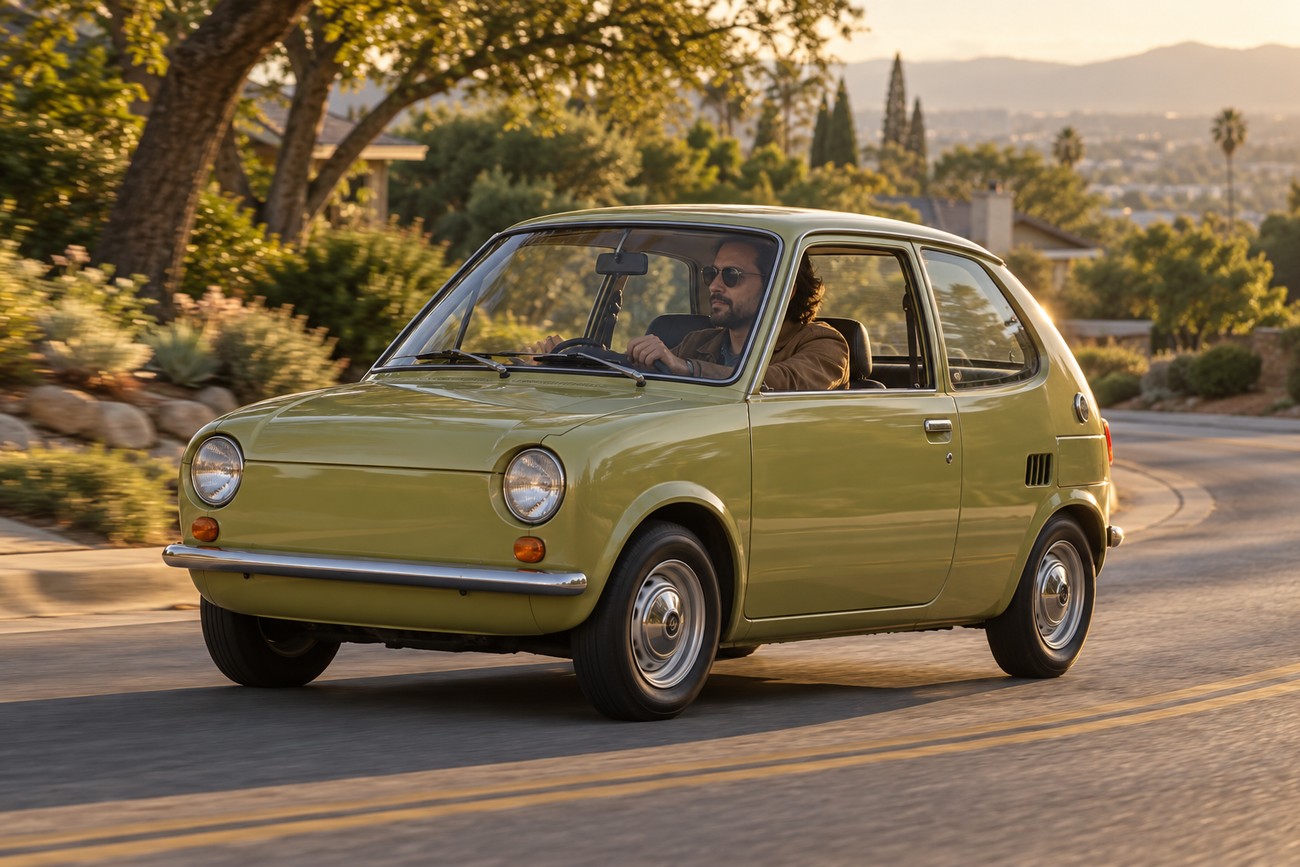
The SC100 has a rare combination of visual wit and mechanical purpose. Its little three-door body suggests a cheerful city runabout; underneath, a rear-mounted 970 cc four-cylinder engine drives the rear wheels through a four-speed manual. Commonly reported weight around 625–660 kg lets that modest specification feel engaged at sensible speeds.
It suits a driver who likes to hear and feel an older machine working, has room for a small classic in their life, and does not need the rear seats to serve as a regular passenger row. The appeal lies in the response to ordinary inputs and the satisfaction of keeping an unusual car in good order. Neither quality depends on a headline top speed.
Buyers who need quiet highway travel, easy overtaking, or dependable four-person versatility should choose something roomier. The reported British price of approximately £2,400 belongs to its period and should not be mistaken for a guide to current value or running costs. Age and rarity make those separate questions.
Seen honestly, the SC100 is easy to admire without pretending it is easy transport. It offers the pleasure of a compact, distinctive machine whose limitations remain plainly visible from the driver’s seat. Buy one for that involvement, rather than as a cheap substitute for a modern small car.
Frequently asked questions
Why do SC100 power figures range from 46 to 48 hp?
Published figures can differ because of rounding, measurement conventions, or market specifications. The commonly quoted figure for the 970 cc F10A is 47 hp (35 kW), while 46 hp and 48 hp also appear in references. Use the registration and engine documentation for a particular car before treating any catalog figure as definitive.
How can I check whether an advertised car matches a British-market Whizzkid?
Check its registration history, chassis and engine details, and any surviving period paperwork against the seller’s description. Compare dated photographs of the car and its specification, especially if parts have been changed over time. “Whizzkid” is associated with the British-market SC100, so the word in an advertisement is a starting point for verification, not proof of identity.
What should I pay attention to on a first test drive?
Ask to see the car start cold, then check that it settles into stable running and restarts when warm. During the drive, note gear engagement, braking, steering, and any unusual noises as speed and engine temperature change. Afterward, discuss anything you noticed with the seller and, ideally, an independent specialist; no single symptom should be assumed to be an inevitable SC100 trait.







