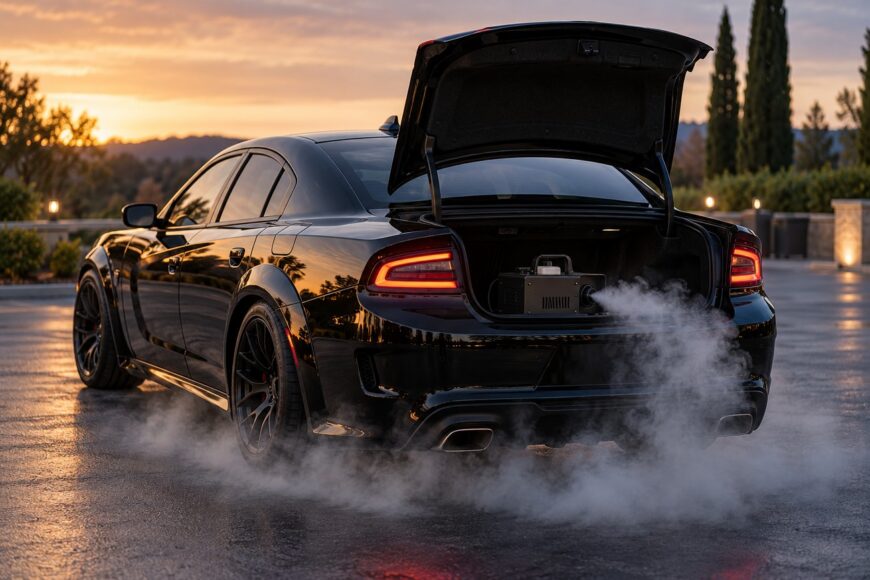
Smoke curling around a Dodge Charger can create a strong static-show image, especially near the rear wheels. The effect suits the car’s muscle-car character, but a fog machine adds more than atmosphere. It can create visibility, electrical, moisture, warranty, and insurance problems if the equipment is used or installed carelessly.
This discussion is limited to legal, stationary use on private property or at an approved event. A fog system should be disabled for normal road driving, and no smoke should be released where it could affect another person’s visibility. Check local laws, event rules, vehicle requirements, and insurance terms before considering any modification.
- Is a Fog Machine Legal on a Dodge Charger?
- What the Charger’s Electrical System and Warranty Change
- The Failure Points Most Installers Underestimate
- If You Still Want the Effect: Keep It Stationary and Controlled
- Why Placement and Fluid Choice Decide Whether It Looks Good
- Safer Alternatives to Real Smoke on a Charger
- Removal, Inspection and Resale Considerations
- Frequently asked questions
- What Dodge Chargers should you stay away from for a fog-machine project?
- How much does it cost to add fog lights to a car?
- What Dodge Chargers should you stay away from?
Is a Fog Machine Legal on a Dodge Charger?
Legality depends on the jurisdiction, location, and way the system is used. In many U. S. states, deliberately obstructing the driver’s view or creating conditions that reduce visibility for other road users can be treated as a safety violation. A vehicle that produces smoke on a public road may attract enforcement even if the driver can still see ahead.
European rules also vary by country, but changes affecting visibility, lighting, or safety-related systems may require approval or compliance checks. A fog generator can also interact with the air intake, cooling, washer systems, exhaust areas, or vehicle wiring, creating additional questions about whether the modification is safe and acceptable.
A stationary display on private property is a different situation from driving through traffic with an active fog system. Experienced installers generally reserve automotive fog effects for static shows, car meets, or private-track events where the surface, audience, ventilation, and operating rules can be controlled.
Check local statutes and venue rules before buying equipment. Treat the system as private-property or approved-event equipment only; there is no reliable basis for presenting a smoke-producing Charger as road-legal across jurisdictions.
What the Charger’s Electrical System and Warranty Change
Automotive fog machines in the range described by the brief typically use 12 V power and draw approximately 400–1,500 W. That is a single-source estimate, not a universal specification, but it shows why a fog machine cannot be treated like a pair of auxiliary lamps.
A load of that scale is far beyond ordinary accessory circuits. Connecting it to headlight wiring, audio wiring, or a cigarette-lighter circuit can overheat conductors, cause voltage problems, damage components, or create a short-circuit and fire risk. The correct design principle is a dedicated protected circuit with suitable cable sizing, a fuse, a relay, and a switch, assessed against the actual device rating.
The Charger has no factory mounting location intended for a fog generator. Any installation is therefore custom and outside normal manufacturer recommendations, particularly if it alters wiring, cooling airflow, air intake areas, washer components, exhaust surroundings, or bodywork.
Warranty decisions depend on the failed component and the modification’s connection to the problem, so an automatic denial should not be assumed. An insurer may also scrutinize or dispute a claim when an unapproved modification could have affected visibility or safety. Keep the equipment documented and disclose relevant modifications where the policy requires it.
The Failure Points Most Installers Underestimate
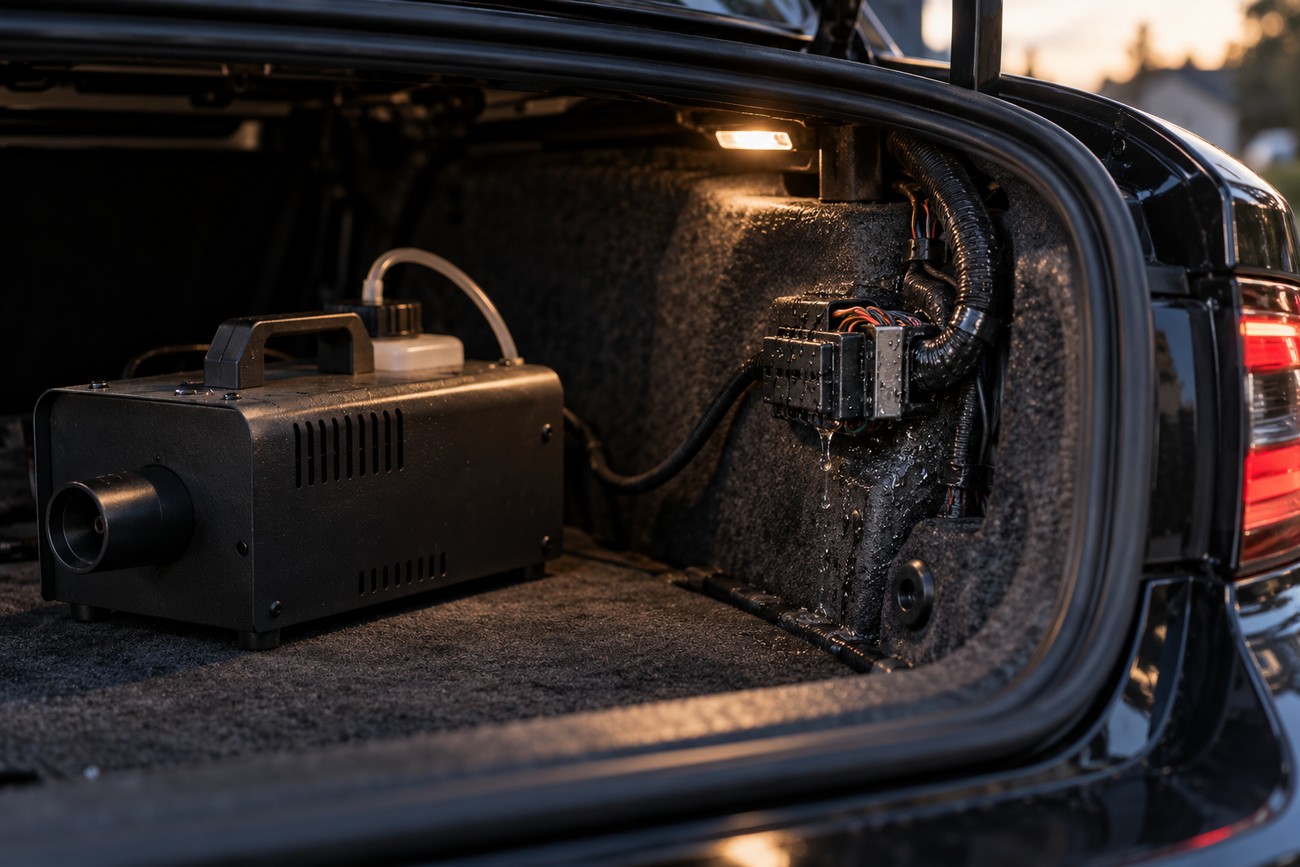
Fog fluid is commonly glycol- or glycerin-based. During prolonged exposure in an enclosed cabin, these fluids can increase humidity, leave residue, and irritate the airways. Sending fog through the Charger’s interior vents can also cause condensation, interior glass film, and reduced visibility.
Moisture and aerosol can collect in the trunk, behind trim, or in the engine bay. Over time, that environment can accelerate corrosion in connectors and enclosed cavities. A system may appear to work during a short demonstration while quietly creating electrical faults, sensor errors, odors, or sticky surfaces afterward.
Heat is another overlooked problem. A generator mounted close to plastic bumper sections, body-kit parts, wiring, or trim can deform nearby materials. The absence of a factory mounting point makes clearance, heat management, and service access matters for professional assessment rather than details to solve by trial and error.
Fluid leaks bring their own costs. Cheap or unidentified fluid may leave a persistent odor, film on glass and plastic, or difficult-to-remove marks on paint, especially in cold weather. A trunk-mounted unit may also produce disappointing results because the fog settles under the vehicle or exits without a controlled direction.
A visually weak effect often leads owners to run the machine longer, increasing heat, residue, and electrical stress. That cycle can turn a cosmetic modification into a maintenance problem without producing the clean rear-wheel effect originally intended.
If You Still Want the Effect: Keep It Stationary and Controlled
The conservative boundary is simple: operate the system only on private property or at an approved static show, and disable it for normal road use. No smoke or fog should be discharged while driving on public roads or where it can impair other people’s visibility.
Risk reduction starts with a separately protected electrical path. A professional should verify the actual load, cable sizing, fuse, relay, switch, battery capacity, mounting security, heat clearance, and protection from moisture. Depending on the verified load and the Charger’s electrical capacity, an auxiliary battery may be necessary.
Brief static-show bursts and a separately protected power path are safer design priorities than maximum fog output or continuous operation.
Lower-power, fast-heating units and short activation periods can limit heat, residue, and electrical strain. The system should also have a clear way to remain disabled during road use, and its installation should be inspected rather than concealed or improvised.
Why Placement and Fluid Choice Decide Whether It Looks Good
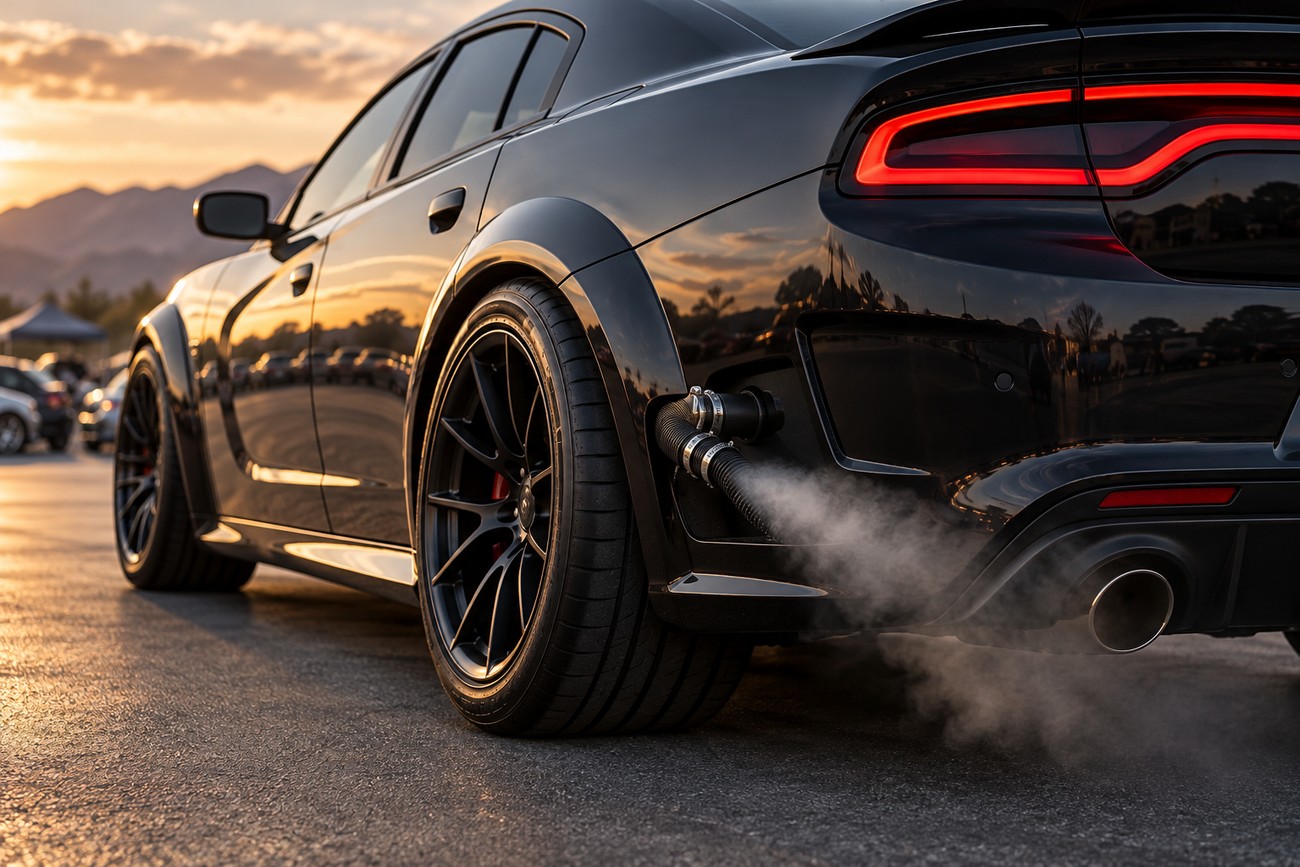
A generator placed in the trunk or bumper does not automatically create a clean rear-wheel effect. Fog follows airflow and gravity, so an undirected outlet may send it beneath the Charger, into wheel wells, or toward nearby spectators instead of producing an even display.
Installers seeking a stationary rear-wheel effect generally favor outlets nearer the rear wheels with directional hoses. Placement still needs stable mounting, heat clearance, protection from road debris, and containment for leaks. Better positioning improves the display, but it does not make public-road use legal.
The fluid should have a clear safety data sheet and a documented composition. Unknown stage fluid increases uncertainty about respiratory irritation, residue, odor, and compatibility with paint, plastics, seals, and interior materials.
Frequent use in cold weather can increase the chance of visible residue on paint and bodywork. A sealed mounting area, controlled hose routing, and leak containment matter more than simply increasing output from a unit that was never designed for the Charger’s available space.
Safer Alternatives to Real Smoke on a Charger
Electronic exhaust effects can suggest smoke or energy without releasing glycol aerosol into the surrounding air. Carefully controlled lighting can also emphasize the Charger’s stance, wheels, or exhaust area while avoiding much of the moisture, residue, and respiratory-exposure problems associated with real fog.
These alternatives are easier to demonstrate at a static event and reduce the risk of deliberately obstructing visibility. They still require sensible electrical design, secure mounting, and protection from heat and water.
Lighting modifications are not automatically legal on public roads. Color, brightness, flashing patterns, placement, and visibility to other drivers may be regulated, so the display mode should remain separate from the road-use configuration.
For many owners, a compliant lighting setup combined with an electronic exhaust effect provides a more repeatable show result and leaves fewer contaminants inside the car. Professional inspection remains appropriate for any substantial electrical modification.
Removal, Inspection and Resale Considerations
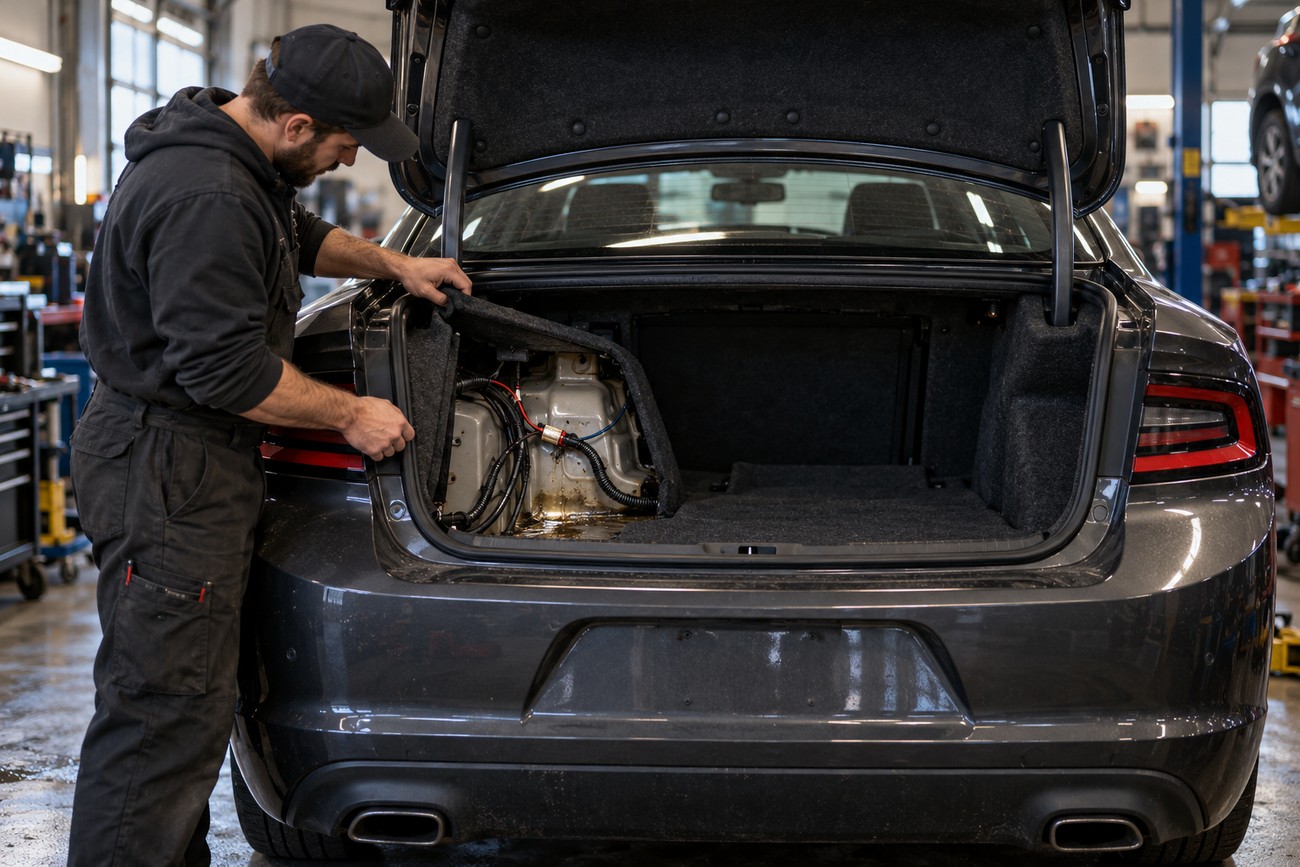
Before buying a Charger with a fog system, inspect the wiring, connectors, mounting points, hoses, fluid container, and surrounding trim. Look for corrosion, water intrusion, heat damage, leaks, sticky surfaces, interior glass film, persistent odors, and evidence that the system was removed without restoring the original wiring.
Moisture and aerosol accumulation can leave problems after only a few uses. A vehicle may look clean from the outside while retaining residue in the trunk, behind panels, or around electrical connectors. A professional inspection can identify damage that a short demonstration will not reveal.
A non-factory fog system may reduce appeal to mainstream buyers and may need to be removed at a financial loss. Returning the Charger to a clean, OEM-like configuration with documented inspection can make the vehicle easier to evaluate, although it does not guarantee a higher resale value.
Insurance scrutiny may also increase if an accident involves an unapproved modification that could have affected visibility. Keep records of removal, wiring restoration, and any repairs so the vehicle’s condition is clear to a future buyer and insurer.
Frequently asked questions
The following answers distinguish a smoke-producing show system from ordinary road equipment and avoid assuming a universal legal position or installation price.
What Dodge Chargers should you stay away from for a fog-machine project?
The available evidence does not identify specific Charger model years to avoid. Screen the individual vehicle instead: damaged wiring, water intrusion, corroded connectors, poor-quality prior modifications, heat-damaged trim, and evidence of leaks are stronger warning signs than an invented year-by-year list.
A Charger with compromised electrical or body systems is a poor candidate for additional custom equipment. Have the car inspected before considering any project, and treat a clean, well-documented vehicle as a safer starting point than one with unresolved modification damage.
How much does it cost to add fog lights to a car?
Conventional fog lights and a fog machine are different categories of equipment. Road fog lights use optical lamps and vehicle lighting circuits, while a fog machine uses a heated fluid system, a reservoir, hoses, and a substantially different electrical load.
The brief does not establish a reliable universal installation price for either project. Cost depends on the vehicle, parts, labor, wiring condition, compliance requirements, and whether professional inspection or restoration is needed. A quote for ordinary fog lights should not be used to estimate a smoke-effect installation.
What Dodge Chargers should you stay away from?
Stay away from individual cars with unresolved flood or water damage, brittle or overheated wiring, corroded connectors, fluid contamination, or undocumented electrical work. These conditions can make any added equipment harder to protect and diagnose.
Also be cautious with cars whose previous owner bypassed factory protections, cut original harnesses, or installed show equipment without clear documentation. A pre-purchase inspection and a traceable wiring history provide more useful protection than relying on a general model-year blacklist.