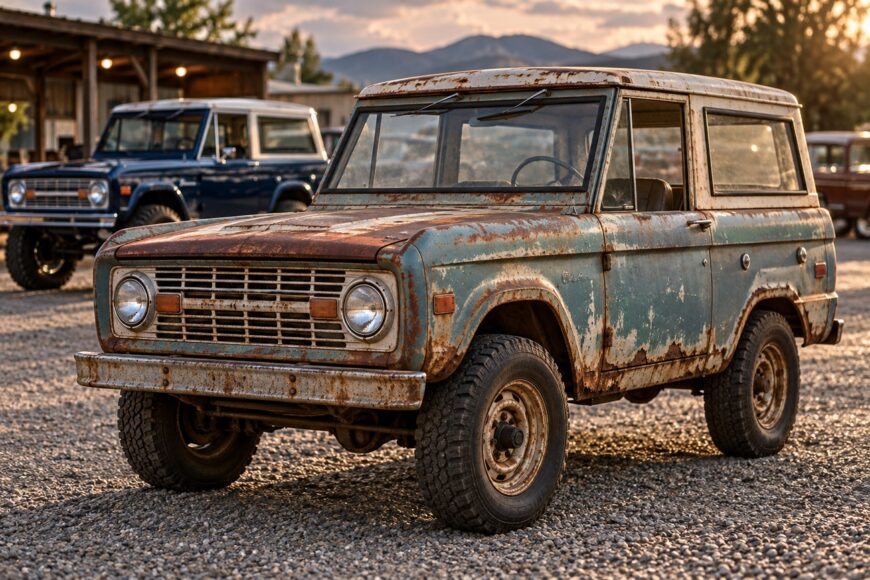
A rusty first-generation Ford Bronco can be advertised for $30,000–$40,000, while a polished specialist build can carry a six-figure price. Neither figure tells a buyer what the truck will cost to own. The rusty example may need structural work; the expensive one may have little more to show for its price than fresh paint, a lift, and attractive wheels.
The difficulty is separating genuine scarcity and documented workmanship from an ambitious asking price. Factory specification, sound metal, clear ownership records, and competent modifications attract different buyers for different reasons. A useful valuation starts with the particular Bronco’s identity and condition, then checks its price against completed sales rather than the most striking listings online.
- Why Early Bronco Prices Seem to Defy Logic
- First-Gen Bronco Price Tiers: Projects to Show Builds
- Originality, Specification, and the Year Question
- The Rust, VIN, and Title Checks That Protect a Buyer
- When a Six-Figure Restomod Is Worth It—and When It Isn’t
- Are Prices Still Rising? Decide What the Truck Is Worth to You
- Frequently asked questions
- How should I insure an Early Bronco whose value exceeds a standard used-car estimate?
- What costs should I add to a winning Bronco auction bid?
- How can I check whether an advertised Roadster or Half-Cab is authentic?
- Should I keep original parts when updating a Bronco for regular driving?
Why Early Bronco Prices Seem to Defy Logic
The first-generation Ford Bronco, also called the Early Bronco, ran from 1966–1977. It was a compact body-on-frame SUV offered as a Roadster, Half-Cab, or Wagon. Those distinct bodies, straightforward proportions, and useful off-road layout give it an appeal that a newer vehicle cannot reproduce simply by adopting the Bronco name.
Ford produced approximately 225,000–226,000 first-generation Broncos. That is a limited original pool for a vehicle sought by collectors, drivers, and off-road enthusiasts, though production does not tell us how many sound examples survive. Decades of corrosion, repairs, and modification also mean that an intact truck in a desirable specification can be much harder to find than an advertisement for an Early Bronco.
Demand is split. A collector may pay for original colors, period equipment, and a traceable history; an off-road buyer may prefer upgraded running gear and accept altered bodywork. A price that makes sense to one group can look excessive to the other, even when both buyers understand the vehicle.
Attention around the modern Bronco and prominent auction results can raise sellers’ expectations. Yet a headline sale does not revalue every worn Wagon or unfinished project. The useful comparison is a completed transaction involving a truck with similar documentation, structure, specification, and build quality.
First-Gen Bronco Price Tiers: Projects to Show Builds
These indicative US-market ranges are broad guideposts, not live valuations or a calculated auction average. Condition and documentation can move an individual truck outside its apparent tier.
| Vehicle type | Indicative US price | What can change the price |
|---|---|---|
| Incomplete project | Approximately $5,000–$10,000 | May lack an engine or clear documents; corrosion and missing parts can make completion uneconomic. |
| Usable, non-show example | Roughly $40,000–$80,000 | Structural condition, identification records, originality, and the standard of previous repairs matter more than shine. |
| Specialist restomod | Roughly $150,000–$250,000 | Documented fabrication and working systems help justify the price; a cosmetic refresh alone does not. |
| Exceptional auction build | Can reach $300,000–$400,000 | These are exceptional results, not typical prices or a benchmark for ordinary drivers. |
Some rusty Broncos are advertised for $30,000–$40,000. That is an asking price, not evidence that similar trucks have sold for it. Before using any listing as a comparable, check whether it sold and what the buyer actually received.
Originality, Specification, and the Year Question
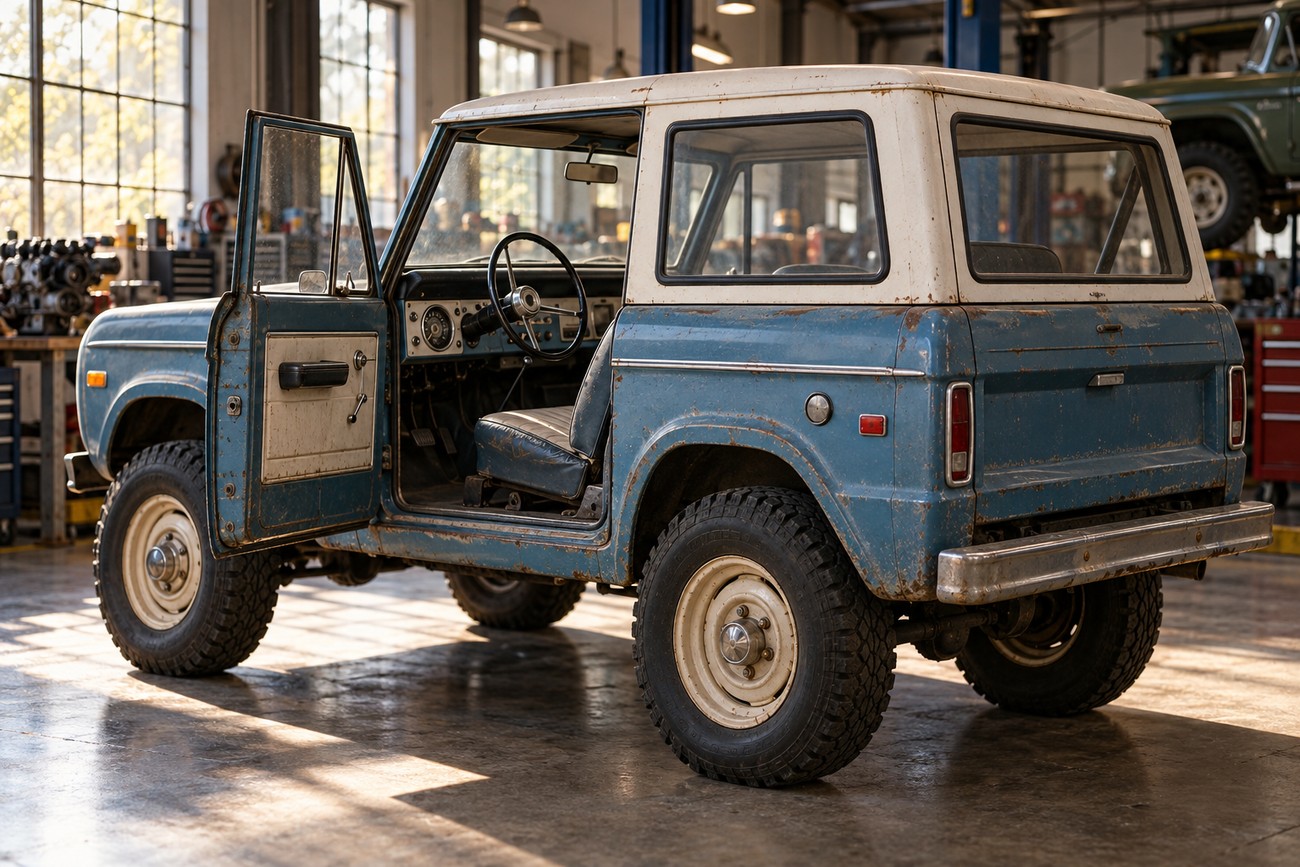
There is no single most valuable Early Bronco year independent of specification and condition. An uncommon body, a factory color, rare options, and credible ownership records can matter more than an earlier date on the title. Those attributes need evidence: a claimed factory configuration is less persuasive when the truck has been repainted or extensively rebuilt without records.
Ordinary surviving parts deserve attention too. Original seats, steering wheel, dashboard, wheels, and trim can be difficult to assemble later in the correct combination. A fashionable lift and large tires may suit a driver, while a collector could place more value on those unglamorous factory pieces. Missing small items also add time and expense to a return to original specification.
Factory engine families included the 170/200-cu-in inline-six and 289/302-cu-in V8. A factory-correct V8 may draw strong interest, but its premium is not fixed across every truck. The engine’s identity, the vehicle’s overall specification, and the quality of any replacement installation all affect what a particular buyer will pay.
A modern engine and transmission can make regular use more appealing. They can also narrow the pool of originality-focused buyers, particularly if fitting them required irreversible cuts or changed mounts. Judge a modified Bronco as a coherent vehicle with a documented build, rather than assuming every swap adds to its value.
The Rust, VIN, and Title Checks That Protect a Buyer
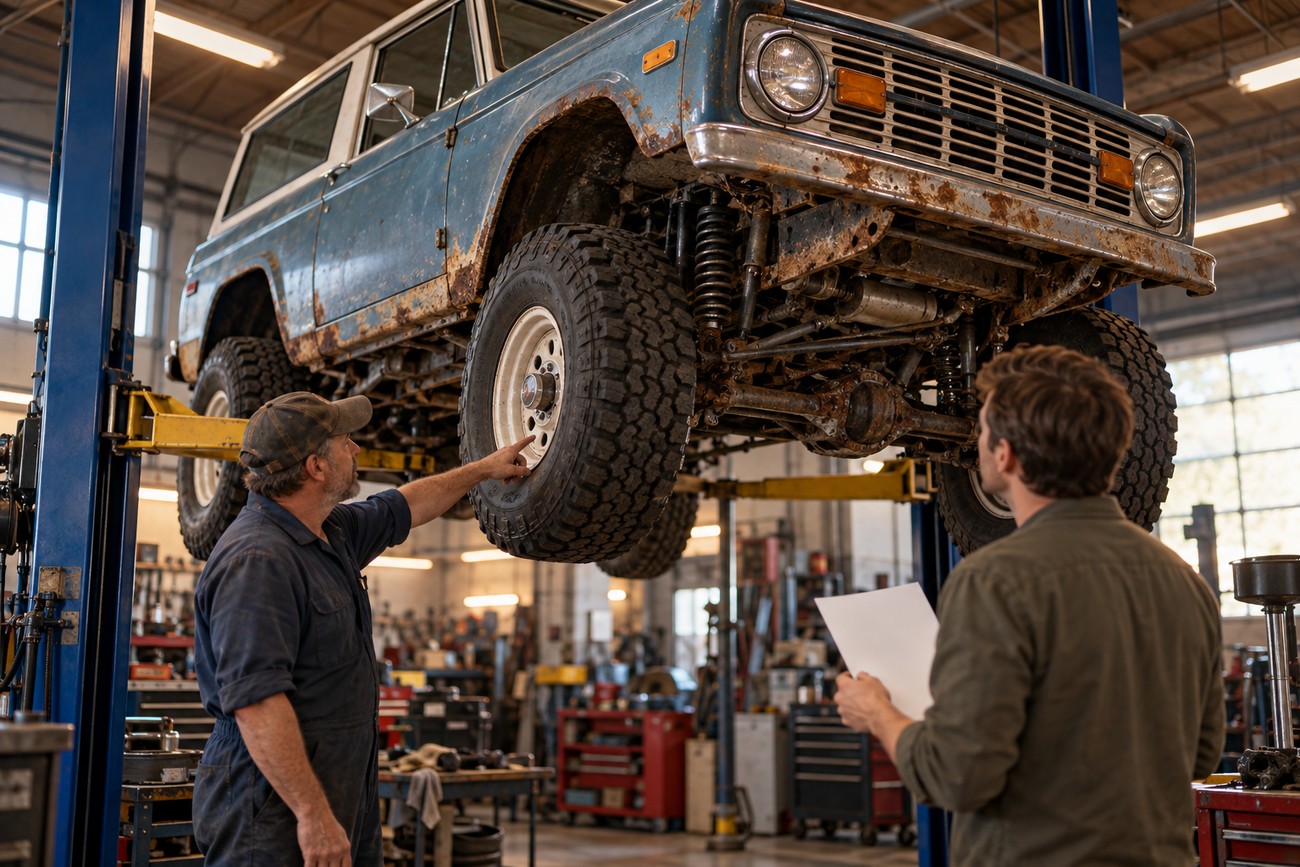
Start before traveling: request clear underside photographs covering the frame, body mounts, floor supports, and previous repair areas. A set of glossy exterior images cannot establish structural condition. Even a Bronco advertised from a dry state needs inspection, because its earlier storage and repair history may be unknown.
Inspect the frame and body supports in person, ideally with someone familiar with older body-on-frame vehicles. Look beyond surface discoloration for weakened metal, concealed patchwork, and repairs around steering or suspension brackets. Patina may be acceptable on sound material; structural corrosion is a repair obligation. Fresh paint or undercoating can make that distinction harder to see.
Compare the position and shape of body mounts and frame repairs on both sides of the truck. Uneven geometry can reveal a poorly reconstructed structure even when new undercoating makes the metal look uniform.
Next, reconcile the vehicle’s identification details with its title and supporting records. Check the markings and locations applicable to that particular truck rather than assuming every Bronco was marked identically, and investigate any inconsistency before paying. A clean, verifiable title supports resale and registration; salvage or rebuilt history may bring an estimated 20%–40% discount on a presentable vehicle, though the effect varies.
A low purchase price offers little protection if the frame, mounts, and paperwork all need resolution. Establish the scope of structural work and any identification problem before treating the truck as a viable restoration. Walking away can cost less than discovering those issues after dismantling.
When a Six-Figure Restomod Is Worth It—and When It Isn’t
Specialist restomods may be offered around $150,000–$250,000, but the number in the advertisement does not certify the work. Ask for photographs and invoices showing fabrication before finishes covered it, along with records for wiring, brakes, steering, and completed testing. A tidy engine bay and expensive upholstery tell you little about hidden joints or how reliably the systems work together.
A quick repaint, lift, and wheel package should be judged differently from a documented specialist build. Inspect the routing and protection of wiring, the execution of custom brackets, and the behavior of the brakes and steering on a drive. Poorly conceived alterations may be costly to correct even when the vehicle looks ready for a showroom.
Restoration costs are equally easy to misread. Reported estimates of $40,000–$50,000 have expanded to $80,000–$100,000 or more after hidden rust, fabrication, trim, and interior needs became clear; these are examples, not standard budgets. Cuts to bodywork and custom drivetrain mounts can add another decision: pay to retain them, or spend more to recover a specification future collectors may prefer.
Keep build cost separate from resale value. An owner may have spent heavily on parts and labor that suit a personal driving brief without creating an equally valuable vehicle for the next buyer. Pay a six-figure price for work you can inspect, document, and use, rather than for a stack of receipts alone.
Are Prices Still Rising? Decide What the Truck Is Worth to You
Some owner communities describe an Early Bronco price plateau since 2023, while dealer and restomod marketing continues to emphasize appreciation. Neither view establishes a universal trend. Exceptional, rare, or particularly well-executed trucks can attract different demand from ordinary drivers and projects, so a single auction result cannot settle the market’s direction.
Decide first what the Bronco must do. A collector seeking factory specification should compare verified configurations and documented sales. Someone planning regular road use may accept modifications, but should require evidence that the steering, brakes, wiring, and structure have been competently sorted. In either case, compare completed transactions for similar vehicles rather than treating unsold listings as market prices.
Set a purchase limit only after adding likely repairs, missing components, transport, and the cost of resolving documentation questions. A cheaper truck in a remote area may lose its advantage if collection is expensive and specialist help is scarce. Local owner communities and marque specialists can also help identify parts and assess work that a general listing leaves unexplained.
Buy the Bronco whose condition and records support its price and intended use. If the seller’s figure depends on an investment story, an unverified build claim, or problems you cannot inspect, leave room in the budget—or leave the truck.
Frequently asked questions
The purchase price is only one part of owning an Early Bronco. Insurance terms, auction charges, authenticity evidence, and the handling of removed parts can affect your options after the sale.
How should I insure an Early Bronco whose value exceeds a standard used-car estimate?
Ask insurers about agreed-value coverage and confirm in writing how a total loss would be valued. Provide photographs, modification records, and relevant completed-sale comparisons so the insured value reflects the actual truck rather than a generic used-car estimate. Check any limits on mileage, storage, regular driving, or off-road use before choosing a policy; terms vary.
What costs should I add to a winning Bronco auction bid?
Add the venue’s buyer’s premium, applicable taxes, transport, and an allowance for immediate inspection and repairs. Review the sale terms before bidding, since charges and payment deadlines vary. A headline bid is a poor budget figure if the vehicle still needs tires, fluid service, or work identified only after delivery.
How can I check whether an advertised Roadster or Half-Cab is authentic?
Compare the truck’s identification records and available ownership documents with period specification information, then examine body details for evidence of a later conversion. Photographs from before restoration and records of bodywork can help explain changes. If the body style drives the asking price, seek a marque specialist’s assessment rather than relying on badges or the current appearance.
Should I keep original parts when updating a Bronco for regular driving?
Keep serviceable original take-off parts where storage allows, label them, and record what replaced them and why. Seats, wheels, trim, and other factory pieces can give a future owner the option to reverse changes and help document the truck’s earlier specification. Protect stored parts from damage; a box of unidentified, deteriorating components offers much less value.