
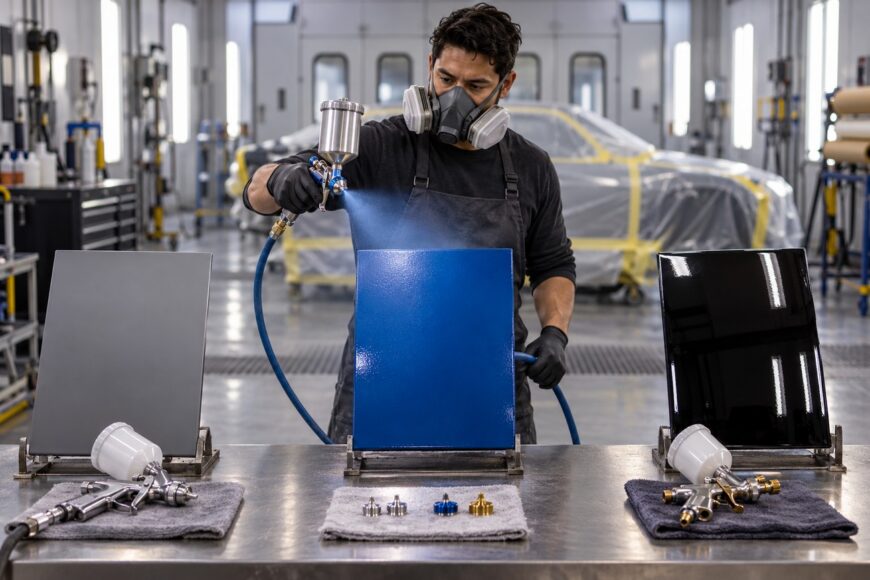
A technician wearing a respirator applies a blue base coat with a spray gun in an automotive body shopPainting
Choosing the Right Spray Gun Nozzle Size for Automotive Primer, Base Coat, and Clear
14
A nozzle that starves thick primer can overfeed clear coat, while a familiar 1.4 mm setup is not automatically right for every automotive coating.
DeVilbiss Car Club
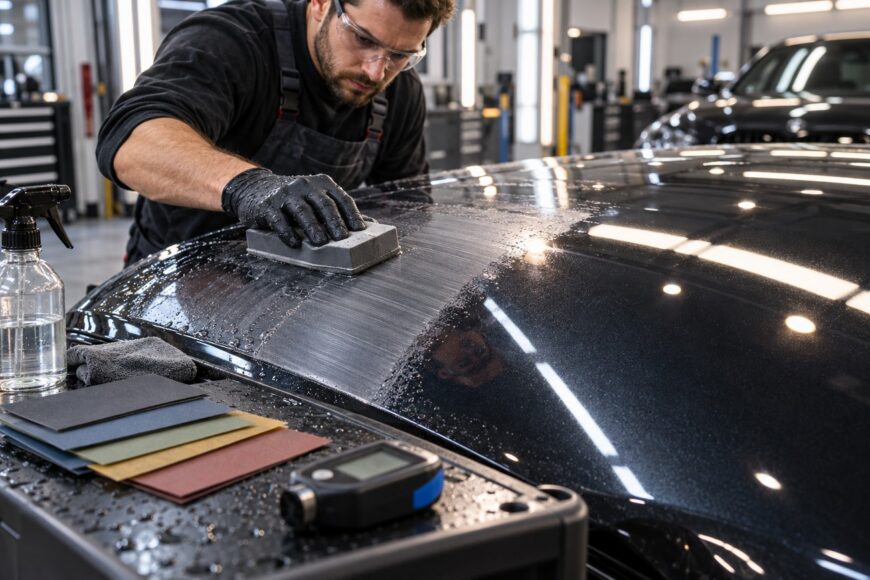
A technician wearing safety glasses and black gloves uses a sanding block to wet sand the glossy black roof of a car in a body shopPainting
Color Sanding Grits for Show-Quality Finishes
13
Color sanding a show-quality finish means leveling a visible defect while leaving a scratch pattern you can polish away. Cut too little, and the dirt nib
DeVilbiss Car Club
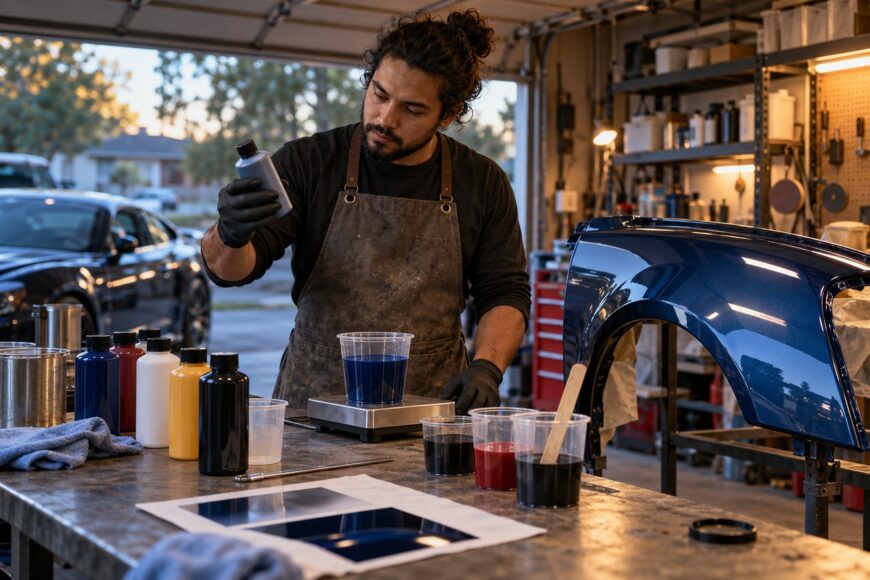
A man wearing an apron and gloves holds a small bottle of automotive paint while mixing colors on a digital scale in his garage workshopPainting
Choosing an Automotive Paint Mixing System for Hobbyist Car Painters
23
A recipe or an expensive mixer cannot guarantee a color match. The existing finish may be faded, previously repaired, or different across panels, while
DeVilbiss Car Club
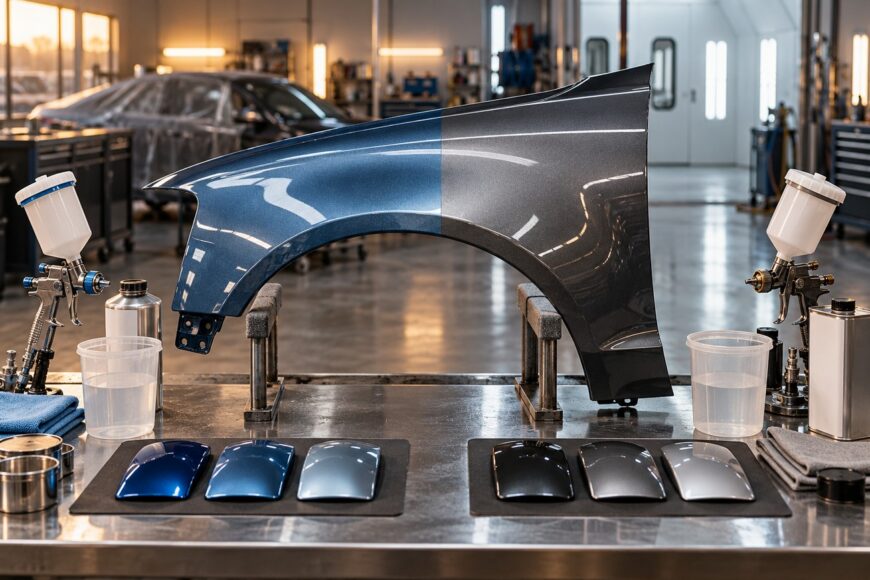
A car fender showing a comparison between waterborne and solvent-based paint finishes on a workbench with spray guns and sample cards in an auto body shopPainting
Waterborne vs Solvent-Based Car Paint
34
Waterborne paint can reduce emissions during the color-coat stage, while solvent-based paint may be more forgiving when temperature, airflow, or equipment
DeVilbiss Car Club
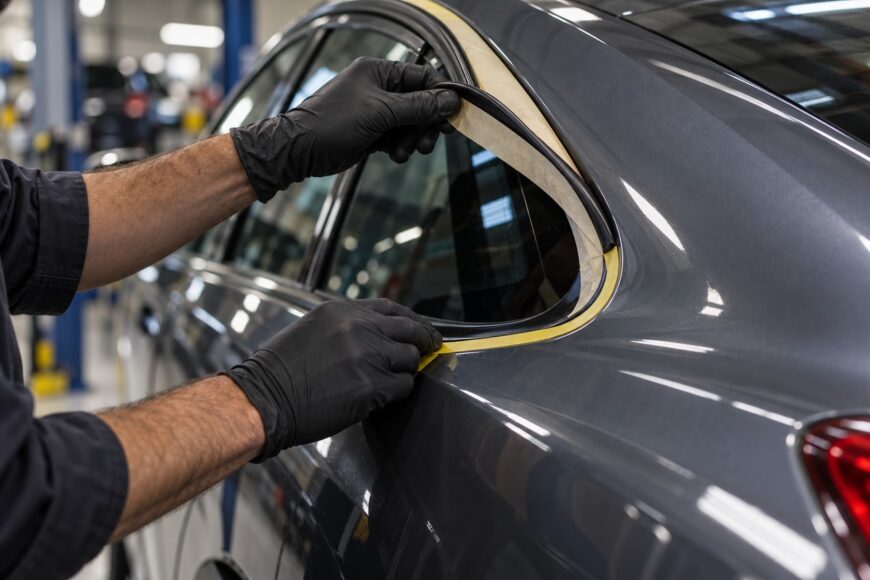
Technician in black gloves applying masking tape around a car window trim in an auto repair shopPainting
Automotive Masking Techniques for Clean Paint Lines on Trim and Glass
4
Paint can creep beneath a window seal, build a ridge beside the glass, or tear along the edge when the mask comes off. Each defect starts at a different
DeVilbiss Car Club
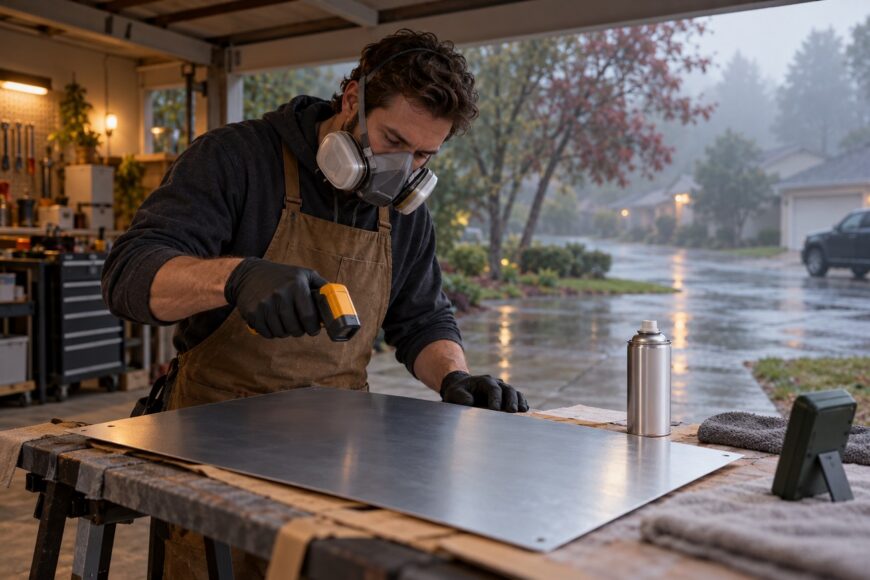
Man wearing a respirator and apron measuring surface temperature of a metal sheet with a thermometer before spray painting in a garage on a rainy dayPainting
Spray Painting in Cold or Humid Weather
3
A spray-applied coating can look smooth at first, then turn cloudy or stay soft long after you expect it to dry. Cold and humidity can interfere even when
DeVilbiss Car Club
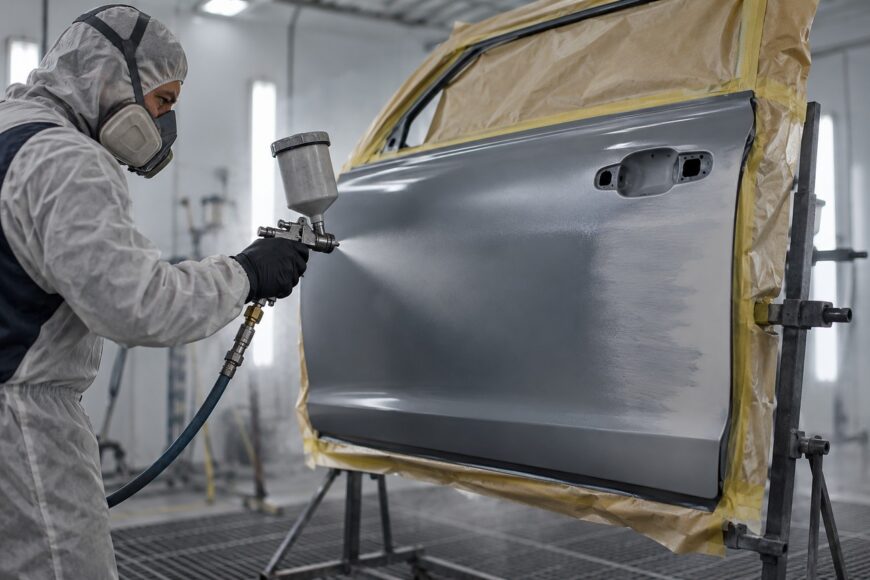
A technician in a protective suit and respirator sprays primer surfacer onto a car door in a paint boothPainting
Spraying Primer Surfacer for Filling Scratches
4
Scratches can appear covered after priming, then return as dark lines after sanding or show through the basecoat. The surface may look uniform in gray
DeVilbiss Car Club
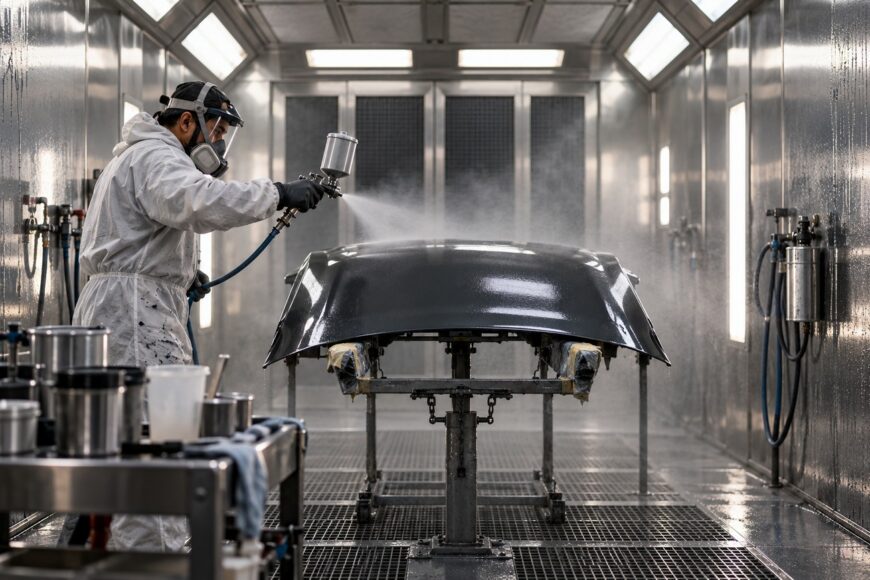
An industrial painter wearing a respirator and protective suit applies a spray coat to a car hood inside a spray boothPainting
How Transfer Efficiency Affects Paint Costs
3
A paint job can consume far more material than an area-and-coverage calculation predicts. Overspray, material left in hoses, mixing and filtration losses
DeVilbiss Car Club
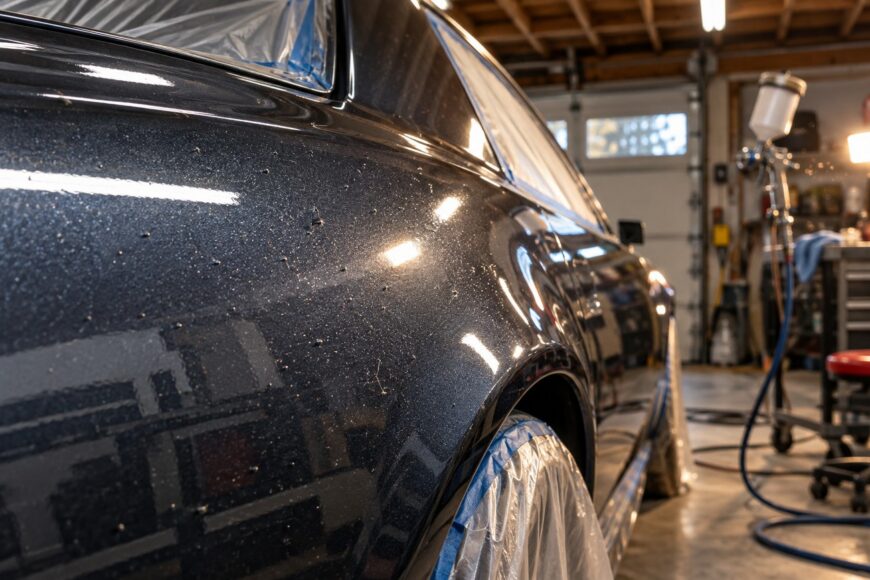
Close-up of freshly painted dark car body showing dust nibs and imperfections on the glossy surface inside a home garagePainting
Controlling Dust Nibs When Painting a Car in Your Home Garage
3
Finding gritty bumps in a freshly cleared panel is frustrating: each one can mean careful sanding and polishing after the clear coat has cured.
DeVilbiss Car Club
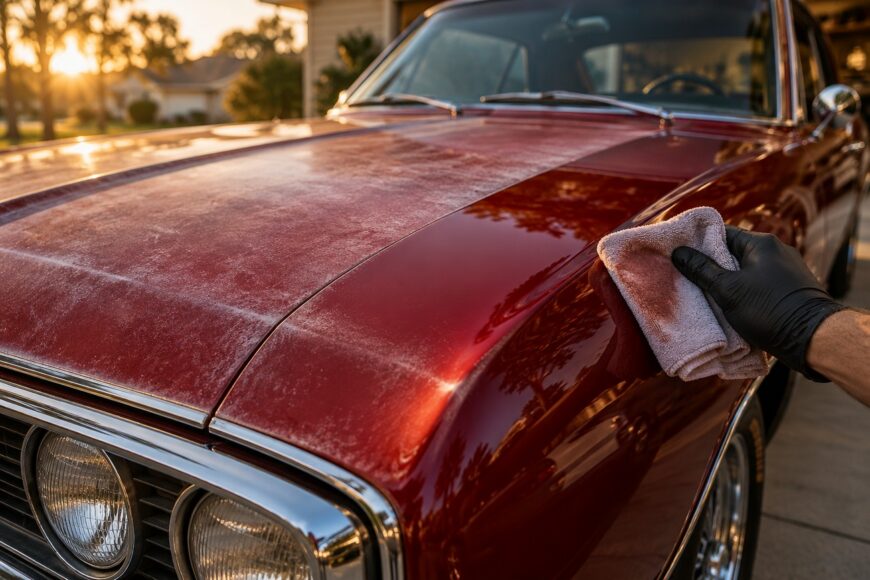
A gloved hand using a microfiber cloth to polish the oxidized red paint on a classic car hoodPainting
Bringing Oxidized Paint Back to Life
3
A chalky appearance, a dull surface, paint transfer onto your hand, or gloss that disappears after polishing are familiar signs of an aging finish.
DeVilbiss Car Club