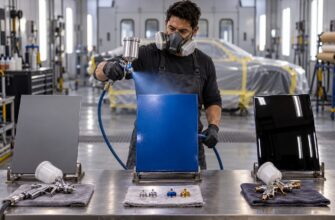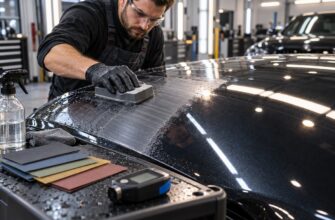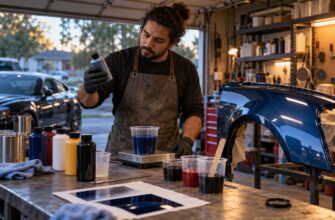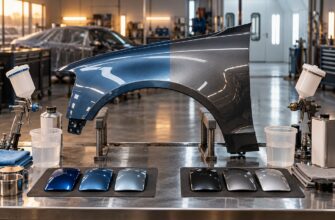
A spray-applied coating can look smooth at first, then turn cloudy or stay soft long after you expect it to dry. Cold and humidity can interfere even when the forecast shows no rain.
Before spraying, check the part itself and the conditions it will face while drying. Air temperature, surface temperature, humidity, and the aerosol’s instructions all matter. A brief spell of suitable weather is little help if the coated part becomes damp or cold later.
- Check the Surface, Not Just the Forecast
- Prepare the Part, Can, and Work Area
- Apply Light Coats and Protect the Drying Window
- Recognize Trouble Before Adding Another Coat
- Frequently Asked Questions
- What should I do if rain starts shortly after spraying outdoors?
- How can I tell whether condensation may form on the surface?
- Why does spray paint stay tacky in cold or humid weather?
- What should I do if the spray can produces a coarse or uneven pattern?
Check the Surface, Not Just the Forecast
Condensation can form on a cold part without rain or visible droplets. The key comparison is between the part’s surface temperature and the dew point: at or below that point, moisture can collect on the surface and interfere with adhesion. Air temperature alone cannot tell you whether the part is safe to coat.
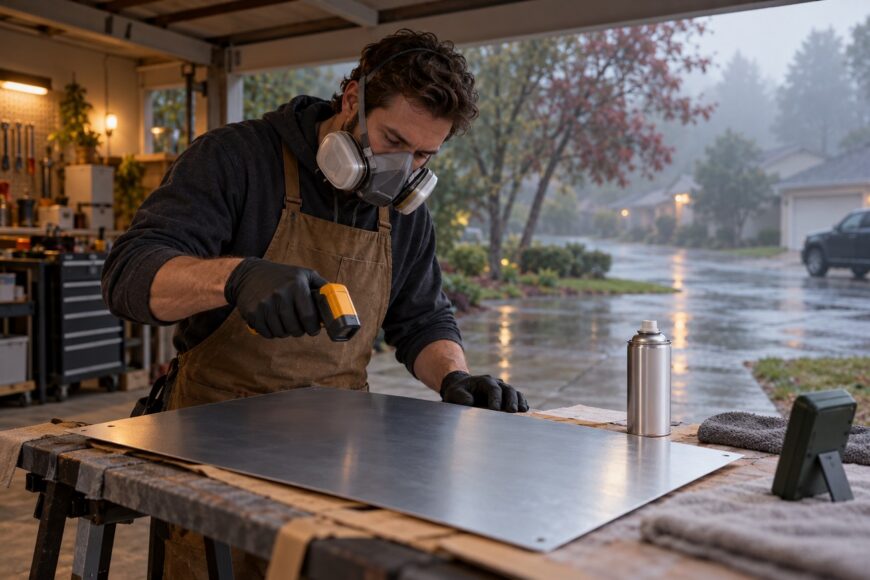
Check relative humidity and air temperature, then measure the part with a suitable surface thermometer. Keep the surface at least 3°C above the dew point during application and drying, unless the product specifies otherwise. Recheck if the weather or workspace conditions change.
A commonly cited working range is 40–65% relative humidity and 50–90°F (10–32°C), but it is not a universal aerosol specification. Some coatings permit humidity near 85%; some solvent-based coatings specify around 80%, while water-based products may be stricter. None of those figures makes condensation acceptable.
Read the specific aerosol label or technical data sheet for limits on air, surface, and coating-material temperature, humidity, and drying. Its instructions take priority over general rules of thumb. If you cannot meet them during application and drying, postpone the job or use a suitable controlled work area.
Prepare the Part, Can, and Work Area
A cold part brought into warm, humid air may collect condensation before you open the can. Let it acclimate, then check its surface temperature and inspect for moisture before cleaning and coating. A small item may warm relatively quickly; heavy metal can remain cold much longer, even when it feels warmer at the edges.
Cold also affects the aerosol. A chilled can loses pressure and may spray unevenly, leaving a coarse texture or an intermittent pattern. Bring it to a suitable temperature only as its label directs, and shake it as instructed. Never use a flame, excessive heat, or an improvised heater to warm a pressurized can.
A stable work area with appropriate temperature control and ventilation is more reliable than a short warm spell outdoors. Indoor spraying still introduces vapors and overspray, so follow the product’s ventilation and ignition-source precautions. Bringing a damp part inside does not make it ready to paint.
Apply Light Coats and Protect the Drying Window
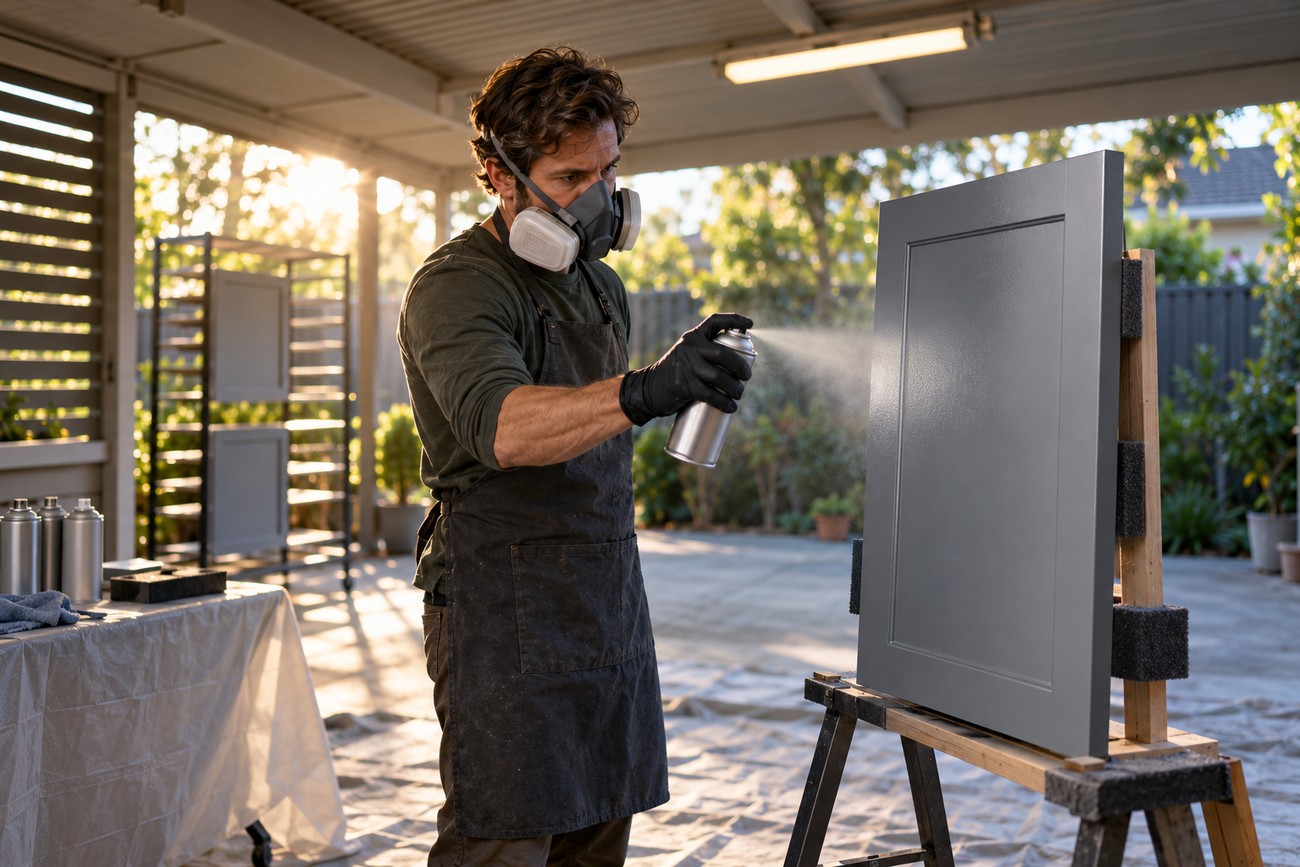
Cold and high humidity slow evaporation, so a coat may stay wet or tacky longer than the advertised drying time suggests. Apply light coats at the distance and intervals specified on the can. A heavier pass is more likely to run and can retain solvent beneath the surface.
Check the product’s recoat and cure instructions before adding paint or handling the item. Touch-dry describes the surface, not full cure; lower layers may still dent or scratch easily in cold, humid conditions. Give the coating suitable conditions for the entire drying period, rather than judging it by a quick fingertip check.
A warm afternoon can provide an acceptable spraying window while leaving too little time before an outdoor part cools toward the dew point overnight. Plan where the part will dry before applying the first coat.
During drying, keep the surface at least 3°C above the dew point unless the product specifies otherwise. Steady, moderate conditions are preferable to intense heat aimed at the fresh film: uneven heating can skin over the surface while material underneath remains soft. Maintain the ventilation required by the product as it dries.
Recognize Trouble Before Adding Another Coat
A cloudy clear coat, persistent tackiness, or paint that dents after its surface feels dry can point to moisture or slow drying. Those symptoms do not prove a single cause. Stop spraying and compare the actual conditions, coat thickness, and elapsed time with the product’s instructions.
Coarse texture or a spray pattern that starts and stops may indicate a chilled can with reduced pressure. Check the can’s condition and temperature against its label before continuing. Spraying a test pattern on a suitable scrap surface can help you see whether delivery has returned to normal without risking another coat on the part.
If the film is still soft, allow more drying time under conditions the product permits, and avoid handling it unnecessarily. Do not bury cloudiness, runs, or a soft coat under more paint; the next layer may make repair harder. Follow the label or technical data sheet to decide when recoating is allowed and how a damaged coat should be repaired.
Frequently Asked Questions
What should I do if rain starts shortly after spraying outdoors?
If you can move the item safely, place it under a ventilated cover or in a suitable sheltered area without touching the wet film. Do not seal it in a container that traps solvent vapors, and keep it away from ignition sources as directed on the can.
After it dries, inspect for water marks, craters, or loss of adhesion; use the product’s repair and recoat instructions before attempting another coat.
How can I tell whether condensation may form on the surface?
Compare the surface temperature with the dew point rather than relying only on the air temperature or forecast. Keep the surface at least 3°C above the dew point during application and drying unless the product specifies otherwise.
Why does spray paint stay tacky in cold or humid weather?
Cold and high humidity slow solvent or water evaporation, especially when the coat is heavy. Allow additional drying time under conditions permitted by the product, and avoid handling or recoating until the label’s requirements are met.
What should I do if the spray can produces a coarse or uneven pattern?
A chilled can may lose pressure and spray intermittently or create a coarse texture. Check its temperature and condition against the label, and test the spray pattern on suitable scrap before applying another coat to the part.