
Bodywork
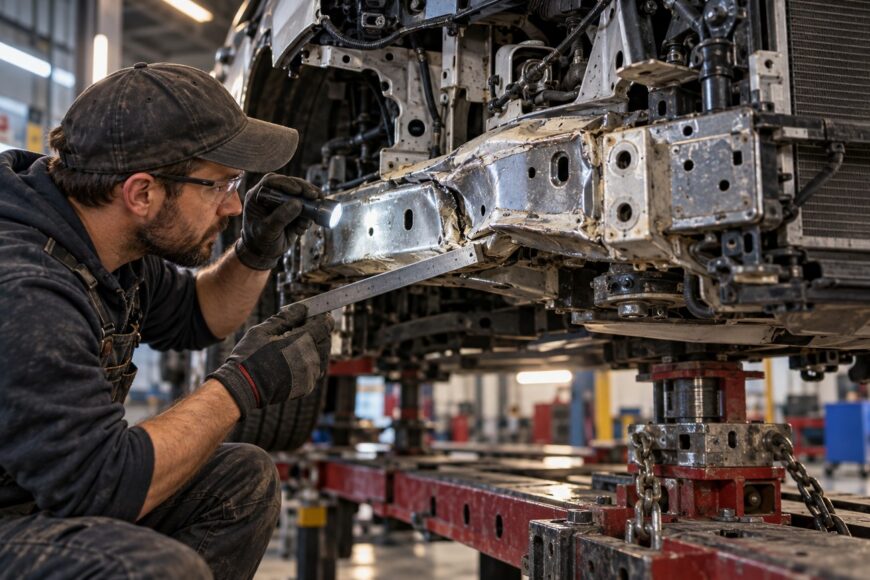
A car can look straight, track normally on a short drive, and still have structural damage hidden behind panels or under a fresh coating.
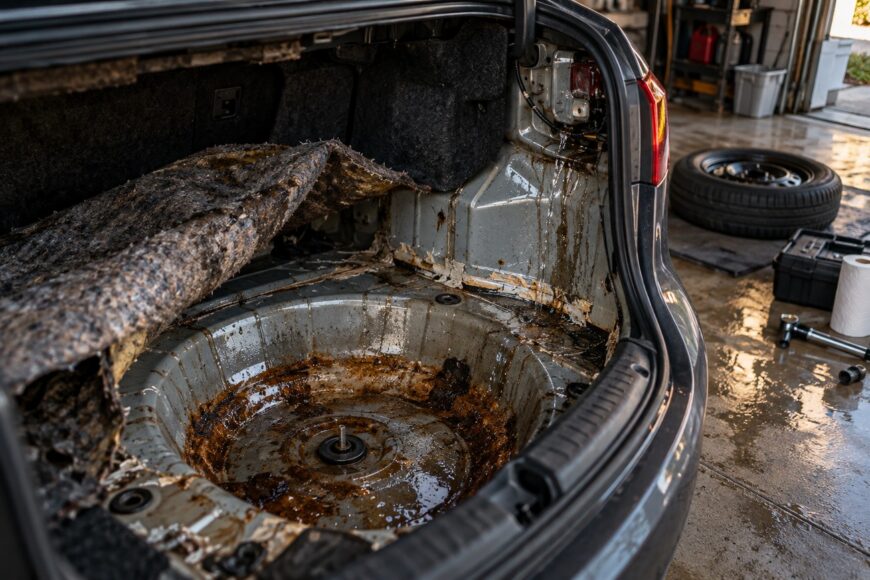
A trunk can look clean until you lift the spare tire and find water or rust in the well. Carpet and insulation can conceal damage long after the visible
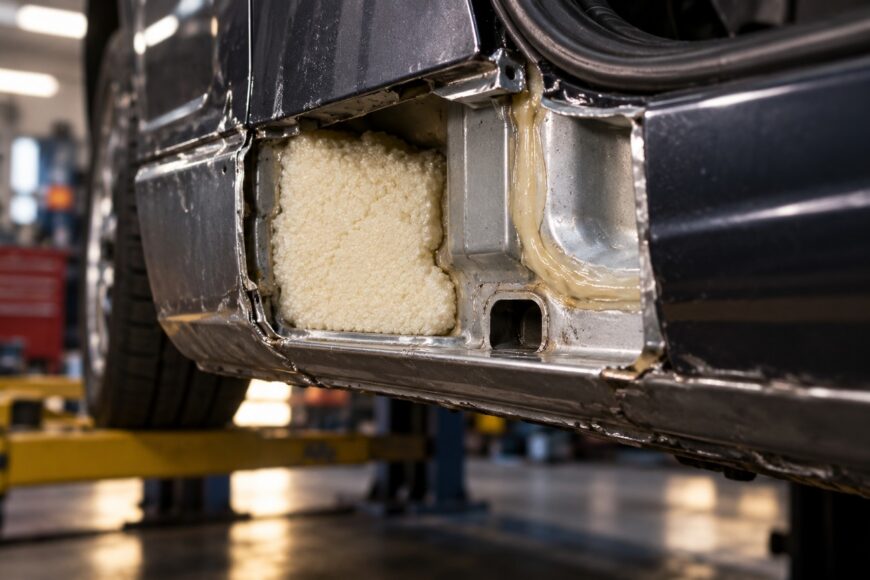
Filling body cavities with closed-cell foam can sound like a simple way to block water, heat loss, and road noise. The foam has low water absorption in
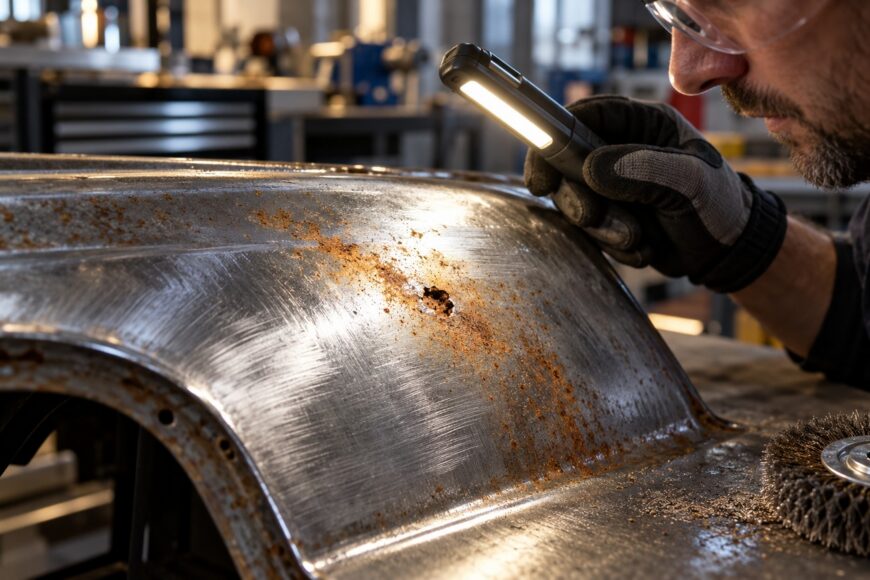
Fresh paint can look like a successful rust repair until orange spots return through the coating, bubbles form along an edge, or a thin rust line reappears beside a seam.
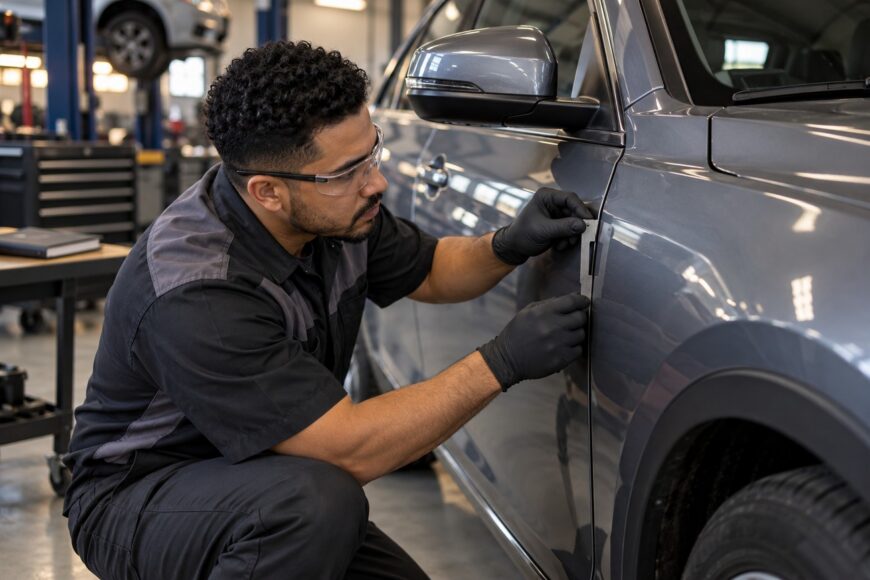
Uneven panel gaps, a door that sits proud or recessed, a front edge that rubs against the fender, and changing wind noise can all point to an alignment problem.

A fender can look installed while its gaps, corrosion protection, clips, and noise control are wrong. A door may rub against the panel, water may reach

Rust returning after a careful-looking treatment usually points to a preparation or coverage failure. Wax may have been sprayed over salt, trapped water
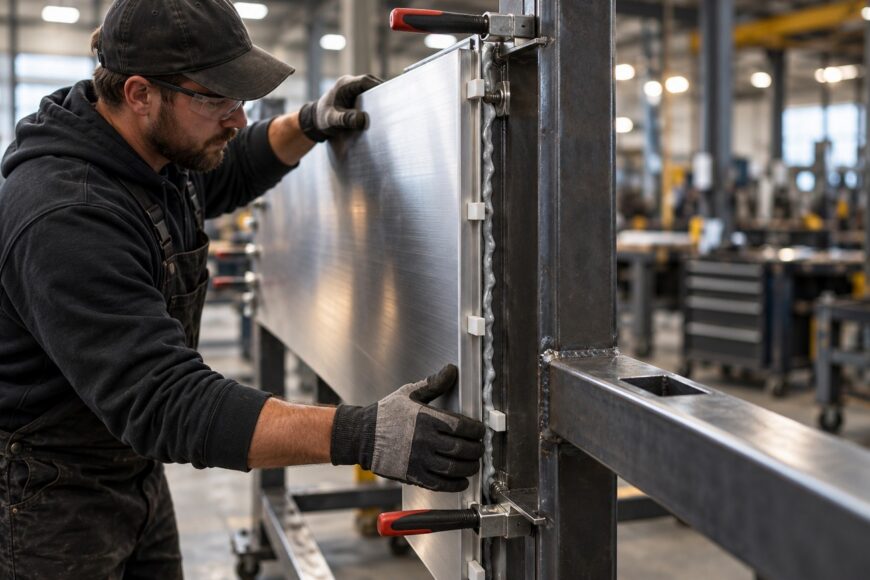
A panel can appear firmly bonded, then lift at an edge or crack along a joint after temperature changes and vibration. The visible failure may start with

A smooth, period-correct classic body has a particular appeal: its surfaces follow the original design, its repairs remain visually quiet, and its construction
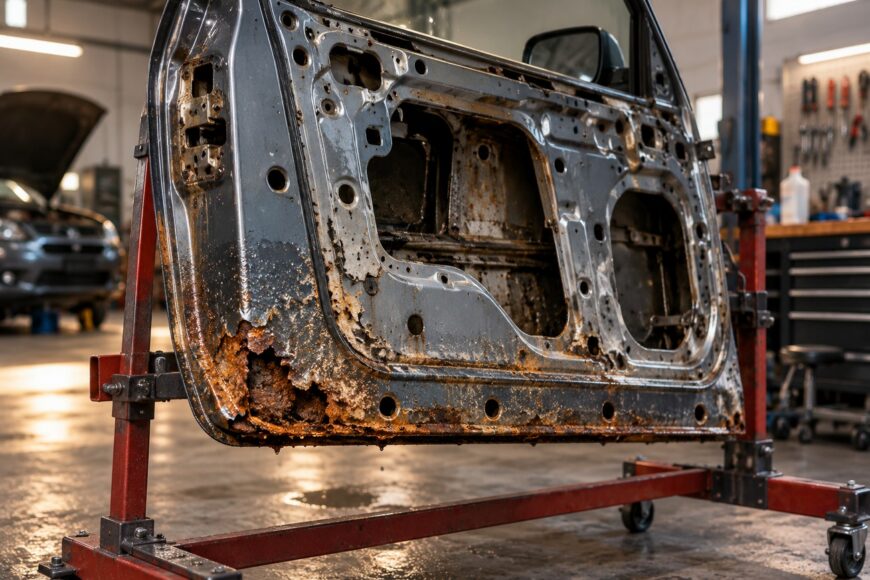
Rust often returns after visible bubbling on a door bottom has been sanded and painted. Water may still be trapped inside the door, and corrosion can remain