
Bodywork
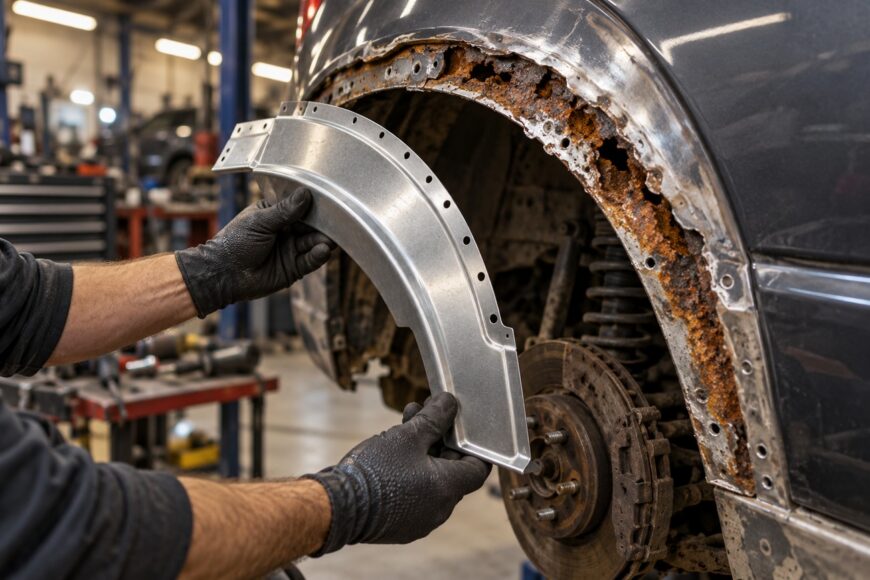
A freshly painted wheel arch lip can look sound in autumn, then show rust again after winter. The failure often starts behind the finish: the folded edge
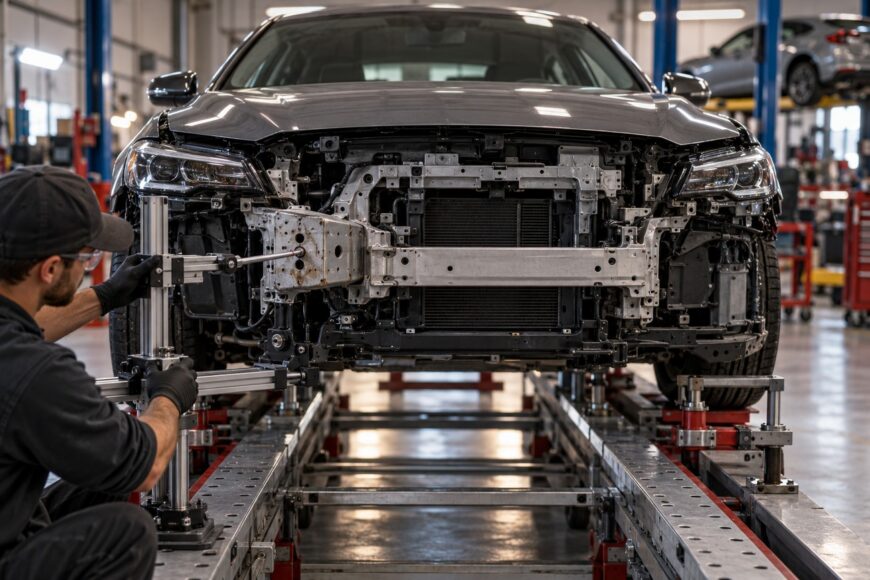
A car can leave a collision shop with smooth paint and even-looking panels, yet still pull to one side or have a door that closes differently than it did before.
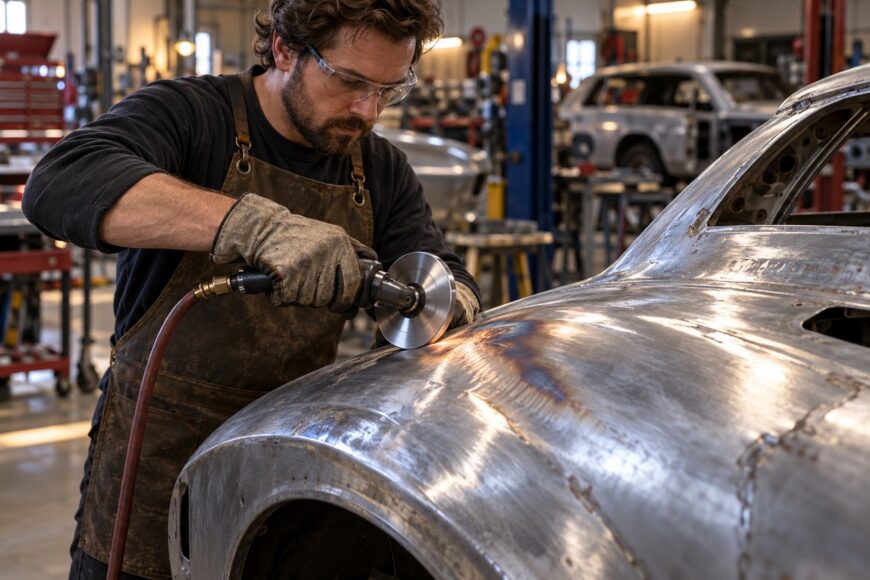
A panel can look nearly straight and still contain stretched metal. That hidden stretch often leaves a low area, a loose reflection, or a wave that returns
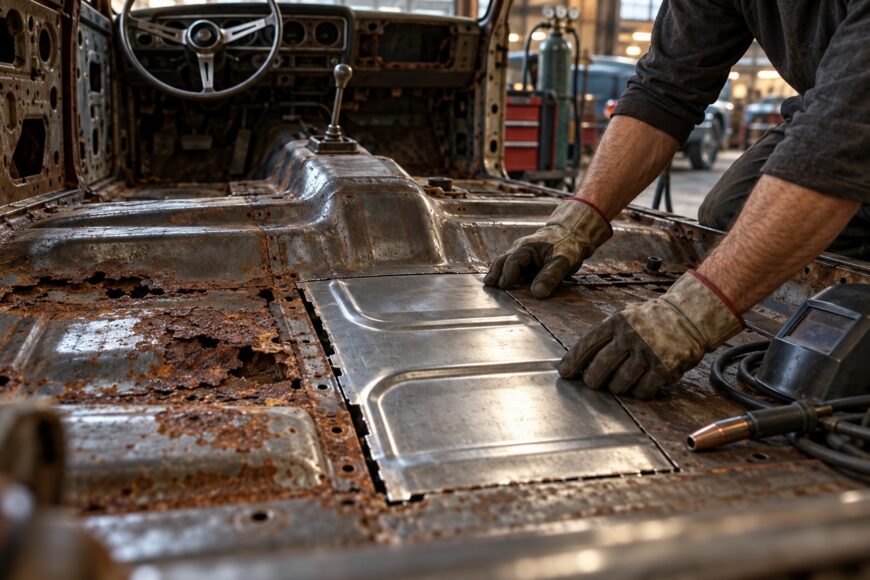
A small hole in a floor pan can hide a much wider area of corrosion beneath the carpet or along a seam. The metal around the opening may look firm from
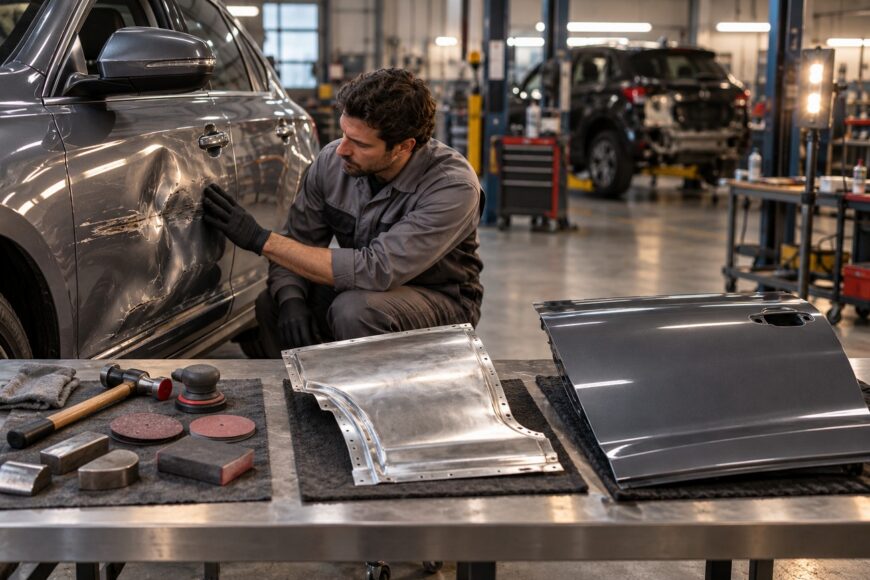
Choosing between repairing a damaged exterior panel and replacing it is rarely a simple matter of keeping the original part or installing a new one.
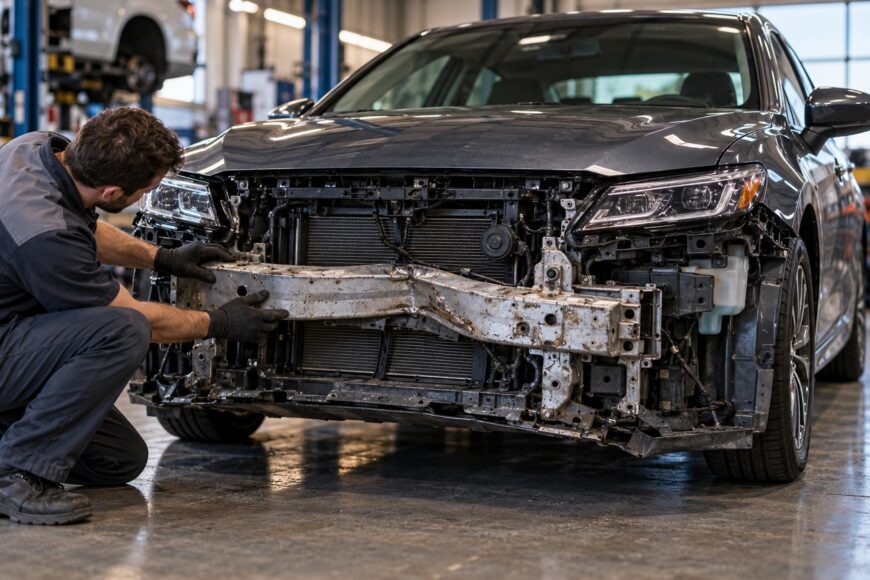
A bumper may appear to fit after an impact while the gaps remain uneven, the cover stays loose, or the mounting points no longer line up.
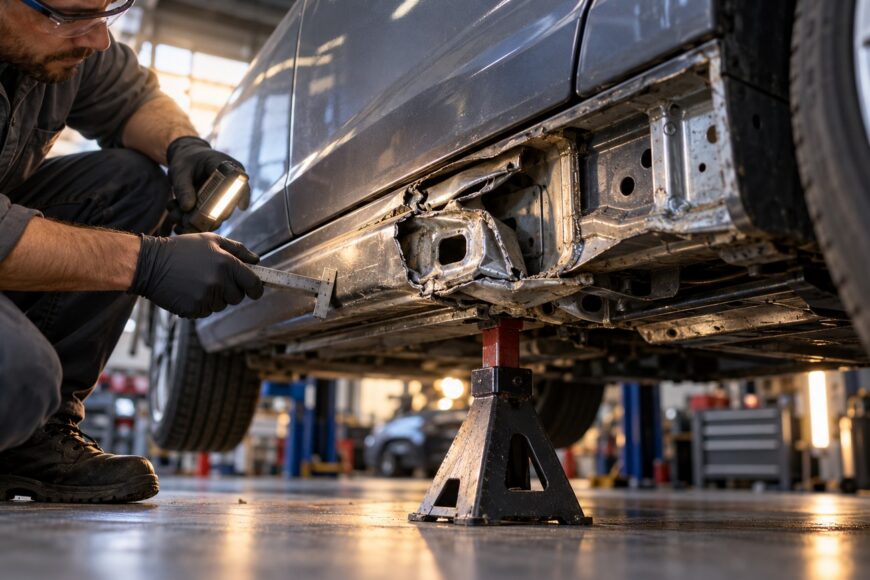
Raise a unibody car on a damaged sill, and the jack may push the jacking point farther inward even when the outside still looks acceptable.
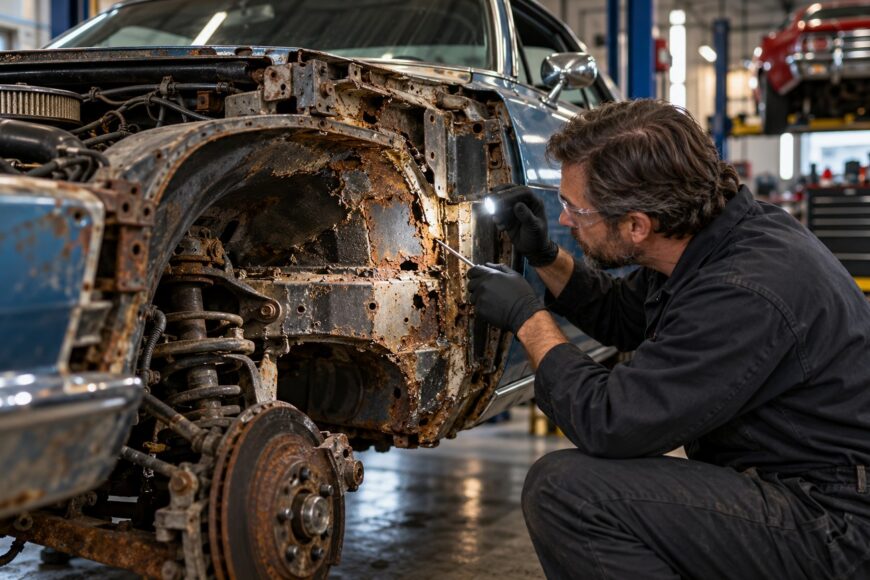
A small rusty edge at the inner fender can conceal perforation, double metal, and damaged reinforcements behind the wheel liner. The visible brown line
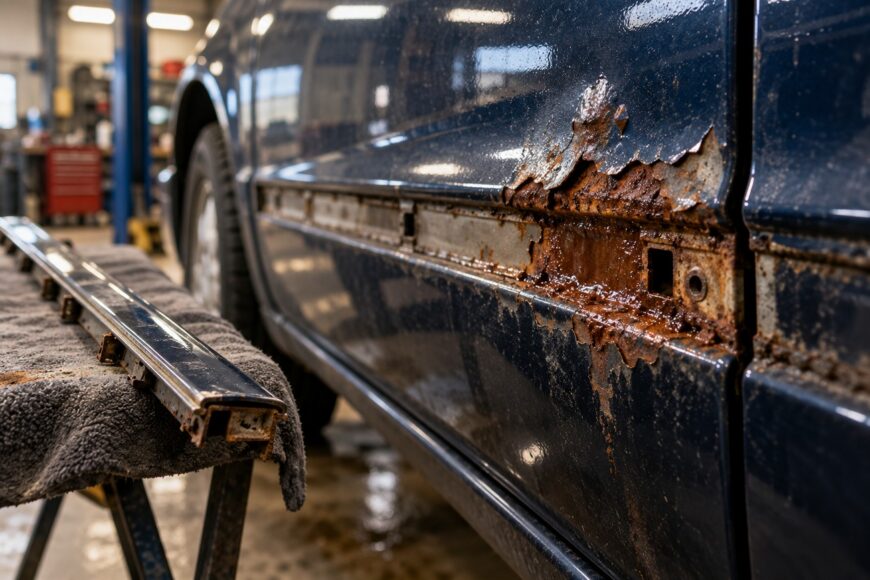
A small paint bubble beside a trim piece can look like a simple touch-up job. Lift the molding, though, and you may find wet dirt and corrosion extending
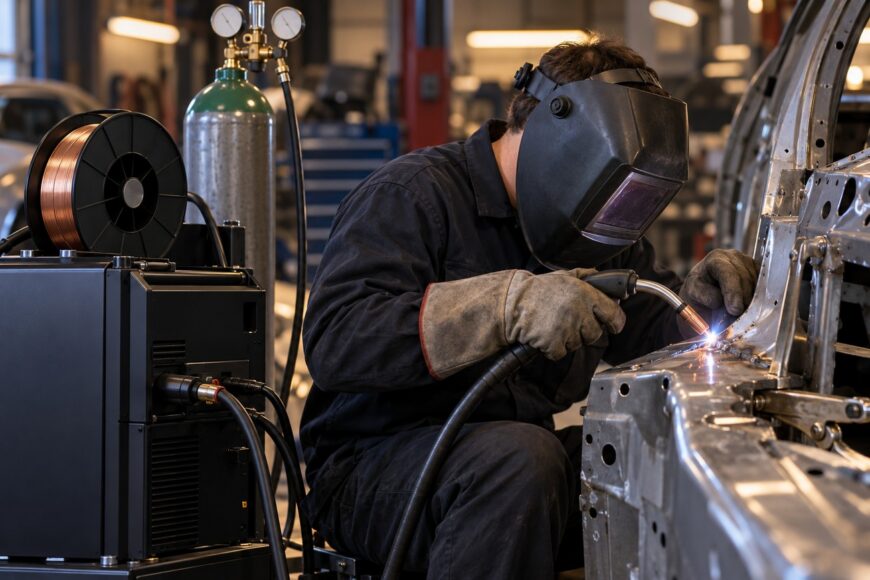
Thin automotive sheet metal can burn through before a beginner sees the puddle collapse, especially where rust has already reduced the edge to less than