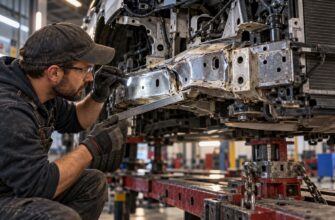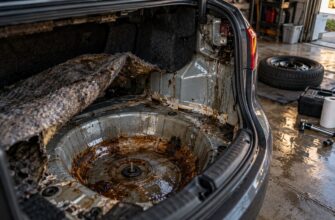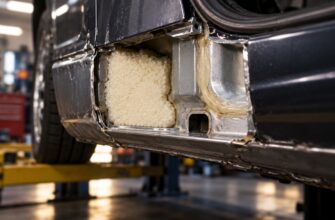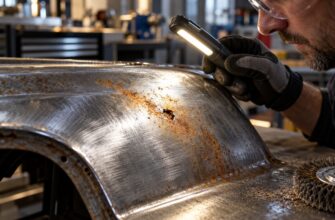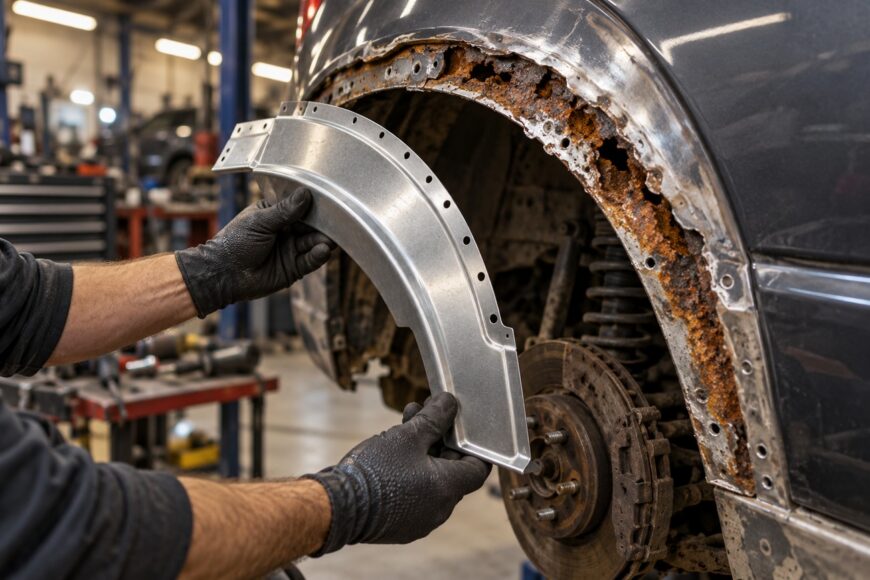
A freshly painted wheel arch lip can look sound in autumn, then show rust again after winter. The failure often starts behind the finish: the folded edge and adjoining flange at the wheel opening collect water, dirt, and salt. Rust visible at the edge may be only the part you can see; damage can extend behind the wheel-arch liner.
The decision is whether the metal remains firm enough to clean and protect, or whether the lip needs rebuilding. Paint, filler, and undercoating cannot restore steel that has flaked away. Checking both the visible and hidden faces before choosing a repair can spare you a neat-looking job that fails during the first wet season.
- Find out how far the rust really goes
- Choose surface treatment, a patch, or a replacement section
- Prepare the arch and expose sound metal
- Rebuild the lip without distorting the arch
- Seal, paint, and protect both sides
- Check the repair for the failures that bring rust back
- Frequently asked questions
- How much does wheel arch lip rust repair cost?
- How long will my car be off the road for this repair?
- How do I repair badly rusted wheel arches?
- How do I remove rust from wheel arches?
Find out how far the rust really goes
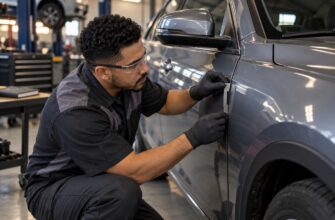
Remove the wheel-arch liner, mud flap, or other trim that blocks the affected edge, as needed. Clean out packed grit and let the area dry before judging it. Dirt trapped against the folded lip can hide a hole, while moisture makes it harder to tell where staining ends and active corrosion begins.
Inspect the outer edge, its inner face, and the adjoining flange. Pay particular attention to liner fastener holes, seams, and the metal just beyond each visible rust spot. Intact-looking paint is no guarantee: corrosion can spread beneath a coating while the surface still appears smooth.
Carefully scrape suspect areas and probe for flaking, layered metal, soft spots, or perforation. A gentle tap can help locate a weak section, but avoid forcing a tool through sound-looking metal simply to test it. The useful finding is where firm steel starts, including around the planned repair, rather than how wide the stain looks from outside.
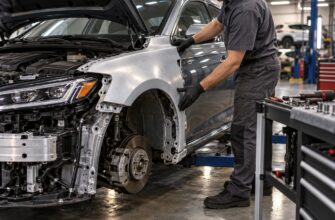
Disassembly may reveal corrosion along much more of the flange than the first few bubbles suggested. It can also expose rust where the liner sits or behind the wheel. Set the repair scope only after seeing those areas; an exterior photo estimate cannot reliably establish how much metal must be removed.
Choose surface treatment, a patch, or a replacement section
Cleaning and recoating without welding is appropriate only when corrosion is superficial and the metal remains firm. Remove loose rust, prepare the surface, and protect it with a compatible coating system. If the edge is perforated, flakes apart, or has lost its shape, surface treatment cannot replace the missing steel.
A weakened lip calls for cutting back to sound metal and fitting a shaped metal repair piece or replacement section. The choice depends on the extent of damage in the flange and surrounding panel, as well as access to the inner face. A long run of thin steel may make one properly fitted section more sensible than several small patches.
Rust converter may have a limited role on residual corrosion if its directions and the coating system permit it. It cannot make loose or weakened metal sound, and it is not a permanent cure beneath a coating. Fiberglass and body filler cannot reliably rebuild a badly eaten edge either; filler belongs in finishing over a sound repair.
If you are assessing the job yourself, separate cleaning you can verify from metalwork you cannot. Firmness, perforation, and the condition behind the liner are useful decision points. Cutting, welding, and refinishing a visible panel require control of both fit and corrosion protection, and may be better handled by a qualified body shop.
Prepare the arch and expose sound metal
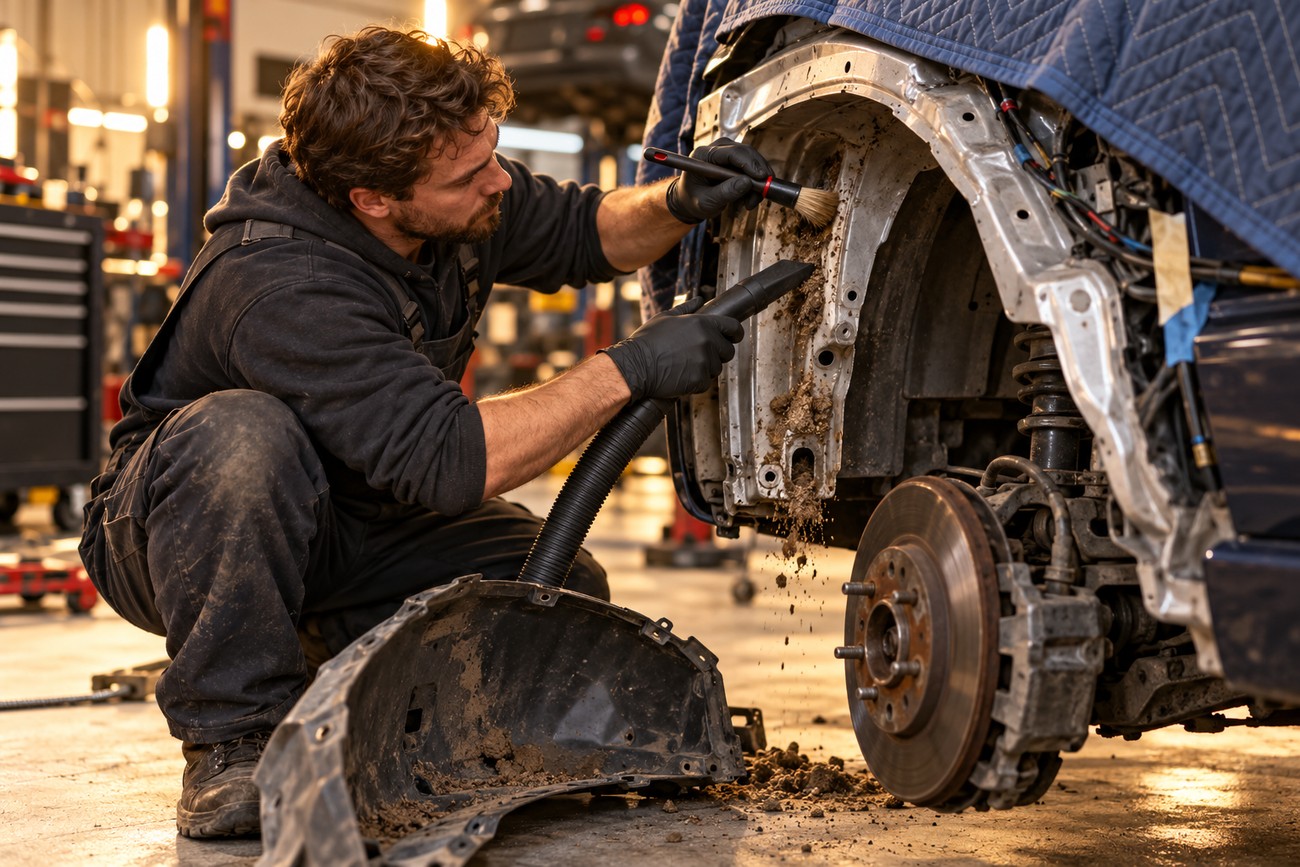
Make enough room to see and reach the entire affected area. Removing the liner may be sufficient, though adjoining trim or parts can obstruct a longer repair. Protect nearby paint, wiring, and trim from cutting and welding work, and check what lies behind the panel before any metal is removed.
Clear the packed dirt from the fold and cavity, then dry the area thoroughly. Check that existing drains remain open. Sealing over damp debris may produce a tidy exterior while leaving the conditions that started the corrosion untouched.
Mark the full extent of flaking or weak metal, including suspect material beside the visible damage. The proposed cut must reach sound surrounding steel that can support a fitted repair piece. If that boundary keeps moving as the area is cleaned, reassess the patch size rather than attaching new metal to a thin margin.
Access to the back of the lip matters before work begins, not only when the final coating is applied. You need a way to inspect the joint and protect the inner face after metalwork. If the cavity cannot be reached adequately, further disassembly or a different repair approach may be necessary.
Rebuild the lip without distorting the arch
For a perforated lip, remove unsound metal back to firm steel, then shape and trial-fit the repair piece to recreate the folded edge. The new metal needs to follow the wheel opening without leaving gaps or an uneven flange. Check the surrounding panel at this stage; steel that is already thin beside the cut can become the next failure point.
Attachment calls for careful control of heat on thin body steel. Excessive heat can warp the arch or burn through it, leaving a crooked line that filler cannot sensibly correct. A long weld seam is no advantage if it joins a repair piece to weak metal or distorts the panel.
Trial-fit the liner against the rebuilt lip before final finishing. A smooth-looking metal joint can still leave an edge that holds debris or stops the liner from seating properly.
After attachment, check the curve from several angles and confirm that fastener locations and the liner fit still make sense. Correcting the shape while the metal is exposed is easier than discovering a fit problem after paint. Where access is poor or the remaining steel is uncertain, a qualified body shop can assess whether a larger section is needed.
Seal, paint, and protect both sides
Prepare the repaired metal for primer and refinishing as a complete coating system, following the products’ instructions. Seal joints where moisture could enter, then refinish the visible arch. Exterior paint alone cannot protect a lip exposed to water from behind, however carefully it is applied.
Each protective material has a different job. Seam sealer closes prepared joints; exterior chip protection helps shield the area struck by wheel-thrown grit; cavity wax treats accessible inner surfaces after metalwork and coating work are complete. Apply them where they belong rather than using a thick layer of one product to conceal an unclean seam.
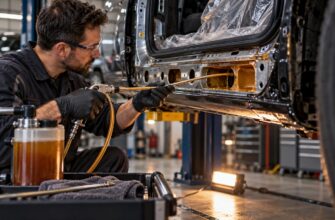
Reach the back of the repair, including the adjoining flange, and keep drainage paths open. Some arch cavities are difficult to access without further trim removal or suitable application equipment. If protection cannot reach the inner face, that limitation belongs in the repair decision rather than being hidden beneath fresh exterior paint.
The lip remains an abrasive environment after repair. Grit from the tire can wear at the finish, especially where wheel or tire changes expose more of the edge. Restoring the original chip protection and keeping the liner correctly fitted reduce that exposure, though neither compensates for rust left beneath the coatings.
Check the repair for the failures that bring rust back
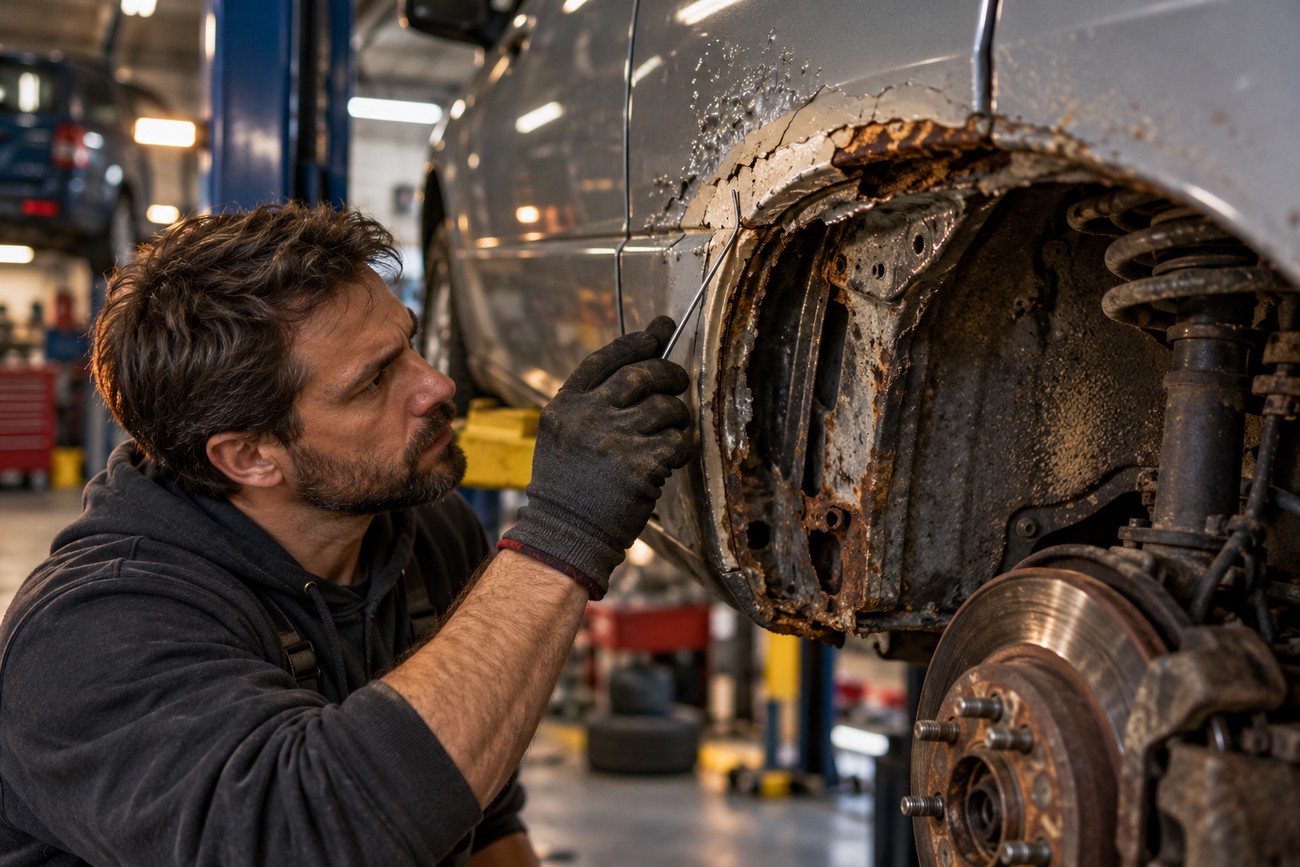
Cracked filler along an arch can indicate movement or corrosion beneath a cosmetic finish. Bubbling under paint or undercoating may point to moisture at an unprotected seam. Rather than adding another layer over the symptom, inspect the metal and the hidden face to find where the coating has lost its foundation.
Rust beside a sound patch is another warning. The repair piece may remain intact while steel left at its edges, already thinned by corrosion, begins to fail. A good inspection looks beyond the join for firm metal and checks that no suspect area has been buried under sealer.
Before refitting everything, check that the lip has an even curve, the liner seats without forcing it, and its fasteners do not open gaps that collect grit. Confirm that drains are clear and the accessible inner surfaces are protected. Smooth paint is only one part of a finished repair.
Keep the arch clean enough to notice new chips or trapped debris during later checks, particularly after periods of wet or salted-road use. No repair can promise that rust will never return. Removing weak metal, protecting both faces, and maintaining drainage give the repaired edge a better chance than cosmetic covering alone.
Frequently asked questions
The answers below cover planning and inspection decisions that are easy to overlook when the rust first appears small. Requirements affecting vehicle safety or inspection can vary by location, so seek local guidance if damage extends beyond the outer lip.
How much does wheel arch lip rust repair cost?
There is no reliable fixed figure. Ask for an estimate that separates inspection and disassembly, removal and replacement of damaged metal, access to the inner face, sealing, and refinishing. A quote based only on exterior photos may change when the liner comes off and a longer weakened flange is exposed.
How long will my car be off the road for this repair?
Turnaround depends on what appears after stripping, how readily a repair piece can be fitted, and the coating and paint stages. Ask the repairer when the metalwork scope can be confirmed and whether further hidden damage would change the schedule. A freshly painted exterior is not a reason to rush protection of the inner face.
How do I repair badly rusted wheel arches?
Badly rusted arches need an assessment of how far sound metal extends beyond the visible damage. If the lip or flange is perforated, the repair generally involves removing weakened steel and fitting a metal repair piece or replacement section, followed by protection on both sides. Extensive damage or uncertain access warrants a body-shop assessment; local inspection rules may also matter.
How do I remove rust from wheel arches?
First remove or move the liner enough to clean, dry, and inspect both faces of the affected lip. Superficial rust on firm metal can be removed and the area recoated with a suitable system. If cleaning exposes holes or a soft edge, stop treating it as a surface-rust job: lost metal needs a sound metal repair before sealing and paint.