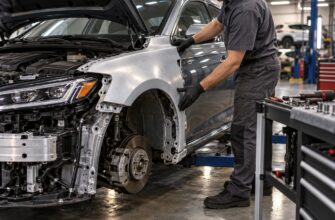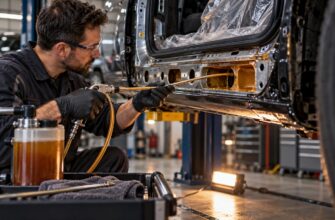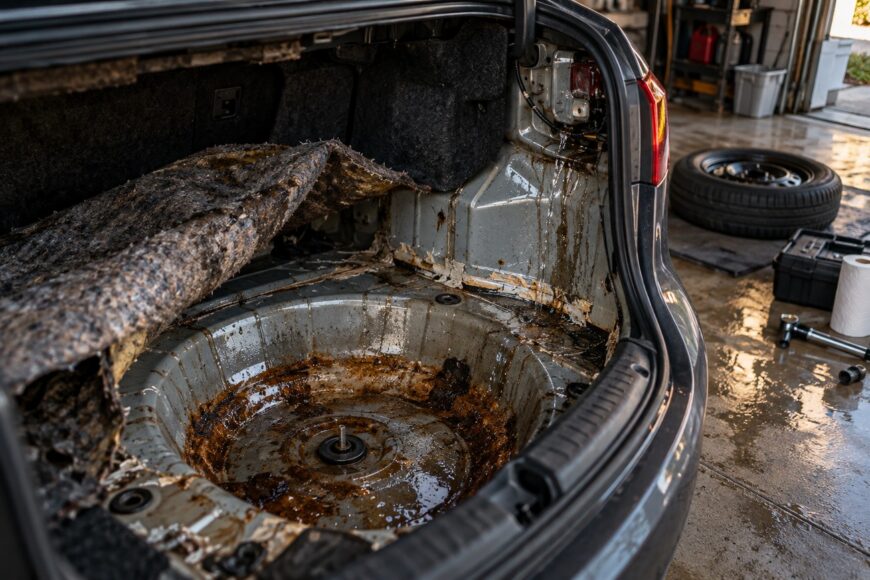
A trunk can look clean until you lift the spare tire and find water or rust in the well. Carpet and insulation can conceal damage long after the visible surfaces have dried.
The repair depends on the metal underneath: firm sheet metal may be cleaned and protected, while weakened metal needs replacement. Either job can fail if water is still getting in. Find the leak and expose the full rusted area before choosing a repair.
- Find the water before you remove the rust
- Decide whether the metal can be saved
- Repair the floor, then protect the seams
- Test the leak before putting the trunk back together
- Frequently asked questions
- How can I get a reliable quote for spare-wheel well rust repair?
- What is the cheapest way to fix rusted rocker panels?
- How much does it cost to repair rusted wheel wells?
Find the water before you remove the rust
Take out the carpet, organizer, spare tire, and damp insulation. Inspect the bottom of the well, its edges, and the surrounding trunk floor. Lift loose coatings and suspect old seam sealer far enough to see where staining ends; corrosion may extend beyond the spot first visible under the tire.
Taillights, seals, drains, seams, and previous body repairs can admit water into the trunk and spare-wheel well. Follow damp marks upward from the lowest point rather than assuming the puddle identifies the entry point. A leaking taillight, for example, may leave water at the bottom without an obvious wet patch beside the lamp.
Check for trapped moisture after rain or washing, and keep the trim out while tracing it. Drying the well and painting the stain may improve its appearance, but corrosion is likely to return if the leak remains. Fix the water path before treating the metal as a finished repair.
Decide whether the metal can be saved
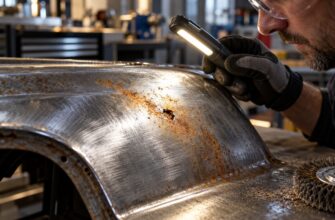
Remove failed coating around the affected area so you can judge the exposed metal, including seam edges and spot-weld areas. If it remains firm and has no significant loss of thickness, local rust removal and recoating may be appropriate. A small mark on the paint does not establish how much metal is sound underneath.
Tap and probe cautiously to find soft areas or metal that gives way, without treating either check as a definitive structural test. Loose rust, blistered paint, and a thin, papery feel are reasons to expose more of the panel. Heavy grinding can turn an already thin floor into a hole before you understand the boundary of the damage.
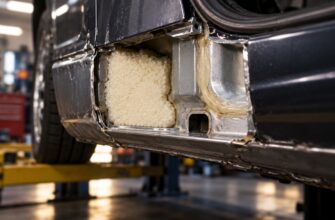
Old seam sealer can hide corrosion running along an overlap or spot-weld line. Lifting it at the edge of a small rust spot may change the job from local recoating to metal replacement.
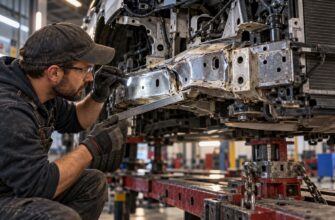
Perforation, severe thinning, or failing seams require damaged metal to be cut out and sound metal welded in. Filler cannot restore lost strength. If the damage approaches a structural attachment or you cannot establish where sound metal begins, have a body-repair professional assess it before covering it.
Repair the floor, then protect the seams
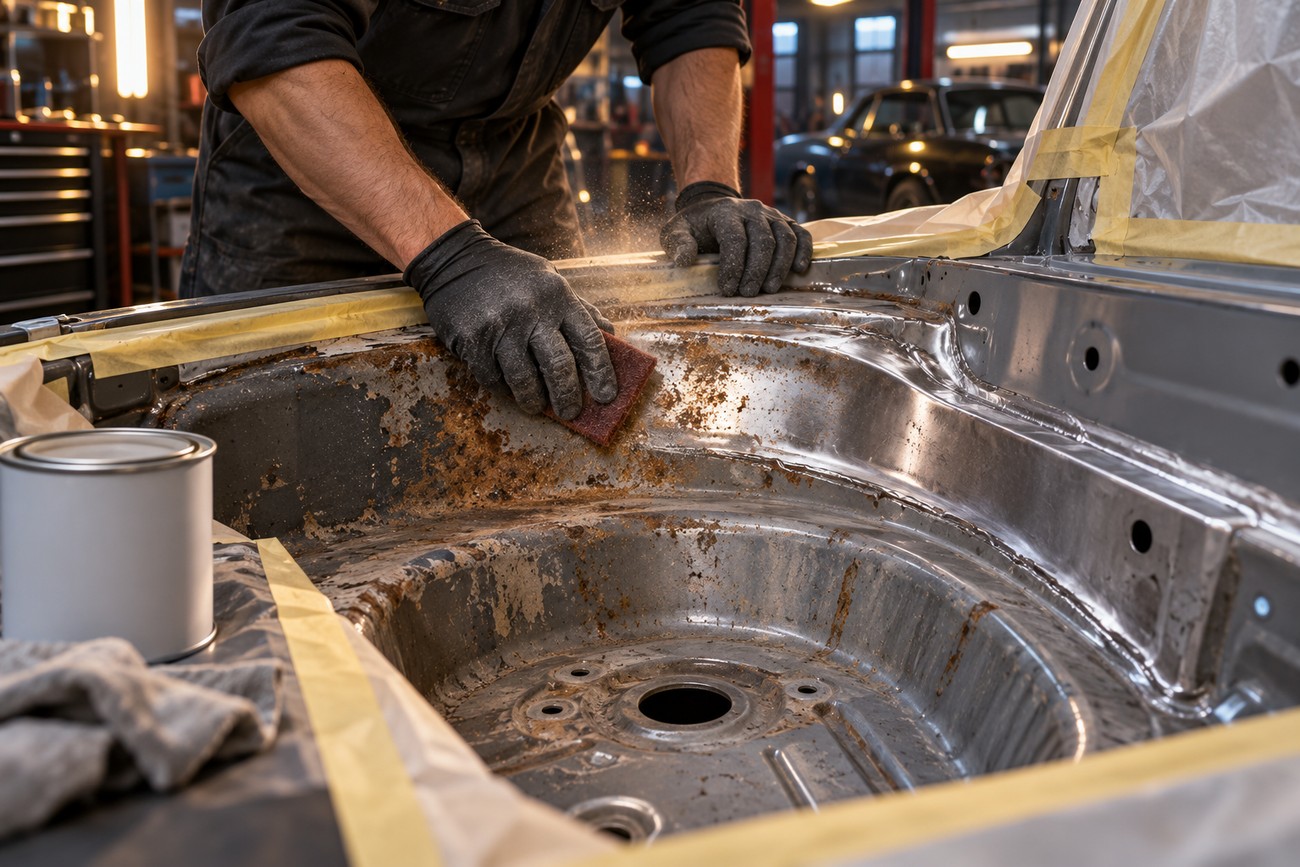
For firm metal with surface rust, remove loose corrosion and failed coating without thinning the panel unnecessarily. On a small patch, P120 may be a starting abrasive; follow with a finer finish suitable for the primer. Clean away dust, decrease the exposed area, and prime it according to the coating system being used.
Restore paint and the appropriate protective coating only after the surface is prepared. Cover the full exposed area, including edges that were uncovered during inspection. Coating over rust left beneath old sealer can trap the same problem under a fresh-looking finish.
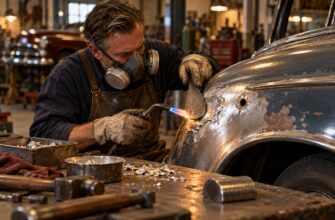
Where the metal is perforated or severely thinned, the repair calls for cutting out the damage and welding in sound metal. That work needs access to the full affected area and protection of the repaired surfaces afterward. Filler or mastic over a hole is a cover, not a metal repair.
Renew seam sealing on repaired overlap joints over properly prepared metal to help prevent water from entering between the panels. Sealant and mastic protect prepared metal; neither stops active corrosion or restores lost strength. Follow the coating and sealer instructions for application order rather than assuming every product can go directly onto bare steel.
Test the leak before putting the trunk back together
Leave the trunk trim out for a controlled water test after the repair. Apply water to one suspected entry area at a time while someone checks the exposed interior for fresh moisture. Inspect both the original leak path and the repaired well; a dry patch at the bottom alone does not prove the entry point is sealed.
Allow the well, carpet, and insulation to dry fully before refitting them. Damp padding can hold water against the floor even after the visible metal feels dry. Check the underside of removable pieces, particularly where they sit in the deepest part of the well.
Scope affects the time needed. Some uncomplicated local repairs may take about one day; more extensive repairs involving welding and refinishing can take two to four days. Those are examples, not promises: the extent of hidden corrosion and the time needed to stop the leak determine the work.
Frequently asked questions
Costs depend on what becomes visible once the trim and failed coatings are removed. These related repairs also involve different panels and access requirements, so an estimate should describe the work it covers.
How can I get a reliable quote for spare-wheel well rust repair?
Arrange an inspection with the trunk trim removed where possible. A price based only on photos is provisional because coatings and seam sealer can hide the edge of the damage. Ask for an estimate that separates leak diagnosis, trim removal, metal repair, refinishing, and leak testing, plus a plan for reporting hidden corrosion before extra work begins.
What is the cheapest way to fix rusted rocker panels?
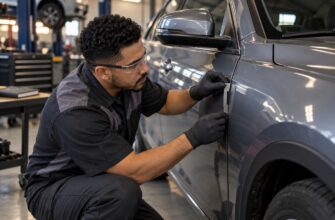
If the rocker metal is firm and the rust is superficial, cleaning and recoating the exposed area is generally less involved than replacing metal. Perforation, severe thinning, or failing seams require a cut-out and welded repair; filler over a weakened rocker is not an equivalent low-cost fix. Have the inner and outer areas inspected before comparing estimates.
How much does it cost to repair rusted wheel wells?
There is no dependable single figure without inspecting the wheel well. The estimate depends on whether corrosion is limited to a cleanable surface, has reached a seam or panel edge, or requires welded metal and refinishing. Ask the shop to identify the affected panels and explain which protective coatings will be restored after repair.