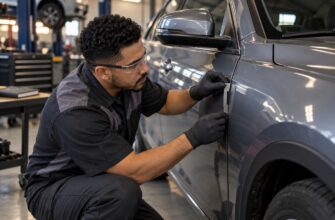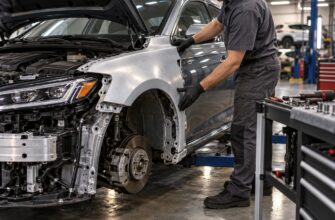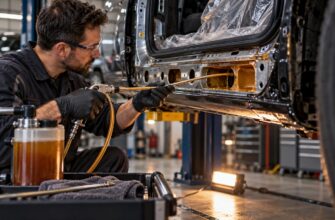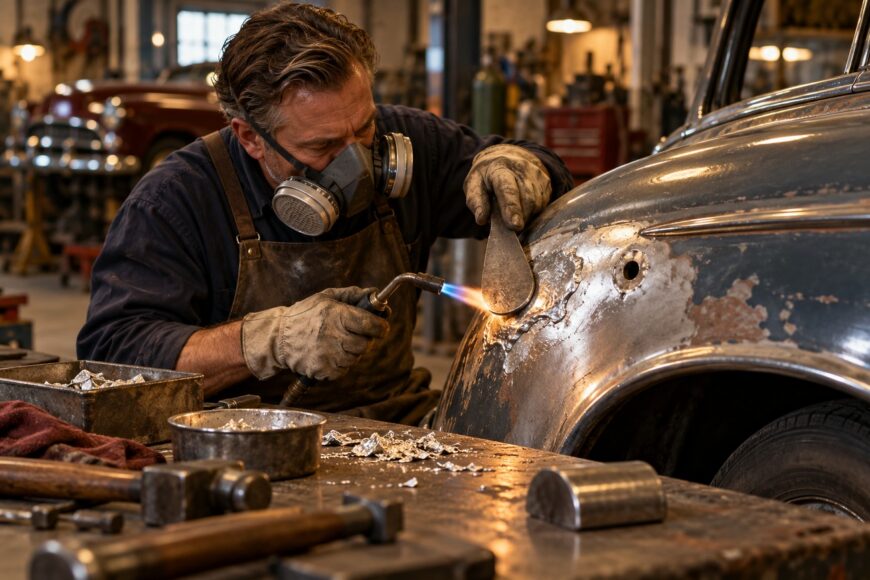
A smooth, period-correct classic body has a particular appeal: its surfaces follow the original design, its repairs remain visually quiet, and its construction reflects the methods available when the car was built or customized. Lead loading can support that result by filling and reshaping prepared steel with a molten lead-tin material. It is a traditional craft, however, rather than a shortcut to a straight panel.
Classic automotive lead loading means lead-tin filling and surfacing, not ordinary pure tin solder. The method can produce a durable localized repair, yet it is slow, skill-dependent, toxic, and usually less convenient than modern polymer filler. Its value today depends on the repair, the project’s historical goals, the available skill, and whether the workshop can control heat, dust, fumes, and waste responsibly.
- What Lead Loading Means in Classic Car Bodywork
- From Lead Sled Customs to Traditional Restoration
- How the Technique Works: Preparation, Heat and Shaping
- Where Lead Loading Still Makes Sense—and Where It Does Not
- Common Failures, Safety Problems and Hidden Costs
- A Practical Choice: Traditional Craft or Modern Repair?
- Frequently asked questions
- What is the $3,000 rule for classic car repairs?
- What type of welder is best for classic car bodywork?
- How many hours does it take to fully restore a classic car?
What Lead Loading Means in Classic Car Bodywork
Lead loading uses molten lead-tin filler to level, fill, and reshape prepared steel. It is associated with traditional body repairs where a metal surface has been altered and needs a stable, workable transition before final finishing. The filler is applied to clean metal, then formed and refined until the repaired area follows the intended contour.
Early custom work commonly used the material to close holes and depressions left after removing trim, handles, emblems, seams, or other body elements. It could also smooth the edges of fabricated patches and changes to a panel. The material helped bridge small surface irregularities, while the underlying steel still had to be sound and properly shaped.
The term can cause confusion because some descriptions call the process “tin soldering.” In classic automotive bodywork, lead loading refers to lead-tin filling and surfacing rather than pure tin solder. It also does not replace welding where panels must be structurally joined, or careful metal shaping where the panel itself is badly distorted.
Preparation determines whether the filler has a reliable foundation. Rust, paint, old filler, oil, and other contamination prevent proper bonding and can remain hidden until the surface is filed or refinished. Lead loading is therefore a finishing and reshaping technique built on clean metalwork, rather than a way to conceal poor preparation.
From Lead Sled Customs to Traditional Restoration
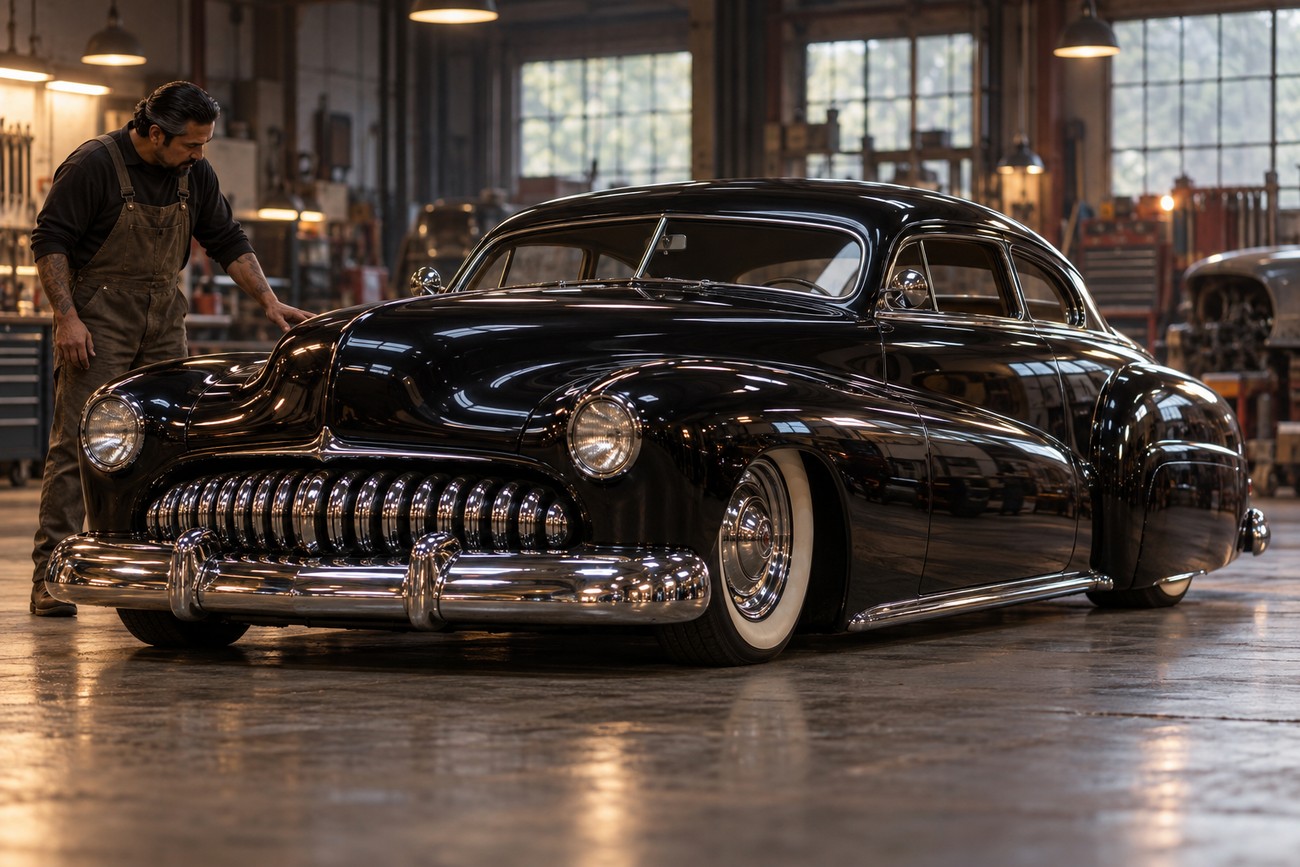
The lead sled style formed in the United States in the late 1940s, during a period when customizes were transforming production cars into smoother, lower, more unified designs. The 1949–1950 Mercury Eight is commonly cited as an early representative example. Its broad panels and strong visual presence made it a natural canvas for extensive custom-body work.
Lead sled describes a broader custom-car style, not a single filler operation. Lowering, shaving trim and handles, channeling the body over the frame, reshaping openings, and smoothing seams could all contribute to the look. Lead loading supplied one practical way to finish some of those alterations after metal had been cut, patched, or stripped of unwanted fittings.
Its historical importance also reflects the materials available at the time. Modern polymer body fillers were not yet widely available, so molten lead-tin filler was a useful method for building a surface over correctly prepared metal. That history explains the technique’s prominence; it does not establish lead as the best contemporary material for every repair.
Today, the style retains genuine historical and aesthetic value, especially in a period-correct custom or restoration. The choice becomes weaker when the only objective is to complete a routine repair quickly. A car may look like a lead sled while receiving selective modern repairs where those materials offer better control and lower workshop risk.
How the Technique Works: Preparation, Heat and Shaping
The work begins by exposing sound bare metal and preparing the area thoroughly. The correct flux and lead-tin filler are applied according to the material and method being used, while the panel is heated carefully enough for the filler to wet and adhere. Rust, paint, and old filler have no place beneath the working layer.
Heat must move evenly across the repair. Excessive heat can distort a body panel, creating a second problem that may require more metal correction. Insufficient heat can prevent proper adhesion, leaving weak areas that later show as lifting, pits, or loose edges.
Keep the heat moving and shape the filler while it is workable. Aggressive reheating and reliance on grinding later can turn a controllable repair into panel distortion, pores, and unnecessary rework.
The soft material is shaped before it becomes rigid, using suitable hand tools and controlled pressure to establish the profile. It is not simply spread onto the panel and corrected entirely after hardening. Filing and sanding then refine the surface, remove high spots, and reveal defects that need attention before primer or paint.
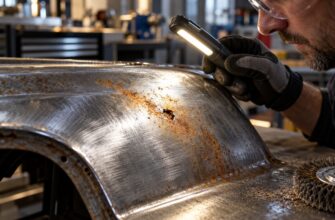
Cleanup is part of the process rather than an afterthought. Flux residue, oxides, filing debris, and dust must be removed before subsequent finishing. A surface that feels smooth under a hand can still contain pores or pits, so inspection under suitable lighting remains important before the repair is sealed.
Where Lead Loading Still Makes Sense—and Where It Does Not
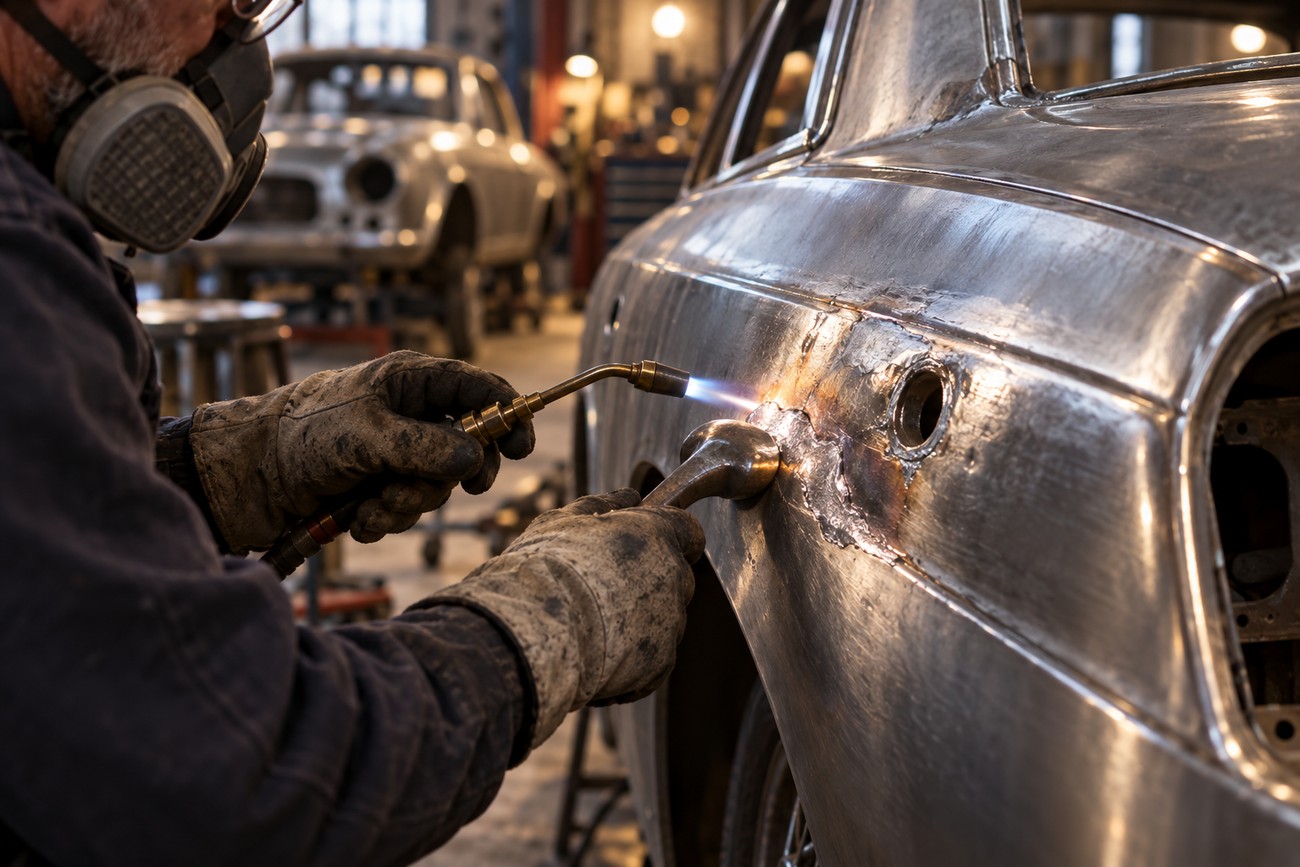
Lead loading can still make sense for a localized traditional repair, a strong finished edge, or a historically faithful restoration. Some owners and shops value the way the material supports period-correct craftsmanship, particularly around filled trim holes, seams, and carefully prepared modifications. The benefit comes from the specific repair and the desired finish, not from the material’s vintage image alone.
Contemporary projects often use lead loading selectively rather than across an entire body. A restorer may choose it for a small area where edge durability and traditional appearance matter, then use other appropriate materials elsewhere. This approach limits exposure to the method’s labor, cleanup, heat demands, and safety burden.
Modern polymer fillers generally win on speed and convenience in current repair practice. They are often easier to apply consistently, easier to correct, and more suitable for a shop that needs repeatable results with controlled cleanup. For a routine non-period repair, lead loading may add time and skill requirements without improving the finished car in a meaningful way.
The practical value should be separated from the aesthetic and historical appeal. A lead-filled repair can be entirely defensible when its traditional character matters and an experienced practitioner is available. It is a poor default when the workshop lacks ventilation, the schedule is tight, or the proposed use is simply an attempt to avoid proper panel repair.
Common Failures, Safety Problems and Hidden Costs
Most failures begin before the filler is heated. Applying it over rust, paint, old filler, grease, or inadequately cleaned steel leads to poor adhesion. Excessive heat can warp the panel, while uneven or insufficient heat leaves sections that do not bond properly. The finished result may contain lumps, pores, pits, or edges that later loosen.
Forming skill matters as much as melting the material. If the filler is allowed to build up unevenly, the operator may spend excessive time filing it back, only to uncover voids and surface defects. Repeated reheating can worsen the problem, and aggressive grinding can remove the sound material needed to retain a clean edge.
The process is also dirty and time-consuming. Flux, oxides, filing debris, dust, and odor complicate workshop cleanup, while contaminated waste requires responsible handling. These tasks are easy to understate in nostalgic descriptions, yet they affect the real cost and suitability of the repair.
Lead is toxic and requires appropriate ventilation, protective equipment, hygiene, and waste handling. Food, drink, clothing, and household tools should be kept away from the work area, and dust should not be distributed through the rest of the shop. Local occupational-safety guidance should determine the specific controls required.
Industrial purity does not make the process automatically safe or suitable. Under GOST 22861-93, lead grade S0000 has total controlled impurities no higher than 1×10⁻⁴%, but that specification concerns industrial purity, not automotive bodywork suitability. Lead and lead compounds are substantially restricted in some jurisdictions through product-safety rules and RoHS-type controls, which can also complicate international sale or certification.
A Practical Choice: Traditional Craft or Modern Repair?
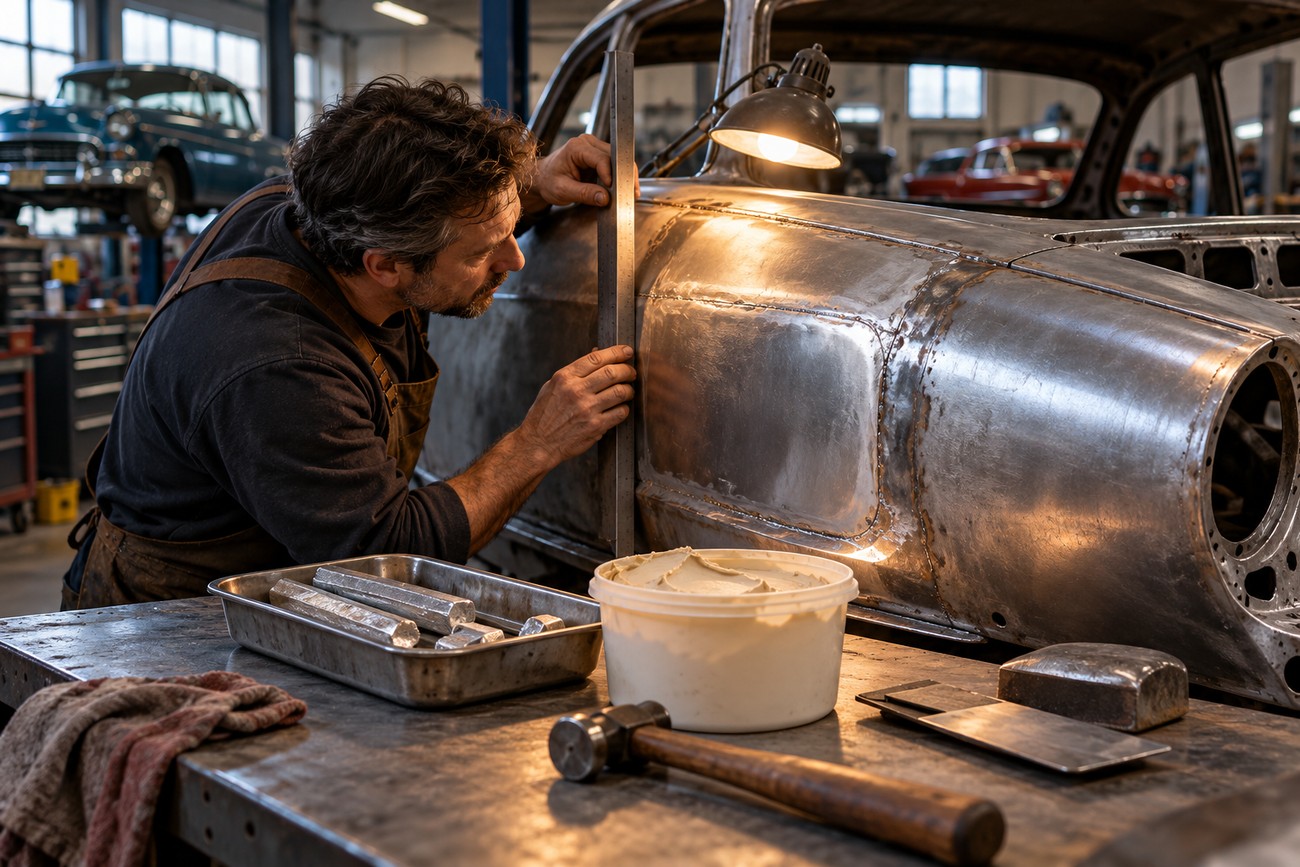
Start with the project’s purpose. A historically faithful custom, a visible traditional repair, or a localized edge that benefits from the method may justify lead loading. A routine repair where the priority is efficient, repeatable preparation will usually favor a modern polymer system.
Examine the repair location and the metal beneath it before choosing the filler. Lead loading cannot compensate for unsound steel, poor welding, or incorrect panel shape. It also requires forming skill and precise heat control, so the availability of an experienced practitioner matters more than familiarity with the basic idea.
The workshop must be assessed alongside the car. Adequate ventilation, protective equipment, hygiene procedures, waste controls, and awareness of local restrictions are part of the decision. Schedule, finish expectations, and the consequences of rework belong in the calculation as well.
Lead loading usually loses to modern polymer systems on speed and convenience. It remains defensible when its specific traditional, localized, or finish-related benefits justify the labor and hazard. Choosing it because it sounds more classic ignores the technical demands that made the original craft difficult in the first place.
Frequently asked questions
Lead loading is only one part of classic-car bodywork. The right repair method depends on the condition of the metal, the required finish, and the project’s historical aims. The following questions address budgeting, welding, and restoration timelines.
What is the $3,000 rule for classic car repairs?
The $3,000 rule is a budgeting rule of thumb, not a technical or safety standard. It cannot decide whether a repair should use lead loading, welding, or modern filler because the correct method depends on the actual condition of the steel, the location of the damage, the required finish, and the project’s historical aims.
A sound estimate should separate structural metalwork, surface preparation, finishing, cleanup, and safety requirements. Lead loading may be sensible for a small period-correct detail and uneconomical for a broad area requiring extensive correction. The figure alone cannot account for those differences.
What type of welder is best for classic car bodywork?
Welder choice is a separate metal-joining decision from lead loading. It depends on panel thickness, access, the amount of heat the area can tolerate, the required joint, and the restorer’s skill. Lead loading cannot replace sound welded metal where structural joining is required.
Before selecting equipment, establish whether the repair needs a structural joint, a patch, or only surface correction. A carefully welded and dressed repair may then receive an appropriate finishing treatment, including selective lead loading where the project justifies it.
How many hours does it take to fully restore a classic car?
There is no fixed timetable for a complete restoration. The condition of the body, the availability of parts, the amount of disassembly, the desired finish, and the skill of the shop can change the schedule substantially.
Lead loading can extend a project through metal preparation, controlled forming, surface correction, inspection, and cleanup. A localized repair may be manageable, while extensive custom-body work requires repeated checking before primer and paint. A responsible schedule should be based on inspected work rather than a universal hour estimate.