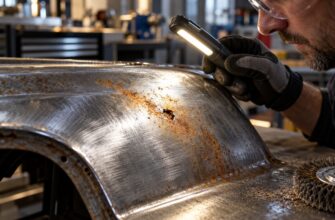
A panel can look nearly straight and still contain stretched metal. That hidden stretch often leaves a low area, a loose reflection, or a wave that returns after hammering. The shape may be close, while the sheet still lacks the tension needed to hold it.
A shrinking disc addresses that residual stretch through localized friction heating followed by cooling. It does not cut, grind away, or remove metal, and it cannot replace the mechanical work needed to restore a badly displaced panel. Its proper role is a controlled finishing step after rough hammer-and-dolly correction.
The useful target is controlled heat in short cycles, followed by cooling and inspection. Chasing a dramatic temperature, a high grinder speed, or visible color change usually makes the process harder to control and can create another distortion.
- What a shrinking disc actually does
- Choose the disc, grinder, and working speed
- A controlled shrinking-disc workflow
- How to control heat without creating another wave
- Common mistakes and why the disc seems not to work
- Limits, materials, and realistic expectations
- Frequently asked questions
- What is a shrinking disc?
- Where can I buy a shrinking disc?
- How do I know when to stop shrinking a panel?
What a shrinking disc actually does
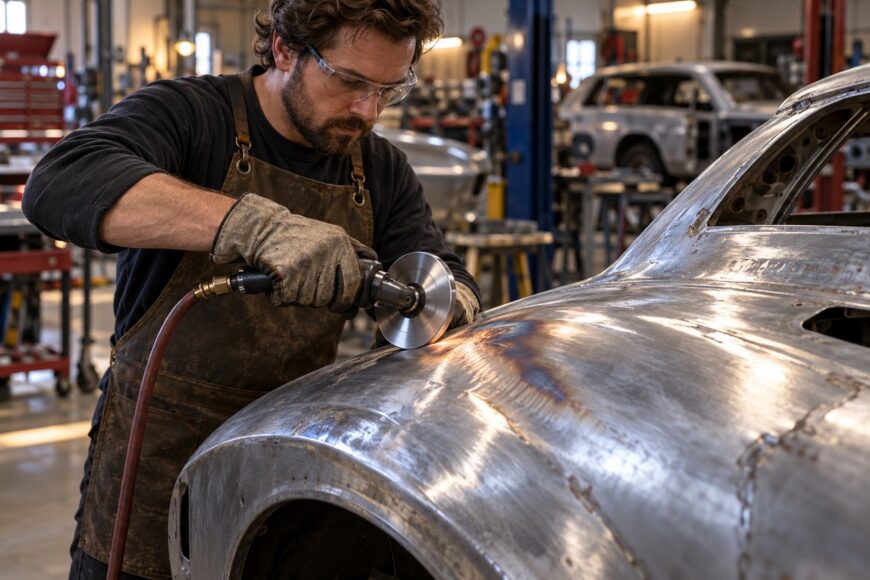
A shrinking disc creates friction at the surface of the steel. That friction produces a localized hot area, and the subsequent cooling allows the affected section to contract. Repeated selectively over stretched high spots, this action can reduce excess length in the sheet and help the panel settle into its intended shape.
The disc does not remove material by cutting or grinding. A polished contact mark may appear where the disc has passed, but that mark is a surface indication of contact and heat, not evidence that steel has been sanded away. This distinction matters because the tool changes the condition of the sheet rather than thinning it to hide a high spot.
Professionals normally use the disc after rough hammer-and-dolly correction. A deep dent, sharply displaced metal, or a panel with its main crown in the wrong position still needs mechanical reshaping with a hammer and backing tool. The disc cannot pull a major deformation back into alignment by itself.
Used at the right stage, the tool deals with the last part of the repair: stretched metal that remains after the broad geometry is close. Used too early, it may polish the surface and add heat while the underlying shape remains wrong. That is why a nearly finished panel is a better candidate than a dramatic dent.
Choose the disc, grinder, and working speed
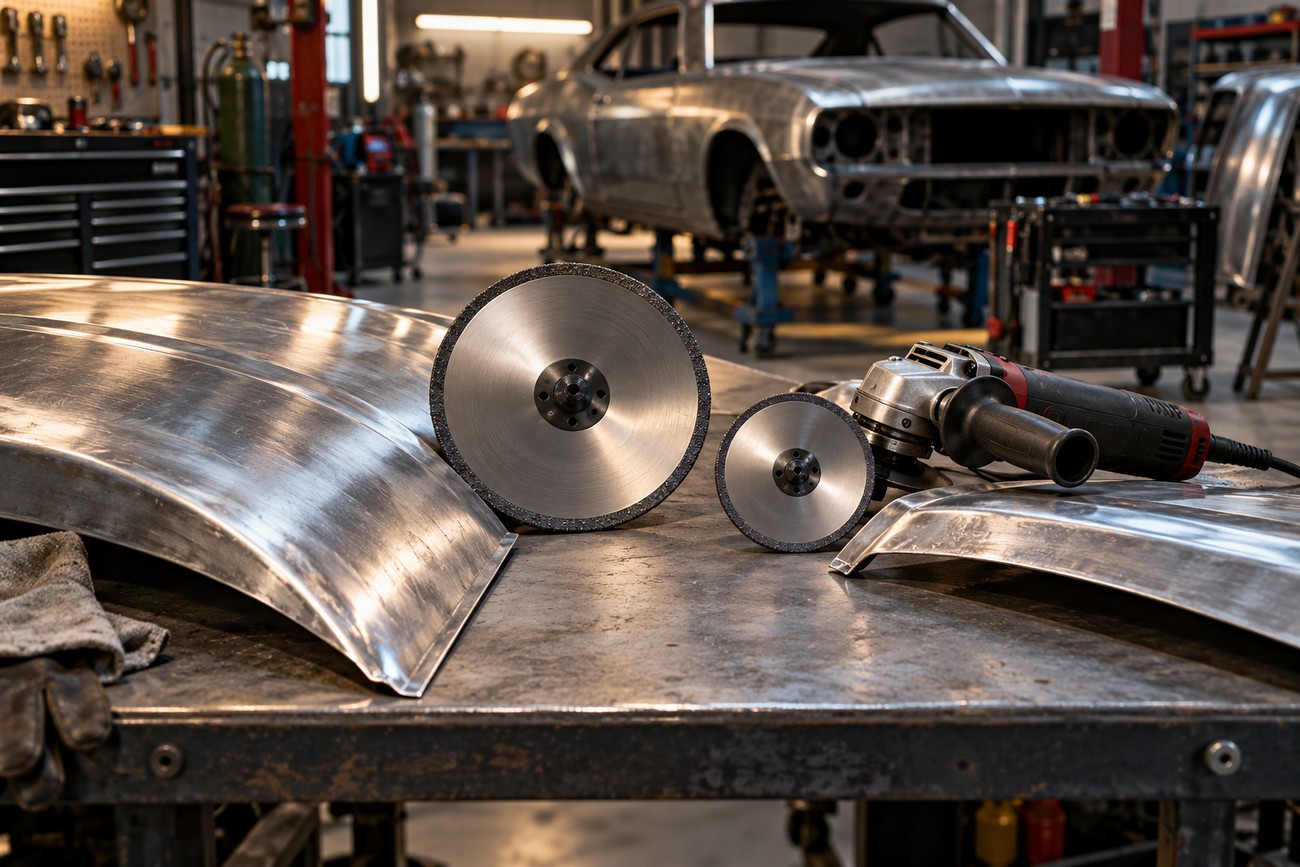
Disc size should follow the panel area and its contours. A 9-inch disc is suited to broad, open surfaces and typically uses a 7/8-inch bore on a 9-inch angle grinder. A 5-inch version is easier to control near edges, narrow sections, and tighter contours where a large disc can bridge across areas that should remain untouched.
Speed requires checking the disc instructions rather than assuming that every shrinking disc uses the same setting. Common working guidance for steel is approximately 1,500–3,000 RPM. Some commercial discs specify approximately 3,000–6,000 RPM, with up to 6,500 RPM for particular kits only.
The disc’s rated maximum speed, grinder size, bore, flange arrangement, and mounting nut must agree. An incorrect nut or unsuitable mounting hardware can prevent the disc from seating correctly and make the assembly unsafe. Fit the guard and use suitable eye and face protection; inspect the disc and grinder before starting.
Some grinders direct cooling air across the work area. That airflow can reduce the heat reaching the contact zone and make the disc seem ineffective on certain machines. Do not make unsafe modifications to defeat the grinder’s cooling system. Adjust the working method only within the equipment manufacturer’s limits and the disc’s instructions.
A controlled shrinking-disc workflow
Begin with the panel mechanically close to its intended shape. Use the hammer and backing tool to correct the main displacement, then remove loose dirt and inspect the bare surface under reflected light. The disc works most predictably when the remaining problem is localized stretch rather than a broad error in geometry.
Identify the high spots before switching on the grinder. A marker can outline the areas that need attention, while reflected light shows breaks in the panel’s lines. A file can also reveal high areas by contacting them first. Marking prevents the common mistake of treating the entire visible low area, even though the stretched metal may be concentrated around its high perimeter.
Mark the high spots and make several brief heat-and-cool passes. Trying to shrink the whole visible low area in one operation spreads heat into metal that may already be close to correct.
Bring the disc into controlled contact and make a short pass over the marked high area. A cycle of roughly 2–5 seconds, followed by cooling and inspection, gives you a chance to see how the panel responds before more heat is added. Keep the working area selective; sweeping across the whole panel makes the result harder to read.
After cooling, reassess the reflection and the surface with your hand or a file where appropriate. Repeat the process only when the remaining high spot still indicates stretched metal. Stop if the reflection is improving and the panel begins to hold its shape; continued work can turn a useful correction into a new wave.
How to control heat without creating another wave
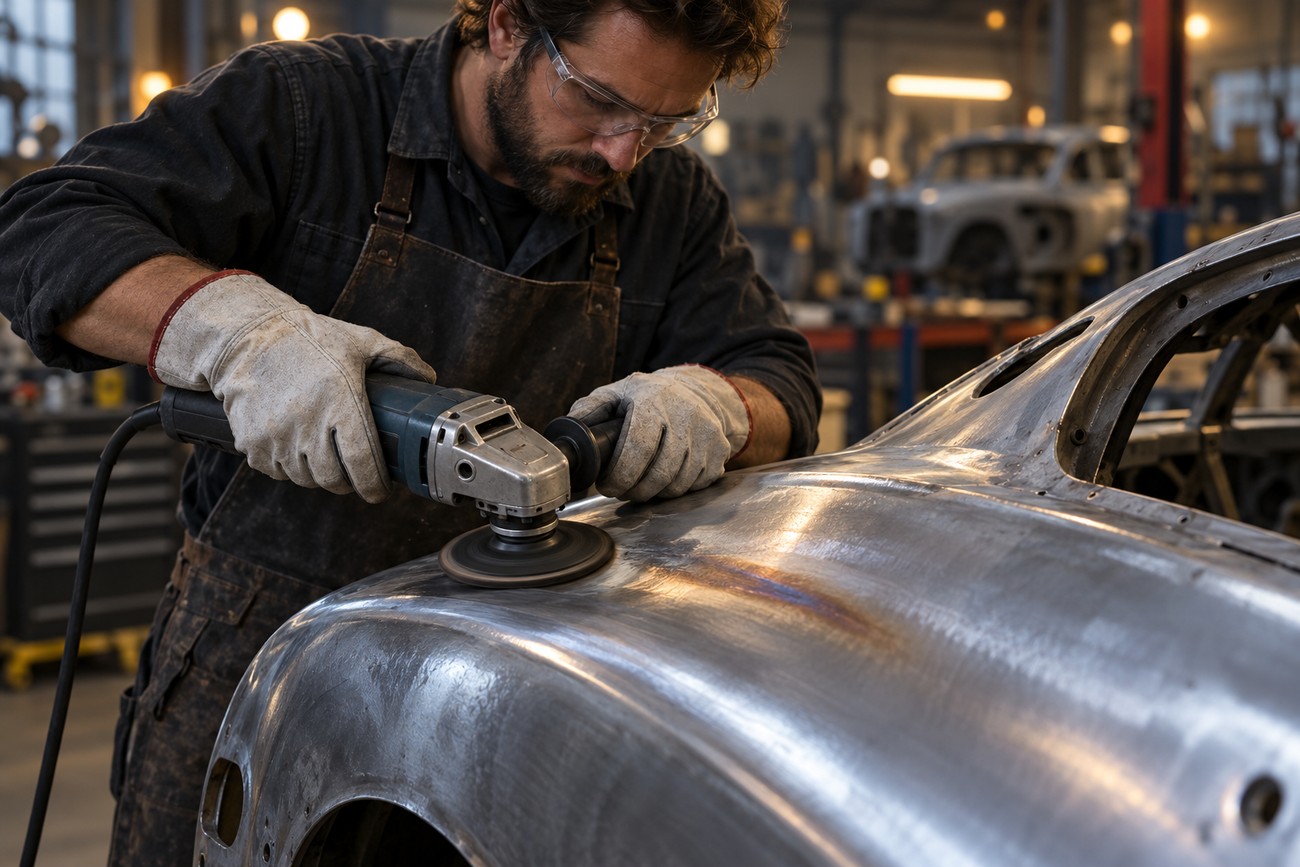
Heat depends on contact, pressure, travel speed, and the area covered by each pass. Holding the disc too far from the panel prevents sufficient friction, while moving excessively quickly may produce the same result. The disc should contact the intended area consistently, with enough movement to distribute heat rather than dwell on a single point.
Pressure should remain controlled. Heavy pressure can make the tool feel productive while concentrating heat too quickly, especially on thin steel. Long heating in one spot increases the risk of over-shrinking and renewed distortion. A brief pass followed by cooling provides better feedback than a continuous attempt to force the panel into shape.
Cooling is part of the operation, rather than cleanup after it. A cool panel gives a more reliable indication of its actual shape and limits the chance of stacking heat from one pass onto the next. Use a repeatable cooling method appropriate to the panel and finish, then inspect the reflection before deciding where to work again.
The grinder’s fan may cool the contact zone and reduce effectiveness on some machines. If the disc appears to do little, first check contact, speed, surface condition, and airflow before increasing pressure or staying longer in one place. A slower-looking process can be safer and more effective than compensating with uncontrolled heat.
Common mistakes and why the disc seems not to work
The most basic failure is using the disc on a major dent before correcting its geometry. The tool may leave a polished area while the displaced metal remains in the wrong position. Hammer-and-dolly work must establish the panel’s shape first, with the disc reserved for residual stretch that the mechanical correction has exposed.
Another failure is heating until the steel turns blue, red, or otherwise changes color visibly. Such a color change is not required for shrinking, and it may indicate unnecessary overheating. The useful result is a controlled change in the panel, confirmed after cooling, rather than a dramatic visual display during the pass.
Skipping cooling makes the operator judge a hot, temporarily altered panel. That can lead to repeated passes in the wrong place and excessive shrinkage. If a new wave begins to appear, stop adding heat, allow the panel to cool, and reassess the geometry instead of trying to chase the wave with another long pass.
A disc with a contaminated, worn, or damaged working surface may produce inconsistent contact. Regular cleaning and restoration of the working surface can help maintain predictable action, subject to the product’s instructions. Also check that the disc is mounted correctly and that the grinder is operating at a compatible speed before blaming the method.
Limits, materials, and realistic expectations
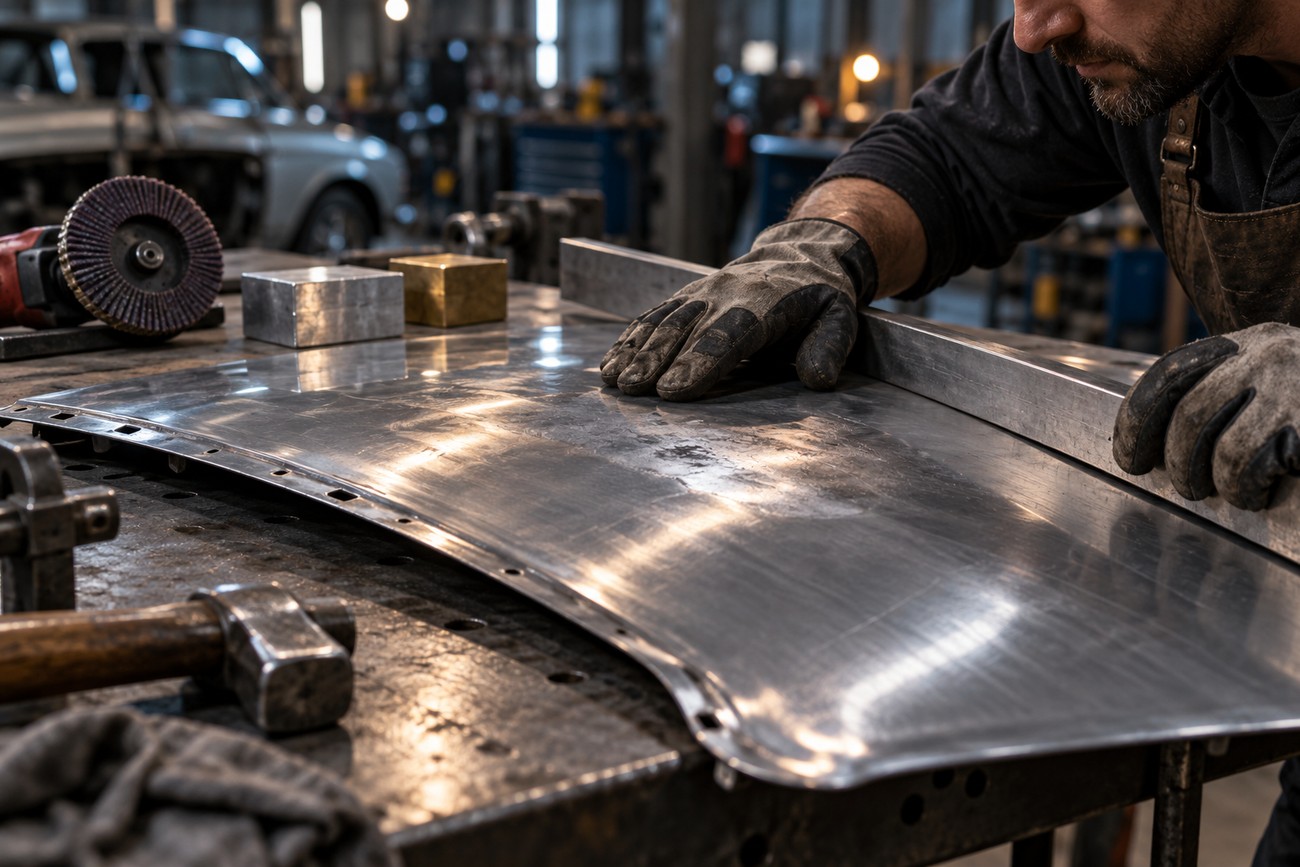
Steel panels are the best-supported application in the available practical guidance. Some sellers claim compatibility with aluminum and brass, yet that claim is product-specific and less established in practical use. Confirm the disc manufacturer’s material guidance before applying the same method to another alloy.
Thin sheet is less forgiving. It is more vulnerable to local overheating, over-shrinking, and renewed distortion, so the working area, pressure, and cycle length require closer control. Large panels can also feel slow because the process may require repeated heating, cooling, and inspection across several separate high spots.
There is no dedicated official shrinking-disc performance norm that defines a required result. Sheet-metal standards address properties and tests such as tensile strength, yield strength, deformation, and reduction of area. They do not establish a universal shrinking-disc setting or guarantee a particular repair outcome.
Marketing may suggest a fast filler-free result. A realistic expectation is narrower: the disc is a controlled finishing aid that can reduce residual stretch after sound mechanical correction. It may help produce a cleaner metal finish, but it cannot guarantee that every panel will need no filler or that every operator will obtain the same result.
Be cautious with additional process claims, including the suggestion that water mixed with soap should be used as a disc lubricant. That advice is reported by one informal source only and is not confirmed by an official standard. Follow the disc manufacturer’s instructions and avoid introducing a substance that changes contact or creates a separate safety problem.
Frequently asked questions
The answers below focus on identification, purchasing, and stopping decisions. Product instructions take priority where speed, material, mounting, or operating limits differ.
What is a shrinking disc?
A shrinking disc is a friction-heating tool for stretched sheet metal. It uses localized friction heating followed by cooling to help contract selected areas, and it does not cut, grind away, or otherwise remove metal like an abrasive disc.
The polished mark left on the panel shows where the disc contacted the surface. It does not mean that a layer of steel has been removed. The tool is normally used after hammer-and-dolly correction, when the remaining issue is residual stretch rather than a major dent.
Where can I buy a shrinking disc?
Choose a disc by checking its diameter, bore, rated RPM, grinder compatibility, mounting hardware, and intended material. A typical 9-inch setup uses a 7/8-inch bore on a 9-inch angle grinder, while a 5-inch disc is more suitable for narrow areas and tighter contours.
Do not select by diameter alone. Confirm the disc’s rated maximum speed against the grinder, and treat the approximately 1,500–3,000 RPM steel guidance separately from products specifying approximately 3,000–6,000 RPM or a particular maximum up to 6,500 RPM. If the listing claims aluminum or brass use, verify that the claim applies to that exact product.
How do I know when to stop shrinking a panel?
Stop when the cooled panel’s reflection is becoming continuous, the marked high spots have reduced, and further passes offer little improvement. Judge the surface after cooling, because a hot panel can give a misleading impression of its final shape.
Do not chase a dramatic color change or a perfectly obvious visual event. If a new wave starts to form, the remaining problem may require mechanical correction, or the panel may already have enough shrinkage. Adding more heat after the useful response has ended usually increases risk rather than improving the repair.