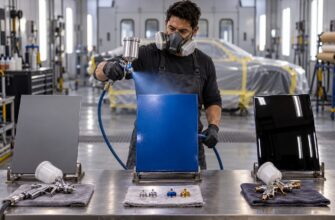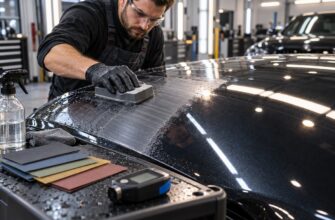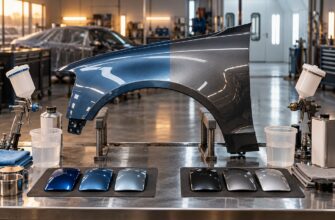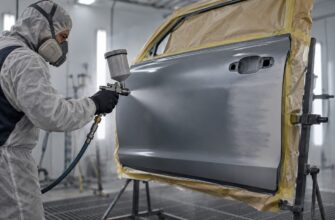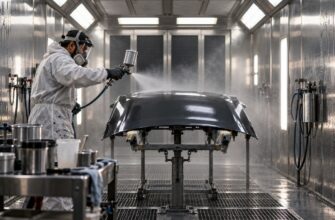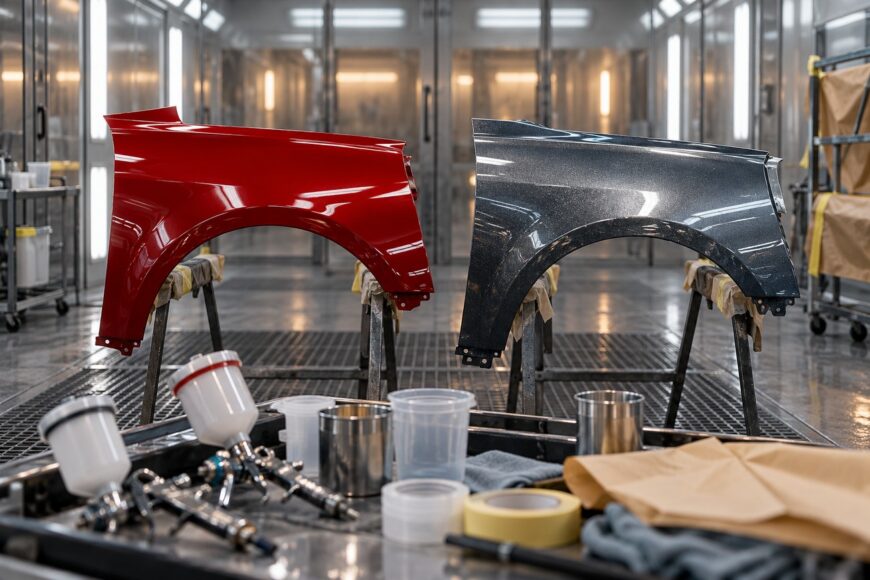
Choosing between a single-stage and a two-stage paint system is a decision about process control as much as appearance. Single-stage may reduce operations and material cost because color and protective resin are delivered in one finish coating. Two-stage can provide finer control of color, metallic effect, gloss, and surface correction through a pigmented basecoat followed by a separate clearcoat, while adding another application step and another potential failure boundary.
Layer count alone does not determine durability, chip resistance, VOC impact, or total repair cost. Resin chemistry, preparation, actual film thickness, product compatibility, temperature, and complete curing all influence the result. A carefully applied single-stage coating can outperform a poorly prepared two-stage repair, while a properly formulated clearcoat can provide protection and correction options that are difficult to reproduce with a complex single-stage color.
- What Single-Stage and Two-Stage Paint Systems Actually Are
- Single-Stage vs Two-Stage Paint: The Practical Comparison
- Which System Fits the Color, Finish, and Vehicle Use?
- Application Steps, Material Use, and the Real Cost
- Defects, Repairs, and Clearcoat Failure Modes
- Durability, UV Protection, and VOC Compliance
- Common Selection and Application Mistakes to Avoid
- Frequently asked questions
- When did automakers stop using single-stage paint on cars?
- Why is Maaco so cheap compared with some body shops?
- What are the main disadvantages of single-stage paint?
What Single-Stage and Two-Stage Paint Systems Actually Are
A single-stage system is a finish coating that combines color pigment and protective resin in one layer. Once applied and cured, that same coating provides the visible color, gloss, and the primary barrier against the environment. Solid colors are often well suited to this arrangement because the film can be leveled and polished after full curing without disturbing a separate effect layer.
A two-stage system separates those jobs. The first material is a pigmented basecoat, followed by a transparent clearcoat. The basecoat primarily supplies color and visual effect; it is not the complete protective finish. The clearcoat forms a separate gloss layer and contributes chemical and UV protection, which gives the painter more control over the final surface and over the way the color is presented.
This separation is particularly useful for metallic and pearl finishes. Metallic flakes and pearl particles must be distributed and oriented consistently, and a separate clear layer allows the color coat to remain relatively thin while the final gloss is built above it. That arrangement usually gives the painter more freedom to correct dust in the clearcoat without directly disturbing the color effect.
The construction of a coating does not guarantee its service life. A two-stage finish can fail through poor preparation, incompatible products, incorrect recoat timing, excessive thickness, or incomplete curing. A single-stage finish can also perform well when its resin, application method, substrate preparation, and curing conditions match the intended use.
Single-Stage vs Two-Stage Paint: The Practical Comparison
The table shows typical trade-offs rather than universal outcomes. Product formulas, color complexity, shop equipment, and repair quality can change the practical result.
| Factor | Single-stage | Two-stage |
|---|---|---|
| Coating structure | Color pigment and protective resin are combined in one finish coating. | A pigmented basecoat is followed by a separate transparent clearcoat. |
| Color and effect control | Usually straightforward with solid colors; complex effects are harder to control consistently. | Basecoat controls color and effect, while clearcoat establishes the final gloss and protection layer. |
| Metallic and pearl suitability | Possible with some formulas, but local correction can disturb particle orientation and reveal a patch. | Usually preferred because the separate clear layer supports more consistent effect control and later correction. |
| Application operations | Generally fewer operations and fewer intercoat decisions. | Requires separate basecoat and clearcoat application, flash control, and recoat timing. |
| Material cost | Often lower for materials, especially on simple solid-color work. | Usually involves more products and process steps, although the total repair cost depends on labor and rework. |
| Repair behavior | Practical on solid colors after full curing; color matching and metallic repairs can be difficult. | Dust and minor surface defects can often be corrected in the clearcoat, provided the basecoat remains undisturbed. |
| Polishing | Can improve a fully cured solid-color finish, but aggressive local work on metallic single-stage can change the effect. | Polishing is generally performed in the clearcoat, with separate control of clear thickness and sanding depth. |
| Failure risks | Color mismatch, effect disturbance, and limited local correction options. | Clearcoat defects, solvent entrapment, adhesion failure, or delamination at the basecoat/clearcoat interface. |
Which System Fits the Color, Finish, and Vehicle Use?
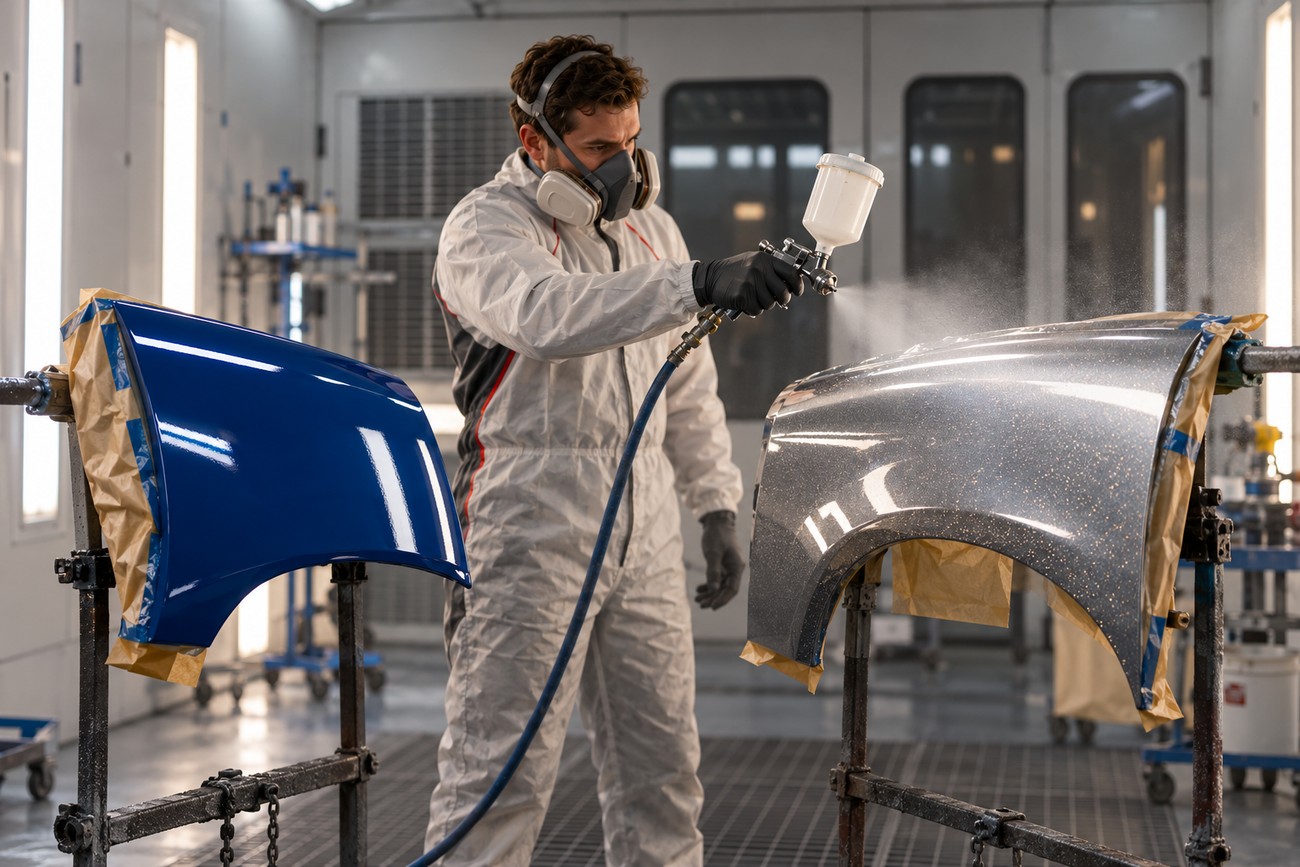
Solid colors often make single-stage the practical choice for a straightforward repair or a vehicle where simple maintenance matters more than maximum finish flexibility. After the coating has fully cured, careful sanding and polishing can remove minor texture and improve gloss. Localized touch-ups still require judgment because a new area may differ in shade or gloss from an aged surrounding panel.
Metallic and pearl colors usually favor two-stage application. The separate clear layer allows the painter to apply the color and visual effect with more consistent control, then build gloss and protection without repeatedly disturbing the particles. With metallic single-stage, sanding or polishing a defect can alter particle orientation and create a visible spot, halo, or cloud that is more conspicuous than the original dust nib.
A dust nib in metallic single-stage is a color-effect problem as soon as aggressive local correction reaches the surrounding film. In clearcoat, the same nib can often be leveled within the transparent layer, while the basecoat remains visually stable.
Vehicle use also changes the calculation. A daily driver exposed to road debris, chemicals, sun, and frequent washing may benefit from the correction options and separate protection of a well-cured two-stage system. A restoration, utility vehicle, or budget repair in a solid color may place greater value on fewer operations and straightforward polishing. Neither use case removes the need for correct preparation and compatible materials.
Some practitioners report better chip resistance from single-stage, but there is no universal independent comparison covering all single-stage and two-stage formulations. The observation may reflect differences in resin flexibility, film build, substrate preparation, and cure rather than the system name alone. Owners should treat chip resistance as a product-specific and process-specific question, rather than assuming that either architecture always wins.
Application Steps, Material Use, and the Real Cost
Single-stage generally involves fewer operations. The painter prepares the substrate, applies the color coating within the product’s film-build and flash requirements, and allows it to cure before any correction work. Fewer operations can reduce labor and material handling, and single-stage is usually less expensive in materials. Those savings are clearest on uncomplicated solid colors with good color information and limited correction.
Two-stage work adds separate decisions for the basecoat and clearcoat. The basecoat must reach the correct visual coverage and effect before the clear is applied, while the clearcoat requires its own mix ratio, spray technique, flash interval, and recoat window. Applying clear to a base that is too wet, too dry, or contaminated can trap solvent, weaken adhesion, or produce a finish that later hazes or peels.
Advertised coverage is usually a theoretical figure. Actual material use rises with transfer losses, the shape of the panel, the number of edges and recesses, the spray method, overlap, masking, and the amount needed for color coverage or effect control. A large curved panel can consume more material than a flat-area calculation suggests, and metallic colors may require additional blending or orientation passes.
Two-stage also brings extra polishing and inspection. Dust in the clearcoat may require controlled denibbing and polishing, while a defect in the basecoat may require additional base application before clear can proceed. Single-stage may appear cheaper at the start, yet complex colors, rework, difficult matching, or a failed correction can erase the initial saving. More layers do not automatically mean better value or greater durability.
Defects, Repairs, and Clearcoat Failure Modes
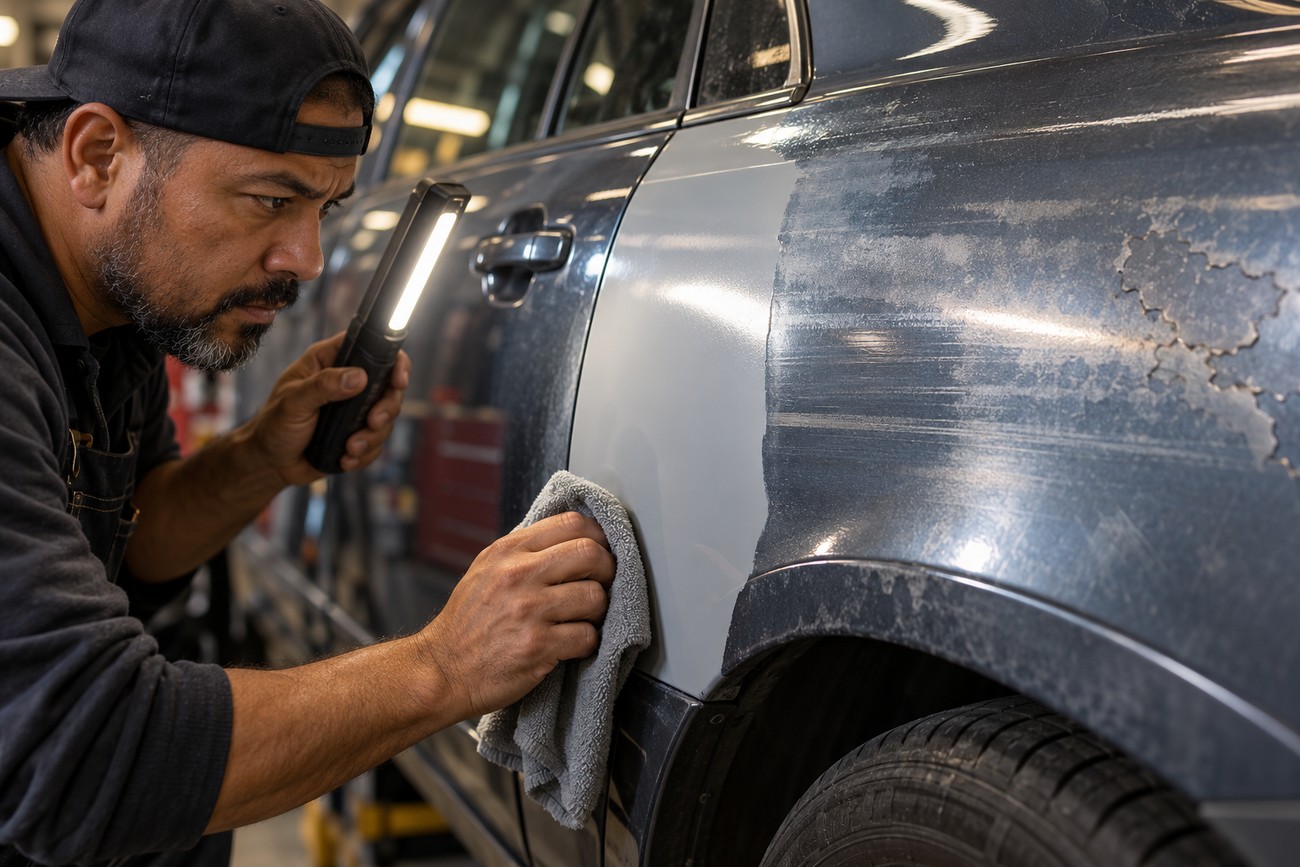
Color mismatch is one of the most visible repair complaints. A fresh single-stage repair can look different from a faded surrounding panel even when the formula is correct, because the old finish has changed through sunlight, weather, polishing, and use. Blending, panel selection, and realistic expectations become important; a new coating cannot recreate the exact history of the adjacent paint through formula selection alone.
Metallic striping, clouding, and uneven particle orientation create a second class of problems. A finish may look acceptable during application and reveal bands or mottling after it flashes or cures. On metallic single-stage, local sanding and polishing can change how the particles reflect light, making the repair area more visible from certain angles. A two-stage process usually gives greater freedom to correct dust or texture in the clearcoat without changing the underlying effect.
Dust nibs are therefore not equal across systems. In a solid single-stage finish, a fully cured surface can often be leveled and polished with controlled work. In metallic single-stage, the same operation can alter the color-effect layer; in two-stage, the technician may have a transparent correction zone, although sanding through clear into the basecoat creates its own repair requirement.
Hazing, peeling, and delamination in a two-stage finish are process failures rather than proof that clearcoat is inherently unreliable. Common contributors include poor substrate preparation, silicone contamination, incorrect recoat timing, incompatible materials, and insufficient cure. The basecoat/clearcoat interface adds a separate risk of adhesion failure, so the advantage of a clear protective layer depends on the quality of that interface.
Clearcoat cannot conceal shrinking filler, corrosion, or contamination indefinitely. Those defects may be hidden during the initial application and then reappear as the substrate moves, the filler shrinks, or adhesion deteriorates. A glossy surface can make a poor repair look complete for a short period, while careful preparation determines whether the finish remains sound.
Durability, UV Protection, and VOC Compliance
A properly formulated and cured clearcoat provides a separate layer of gloss, chemical resistance, and UV protection. That layer can reduce direct exposure of the color coat to fuel, cleaning chemicals, weather, and sunlight. Clearcoat does not completely prevent color fading, and more gloss does not automatically mean greater durability. Formulation, preparation, actual film thickness, environment, and complete curing remain decisive.
Film thickness deserves particular attention. Actual total film thickness matters more than nominal pass count, because excessive build increases the risks of shrinkage, runs, solvent retention, and cracking. A thin, properly cured coating may perform better than a thicker finish applied outside the manufacturer’s process window. Temperature and humidity also affect evaporation and cure, so a schedule that works in one shop may be unsuitable in another.
VOC comparisons require the same care. Regulations use jurisdiction-specific categories and calculation methods, and the relevant figure may apply to a ready-to-apply mixture, a particular coating category, or a defined combination of components. Layer count alone cannot establish which system has the lower regulatory impact.
For example, Maryland limits single-stage coatings to 2.8 lb/gal and clearcoat to 2.1 lb/gal. Virginia lists 5.0 lb/gal for both the single-stage and two-stage categories cited there. These figures should not be treated as a general ranking because the categories and regulatory framework differ.
In the European Union, the ready-to-apply mixture, including 2K components and added thinners, must meet the applicable VOC limit and be labeled by the manufacturer. A shop or owner should therefore check the technical and regulatory documentation for the exact product, mix ratio, reducer, and location. Advertising figures based on a different mixture or jurisdiction can mislead even when the printed units look identical.
Common Selection and Application Mistakes to Avoid
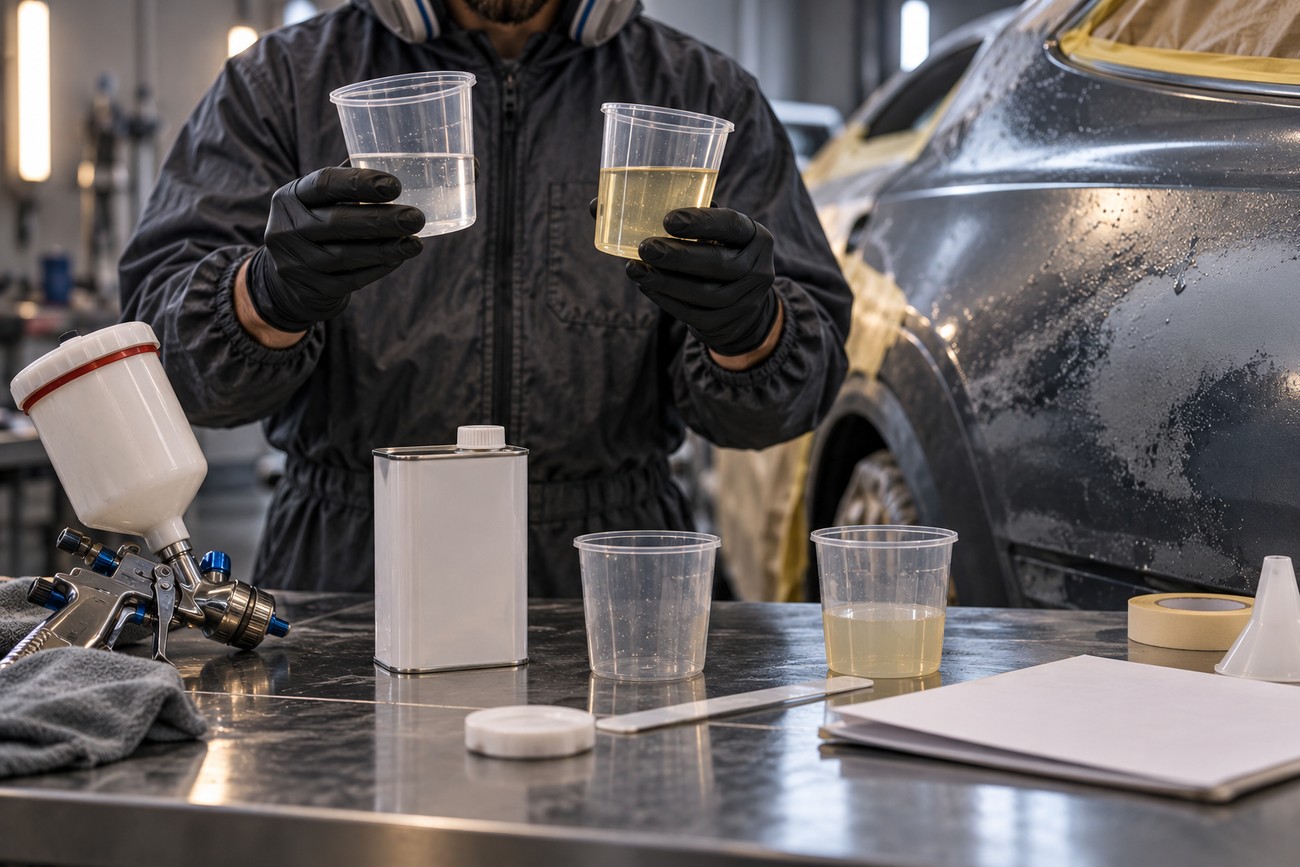
Choosing single-stage for a complex metallic solely to save money is a frequent false economy. The initial material bill may be lower, yet correcting mottling, dust, or a mismatch on a faded panel can require additional blending and refinishing. A two-stage system often offers more controlled correction for these colors, provided the painter follows the basecoat and clearcoat requirements.
Product compatibility must be checked before materials are combined. Technical data sheets should confirm mix ratios, reducer or thinner selection, substrate requirements, flash intervals, and recoat windows. Products from different systems should not be mixed casually, because solvent strength and resin chemistry can produce lifting, poor adhesion, wrinkling, or delayed failure.
The next coat must be applied within the manufacturer’s specified window and onto a properly prepared surface. A basecoat that is too wet can retain solvent under clear; one that is too dry or contaminated can reduce adhesion. Excessive film thickness also raises the risk of shrinkage, runs, and cracking, so adding passes to improve confidence can create a defect that takes longer to repair.
A reliable selection sequence starts with the color and effect, then considers the planned repair method, regulatory location, shop process control, and expected finish. Confirm the product’s as-applied VOC and coverage information, allow for transfer and panel losses, and judge durability by preparation, film thickness, temperature, and full cure. Layer count is the final description of the system, not a substitute for evaluating how the system will actually be used.
Frequently asked questions
These questions address common concerns about the history, cost, and limitations of single-stage paint. The answers also emphasize why color, repair scope, preparation, and product specifications matter more than layer count alone.
When did automakers stop using single-stage paint on cars?
There was no single universal date when automakers stopped using single-stage paint. The transition was gradual and varied by manufacturer, model, color, and market. Some solid colors continued to use single-stage formulations while metallic and pearl finishes moved more readily toward a basecoat-and-clearcoat arrangement.
Factory practice also changed for reasons beyond appearance, including emissions requirements, production methods, available resin technology, and the need for consistent finish control. The age of a vehicle can provide a clue, but its color, market specification, and repair history are more reliable indicators than a universal cutoff year.
Why is Maaco so cheap compared with some body shops?
Low advertised body-shop prices generally reflect a defined repair scope and a standardized operating model, rather than proving that one paint system is inherently inferior. High-throughput facilities may use standardized materials, limited preparation, narrow color-blending allowances, and tightly controlled labor steps. Additional disassembly, corrosion repair, panel correction, blending, or higher-grade finish work may be excluded or charged separately.
Compare written scopes instead of headline prices. Ask what preparation is included, whether adjacent panels will be blended, how defects are handled, which materials are used, and what work triggers an additional charge. The useful comparison is the completed repair specification and expected finish, not the number shown in an advertisement.
What are the main disadvantages of single-stage paint?
The main disadvantages are greater difficulty with metallic and pearl correction, color matching on faded panels, local sanding of effect colors, and maintaining consistent gloss across a repaired area. A metallic single-stage defect can become a visible patch when sanding changes particle orientation. A fresh solid-color repair can also differ from an aged surrounding panel.
Single-stage remains practical for many solid-color repairs and can be polished after full curing. The choice becomes less favorable when the repair depends on extensive local correction, precise metallic control, or a separate transparent layer for chemical and UV protection.