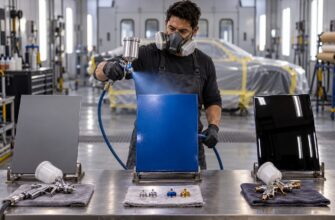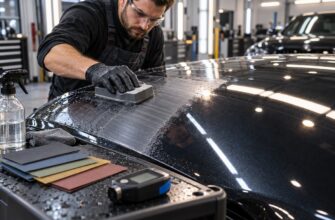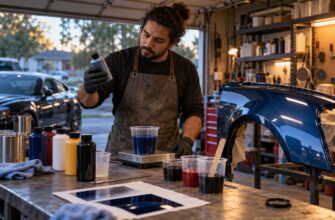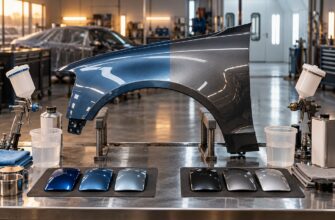
A freshly repainted car can look ready for protection the day it leaves the body shop. The surface may even feel dry, while the paint beneath is still releasing residual solvents and gaining chemical resistance. Covering it at that stage can interfere with curing and make later paint correction more difficult.
Wax is appealing because it costs less, is simpler to apply, and is easier to remove. Ceramic coating offers longer service life and better resistance to chemicals, but its preparation and application place greater demands on the finish. Neither choice should be made from a calendar date alone: the painter’s guidance for the exact paint and clearcoat system takes priority over a universal online waiting period.
- The Short Answer: Do Not Cover Fresh Repaint on Day One
- Why Fresh Paint Needs Time to Cure
- Wax After Repaint: Lower Commitment, Not Immediate Permission
- Ceramic Coating After Repaint: Benefits and Limits
- Wax vs Ceramic After a Fresh Repaint
- What to Do Before Applying Any Protection
- The First 30–90 Days: A Safer Care Plan
- Common Mistakes and the Right Decision Rule
- Frequently asked questions
- How long should you wait to ceramic coat fresh paint?
- What should you do if the body shop gives no cure-time recommendation?
- What if defects appear after the car has already been ceramic coated?
The Short Answer: Do Not Cover Fresh Repaint on Day One
Usually, the safest choice immediately after a repaint is to leave the finish uncoated. Fresh paint generally needs to reach full or near-full chemical cure before you apply wax, a sealant, or a ceramic coating. Dry to the touch means the surface feels dry; it does not establish that the complete paint system is ready to be sealed.
A commonly recommended waiting range for traditional wax is about 30–90 days after repaint. Ceramic coating is often delayed at least 30 days, and some paint systems require longer. These are planning ranges, not guaranteed application dates for every car.
Ask the body shop what paint and clearcoat it used, when the work was completed, whether the finish was baked, and what the product instructions say about waxing or coating. A shop that knows the materials and cure process can give more useful guidance than a generic “wait a month” rule. If that guidance calls for a longer wait, follow it even if the car already looks glossy.
Waiting also leaves room to inspect the repair in ordinary light and address any paint defects after the finish has matured sufficiently. Long-term protection makes more sense once you know the surface underneath is sound. Until then, careful washing does more for the repaint than an early layer of either product.
Why Fresh Paint Needs Time to Cure
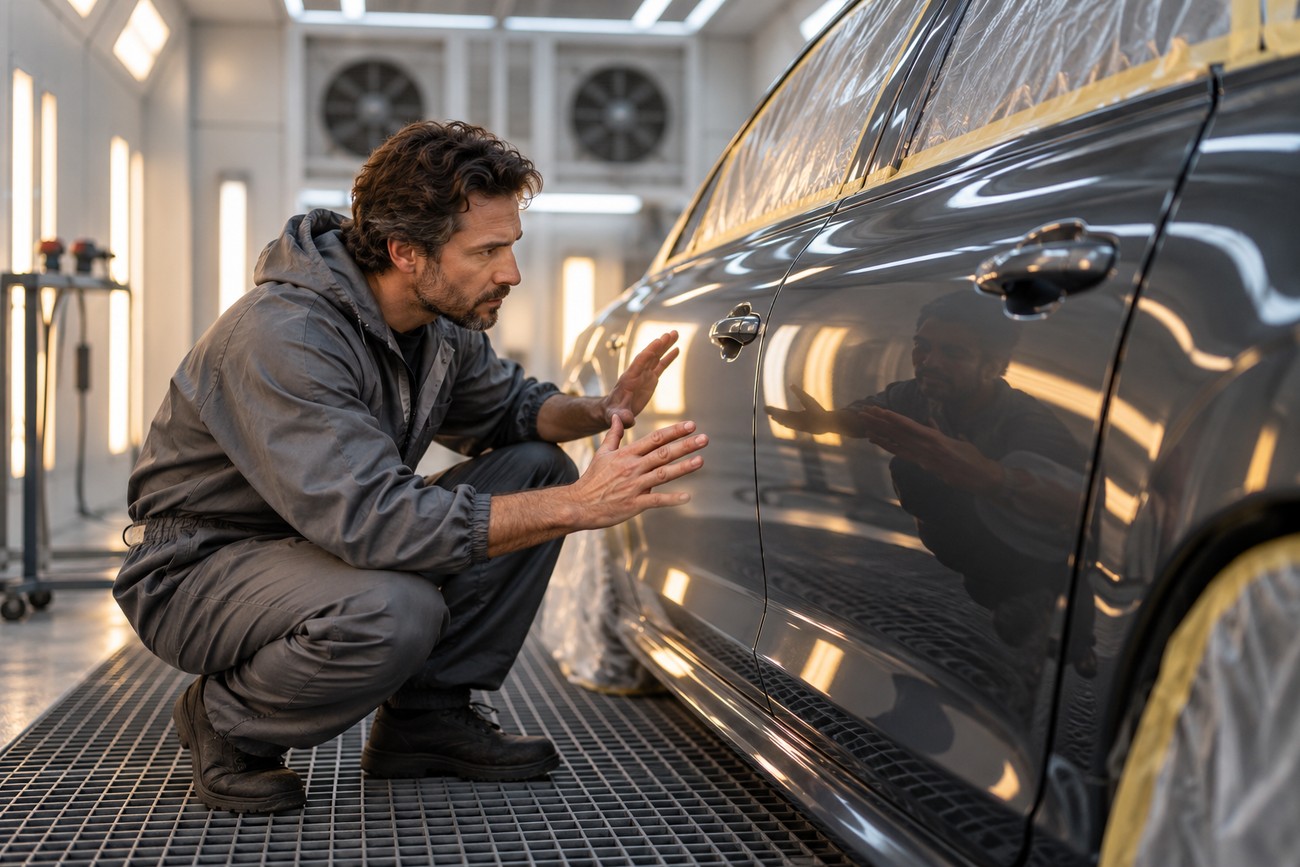
Paint drying and paint curing describe different stages. A surface may become touch-dry as solvents leave its outer layer, while deeper material continues to release residual solvents and develop its final properties. Sealing that surface too early may slow solvent release and contribute to haze, streaking, a lingering solvent odor, or problems during later correction.
For many two-component, or 2K, paint systems, full chemical resistance develops over weeks rather than days. The basecoat, clearcoat, and complete paint system do not necessarily mature on identical schedules. A hard-feeling clearcoat therefore tells you little about how the whole repair will respond to coating preparation or trapped solvents.
The useful cure date is tied to the exact paint and clearcoat system and the conditions in which it dried. Check the shop’s recorded bake process and written product guidance before treating a commonly quoted waiting period as permission to coat.
Temperature, humidity, film thickness, and the shop’s drying process can all change the schedule. A booth bake or other specified cure cycle may shorten the wait for some systems, but it does not automatically authorize wax or ceramic coating as soon as the vehicle is released. The materials still have their own instructions and limitations.
These distinctions matter most when a repair involves more than a small, uncomplicated panel. Additional coats or a different clearcoat can change what “fresh paint” means in practice. Rather than trying to judge cure by shine, touch, or the disappearance of paint smell, get a recommendation tied to the repair that was actually performed.
Wax After Repaint: Lower Commitment, Not Immediate Permission
Traditional wax is generally the simpler and less expensive option once the repaint is ready. It often gives the finish a warmer-looking appearance, and you can remove or renew it more easily than a ceramic coating. That lower commitment can be useful if you prefer to assess the repair over time or expect further paintwork.
Wax also has a shorter service life. Washing and exposure gradually reduce its effect, so maintaining the look and water-repellent behavior means applying it again. For an owner willing to renew protection periodically, that trade-off may be reasonable; for someone seeking less frequent application, it may be inconvenient.
Ease of removal does not make wax safe on uncured paint. Applying it before the painter’s recommended window can interfere with solvent release, and an early application may leave haze or uneven streaks that then need attention on a still-sensitive surface. Wax residues can also complicate a painter’s inspection or correction of a defect.
If you choose wax, wait until the shop confirms the finish is ready, then start with a clean surface and a gentle application method. Avoid trying to improve a fresh repair by rubbing harder or adding repeated coats. If the paint already looks uneven, ask the shop to inspect it before covering it.
Ceramic Coating After Repaint: Benefits and Limits
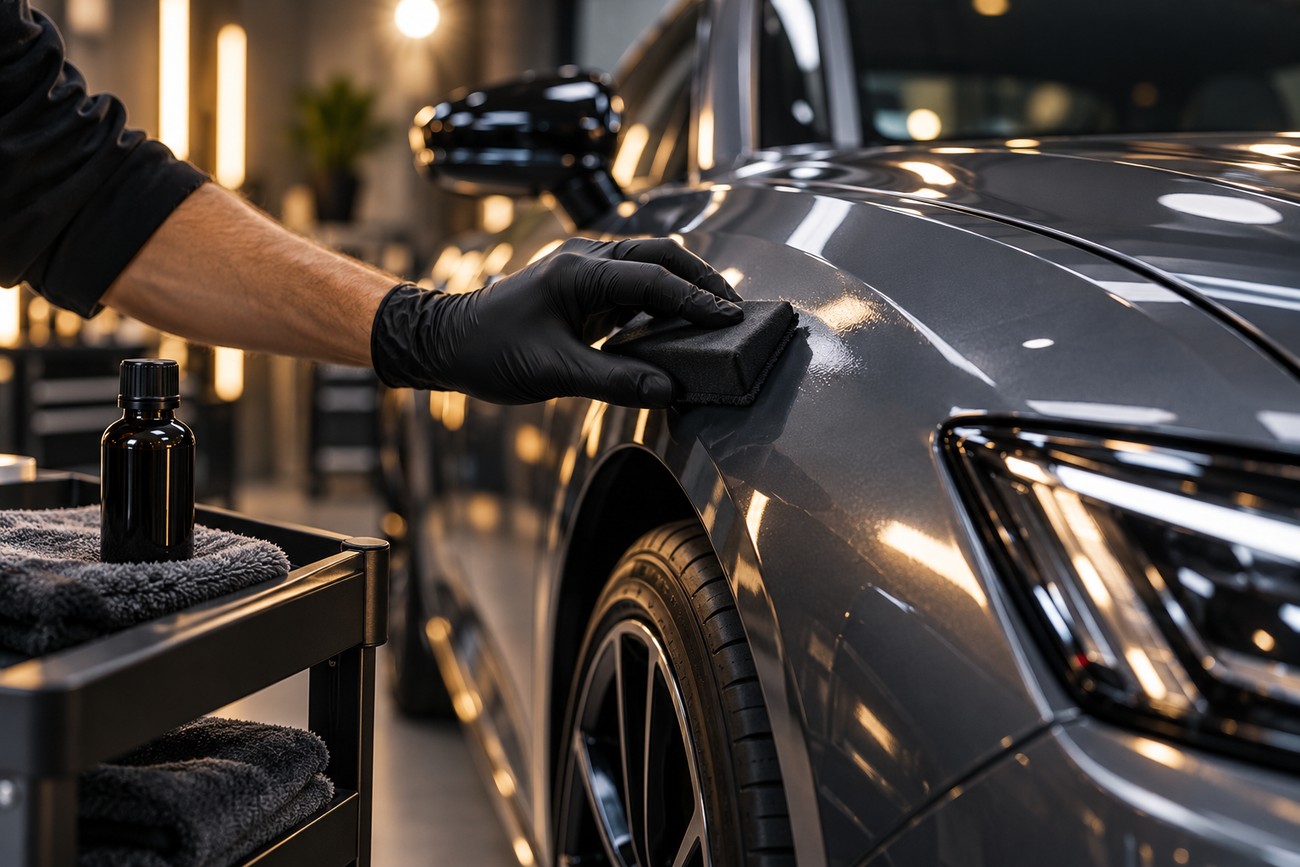
Ceramic coatings generally last longer than wax and provide greater resistance to routine chemical exposure. Their water-repellent properties can make dirt easier to wash away, which may reduce the effort needed to keep a properly cured repaint clean. Those benefits depend on correct preparation, application, and subsequent care; a coating does not make washing unnecessary.
Preparation is the critical difference on fresh paint. A coating installer may need to clean residues, decrease the panel, or polish defects before application. Aggressive chemicals, abrasives, and machine polishing can be inappropriate for a clearcoat that has not matured enough to tolerate them safely. Even after the paint is ready, the coating itself may require controlled conditions and protection from moisture during its initial cure.
Applying ceramic coating too early may interfere with residual solvent release and complicate correction if the finish later needs work. The coating’s gloss can make orange peel, sanding marks, dust, or a run more apparent rather than conceal them. Removing a coating to correct the paint adds work and introduces another procedure on a repair that could have been inspected first.
Ceramic coating is not armor. Neither it nor wax reliably prevents rock chips, deep scratches, or damage from poor washing technique. If impact damage on a hood or wheel arch is your main concern, discuss mechanical protection such as paint-protection film once the repaint is ready for it, rather than expecting a liquid coating to absorb impacts.
Choose ceramic coating when the finish has cured, the paintwork has been checked, and you can meet the coating’s preparation and initial curing requirements. Its longer life is an advantage only if the surface underneath is ready to remain as it is. A durable layer applied over a defect merely makes that defect a more involved job to address.
Wax vs Ceramic After a Fresh Repaint
Neither option should go onto a repaint before its specific paint system is ready. Once the painter confirms that it is, the better choice depends on the finish’s condition, your maintenance preferences, and how much preparation it can safely tolerate.
| Consideration | Wax | Ceramic coating |
|---|---|---|
| Safe timing | Often delayed about 30–90 days; follow the painter’s guidance. | Often delayed at least 30 days, sometimes longer; follow paint and coating instructions. |
| Preparation | Generally simpler, though the paint must be clean and ready. | Requires more exact cleaning, possible correction, and suitable application conditions. |
| Durability | Shorter-lived and requires regular renewal. | Generally lasts longer when properly applied and maintained. |
| Appearance | Often gives a warmer-looking finish. | Can add gloss while also emphasizing defects left underneath. |
| Chemical resistance | More limited. | Generally greater; still needs sensible washing and care. |
| Maintenance | Simple to renew, but renewal is more frequent. | Less frequent reapplication, with careful washing still essential. |
| Reversibility | Generally easier to remove before further paintwork. | Removal and correction are more involved. |
| Physical damage | Does not reliably prevent chips or deep scratches. | Does not reliably prevent chips, deep scratches, or poor-wash damage; neither replaces mechanical protection. |
What to Do Before Applying Any Protection
Start with the repair record rather than a bottle of product. Ask for the paint and clearcoat identification, the date of application, any bake or cure details, and the shop’s written recommendation for washing, polishing, waxing, and coating. This gives you a basis for scheduling work and helps a detailer avoid preparation that conflicts with the paint instructions.
Allow the finish to mature for the period specified for that repair. During that time, inspect it in clean, ordinary light for dust nibs, runs, orange peel, sanding marks, and changes in gloss. Note anything you find and speak to the body shop before another person polishes or covers the area; the shop may need to examine the finish as delivered.
Correction comes after adequate cure and inspection, and only where it is needed. Removing a dust nib or refining a sanding mark can involve abrasives and machine work. On immature clearcoat, unnecessary polishing or solvent-heavy cleaning may create a new problem while trying to solve a small one.
Protection belongs last in the sequence: cure, inspect, correct safely if needed, then apply the chosen product under its required conditions. A coating cannot level a run or remove orange peel. Covering a defect under a glossy layer can make it harder to assess and may require coating removal before the paint can be corrected.
This sequence can save an avoidable repeat job. For example, if a repaired door looks glossy indoors but shows sanding marks in daylight, coating it first adds a removal step without improving the underlying paint. Finding and resolving that issue before protection is kinder to the finish and usually simpler for everyone involved.
The First 30–90 Days: A Safer Care Plan
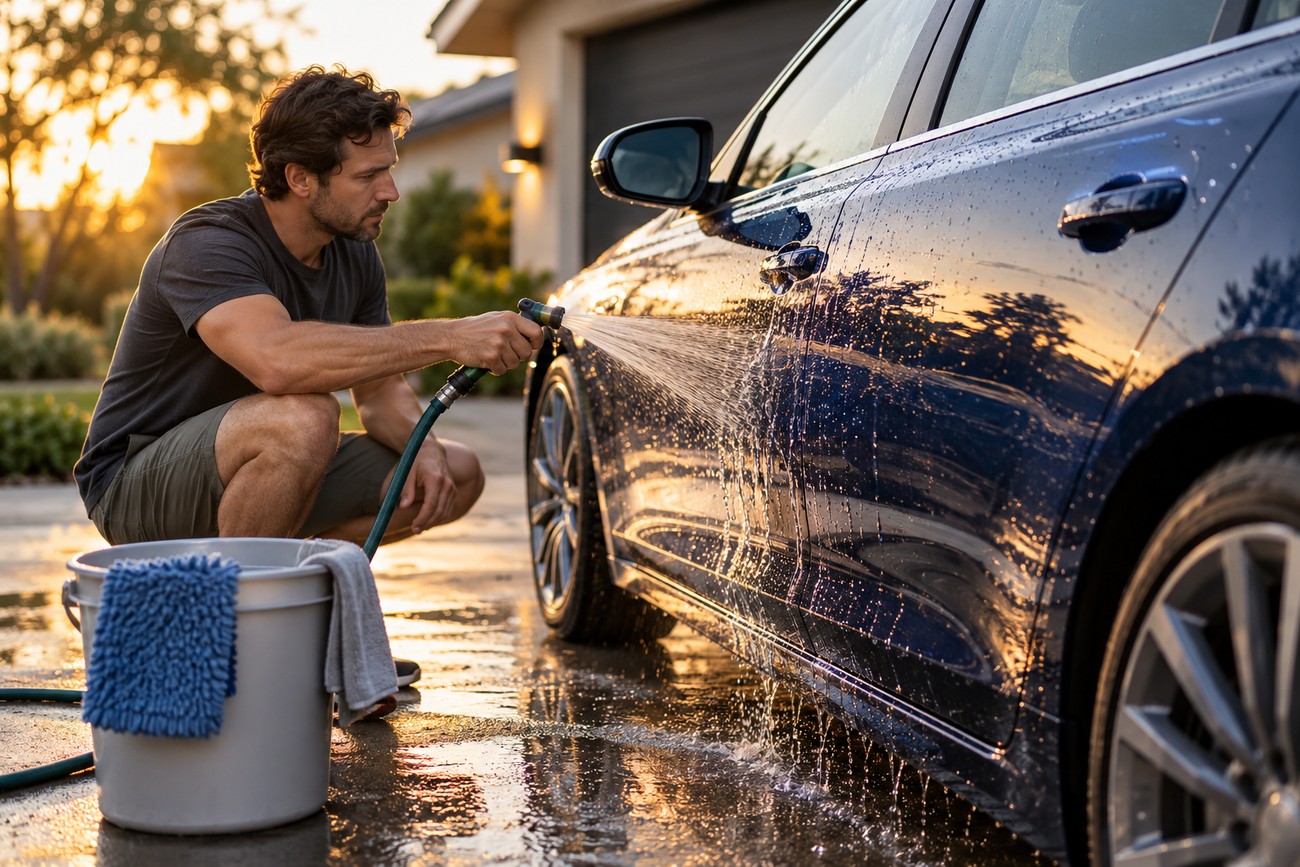
Immediately after collection, obtain the body shop’s care and cure instructions and keep them with the repair paperwork. Do not assume that a baked finish is ready for wax or ceramic coating simply because it can be driven home. If you notice a defect, record its location and arrange an inspection rather than trying to polish it away.
During the first weeks, prioritize gentle washing when cleaning is needed. Use clean wash and drying materials, avoid strong chemicals, and do not scrub stubborn contamination across the paint. Gentle care reduces the chance of marking a sensitive finish while it continues to mature.
As the shop’s recommended protection date approaches, check that the finish still looks consistent and that any concerns have been resolved. The commonly discussed 30–90-day range for traditional wax is a guide to planning, not a reason to override a longer product-specific wait. Ceramic coating is often delayed at least 30 days, with longer waits possible for particular systems.
Once the repaint is cleared for protection, schedule the work when the installer can meet the product’s application and initial curing conditions. If that is difficult, postponing ceramic coating is preferable to rushing it into rain, moisture, or unsuitable preparation conditions. Wax can be the lower-commitment choice later, provided the painter has approved it.
Careful maintenance throughout this period often matters more than choosing wax versus ceramic coating immediately. Clean washing, restrained handling, and timely communication with the body shop preserve your opportunity to inspect and correct the repair. There is no benefit in applying a long-lived product before the paint beneath it is ready.
Common Mistakes and the Right Decision Rule
The first mistake is protecting the car as soon as it is collected because it looks finished. A touch-dry surface may still be curing underneath, and premature sealing can contribute to haze, streaking, a trapped solvent odor, or later correction difficulties. Confirm the shop’s recommendation before booking an application.
A generic “one week is enough” rule is another poor substitute for repair details. Paint chemistry, clearcoat, temperature, humidity, film thickness, and drying method can change the safe schedule. Even a bake cycle is only one part of that decision.
Trying to fix appearance too early can be as unhelpful as coating too early. Aggressive preparation may mark fresh clearcoat, while ceramic gloss can emphasize dust, runs, orange peel, or sanding defects left unresolved. Conversely, expecting ceramic coating to stop stone chips or scratches from careless washing asks it to provide protection it cannot reliably deliver.
Use this decision rule: follow the paint product and painter’s guidance, confirm adequate cure, inspect the finish, and arrange only the correction it safely needs. Then choose the least aggressive suitable protection for how you will use and maintain the car, and apply it under the product’s required conditions. Durability claims come after those checks, never before them.
Frequently asked questions
These situations call for a decision about the specific repair, rather than another universal date. Keep the body shop’s written guidance as the reference when it conflicts with general advice.
How long should you wait to ceramic coat fresh paint?
Ceramic coating is commonly delayed at least 30 days after repaint, and some paint systems require longer. To turn that planning range into an appointment, ask the painter for the exact paint and clearcoat products, the application date, any specified bake cycle, and the written guidance on when coating preparation and application are allowed. Give those details to the installer and check that the proposed cleaning and polishing steps are compatible with the repair.
Book the work only after the allowed date, once any paint defects have been assessed and suitable conditions are available for the coating’s initial cure. If either the paint guidance or the coating instructions call for a longer wait, use the longer applicable schedule.
What should you do if the body shop gives no cure-time recommendation?
Ask the shop for the paint and clearcoat specifications and request written care and protection guidance for those products. If the person who released the car cannot provide it, ask for the painter or shop manager who can check the repair record. Avoid booking ceramic coating or applying wax while the answer is unresolved.
In the meantime, wash gently when necessary, avoid strong chemicals and unnecessary rubbing, and keep a record of any visible defects. This preserves the chance to inspect and correct the paint without adding a layer that may need to be removed. A commonly quoted waiting range cannot replace missing information about your particular repaint.
What if defects appear after the car has already been ceramic coated?
Document the defects in clear photographs and contact the body shop and coating installer before attempting to polish them. They can help determine whether the marks are in the coating, in the paint beneath it, or related to later washing. Correction may require removing the coating from the affected area before the paint can be properly assessed and worked on.
That extra step is why a pre-coating inspection matters. Gloss does not reliably conceal a run, orange peel, or a sanding defect, and correcting one after coating can be more involved. Agree on the inspection and correction plan before anyone uses aggressive chemicals or abrasives on the repaired panel.