A sealed can may still be ruined by freezing, heat, moisture, contamination, or a failed closure. Hardener adds further concerns: vapor exposure, packaging compatibility, chemical incompatibility, and fire risk. Proper storage protects both the material and the people who handle it later.
Safe conditions depend on the product-specific SDS and TDS, rather than generic advice such as “keep it at room temperature.” A sound system covers the storage location, container sealing, separation, inspection, and disposal route before a problem occurs.
- Start with the product label, SDS, and TDS
- Choose a stable, dry, ventilated storage area
- Seal, label, and position every container correctly
- Prevent contamination, blocked nozzles, and accidental mixing
- Temperature, shelf life, and the limits of “still good”
- Handle damaged containers, leftovers, and disposal safely
- Frequently asked questions
- What are the OSHA requirements for storing paint?
- How can I tell whether an opened hardener is still usable?
- What should I do if a paint or hardener container is leaking or swollen?
Start with the product label, SDS, and TDS
Paint is a broad description, not a single chemical category. Water-based coatings, solvent-based paints, polyurethane systems, and two-component products can have different temperature limits, ventilation needs, shelf lives, and fire classifications.
The product-specific SDS/TDS takes priority over generic storage advice or marketing wording. Some product documents specify 0–35 °C for a hardener; others specify 20–40 °C. These ranges are product-specific, not universal limits for every hardener.
Read the original label together with the SDS and TDS before choosing a cabinet or storage room. Check the stated storage range, packaging requirements, moisture warnings, incompatible chemicals, ventilation instructions, shelf life, and emergency measures. A phrase such as “store at room temperature” does not replace a defined range where one is provided.
Choose a stable, dry, ventilated storage area
Hardener should be kept in a dry, cool, well-ventilated place protected from sunlight, heat, sparks, and open flame. Keep paint, thinner, and solvent away from radiators, boilers, hot equipment, and work that creates sparks.
Freezing can permanently damage the uniformity of water-based paint, while hardener should not be stored where it can freeze. An attic may overheat during the day, and an unheated garage may expose materials to freezing and rapid temperature swings. A stable indoor storage area is generally easier to control.
Closed containers reduce releases, but they do not eliminate vapor or fire hazards during opening, leakage, or container damage. Flammable paints, thinners, and solvents should remain in closed fire-resistant containers when not in use. Liquids with a flash point below 80 °F require stronger storage and control measures.
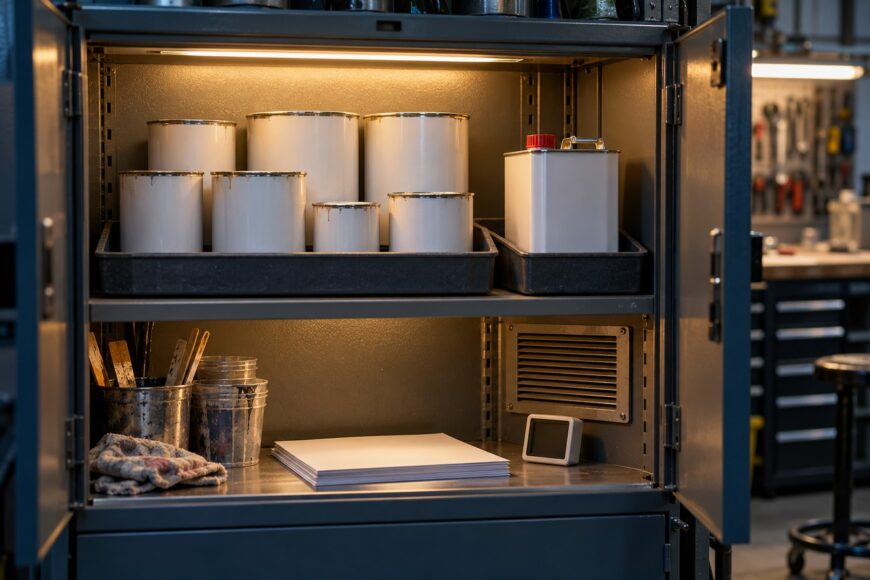
Keep products away from food, drinks, oxidizers, and incompatible chemicals. Use a suitable shelf or cabinet that can support the containers, and keep the area clear enough to inspect labels and remove a container without knocking over another one.
Seal, label, and position every container correctly
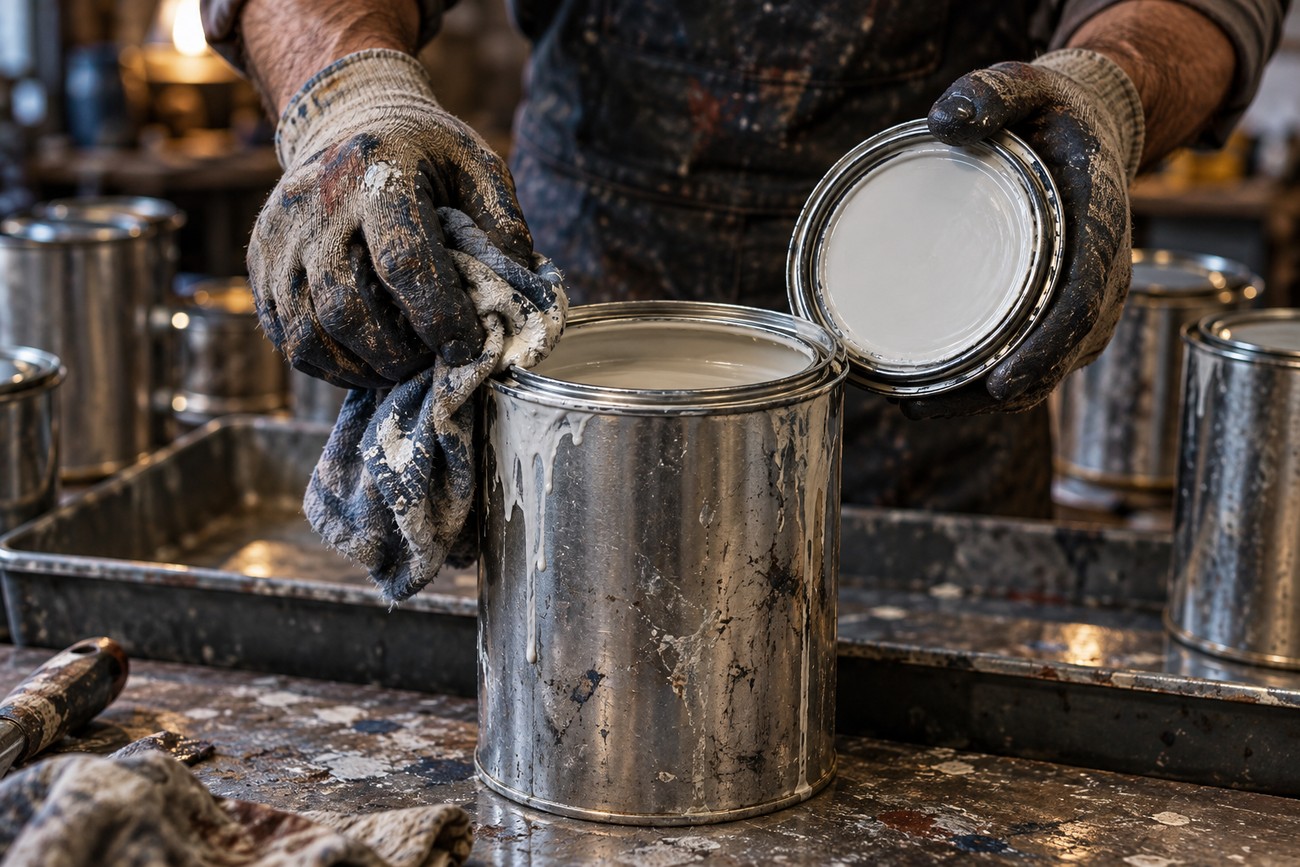
Use tightly closed original containers, reseal opened containers promptly, and store them upright. Upright placement reduces the chance of leakage around the lid or seam, especially when a container is moved or stacked.
Before closing a can, remove coating from the rim, lid, threads, and gasket. Dried material can create small gaps that allow water or solvent to evaporate. Simply tightening a dirty lid harder can damage the closure while leaving the actual sealing surfaces contaminated.
Clean sealing surfaces, verify the gasket, label the opened container, and place it upright in secondary containment. A clean closure usually gives better protection than excessive force applied to a lid covered with dried coating.
Keep every product clearly identified, including opened containers. Polyurethane and isocyanate hardeners must not be transferred to unmarked or incompatible containers; follow the specified packaging material, ideally matching the original where the manufacturer requires it. Place containers in secondary containment to limit the spread of a leak, while remembering that containment does not repair corrosion, damaged packaging, or a failed seal.
Prevent contamination, blocked nozzles, and accidental mixing
Residue on a cap, neck, or thread can prevent complete resealing. The result may appear later as a skin on the surface, thickening, or a change caused by evaporation. Moisture entering a sensitive hardener can also affect performance even when the container still looks sound.
Spray equipment creates a separate failure point. After using a 2K aerosol product, clean the nozzle according to the product instructions. Cured residue inside the outlet can block the nozzle while the material in the container remains usable.
Do not mix paint and hardener in advance to save time. Pot life starts after mixing and is set by the specific system’s TDS, not by the storage life of the separate components. The mixture may have limited working time and can undergo exothermic curing.
Temperature, shelf life, and the limits of “still good”
The printed shelf life assumes that the product was stored under the stated conditions. Overheating, freezing, moisture contamination, broken seals, and repeated temperature cycling can shorten practical usability before the printed date.
After opening, practical usable life may be shorter than the original shelf-life period, especially for moisture-sensitive polyurethane products. Inspect the container for corrosion, swelling, damaged closures, or evidence of leakage, then compare the material with the manufacturer’s description.
Separation, skinning, thickening, crystallization, an unusual odor, or a changed appearance can signal a problem. Visual inspection cannot prove that a coating will cure or perform correctly. Use a small test only when the manufacturer permits it, and obtain technical guidance before using questionable material on a critical finish.
The manufacturer’s stated storage range controls. Some hardener documents specify 0–35 °C, while others specify 20–40 °C; neither range applies universally. Adding water or turning a container upside down is not a universal manufacturer-approved method for extending storage life and may introduce contamination or alter the formulation.
Handle damaged containers, leftovers, and disposal safely
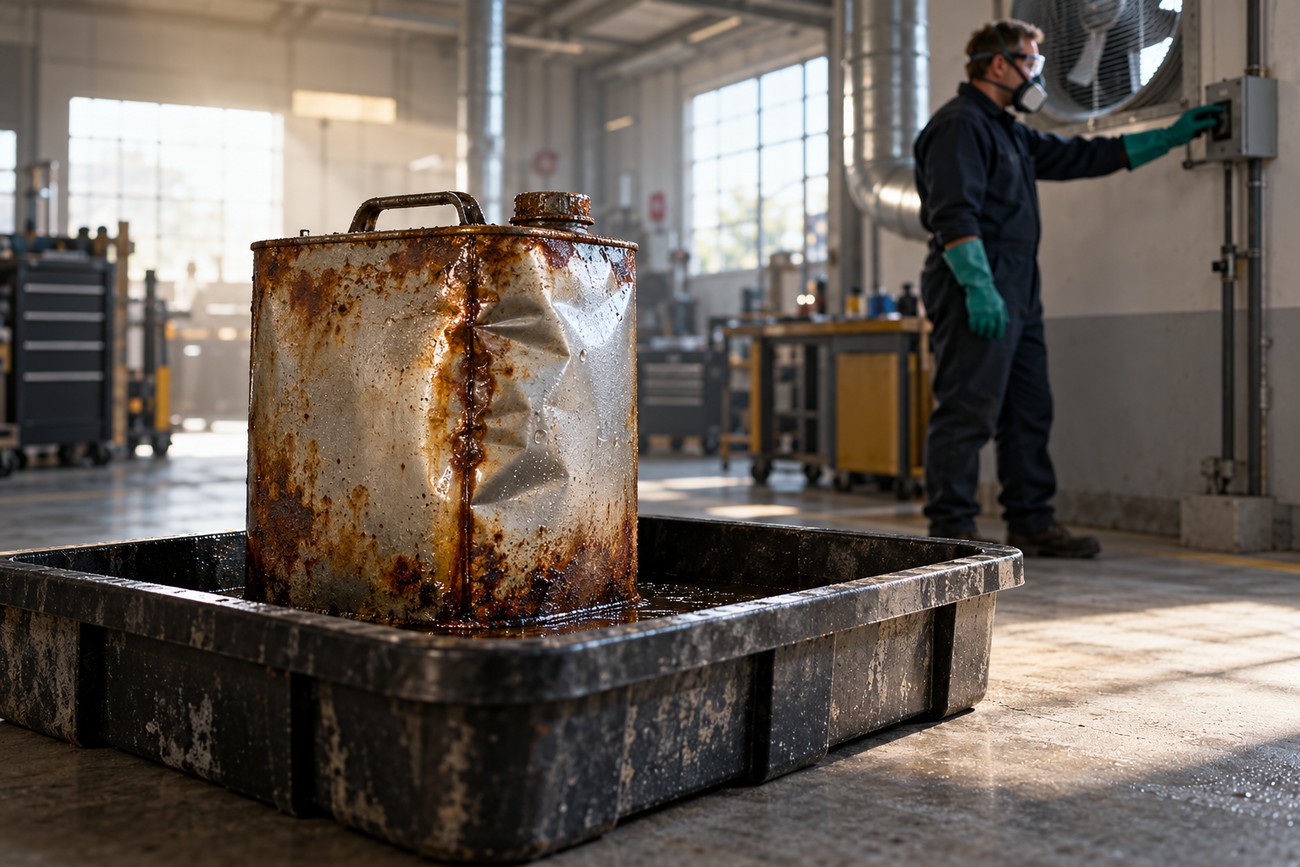
Move leaking, swollen, corroded, or badly damaged packaging away from people and ignition sources when this can be done safely. Avoid casually reopening or transferring the container. Place it in suitable secondary containment and consult the SDS for emergency handling and disposal instructions.
A sealed container can still present a vapor or fire hazard if it is leaking or damaged. Keep the area ventilated as directed by the SDS, avoid creating sparks, and use the product’s listed emergency or waste channel when the condition is uncertain.
Never pour paint, hardener, thinner, or solvent residues into a drain. Water-based or latex paint may be handled differently from oil-based coatings, but the correct route depends on the product and municipality. Oil-based coatings commonly require household hazardous-waste handling.
Do not assume that dried leftovers belong in ordinary household waste. Check local rules and the product SDS before disposal, especially for two-component coatings, solvent residues, and flammable liquids. Keep the original label available so a waste facility can identify the contents.
Frequently asked questions
The answers below cover workplace storage requirements, opened hardener, and damaged containers. In each case, follow the product’s SDS and account for local requirements. Do not treat all paints, thinners, and hardeners as interchangeable.
What are the OSHA requirements for storing paint?
OSHA expectations depend on the product’s hazard classification, workplace conditions, container type, and applicable regulations. In practice, employers generally need hazard communication, accessible SDS information, clear labeling, appropriate flammable-liquid controls, ventilation, and control of ignition sources.
Exact duties may also follow applicable fire codes and local requirements. A workplace should assess each paint, thinner, and hardener rather than treating all coatings as interchangeable. The SDS identifies hazards that determine whether a cabinet, restricted area, or additional controls are appropriate.
How can I tell whether an opened hardener is still usable?
Start with the closure and packaging: check for a damaged seal, corrosion, leakage, moisture entry, or a container that has been stored outside the specified range. Look for moisture-related changes or crystallization where relevant, and compare the material’s appearance and condition with the manufacturer’s description.
These checks cannot confirm final coating performance. Contact the manufacturer before using questionable hardener in a critical finish, and perform a small compatibility or cure test only if the product guidance allows it.
What should I do if a paint or hardener container is leaking or swollen?
Keep people away, remove ignition sources only when safe, and avoid opening or transferring the container. Isolate it in suitable secondary containment in accordance with the SDS, limiting exposure to heat, sparks, and poor ventilation.
Use the emergency or waste contact listed in the SDS for the next step. A leaking or swollen container requires a controlled response based on the product and local rules, rather than routine household disposal.