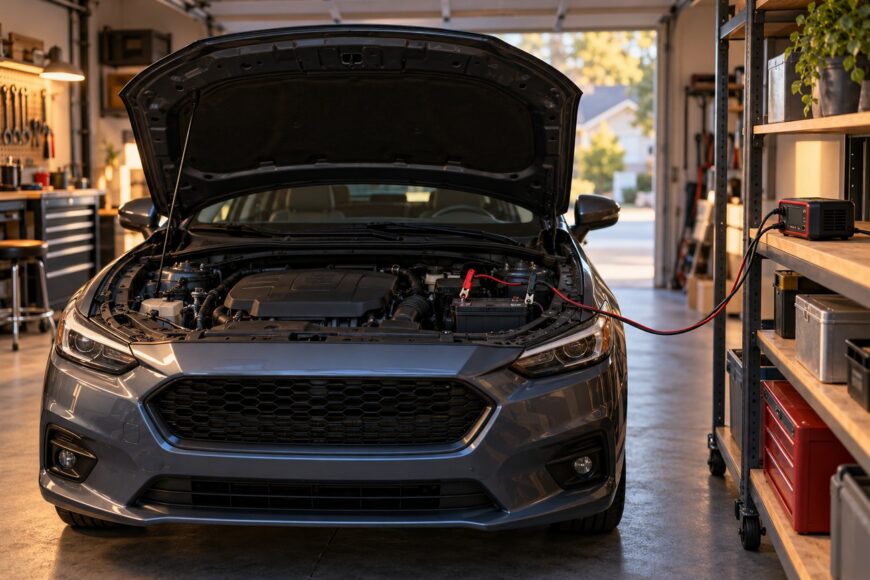
A car can sit quietly for weeks and leave you with a starter that barely turns, or does not turn at all. The battery continues to lose charge through self-discharge, while the vehicle draws a small resting current for systems such as security, memory, and control modules. Over time, those modest losses can substantially reduce starting power.
A Battery Tender or other smart maintainer is designed to manage that loss during storage. It is a low-current charge-management device, not a fast charger or a repair for a failing battery. Its usefulness depends on the battery’s condition, the charging mode, temperature, ventilation, connection quality, and periodic checks.
- Why a Stored Car Battery Goes Flat
- What a Battery Tender Actually Does
- Battery Tender vs. Trickle Charger vs. Smart Charger
- How to Use One Safely During Car Storage
- Storage Routine: Charge, Temperature, and Checks
- Common Mistakes and the Problems a Maintainer Cannot Fix
- Frequently asked questions
- Should I disconnect or remove the battery when storing a car?
- What should I check if the battery still goes flat with a maintainer connected?
- How can I keep my car battery charged while it’s stored?
- What is the best trickle charger for long-term car storage?
Why a Stored Car Battery Goes Flat
A lead-acid battery does not remain at the same charge level simply because the engine is switched off. Self-discharge gradually reduces its stored energy, and a connected vehicle adds parasitic electrical loads. Those loads may be small individually, but they continue while the car is parked and can matter during weeks or months of inactivity.
The result depends on battery age, condition, temperature, vehicle design, and the amount of resting current. There is no reliable timetable for when every stored battery will fail. One car may start after a short period, while another with an aging battery or an electrical fault may lose usable starting power much sooner.
Low charge creates a second problem for lead-acid batteries. If a battery remains deeply discharged for an extended period, sulfation can develop, making starting performance difficult to recover. Repeatedly jump-starting the car may get the engine running, but it does not provide a dependable storage strategy or identify why the battery went flat.
A maintainer addresses the continuing loss rather than supplying a high-current starting boost each time you return to the vehicle. Once the battery has been charged correctly, the device supplies controlled maintenance current as needed. That is useful for a seasonal car, a collector vehicle, or a daily driver that spends long periods parked.
What a Battery Tender Actually Does
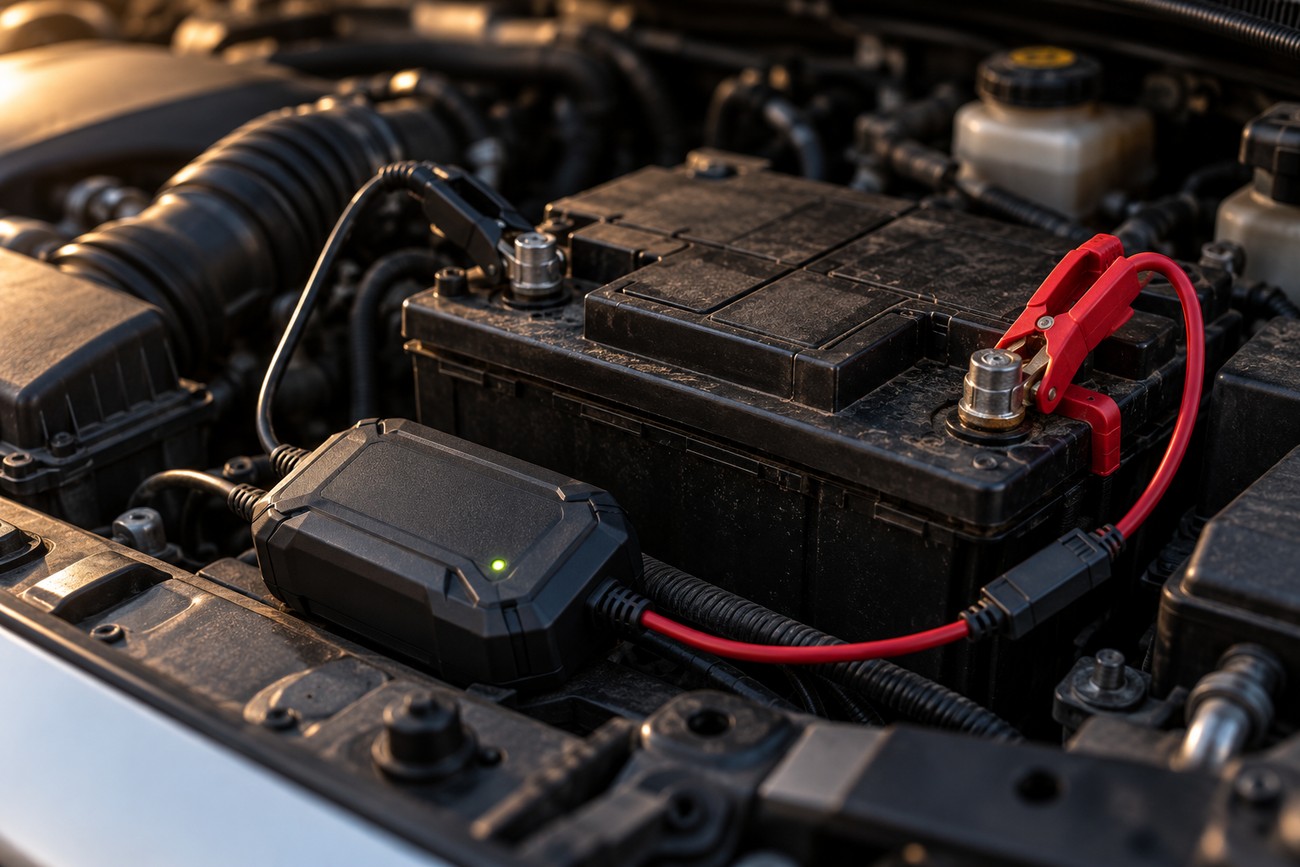
“Battery Tender” is commonly used for a branded battery-maintainer product, while “maintainer” describes the broader device category. The basic purpose is the same: charge the battery to a full or nearly full state, then compensate for self-discharge and resting electrical loads during storage.
A smart unit changes its operating mode as the battery’s condition changes. During the initial stage, it may provide charging current to restore the battery. Afterward, float maintenance holds the battery at an appropriate level, subject to the device and battery specifications, instead of continuously applying an uncontrolled trickle charge.
This makes a maintainer different from a quick charger. It is intended to preserve available charge over time, not to recharge a completely depleted battery quickly. A severely discharged battery may need a suitable charger first, and some maintainers will refuse to start if the voltage is too low.
Battery Tender’s manufacturer describes technology that maintains optimal float voltage. That wording explains the product’s intended function and branded charging design; it is not a universal charging standard. The battery type, charger model, ambient temperature, and manufacturer instructions still determine whether a particular setup is appropriate.
Battery Tender vs. Trickle Charger vs. Smart Charger
A conventional charger is primarily designed to recharge a depleted battery. It may provide substantially more current than a maintainer and can be useful when a battery needs charging before storage. Whether it can remain connected unattended depends on its control system, so a conventional charger should not automatically be treated as a long-term storage device.
An ordinary trickle charger supplies a low current, but low current alone does not guarantee safe indefinite connection. If the unit does not regulate its mode or float behavior, it may continue charging after the battery is full. That can cause overcharging, heat, electrolyte loss, or battery damage, depending on the design and conditions.
A smart maintainer monitors the battery and controls its charging or float mode. It is therefore better suited to unattended storage when the instructions specifically permit that use. “Smart” still does not mean universal: the selected unit must match the battery chemistry, voltage, capacity, and permitted charging conditions.
Check whether the battery is flooded lead-acid, AGM, gel, lithium, or another type before connecting anything. A setting intended for one chemistry may be unsuitable for another. The same caution applies to capacity and temperature limits; a device that is appropriate for a small motorcycle battery may not be the right choice for a larger car battery.
How to Use One Safely During Car Storage

Start with the battery and the storage area rather than connecting the device immediately. Look for case damage, swelling, leakage, corrosion, loose terminals, or a battery that has already been deeply discharged. A maintainer cannot make a damaged battery safe, and visible defects call for testing or replacement guidance from a qualified source.
Place the unit in a dry, ventilated location away from water, fuel vapors, and excessive heat. Storage guidance gives temperature ranges as broad as 0–25 °C and as narrow as about 5–15 °C. Avoid placing the charger where condensation can collect or where its cables can be crushed by a door, hood, or moving equipment.
Clean and secure the terminals, then follow the prescribed connection order and polarity. Some systems use ring terminals attached semi-permanently to the battery, while others use alligator clips. Either arrangement can work if the connections are tight, dry, correctly polarized, and protected from accidental contact.
Very low temperatures require additional care. Some batteries and charging modes restrict charging at low temperatures, so follow both the battery and charger instructions rather than assuming that a smart device removes the limitation. A cold battery may also accept charge differently from a warm one, especially after the vehicle has been sitting outside.
Keep ventilation in mind even with a regulated maintainer. Charging can produce gas under some conditions, and a garage with poor airflow is less suitable than a dry, ventilated space. Smart electronics reduce charging risk when used correctly, but they do not replace sound connections, appropriate placement, or periodic checks.
Storage Routine: Charge, Temperature, and Checks
For lead-acid batteries, storage guidance commonly recommends keeping the battery fully charged or nearly fully charged. Other storage guidance uses roughly 50–70% state of charge as a long-storage compromise. The appropriate target depends on the battery and storage setup, so follow the battery and charger instructions rather than applying one target to every situation.
A practical seasonal routine begins with a battery in known condition and a suitable charge. If the car remains connected to a smart maintainer, confirm that the unit reaches its maintenance stage and shows no fault indication. If the battery is disconnected or removed, check its condition about monthly and recharge it when needed instead of leaving it unexamined for the entire storage period.
Cooler storage generally reduces self-discharge, but temperature does not replace charge monitoring. A cool, dry location is preferable to a warm, damp one, while condensation on the case or terminals can encourage corrosion and poor contact. Keep the battery clean and dry, and inspect it for changes rather than assuming that a parked car is electrically inactive.
At the end of storage, allow the maintainer to complete its intended stage before starting the car where practical. A battery that has remained healthy should deliver consistent cranking. Slow cranking, repeated warning indications, or a rapid voltage drop after charging suggests that the battery needs testing rather than more time on maintenance mode.
Common Mistakes and the Problems a Maintainer Cannot Fix
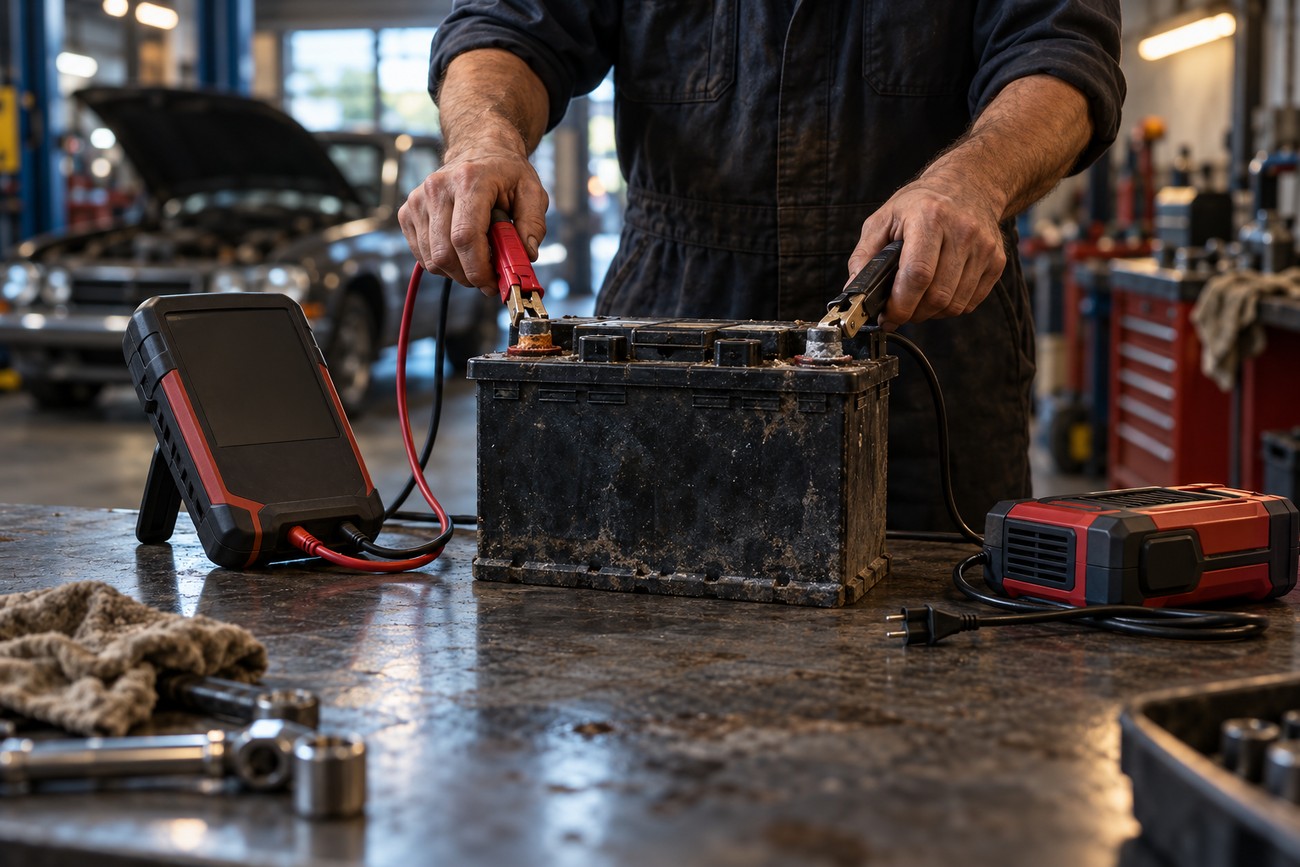
A common mistake is leaving a car untouched for months and expecting the battery to preserve its charge. Another is treating a maintainer as a rescue charger and connecting it to a battery that is already too depleted for the device to recognize. In that situation, the battery may require a proper charging procedure and a capacity test before it is returned to storage.
Wrong settings create a separate failure path. Selecting an unsuitable chemistry mode, using a unit outside its capacity range, or charging in conditions restricted by the battery manufacturer can produce poor results even when the device appears to operate normally. An ordinary trickle charger also should not be left connected indefinitely merely because its output is small.
A maintainer can also conceal an electrical fault. If the vehicle has an abnormal parasitic drain, the device may keep supplying current while the underlying problem remains unnoticed. Once the maintainer is removed, the battery may go flat again, making the apparent solution temporary.
Keeping an aged, sulfate battery or one that has lost capacity on float does not restore lost capacity. It may preserve what remains for a while, but it cannot repair permanent internal damage. A battery that repeatedly loses capacity after proper maintenance may need testing or replacement, while a healthy battery that discharges quickly points toward the vehicle’s electrical system or a connection problem.
Check the outlet, charger indicators, polarity, terminal contact, battery mode, and cables before concluding that the battery has failed. If those items are correct, investigate resting current and battery capacity separately. A stronger charger is not a substitute for that distinction.
Frequently asked questions
Storage decisions depend on whether the battery remains installed and whether a compatible maintainer can stay connected. If the battery goes flat despite maintenance, check the connection, battery condition, and vehicle draw separately. The answers below cover those decisions and the type of charger suited to long-term storage.
Should I disconnect or remove the battery when storing a car?
Disconnecting the negative terminal can reduce parasitic drain from the vehicle, while removing the battery may be useful when the storage area is unsuitable or the car will not be accessible. Removal is less convenient and may erase vehicle settings or require a reset procedure, so the vehicle manufacturer’s instructions matter.
Disconnection does not eliminate self-discharge or replace periodic checks. Inspect the battery about monthly and recharge it as needed, whether it is installed, disconnected, or stored separately. If a smart maintainer is connected, use the connection arrangement approved for that vehicle and charger.
What should I check if the battery still goes flat with a maintainer connected?
First confirm that the outlet has power and that the unit shows the expected charging or maintenance status. Then inspect polarity, terminal cleanliness, cable condition, and the selected battery mode. A loose ring terminal or corroded clamp can prevent charging even when the charger appears powered.
If the setup is correct, test the battery’s capacity and inspect the vehicle for abnormal resting current. A charger fault, a battery with permanent capacity loss, or a parasitic drain can each produce the same symptom. Replacing the maintainer without separating those possibilities may leave the actual fault unresolved.
How can I keep my car battery charged while it’s stored?
Use a maintainer approved for the battery’s chemistry and capacity, connect it with clean, secure terminals and correct polarity, and place it in a dry, ventilated location. Confirm that the device reaches its regulated maintenance stage rather than continuing an uncontrolled charge.
If continuous connection is unsuitable, disconnect the battery and check it about monthly, recharging when necessary. This approach still requires attention to temperature, condensation, and battery condition. A maintainer preserves a healthy battery; it cannot restore one that has already lost capacity.
What is the best trickle charger for long-term car storage?
The best choice is usually a smart maintainer specifically approved for the battery type and storage use, rather than an uncontrolled trickle charger. Look for regulated maintenance or float behavior, suitable voltage and capacity ranges, clear fault indications, and instructions that permit the intended connection period.
Do not choose by low current alone. The unit must also be suitable for the storage temperature and the battery’s chemistry. A conventional charger can recharge a depleted battery, but it should not automatically be left connected indefinitely unless its design and instructions specifically support that use.