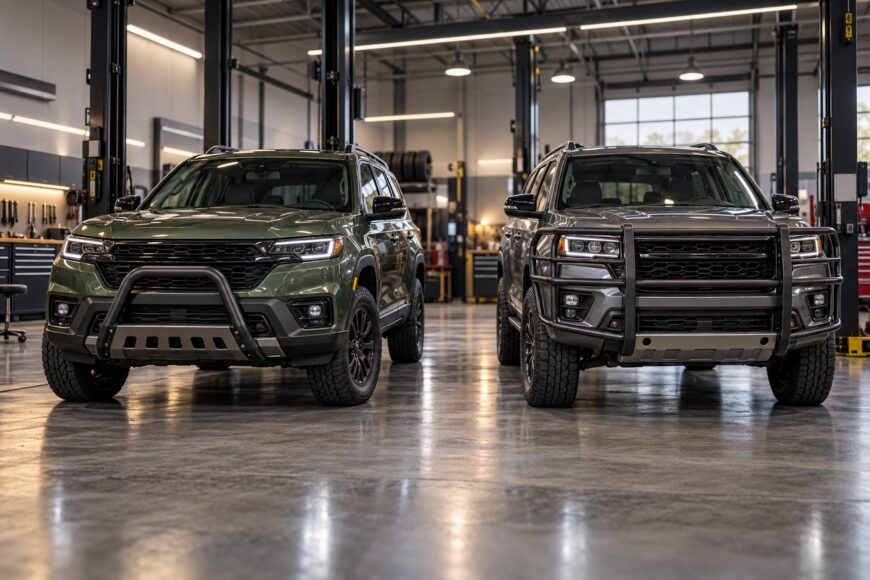
A bull bar and a grille guard can look similar in a product photo, yet they protect different parts of the front end and involve different costs, weight, fitment, and legal constraints. A bull bar usually covers the lower grille and central bumper area. A grille guard extends farther across the vehicle, commonly including the grille, headlights, and bumper corners.
Neither accessory should be treated as a substitute for a certified crash structure. These products are generally intended to reduce damage from branches, brush, debris, and light contact. The right choice depends on the hazards you face, the equipment already mounted on the vehicle, and whether the construction is legal and properly supported for that specific vehicle.
- Bull Bars vs. Grille Guards: What Actually Changes?
- A Practical Comparison of Coverage, Mounting, and Cost
- Which One Fits Your Use Case—and Your Front-End Equipment?
- Fitment and Installation: Checks That Prevent Regret
- Hidden Trade-Offs: Cooling, Handling, and Real-World Damage
- Legality, Safety, and the Buying Myths That Cause Problems
- Frequently asked questions
- What is the difference between a bull bar and a grille guard?
- What is the point of a grille guard?
- How can I tell whether a grille guard is strong enough for my truck?
Bull Bars vs. Grille Guards: What Actually Changes?
A bull bar is usually a relatively compact A-frame structure positioned around the center of the front bumper. Its main purpose is to shield the lower grille and central bumper area from brush, debris, and minor contact. It leaves more of the headlights and outer bumper exposed, which can be an advantage when you want limited coverage and lower added mass.
A grille guard is commonly an H-frame or full-width structure with vertical supports and a crossbar. It covers a wider zone, commonly including the grille, headlights, and bumper corners. That larger envelope can reduce exposure to branches on narrow trails, although it also creates more mounting points, more material, and more opportunities for interference with factory equipment.
The names are not standardized across the accessory market. Some catalogs use “brush guard” and “grille guard” as overlapping terms, even though one product may protect only the grille while another reaches around the headlights and outer corners. The product’s actual coverage, bracket design, and mounting position matter more than the label printed on the listing.
Wider coverage does not automatically make the guard the better purchase. A full-width design can be excessive for a vehicle used mainly on paved roads, while a compact bull bar may be inadequate for regular brush clearance. The useful question is which parts of the vehicle are exposed during normal driving and what equipment must remain unobstructed.
A Practical Comparison of Coverage, Mounting, and Cost
The figures below are market-oriented guidance rather than universal specifications. Prices, materials, mounting systems, and weight vary with the vehicle, construction, finish, and included hardware.
| Factor | Bull bar | Grille guard |
|---|---|---|
| Typical coverage | Usually the center of the front end: the lower grille and central bumper area. | A wider area commonly including the grille, headlights, and bumper corners. |
| Typical frame design | Often described as an A-frame design. | Often described as an H-frame or full-width frame with vertical supports and a crossbar. |
| Common materials | Tubular steel, stainless steel, or aluminum. | Tubular steel, stainless steel, or aluminum; heavier versions may use thicker metal. |
| Frame attachment | Vehicle-specific brackets may connect to the frame, depending on the design. | Many pickup and grille-guard designs attach directly to the vehicle frame rather than only to the bumper. |
| Approximate market starting range | About $200–500. | About $500–1,200. |
| Weight implications | Usually the lighter and more compact option, though specifications vary. | Some grille guards weigh 80 lb or more, depending on size and construction. |
| Equipment conflicts | May affect a front plate, lights, sensors, or central mounting points. | More likely to compete for space with headlights, sensors, cameras, winch hardware, lights, and bumper brackets. |
| Realistic impact role | Center-front protection from branches, debris, and light contact. | Broader protection from brush, branches, debris, and light contact around the front end. |
Direct frame attachment can improve load transfer, yet it does not make every product equally strong. The geometry of the brackets, the quality of the fasteners, and the way loads travel into the frame are often more important than a large tube diameter. A guard attached only to a plastic or thin bumper cover is a different proposition from one supported by properly designed frame brackets.
The price gap also reflects size and installation complexity rather than a guaranteed level of collision protection. A cheaper bull bar can be the more suitable product if you need only central coverage. A more expensive grille guard may still be a poor choice if it blocks required equipment or adds weight that the vehicle was not designed to carry.
Which One Fits Your Use Case—and Your Front-End Equipment?
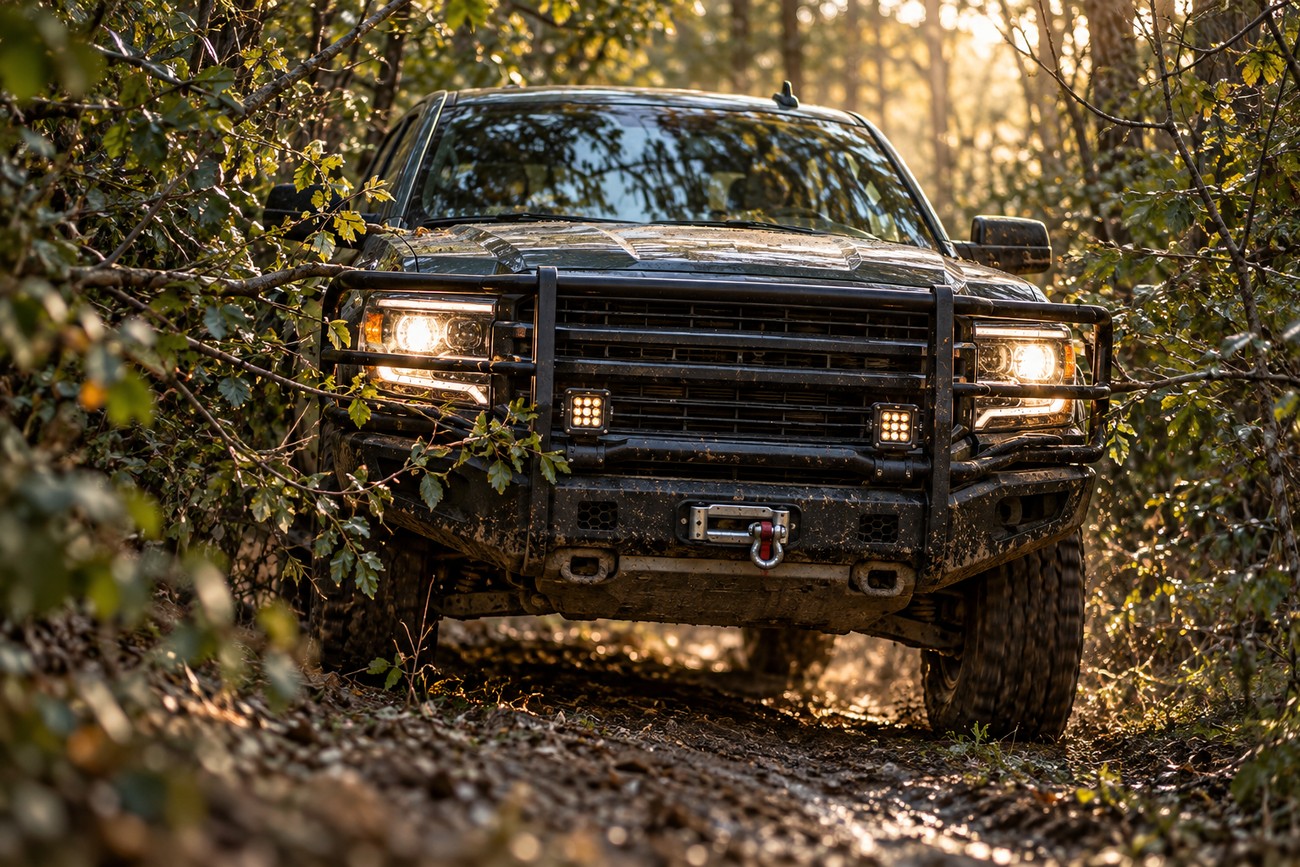
Choose a bull bar when the main exposure is in the center of the vehicle and you need a compact barrier against brush, loose debris, or light-duty parking contact. It should not be purchased with the expectation that it will protect the headlights and bumper corners. Those areas require a wider guard whose supports and crossbar reach around them.
A grille guard makes more sense for repeated travel through vegetation where branches can strike the headlights or outer front corners. It can also provide mounting space for selected lights or recovery equipment, provided the vehicle-specific design supports those accessories. The same structure may occupy the space needed for a license plate, winch, factory tow hooks, sensors, or existing lighting brackets.
For urban use, a lower-profile city guard can be a more restrained solution. It can cover the vulnerable center area without the mass and broad coverage of a full-width grille guard. This approach may reduce conflicts with visibility, sensors, and front-end styling, although its actual benefit still depends on the bracket design and the hazards involved.
Tube thickness is an easy feature to compare in photographs, but it is a weak measure of practical strength on its own. A properly supported, moderately sized guard can transfer loads more predictably than a visually massive product with poor brackets. Check where the supports attach, which factory components are removed, and whether the vehicle manufacturer’s mounting points remain available.
Fitment and Installation: Checks That Prevent Regret
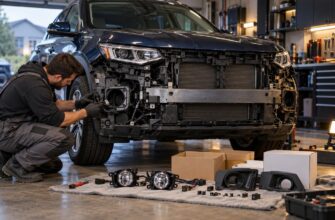
Start with the exact vehicle generation, trim, bumper design, and factory equipment. A product described as vehicle-specific may still fit one bumper configuration and interfere with another. Tow hooks, winch hardware, lighting mounts, license-plate position, and frame brackets should be checked before purchase rather than after the package arrives.
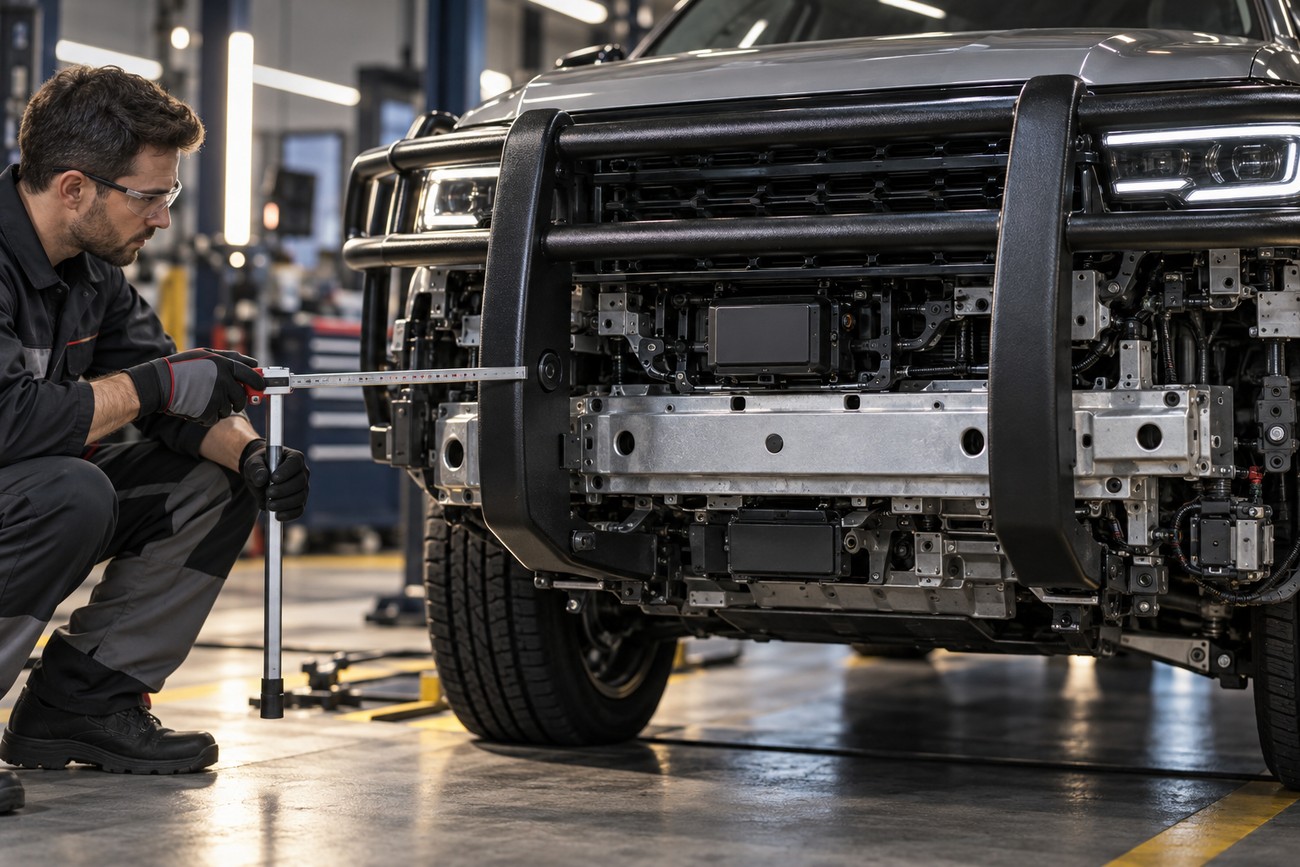
Electronic equipment needs its own inspection. Parking sensors, radar units, cameras, and other ADAS components depend on a clear and correctly shaped field of view. A guard can sit physically outside the bumper while still entering a sensor’s operating area or reflecting signals in a way that produces warnings or inaccurate operation.
Bracket-to-frame geometry and the sensor field of view should be verified before final tightening. A vehicle-specific label describes the intended application; it does not replace a check of the actual bumper, brackets, and factory equipment on the vehicle in front of you.
Large grille guards are often difficult for one person to install because of their size and weight. A second person can help hold the structure in position while the brackets are aligned, reducing the risk of cross-threaded fasteners or forced alignment. Follow the supplied tightening sequence and torque guidance, and inspect whether the guard sits evenly before loading it with accessories.
Weak brackets, incorrect tightening, or poor kit geometry can lead to squeaks, vibration, and play after installation. Recheck fasteners after the initial use period and investigate movement immediately. A guard that shifts under hand pressure is not ready for off-road loading, regardless of how thick or polished its tubes appear.
Hidden Trade-Offs: Cooling, Handling, and Real-World Damage
Added mass changes the front axle load and increases the work required from the front suspension. Some grille guards add 80 lb or more before a winch, lights, or recovery hardware are installed. That extra weight can influence ride height, steering response, braking feel, and suspension service life, especially on a vehicle already carrying a heavy front assembly.
Airflow deserves a physical check rather than a visual assumption. A metal guard can affect aerodynamics and may restrict radiator airflow if its tubes, plates, or mounting hardware block part of the cooling path. The risk depends on the guard’s geometry and the vehicle’s airflow layout, so monitor operating temperature under the conditions in which the vehicle is normally used.
Corrosion resistance also varies within the same material category. Stainless steel is not a single uniform quality level: alloy choice, weld quality, surface preparation, and finishing or polishing all affect long-term performance. A shiny surface can hide poor weld finishing or contamination around joints, while a coated steel product may perform well if the coating is properly applied and maintained.
A rigid external structure can create new load paths during an abnormal impact. Loads may be transferred into the body, frame brackets, bumper mounts, or sensors in ways the original front end was not designed to receive. The guard can reduce damage in one light contact while increasing damage to mounting hardware or surrounding panels in another.
These accessories are generally intended for branches, brush, debris, and light contact, not as a guarantee of survival in a serious crash. They do not replace the vehicle’s engineered crash-management systems. Treat claims based on “heavy-duty” appearance with caution, particularly when the product’s frame attachment and intended load case are poorly documented.
Legality, Safety, and the Buying Myths That Cause Problems
Legal treatment must be checked before installation, using the exact vehicle category and jurisdiction. Under cited TR CU 018/2011-related interpretations, forward-projecting steel structures attached to the front of M1 and N1 vehicles are prohibited. This can affect a product that is widely sold online and described as suitable for a particular truck or SUV.
For category G vehicles, the restriction is interpreted differently in the cited explanations, and a certificate of conformity may be required for inspection. That distinction does not create universal approval for every guard or every vehicle. Confirm the category, certification, modification process, and inspection requirements with the relevant local authority before buying or fitting the accessory.
Appearance is not evidence of legality or safety. A polished tube, a large crossbar, and a product photograph can conceal inadequate documentation, unsuitable mounting, or interference with safety systems. The same applies to thickness: a thicker or stainless-steel tube does not turn a bull bar or grille guard into a certified crash structure.
A full grille guard offers more coverage, yet it is not automatically safer or more practical. It also adds weight, installation complexity, and possible cooling, sensor, and equipment conflicts. The sensible purchase is the smallest properly mounted design that covers the hazard you actually face and remains compatible with the vehicle’s legal and electronic requirements.
Frequently asked questions
What is the difference between a bull bar and a grille guard?
A bull bar usually protects the center of the front end, including the lower grille and central bumper area. A grille guard covers a wider zone commonly including the grille, headlights, and bumper corners. Bull bars are often described as A-frame designs, while grille guards are commonly H-frame or full-width structures with vertical supports and a crossbar.
Retailers sometimes use the terms inconsistently, and “brush guard” may describe either a similar full-width product or a different coverage pattern. Judge the actual width, height, headlight coverage, bracket layout, and frame attachment rather than relying on the product name.
What is the point of a grille guard?
A grille guard reduces exposure of the grille, headlights, and front corners to brush, branches, debris, and light contact. It is useful when those areas face repeated hazards that a center-only bull bar leaves exposed.
It cannot guarantee protection in a serious collision and may introduce new risks if it blocks sensors, restricts airflow, or transfers abnormal loads into the body and brackets. Its value depends on the terrain, the vehicle’s equipment, and the quality of its mounting system.
How can I tell whether a grille guard is strong enough for my truck?
Examine the load path from the tubes through the brackets and into the vehicle frame. Look for clear fitment documentation, suitable fasteners, properly supported frame brackets, and installation instructions that match the exact bumper and trim. The guard should sit without forced alignment, and its attachment points should not rely solely on a bumper cover.
Tube diameter, polished finish, and visual bulk provide limited evidence. Select a design rated and documented for the intended use, then verify that it leaves adequate space for the license plate, winch, lights, tow hooks, and electronic systems. Strength is useful only when the whole mounting system and the vehicle configuration support it.