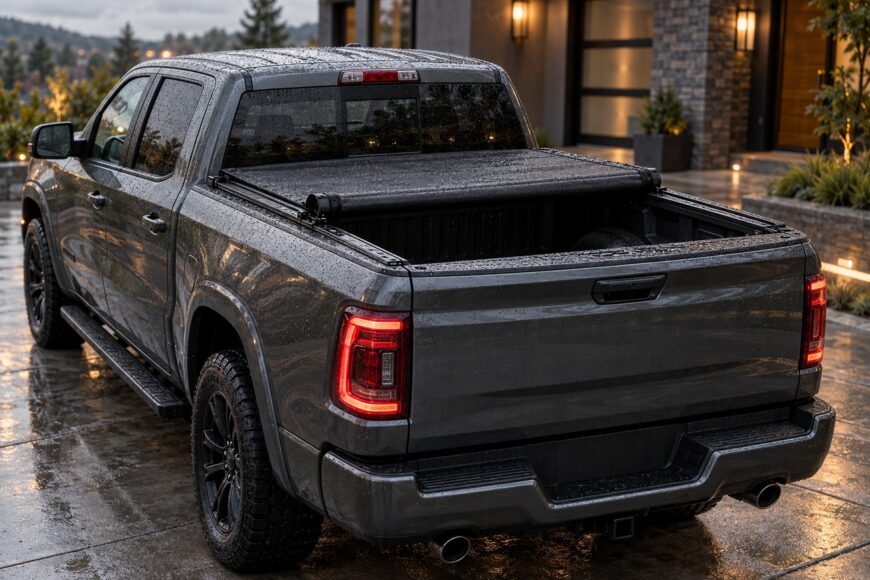
A tonneau cover can hide cargo from view, limit its exposure to rain, and make a pickup bed more useful for everyday loads. The trade-off is that no design gives you maximum bed access, security, weather sealing, low weight, and low cost at once. A cover that protects tools well may take more effort to open or get in the way of tall cargo.
The first choice is usually between a soft cover and a hard one, followed by how it opens. Materials matter, but a well-made cover can still leak or rattle if it does not fit the truck or is installed poorly. Start with what you carry, how often you open the bed, and which accessories must remain usable; those answers narrow the field more reliably than a generic product ranking.
- What a Tonneau Cover Does—and What It Does Not
- Tonneau Cover Types: Soft, Hard, and Access Styles
- How to Choose the Right Cover for Your Pickup
- Fit, Installation, and Compatibility Checks Before You Buy
- Water, Security, Load Rating, and Everyday Trade-Offs
- Fuel Economy, Noise, and Maintenance: Separating Claims from Ownership
- Frequently asked questions
- How should I clean and care for a vinyl tonneau cover?
- What is the best cover for a pickup bed?
- What are the best truck bed covers for 2026?
- What is the cover for a pickup bed called?
What a Tonneau Cover Does—and What It Does Not
A tonneau cover is a cover designed for a pickup bed. It spans the bed opening to reduce cargo visibility and limit exposure to weather while changing how you reach the load underneath. Depending on the design, you may roll it back, fold sections away, slide it into a housing, or lift a single panel.
Most covers are water-resistant rather than fully waterproof; some moisture inside the bed can be normal. Water can enter around the tailgate, hinges, rails, or seals, especially when the cover is misaligned. Keep documents, electronics, and other moisture-sensitive items in their own protective containers rather than relying on the cover alone.
Covering cargo also makes casual access harder, particularly with a rigid design and a secured tailgate. It does not turn the bed into a lockable safe or a theft-proof storage space. Check how the cover latches and whether the tailgate can still be opened: a closed cover offers much less protection if the bed remains accessible from the rear.
A covered bed can reduce aerodynamic drag, but fuel-economy gains are variable and depend on the pickup model, speed, and cover design. Treat any potential saving as a secondary benefit. The dependable reasons to buy are the access pattern, cargo screening, and degree of weather protection you need.
Tonneau Cover Types: Soft, Hard, and Access Styles
Construction and opening style are separate choices: roll-up and folding covers can be soft or hard. Soft covers commonly use vinyl, canvas, or fabric; hard covers commonly use aluminum, fiberglass, ABS, or composite materials. The table compares the combinations you are most likely to consider.
| Type | Typical material | Bed access | Practical protection | Weight and best use |
|---|---|---|---|---|
| Soft roll-up | Vinyl, canvas, or fabric | Rolls toward the cab for broad bed access | Screens cargo and sheds some weather; limited resistance to cutting | Relatively light; suits frequent loading of bulky items |
| Soft folding | Vinyl, canvas, or fabric over a folding frame | Sections fold back for partial access | Similar material limits to other soft covers; seams need attention | Usually manageable; suits regular access without rolling a full panel |
| Hard folding | Aluminum, fiberglass, ABS, or composite | Opens in sections; the folded stack may occupy bed space | More resistant to casual access, with weather performance dependent on seals | Heavier; suits mixed daily cargo and partial bed access |
| Retractable | Typically hard panels or slats | Slides into a housing near the cab | Rigid construction, with joints and drainage worth checking | Housing uses bed space; suits frequent access where that loss is acceptable |
| Hinged | Typically fiberglass, ABS, or composite | Lifts as one large panel | Broad, continuous top surface, subject to perimeter sealing | Can be cumbersome for tall cargo; suits loads that fit beneath it |
The opening mechanism changes the space you can actually use. A retractable cover keeps its housing in the bed, while a folded stack may block part of the opening or rear-cab view. A hinged panel can be straightforward for smaller items yet awkward when a load rises above the bed rails. Check the fully open position before deciding that a cover offers “full access.”
How to Choose the Right Cover for Your Pickup
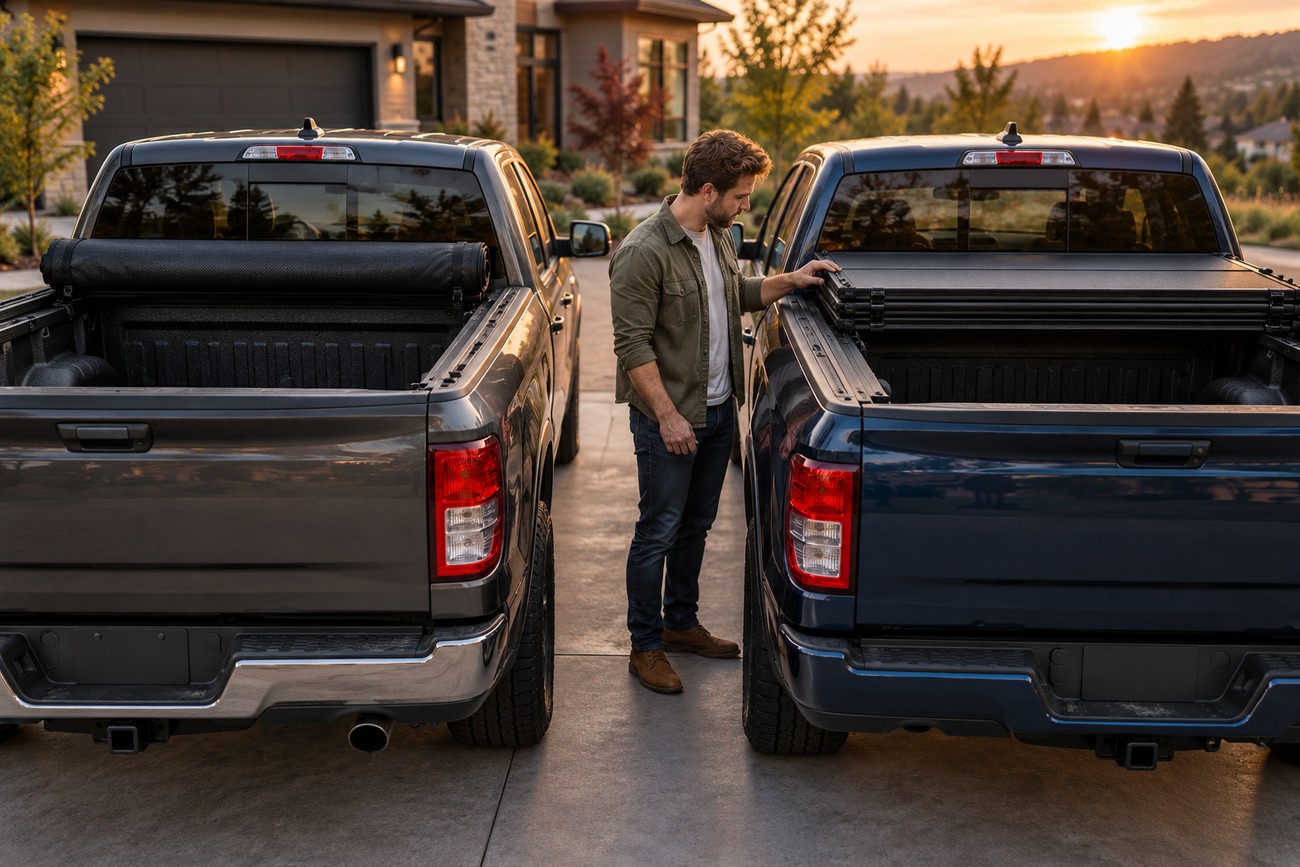
If you open the bed throughout the day, start with roll-up or folding designs. A roll-up cover clears a broad opening, although soft versions usually give up some protection and durability compared with hard covers. Hard folding often balances partial bed access and protection better than a design you must remove completely.
For tools or gear that regularly stay in the bed, hard construction generally provides greater durability and resistance to casual access than soft material. Pair that choice with a tailgate that closes and secures properly. If rain exposure is your main concern, compare sealing and drainage details rather than assuming that the hardest panel will make the driest bed.
Plan around your largest routine load, not the smallest one. A cover that works for bags may obstruct furniture, tall equipment, or a rack-supported load. Look at how quickly it can be removed, whether it can be secured partly open, and how much of the opening its folded sections or storage housing occupy.
Decide on racks, toolboxes, and rail-mounted accessories before choosing the cover: two products may both claim to fit the pickup yet need the same space along the bed rails. A low-profile design can reduce visual bulk, sit more naturally with the cab roof, and potentially reduce aerodynamic interference, but it may leave less clearance beneath the closed cover. Choose your access pattern first, then check protection and fit against the cargo you actually carry.
Fit, Installation, and Compatibility Checks Before You Buy
Match the exact pickup year, cab configuration, and bed length in the fit listing. Then account for anything already on the bed: a bed liner, toolbox, rack, bed caps, or rail-mounted accessories can occupy mounting space or obstruct the cover as it opens. Check both the closed position and the path the cover takes when fully opened.
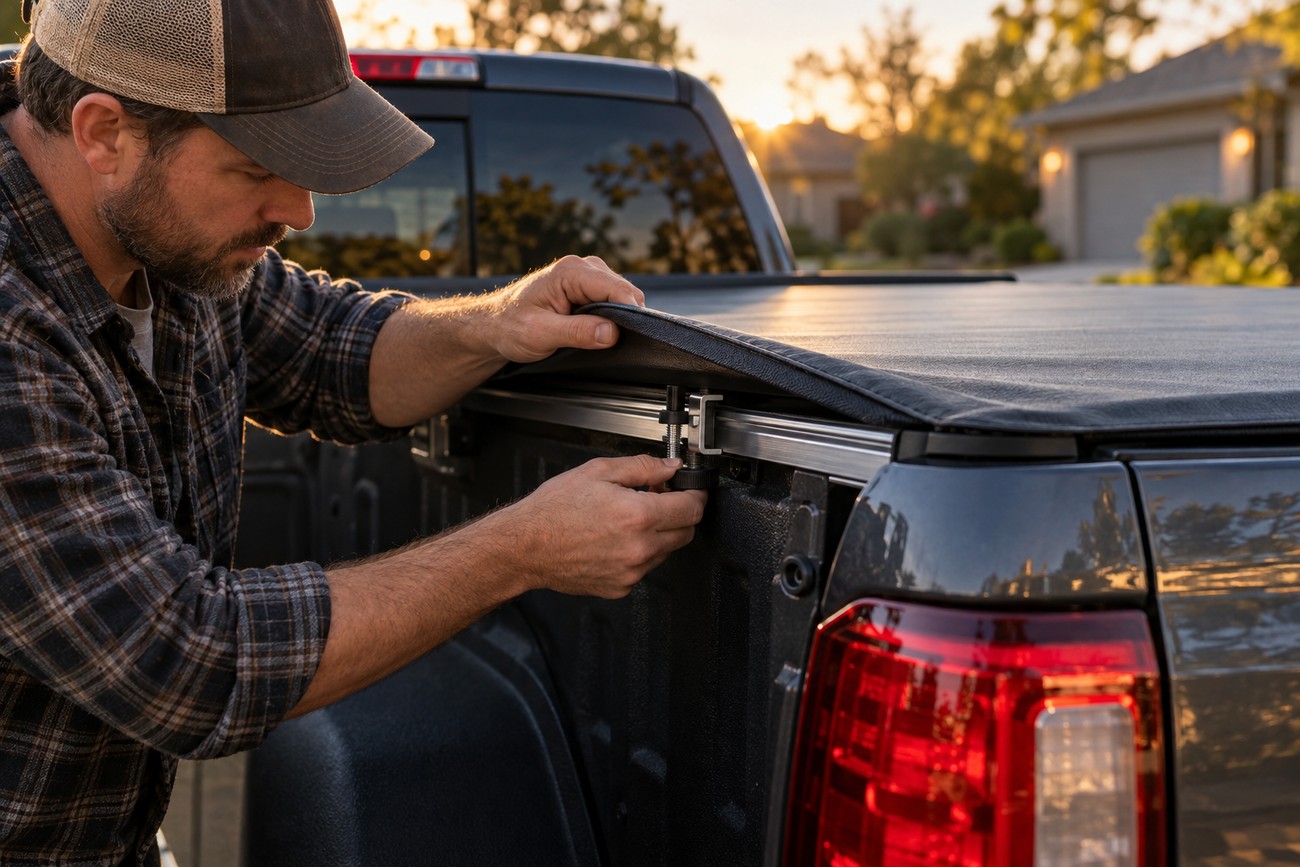
Read the installation requirements for the specific cover and pickup combination. No-drill installation and custom-fit compatibility apply to some models, not universally; even a clamp-on kit can require clamp adjustment, seal alignment, and latch tuning. Some setups may require drilling, so confirm that before ordering if permanent modification is a concern.
Test the cover with the tailgate, bed liner, and accessories in their final positions before tightening the clamps. A small shift that seems harmless while the bed is open can become a latch problem, a leak path, or highway noise once everything is closed.
After fitting, operate the cover through its full travel and close the tailgate as you normally would. Look for uneven contact along the rails, gaps at the front corners, and latches that need force to engage. If the cover moves or flaps on a drive, correct the alignment and fastening rather than assuming the noise is normal for its material.
Water, Security, Load Rating, and Everyday Trade-Offs
Seals, pressure against the rails, drainage, alignment, and installation quality all affect where water goes. Folding joints and the tailgate area deserve particular attention because each adds a possible path into the bed.
Keep moisture-sensitive cargo protected even if a new cover stays dry during its first rainstorm. Seals can wear, debris can interrupt contact, and a shifted clamp can open a gap later. If water appears repeatedly in one location, inspect the nearby seal and drainage route before treating the entire cover as defective.
Hard folding covers commonly carry stated ratings of about 250–400 lb of evenly distributed load. Some models claim 500+ lb; others list ratings up to 150 kg. A stated load rating applies to evenly distributed weight, not one concentrated heavy object. Do not set a heavy item on a single panel or hinge simply because its weight falls below the published figure; follow that model’s loading instructions.
Greater rigidity also brings mass and access compromises. Lifting or removing a hard cover may take more effort, and folded panels can consume space needed for cargo. Before buying, consider where you would put the cover when the bed must be completely open.
A closed cover reduces visibility and casual access, but it does not compensate for a weak or unlocked tailgate. Check the whole path into the bed, including the cover’s latches and the tailgate, before leaving valuables inside. Even a well-secured setup should be treated as a deterrent rather than theft-proof storage.
Fuel Economy, Noise, and Maintenance: Separating Claims from Ownership
Fuel-economy results vary by pickup model, speed, and cover design. Tests and owner reports range from noticeable changes to modest or inconsistent ones, so a cover is a poor purchase if it must pay for itself through fuel savings. Choose it for cargo use first; any reduction in consumption is a possible extra.
Flapping and wind noise often point to loose fit, poor adjustment, or worn seals rather than an unavoidable feature of every soft cover. Check that the cover is tensioned and latched as specified, then inspect the clamps and rail contact. Do not drive with a cover partly open unless its instructions expressly allow that position and explain how to secure it.
Soft materials can stretch, fade, and become stiff in cold weather. About 3–5 years is a common service-life estimate for soft vinyl covers with normal use and care, while hard covers often last 10+ years with normal care. These are expectations, not guarantees: exposure, handling, and the condition of the seals and hardware matter as much as the top panel.
Wash away grit that could abrade the surface or interfere with seals, and keep drainage paths clear where the design provides them. Recheck tension, clamps, fasteners, latches, and seal contact periodically, especially after removing and reinstalling the cover. If a component is torn, cracked, or no longer holds adjustment, cleaning will not restore it; identify the damaged part and follow the cover maker’s repair or replacement guidance.
Frequently asked questions
Routine care depends on the cover material and the maker’s instructions. For product comparisons, fit and the way the cover opens matter more than a universal ranking. The questions below address vinyl care, cover selection, and common terminology.
How should I clean and care for a vinyl tonneau cover?
Rinse off loose grit first, then clean the vinyl gently with a product permitted by the cover manufacturer and rinse it thoroughly. Avoid abrasive scrubbing, and do not apply a dressing unless the maker says it is suitable. Once the cover is dry, check its tension, seals, and edges for trapped debris or damage.
What is the best cover for a pickup bed?
The best cover fits your exact pickup and suits the way you load it. Choose a roll-up design if you regularly need a broad bed opening; consider a hard folding cover if your cargo usually fits below the rails and you want a sturdier barrier. Check how much space the cover occupies when open before deciding.
What are the best truck bed covers for 2026?
There is no single best 2026 cover for every truck. Shortlist models that fit your pickup and bed length, then compare access when open, latch and tailgate operation, weather sealing, and replacement-part availability. Confirm that the manufacturer permits how you plan to use the cover, including any partially open driving position.
What is the cover for a pickup bed called?
It is commonly called a tonneau cover or truck bed cover. When searching for a cover, parts, or installation instructions, include the opening style and your pickup’s exact fit details.