An icy morning can arrive while afternoons still feel mild. If tire-shop appointments are filling up, waiting for the first snow may leave you driving on summer tires through the first slippery commute. Changing too early has a cost as well: on persistently warm, dry pavement, winter tires can be noisier and wear faster than summer tires.
The useful decision point lies between those extremes. Watch the temperature trend, consider the roads you actually drive, and allow time to get the tires fitted before predictable icy conditions. A temperature guideline can help you plan, but it cannot replace the forecast or any rules that apply where you drive.
- The best time to switch: watch the temperature trend, not the calendar
- What if mornings freeze but afternoons are warm?
- Studded or studless tires can change the practical choice
- Check local rules before choosing a changeover date
- Before your appointment: avoid the changeover mistakes
- Frequently asked questions
- What does the “7/7 rule” for winter tires mean?
- How can I tell whether stored winter tires are fit to reuse?
- What if my winter trip crosses areas with different tire rules?
The best time to switch: watch the temperature trend, not the calendar
A sustained average daily temperature around +5 to +7°C is a practical cue to plan the switch to winter tires. It is a guideline, rather than a universal legal deadline or a guarantee that every road will be safe. Use it alongside the forecast and the conditions on your regular route.
Summer-tire rubber hardens as conditions get colder, reducing its ability to grip the road. That matters before snow appears, particularly when a cold morning leaves damp pavement slippery. Waiting for visible snowfall can therefore mean missing the point when you needed more cold-weather grip.
The average daily temperature accounts for temperatures across the full day, rather than just its daytime high or overnight low. A mild afternoon does not erase a run of cold mornings, just as one freezing night does not establish a lasting seasonal change. Look for a sustained pattern rather than making the decision from a single reading.
What if mornings freeze but afternoons are warm?
Give more weight to the conditions you will drive through than to the warmest hour of the day. Frost on a regular early commute, a forecast cooling trend, or an upcoming trip through colder areas can justify changing before the average daily temperature settles around +5 to +7°C. Do not wait for the first snowfall when icy driving is already predictable.
If temperatures are otherwise staying warm and that freezing morning was isolated, there is less reason to rush. On persistently warm, dry pavement, winter tires can be noisier and wear faster than summer tires. Check the next several days of weather and your likely travel times before committing to an unusually early change.
Allow for the time between deciding to switch and getting the work done. Tire shops may become busy as a cold spell approaches, so a forecast change is a better prompt to arrange an appointment than snow already on the road. If ice arrives before your booking, avoid assuming that a short or familiar journey is safe on summer tires.
Studded or studless tires can change the practical choice
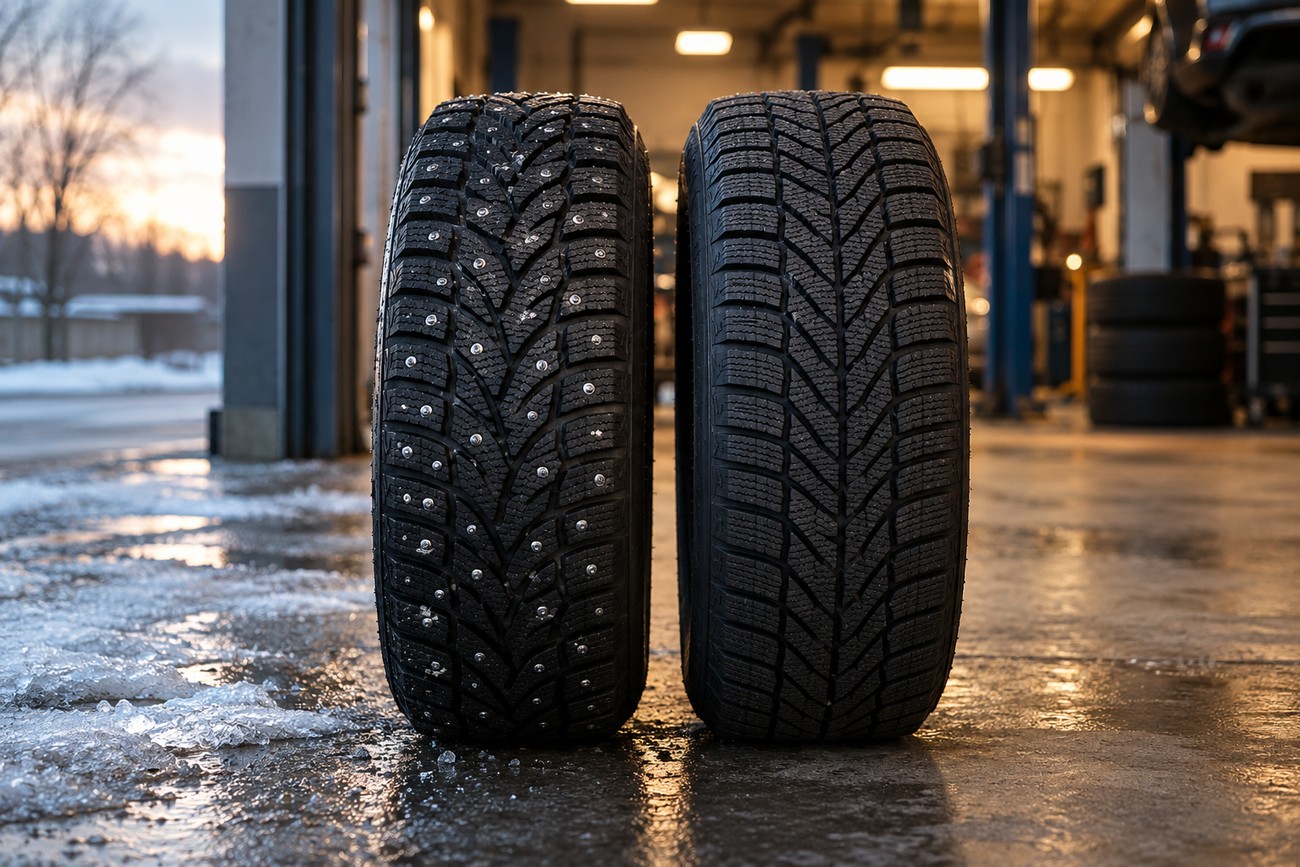
The winter roads you use should guide the type of tire you choose. Studless winter tires may suit a mild winter with mostly cleared roads and little ice. Studs can offer an advantage on bare ice, making them more relevant where that surface is a regular part of the drive.
Frequent driving on clear pavement reduces the appeal of studs and can increase their wear. A driver who spends most winter journeys on cleared city roads may get less use from that ice advantage than someone who routinely encounters exposed ice. Neither tire type makes speed, following distance, or route conditions irrelevant.
Winter compounds are designed for colder conditions, though their behavior varies by tire. Some tire makers describe studless winter compounds as retaining useful flexibility up to roughly +10°C; that is not a universal switching threshold. Choose the tire for your usual winter conditions, then use the temperature trend and forecast to decide when to fit it.
Check local rules before choosing a changeover date
Legal requirements depend on the jurisdiction, vehicle, and route. Check the rules that apply before setting a changeover date, especially if a trip crosses a border or reaches a region with different conditions. The temperature cue for switching is practical guidance; it does not override a legal requirement.
Russia provides one specific example. For M1 and N1 vehicles, winter tires are required in December, January, and February, and regional authorities may extend that period. Under the cited Russian rules, winter tires must be fitted on all wheels, rather than only on the driven axle.
In Russia, studded tires are prohibited in June, July, and August. A 4 mm minimum remaining tread depth is also commonly cited for winter tires there; verify the current rule and how it applies to your vehicle before relying on that figure. These are Russia-specific points, not requirements to apply worldwide.
Before your appointment: avoid the changeover mistakes
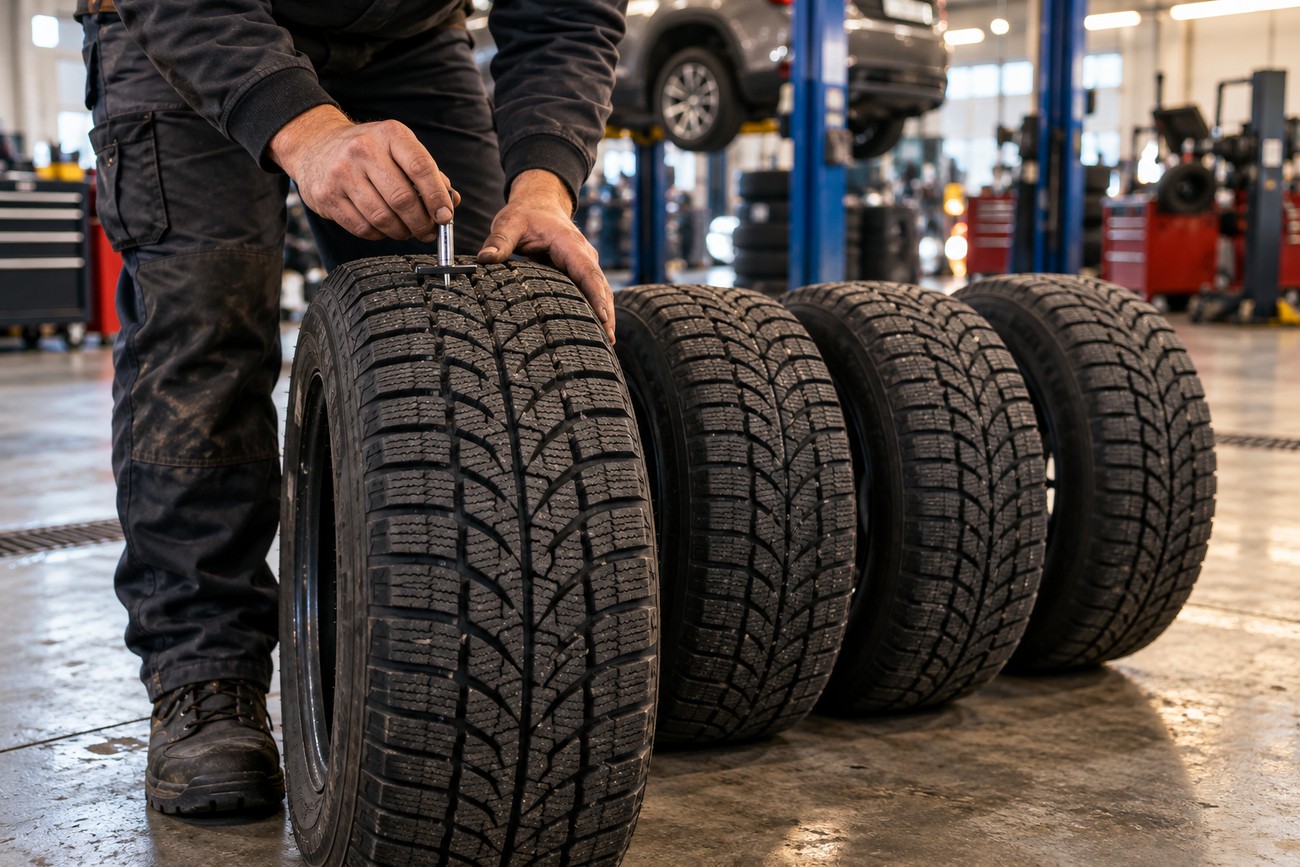
Book before the seasonal rush, and inspect the full set before it goes back on the car. Check remaining tread and look for cuts, bulges, and uneven wear. If a tire’s condition is uncertain, have a tire professional assess it rather than discovering a problem during installation.
Fit winter tires on all wheels. Mixing summer and winter tires across the axles can give the front and rear of the car different levels of grip, making its handling less predictable on a slippery road. Changing only the driven axle leaves that mismatch in place.
Ask about balancing when the wheels are fitted; balancing after a seasonal wheel change is recommended. Check tire pressure after fitting and regularly thereafter, using the pressure specified for your vehicle. Every two weeks is a commonly suggested check interval, though it is a reminder rather than a universal requirement.
Frequently asked questions
These points help with decisions that a changeover date alone cannot settle. Tire condition, travel plans, and local rules still matter once you have chosen when to book.
What does the “7/7 rule” for winter tires mean?
The phrase is an informal reminder linked to the common cue of roughly +7°C, not a universal legal standard. Do not assume it requires you to wait a fixed seven days. A sustained average daily temperature around +5 to +7°C can help you plan, while a forecast icy trip or an applicable local rule may call for action sooner.
How can I tell whether stored winter tires are fit to reuse?
Inspect each tire before fitting it, including its tread and sidewalls. Look for cracks, cuts, bulges, and uneven wear as well as adequate remaining tread. If damage or the tire’s overall condition is uncertain, seek a tire professional’s assessment before using the set.
What if my winter trip crosses areas with different tire rules?
Check requirements along the entire route, including your destination and any restrictions on studded tires. Rules at your starting point may not cover every area you enter. Confirm what applies to your vehicle and tires before departure, then consider the forecast conditions along the journey as well.