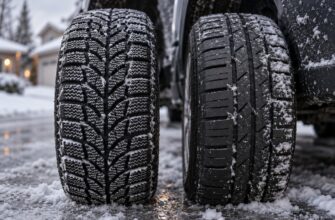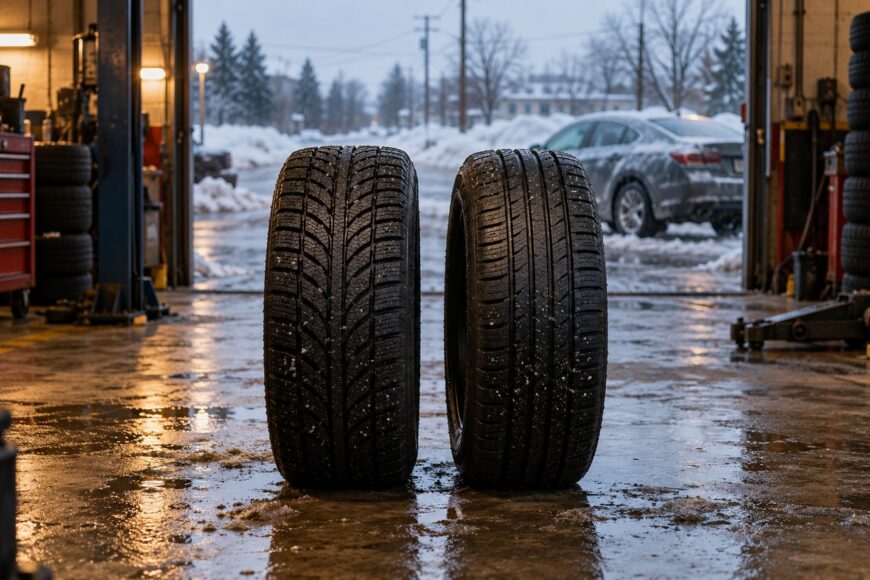
Keeping one set of tires on the car all year is appealing, especially if snow usually arrives without much warning. The compromise can become clear later: a tire that helps you pull away on a snowy street may still disappoint when you brake on ice, while a snow-focused tread may add road noise on every dry commute.
The useful choice depends on the winter roads you actually drive. Occasional slush on cleared streets calls for a different tire than repeated trips over icy highways or mountain roads. Start with your climate and routes, then compare specific tires rather than trusting whichever category name sounds more capable.
- What all-season, all-weather, M+S, and 3PMSF mean
- All-season vs. all-weather tires at a glance
- Choose for the worst road you regularly drive
- The year-round costs of extra snow capability
- Check the tire—not just the product listing—before you buy
- Frequently asked questions
- Which are better, all-weather tires or all-season tires?
- What is the downside of all-weather tires?
- What tires should you stay away from?
What all-season, all-weather, M+S, and 3PMSF mean
Conventional all-season tires are intended for year-round use in relatively moderate conditions, though their capabilities vary widely. All-weather is a marketing designation within the broader all-season category; such tires usually, but not invariably, carry the three-peak mountain snowflake symbol, or 3PMSF. The name itself is not an official performance standard, so check the tire rather than relying on the product description.
3PMSF indicates that a tire passed a standardized packed-snow traction test under ASTM F1805. It establishes a threshold for traction in that test, not a ranking of winter tires. In particular, it is not an ice-braking or handling rating.
M+S means mud and snow, but M+S alone does not establish that a tire passed the 3PMSF snow-traction test. A tire can therefore have M+S on its sidewall without a passing result from the packed-snow test signaled by 3PMSF. Neither marking tells you how confidently the tire will stop on bare or wet ice.
You may see 3PMSF described as a “winter standard.” That shorthand is useful only if its limits stay clear: the symbol confirms a specific snow-traction test, not a comprehensive assessment of braking, cornering, and control across winter surfaces. Treat it as one piece of evidence when comparing tires, not as a complete winter-performance rating.
All-season vs. all-weather tires at a glance
These are typical tendencies, not promises about individual models; compare tires tested in the conditions that matter to you.
| Consideration | Conventional all-season | All-weather |
|---|---|---|
| Category and markings | Often marked M+S; M+S alone does not establish that the tire passed the 3PMSF snow-traction test. | A marketing designation within the all-season category; usually, but not invariably, marked 3PMSF. Check the sidewall. |
| Packed-snow traction | Varies by model; without 3PMSF, no passing result from that standardized test is established. | Typically improves on a conventional all-season tire. A 3PMSF marking confirms a passing packed-snow traction result under ASTM F1805, not a performance ranking. |
| Ice | Ice braking and handling cannot be inferred from M+S. | 3PMSF is not an ice-braking or handling rating; a dedicated winter tire remains the stronger choice for frequent ice. |
| Year-round driving | Often a sensible fit for mostly clear, mild-weather roads; comfort and wear depend on the model. | Offers more snow-focused capability, while noise, rolling resistance, wear, and dry-road feel vary by model. |
| Likely buyer | A driver who rarely encounters snow and can avoid travel when roads turn wintry. | A driver who wants one set for occasional snowfall and accepts the limits on ice. |
Choose for the worst road you regularly drive
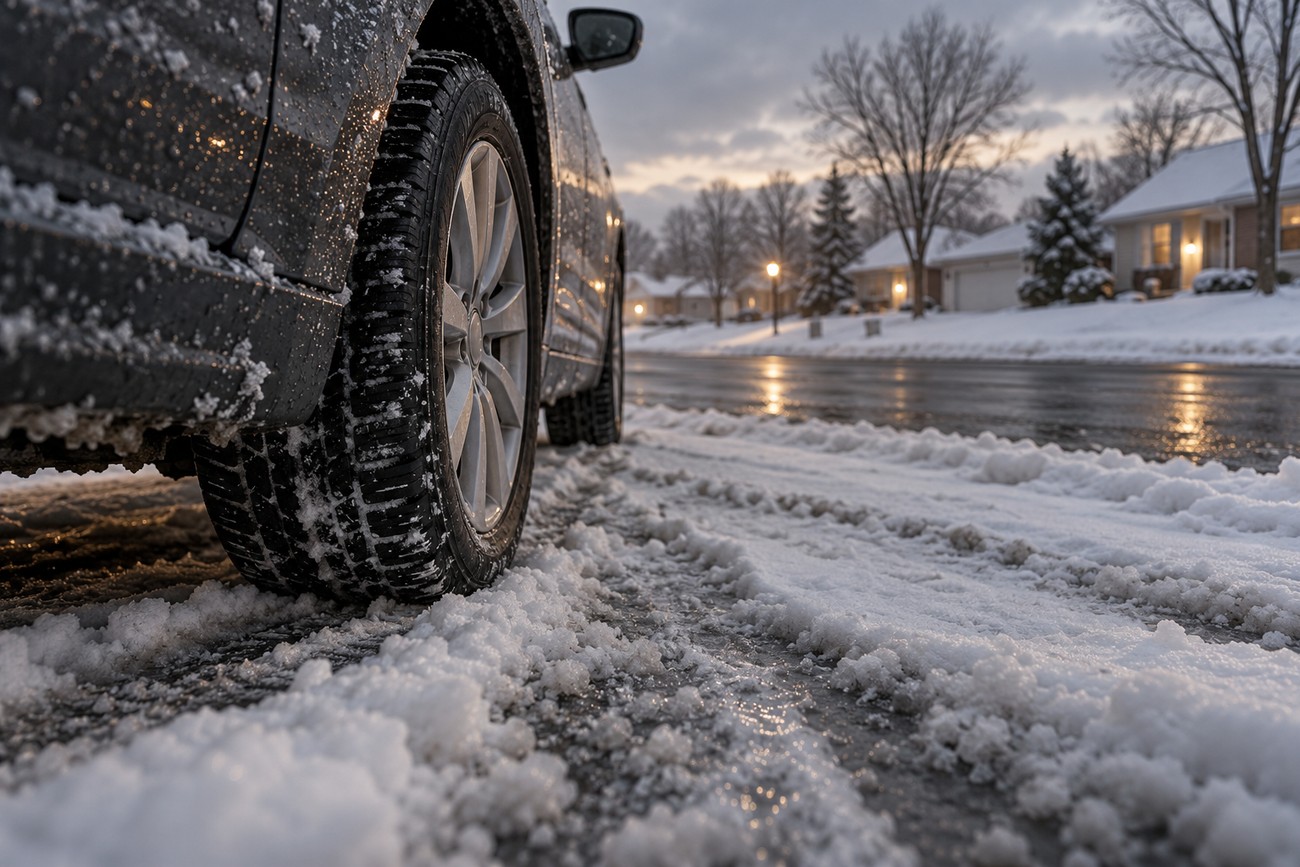
Base the decision on roads you must use, rather than the harshest weather your region has ever seen. If winter driving is mostly on clear, mild-weather streets and you can postpone trips during snowfall, a suitable conventional all-season tire may be enough. Its year-round road manners may matter more to you than additional packed-snow traction you rarely use.
All-weather tires make a stronger case where snow is occasional but can arrive before roads are cleared. They typically improve snow traction relative to conventional all-season tires, which can make an unexpected snowy departure less difficult. The benefit is most relevant when a separate winter set would otherwise spend much of the season waiting for a storm.
Frequent ice, deep snow, mountain roads, and sustained severe cold change the calculation. Dedicated winter tires remain the stronger choice for those conditions. Drivers who regularly travel at highway speeds in freezing weather should pay particular attention to stopping and steering demands, rather than judging a tire by how readily the vehicle gets moving.
That distinction matters because 3PMSF indicates a passing standardized packed-snow traction test under ASTM F1805; it is not an ice-braking or handling rating. Good pull-away grip on snow can give a misleading sense of security at the next icy junction. Whatever tire you choose, leave room to slow down and avoid treating a sidewall symbol as permission to drive normally on a slippery road.
The year-round costs of extra snow capability
Snow-oriented tread and compounds can change how a car feels during the months without snow. Some drivers notice more cabin noise or less precise steering on dry pavement after switching to all-weather tires. Those effects vary by model, road surface, and vehicle, so a category label cannot tell you how noticeable the change will be.
Rolling resistance and wear also deserve attention if most of your driving is warm-weather commuting. Depending on the model and conditions, an all-weather tire may use more fuel or wear sooner than a conventional all-season alternative. In a hot climate with rare winter exposure, that year-round trade-off may buy little practical benefit.
The most consequential disappointment can come on bare ice. Although all-weather tires typically improve snow traction relative to conventional all-season tires, a 3PMSF marking is not an ice-braking or handling rating. If icy roads are a regular part of your route, weigh that limitation more heavily than an improvement you feel when accelerating through loose snow.
Check the tire—not just the product listing—before you buy
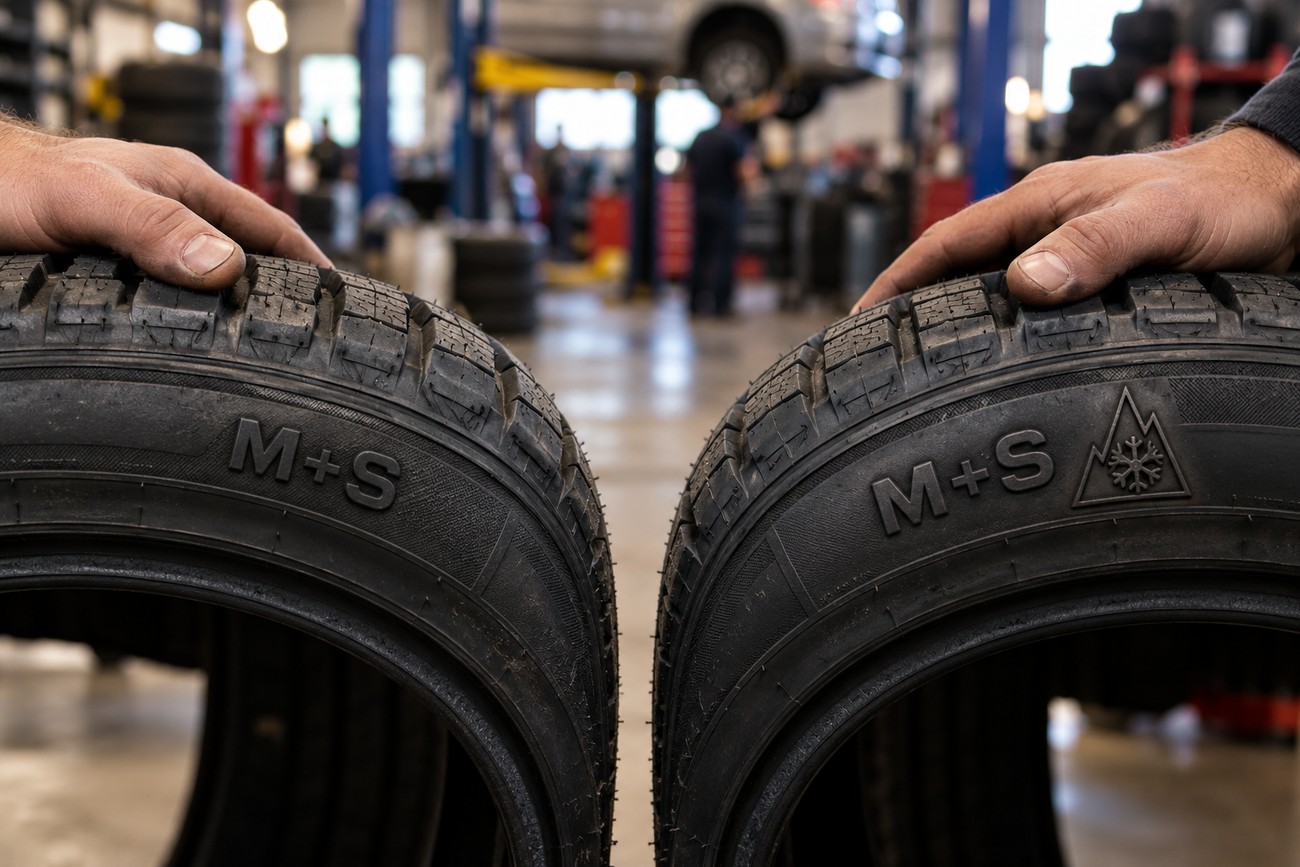
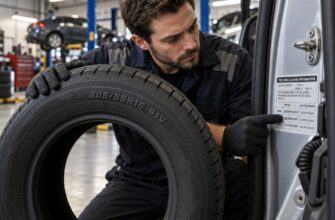
Confirm the markings on each tire’s sidewall before installation. All-weather is a marketing designation within the broader all-season category, and such tires usually, but not invariably, carry 3PMSF. A retailer’s category label is no substitute for the physical symbol; M+S alone does not establish that a tire passed the 3PMSF snow-traction test.
Next, compare independent results for the specific models on the surfaces you encounter: snow, wet pavement, dry pavement, and ice where results are available. Look beyond a single overall score to braking, handling, noise, and wear information that matches your driving. Two tires sold under the same category name can make noticeably different compromises.
Visible grooves are a poor reason to keep an aging winter set by themselves: rubber condition can change even while tread remains. Compare that set’s condition with a replacement before assuming it still provides the winter grip you bought it for.
Inspect tread depth and rubber condition, consider the tires’ age, and maintain the vehicle’s specified inflation pressure. These factors affect winter suitability beyond any sidewall marking; avoid relying on a single visual check or one replacement threshold for every tire. If you drive in Canada, check current requirements for the provinces on your route, because winter-tire marking rules and applicable dates vary by province.
Frequently asked questions
The best answer depends on the vehicle’s setup and the roads it must cover. These short answers address common purchase decisions without treating a tire category as a guarantee.
Which are better, all-weather tires or all-season tires?
Choose all-weather tires if you need one set and occasionally have to drive before snowy roads are cleared; choose conventional all-season tires if winter roads are usually clear and you can avoid the rare snow day. Neither category wins across every model or route. If your regular journey includes ice or severe winter conditions, compare a dedicated winter setup instead.
What is the downside of all-weather tires?
The main downside is accepting a year-round compromise for snow capability you may seldom use. Depending on the model, you may notice more noise, different dry-road steering feel, increased rolling resistance, or faster wear. Check model-specific tests and your annual driving conditions before assuming those penalties—or the snow benefit—will be substantial for you.
What tires should you stay away from?
Avoid tires whose condition, size, load rating, or other specifications do not suit your vehicle and journey, regardless of the name on the listing. Be especially cautious about using worn or aged tires for winter travel, or buying an M+S-only tire on the assumption that it has passed the 3PMSF test. Where winter markings are legally required, verify the current rules for each place you will drive; Canadian requirements and dates vary by province.