Repeated conventional balancing has not removed the vibration, especially at highway speed or within a narrow speed range. The shop may report that the wheel is balanced, yet the steering wheel or body still trembles after several attempts. A change after tire rotation can make the source even harder to identify.
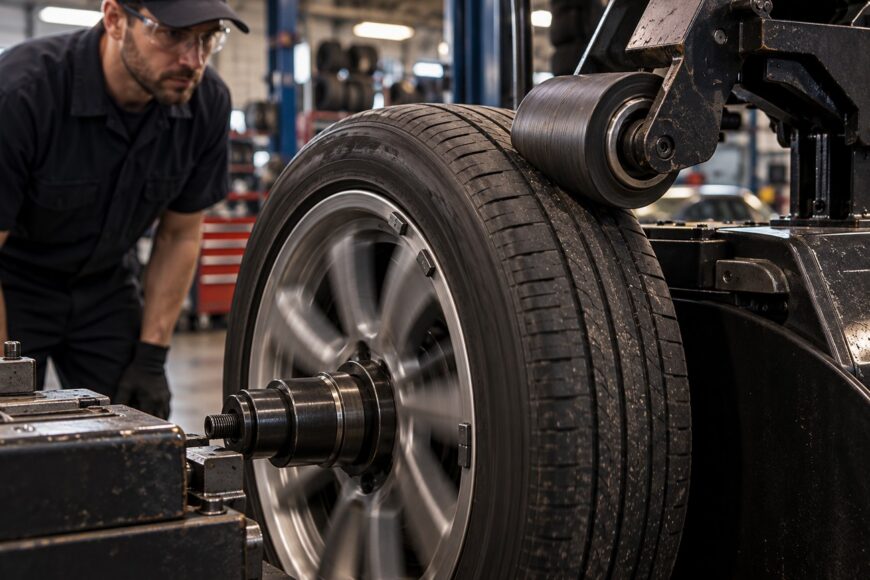
Mass balancing corrects how weight is distributed around the wheel. Road force measurement examines how the complete tire-and-wheel assembly loads the hub as it rotates under a roller. That makes it a useful diagnostic step when ordinary balancing has reached its limit, although it does not guarantee that every vehicle vibration comes from the wheel assembly.
- Why a Balanced Wheel Can Still Vibrate
- Make the Measurement Worth Trusting
- What the Road Force Result Actually Tells You
- When Road Force Is Not the Whole Diagnosis
- The Service Errors That Keep the Vibration Alive
- A Practical Decision Path for Persistent Vibration
- Frequently asked questions
- What is an acceptable road force balance?
- How long does road force balancing take?
- What should a road force balancing printout show?
Why a Balanced Wheel Can Still Vibrate
Mass imbalance occurs when the rotating assembly has a heavy spot. Balance weights can compensate for that weight distribution, so the machine may show little remaining imbalance. Road force variation, or RFV, describes the change in load applied to the hub as the wheel rotates.
RFV reflects tire stiffness variation and wheel-tire assembly ovality, as well as other radial variation. A tire can therefore be correctly balanced by mass while still pressing against the road with changing force during each revolution. A load roller applies pressure to the rotating assembly and can expose this behavior, which a free-spinning balance test may not reveal.
Technicians also evaluate the pattern of the load change. RH1 represents one load-variation cycle per wheel revolution, while RH2 represents two cycles per revolution. These measurements are considered alongside tire and wheel radial runout because the pattern can help separate a tire issue from a wheel-shape or mounting issue.
Speed matters because the vehicle, suspension, and tires respond differently as rotational speed rises. A small loaded variation may be barely noticeable at city speeds and become prominent on a highway. The same source may be felt through the steering wheel when it is on the front axle, or through the seat and body when it is on the rear axle, although vehicle structure and suspension can blur that distinction.
Make the Measurement Worth Trusting
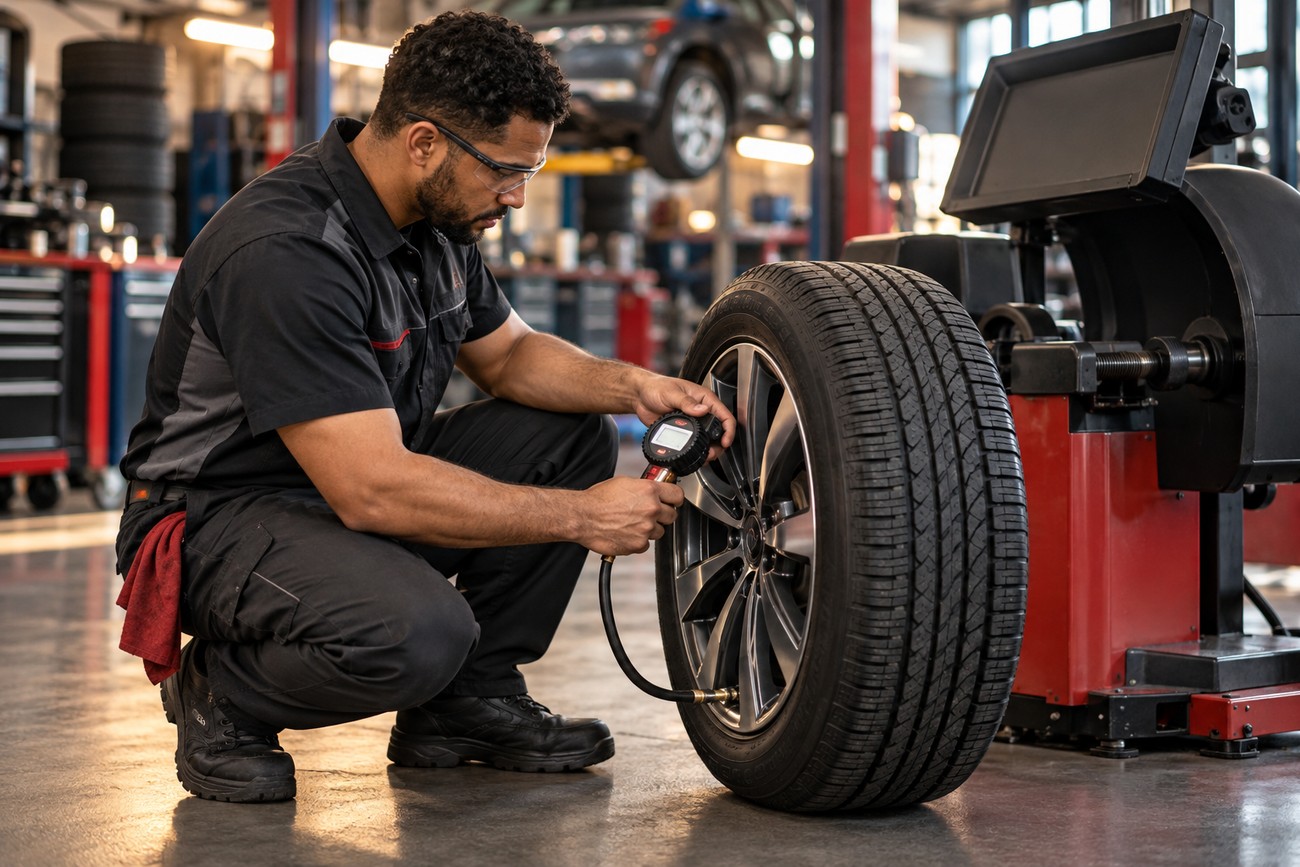
Road force results are only useful when the test conditions represent the vehicle correctly. Set tire pressure to the vehicle manufacturer’s specification before testing. Pressure changes the way the tire carries the load and can affect the measurement.
Some prescribed procedures require the tires to warm for at least 15 minutes at highway speed before measurement. This can matter after a tire has been parked or mounted, because temporary flat spotting and cold-tire behavior may influence the first result. The applicable vehicle, tire, or equipment procedure should determine whether warm-up is required.
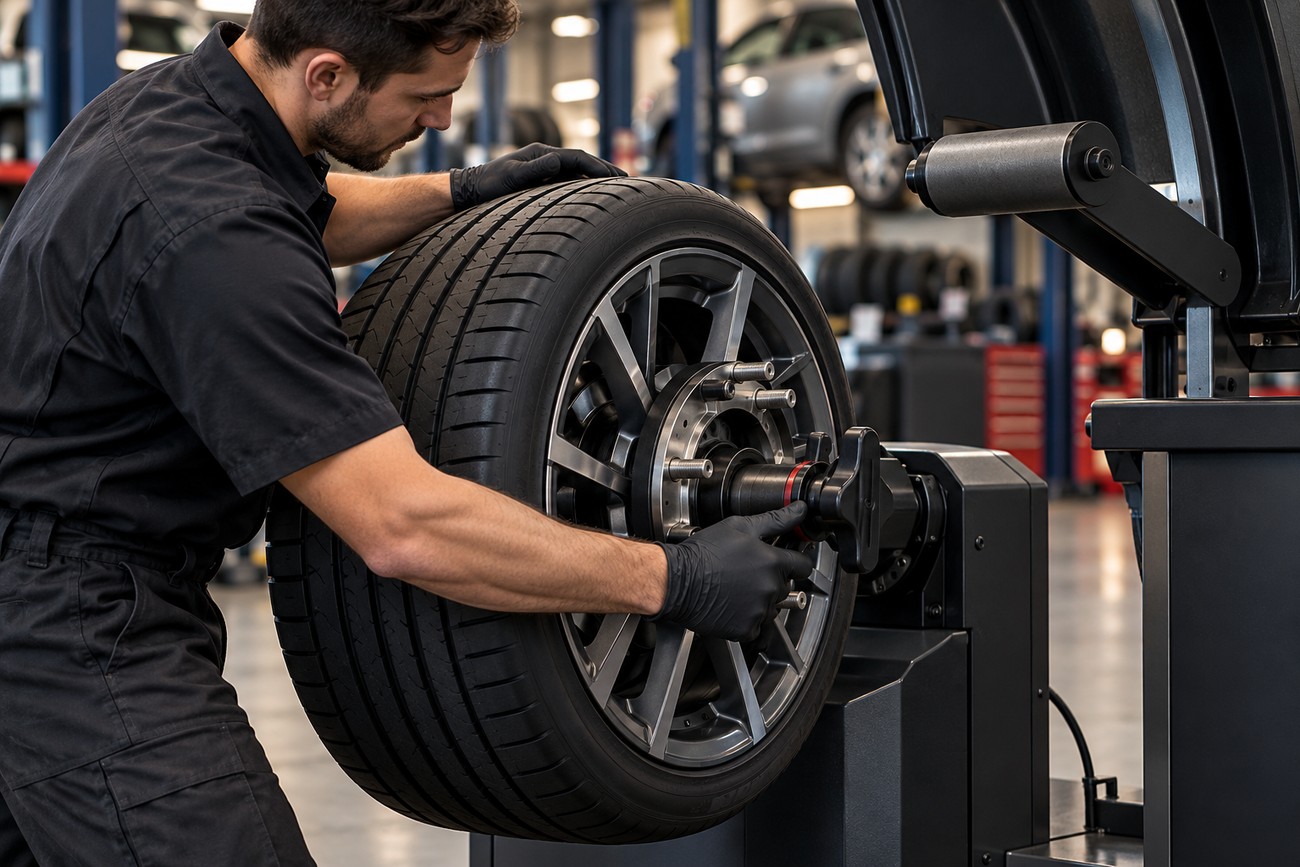
The wheel must be clean, particularly at the mounting surfaces. The operator also needs the correct cone, flange, or other adapter and must center the wheel accurately on the machine. Dirt, an unsuitable centering method, or poor seating can create a reading that resembles a tire or wheel defect.
Machine condition and calibration also affect the result, as do the attachment method and operator technique. A road-force number from a poorly maintained machine or an incorrectly mounted wheel should not be treated as a precise diagnosis. Reliable testing starts with reliable mounting.
What the Road Force Result Actually Tells You
A road-force result describes the behavior of the loaded wheel assembly. It should be read together with RH1, RH2, tire radial runout, and wheel radial runout. The separate contributions matter because a high combined value can come from the tire, the wheel, their relationship, or an installation problem.
ForceMatch is a corrective procedure that rotates the tire relative to the wheel so the tire’s stiff or high spot aligns with the wheel’s low spot. This can reduce the combined radial variation. ForceMatch is not ordinary mass balancing, and it cannot turn a structurally nonuniform tire into an equivalent sound tire.
A high first reading may justify remounting the tire, rotating it 180 degrees relative to the wheel, reseating the beads, and measuring again. The second result shows whether the relationship between the tire and wheel was contributing substantially. It also prevents the first machine reading from being mistaken for a final verdict.
The useful question is therefore how the assembly changed after the adjustment. A meaningful record should show the initial and final RFV, the tire and wheel positions, runout observations, and the result after rotation or ForceMatch. Without that comparison, a customer cannot tell whether the service reduced the source of the vibration.
When Road Force Is Not the Whole Diagnosis
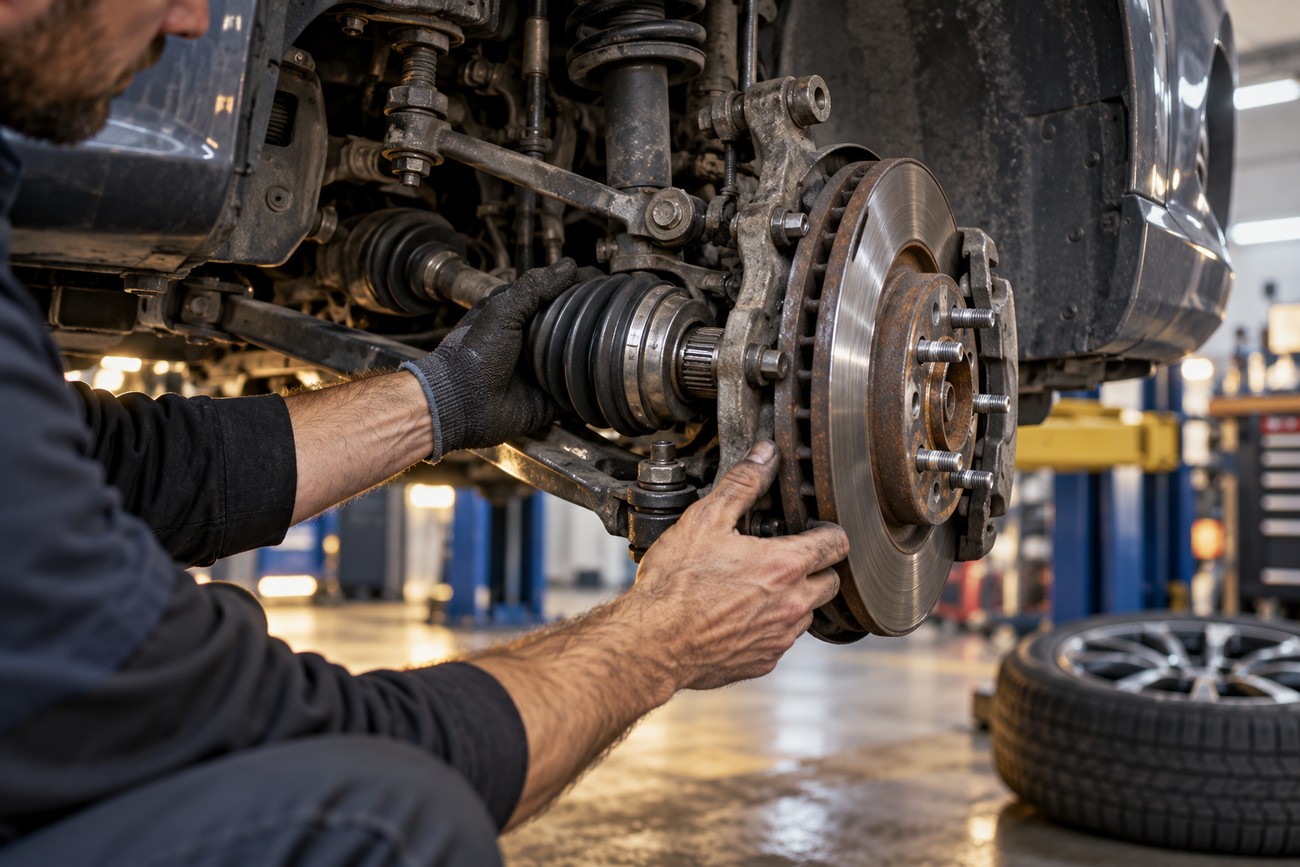
Road force characterizes one wheel assembly under load. It does not automatically diagnose a wheel bearing, CV joint, axle or driveshaft, suspension component, brake component, or bent hub. Those parts can create vibration even when the tire and wheel produce an acceptable road-force result.
A low RFV reading can coexist with vibration from the drivetrain, hub, brakes, or suspension. The machine measures the wheel assembly separately, while the vehicle produces additional resonances through its structure, steering, suspension, and powertrain. The speed at which the complaint occurs remains important after the wheel test.
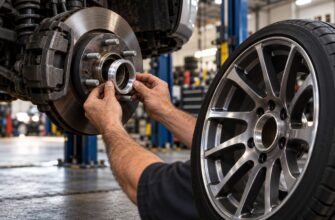
Basic mounting checks belong in the diagnosis before parts are replaced. Dirt between the wheel and hub, incorrect wheel seating, or old sealant can imitate a tire problem. A technician should inspect contact surfaces, verify that the wheel is seated correctly, and consider hub runout where the vehicle symptoms support that check.
Replacing suspension or driveline parts solely because a vibration remains after balancing can waste time and money. Conversely, a good road-force result should not be used to dismiss a repeatable vehicle complaint. It marks the boundary between wheel-assembly diagnosis and the next stage of vehicle testing.
The Service Errors That Keep the Vibration Alive
The first failure is checking only balance weights. A wheel with few weights may still have significant RFV because weight distribution and loaded radial force are different measurements. A proper service should state whether the wheel received ordinary mass balancing, road-force measurement, or both.
Testing cold or incorrectly inflated tires can also distort the decision. So can a wrong cone, unsuitable flange, poor centering, or dirt on the wheel. These errors are particularly serious when a shop presents one number as proof that the tire itself is defective.
Breaking the bead and comparing the first reading with the result after rotating the tire shows whether the tire-wheel relationship was part of the problem. The first number is evidence for the next step, not automatically the final diagnosis.
Marketing language can conceal ordinary spin balancing under a phrase such as “road-force balance.” A genuine road-force procedure includes a loaded measurement and may include bead reseating, tire rotation on the wheel, ForceMatch, and a repeat measurement when justified. Tire rotation can reduce RFV, but it cannot make a structurally nonuniform tire equivalent to a sound tire.
The service record should preserve the initial RFV, final RFV, tire and wheel positions, relevant marks, runout observations, and the result after adjustment. Without before-and-after information, there is no reliable way to establish what changed or whether the vibration source was actually reduced.
A Practical Decision Path for Persistent Vibration
Start by documenting the complaint: the speed range, whether the vibration is felt mainly in the steering wheel or body, and whether it changes after tire rotation. This information helps determine whether the symptom follows a wheel position or remains with the vehicle. It also gives the technician a way to reassess the result on the road.
Next, inspect wheel seating, hub and wheel contact surfaces, visible damage, tire condition, and pressure. Confirm the required test conditions, including any prescribed warm-up. The measurement should then be performed with correct centering, a suitable adapter or flange, and a clean wheel.
Evaluate RFV, RH1, RH2, and tire and wheel radial runout together. If the first result is high, remounting, rotating the tire relative to the wheel, reseating the beads, or using ForceMatch may be justified. Record each relevant position and repeat the measurement after the adjustment.
Interpret the final result in the context of the vehicle complaint and applicable manufacturer or equipment guidance. There is no universal internet number that determines every replacement decision. If the wheel assembly is acceptable yet the vibration remains, continue with hub, brake, suspension, and driveline checks rather than repeating the same balance operation.
Frequently asked questions
Road-force measurement is a diagnostic step, not a guarantee that every vibration comes from the wheel assembly. The result should be interpreted with the vehicle symptoms and the test conditions. Before-and-after records help show whether an adjustment changed the assembly.
What is an acceptable road force balance?
There is no single acceptable RFV threshold for every vehicle, tire, machine, and driver complaint. One commonly cited practical discussion treats about 11–20 units as acceptable and 21–27 units as potentially noticeable, but these are informal ranges rather than a universal manufacturer-approved or machine-wide limit.
The number must be considered with tire and wheel runout, the vehicle’s sensitivity, the speed of the complaint, and the quality of the measurement. A printout without test conditions, positions, and repeat results provides too little context for an automatic pass-or-fail decision.
How long does road force balancing take?
Service time varies with setup and the condition of the assembly. A straightforward measurement may require less work than a case involving tire warm-up, bead breaking, tire rotation, ForceMatch, and repeat testing.
Some prescribed procedures require at least 15 minutes of warming at highway speed before measurement. A careful appointment should also allow time to verify pressure, clean and center the wheel, document the readings, and reassess the vehicle if the wheel result does not explain the complaint.
What should a road force balancing printout show?
A useful printout should show the initial and final RFV values, tire and wheel positions, relevant runout observations, and the result after tire rotation or ForceMatch. It should also identify meaningful adjustment information so the change can be traced to a specific action.
Those records distinguish a measured road-force procedure from ordinary balancing by grams. They also preserve evidence for the next diagnostic step if the vehicle still vibrates after the wheel assembly has been corrected.