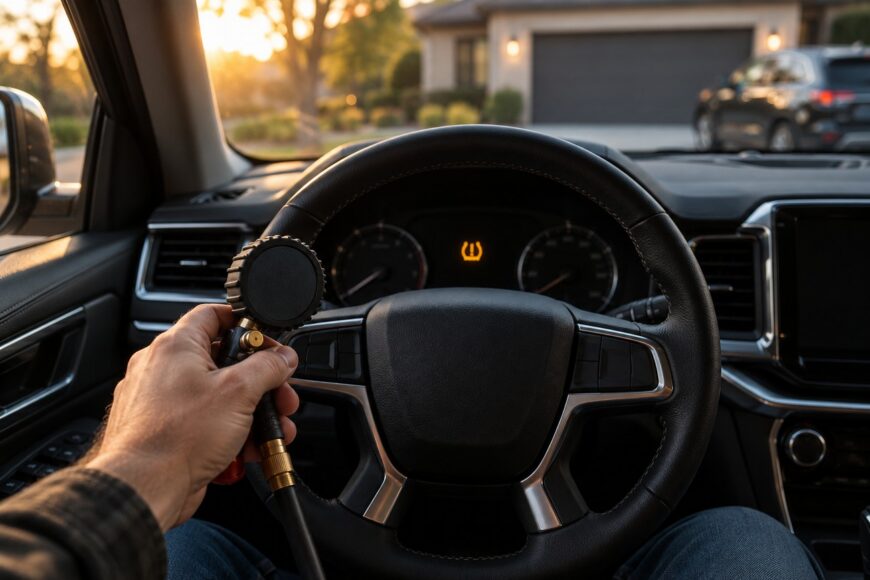
A tire pressure monitoring system (TPMS) light may appear after a cold night or stay on after tire service. The cause could be low pressure, a system fault, or a reset or learning procedure that has not finished. The light tells you to investigate; it does not, by itself, tell you which condition is present.
TPMS is designed to warn you about pressure loss, often before a tire looks visibly low. It cannot replace a check with a separate, reliable gauge. Start with the pressure specified for your vehicle, then use the warning light and your manual to decide whether the system also needs attention.
- What does the TPMS warning light mean?
- Direct vs. indirect TPMS: what owners need to know
- When does TPMS warn—and why is there no universal threshold?
- Check the tires before resetting the system
- Why the light stays on after inflation or a wheel swap
- What TPMS cannot tell you
- Frequently asked questions
- What is the 4 psi rule for tires?
- What are the two types of tire pressure monitoring systems?
- What is the 4 psi rule on tires?
What does the TPMS warning light mean?
TPMS monitors for pressure loss while the vehicle is in use. A low-pressure warning calls for a check of all road tires against the vehicle’s recommended cold inflation pressures. It does not establish that a tire is punctured: colder weather can lower pressure enough to trigger an alert, while a slow leak is another possibility.
Pay attention to how the warning appears. Depending on the vehicle, a flashing light or a separate indicator can signal a TPMS malfunction rather than a confirmed low-pressure reading. Your owner’s manual explains the exact indicator behavior and any message shown on the dashboard.
After you inflate the tires, the light may remain on while the system updates. Some vehicles clear the alert after driving; others require a vehicle-specific reset. Check the pressure first, because clearing a warning without correcting an underinflated tire leaves the underlying problem in place.
Direct vs. indirect TPMS: what owners need to know
Both types warn about possible pressure loss, but they gather different information. That distinction matters when you change wheels, adjust pressure, or try to diagnose a warning that will not clear.
| Feature | Direct TPMS | Indirect TPMS |
|---|---|---|
| How it detects pressure loss | Measures pressure using a sensor in the wheel. | Infers pressure loss from wheel-speed behavior, typically using ABS data. |
| Wheel-mounted hardware | Uses pressure sensors associated with the wheels. | Generally has no separate pressure sensor in each wheel. |
| After pressure or wheel changes | A wheel change may require automatic learning, a manual relearn, or diagnostic equipment, depending on the vehicle. | Generally needs recalibration after pressure adjustment to establish the correct baseline. |
| Characteristic limitation | A numerical dashboard display is vehicle-dependent; a sensor or its integrated battery can also fail. | May be less effective if all tires lose pressure similarly and does not directly measure pressure. |
If your dashboard shows a number for each tire, those readings come from a direct system. A direct system can also be fitted without a numerical display, so the absence of numbers does not identify the type on its own. Check the manual before buying sensors or attempting a reset.
When does TPMS warn—and why is there no universal threshold?
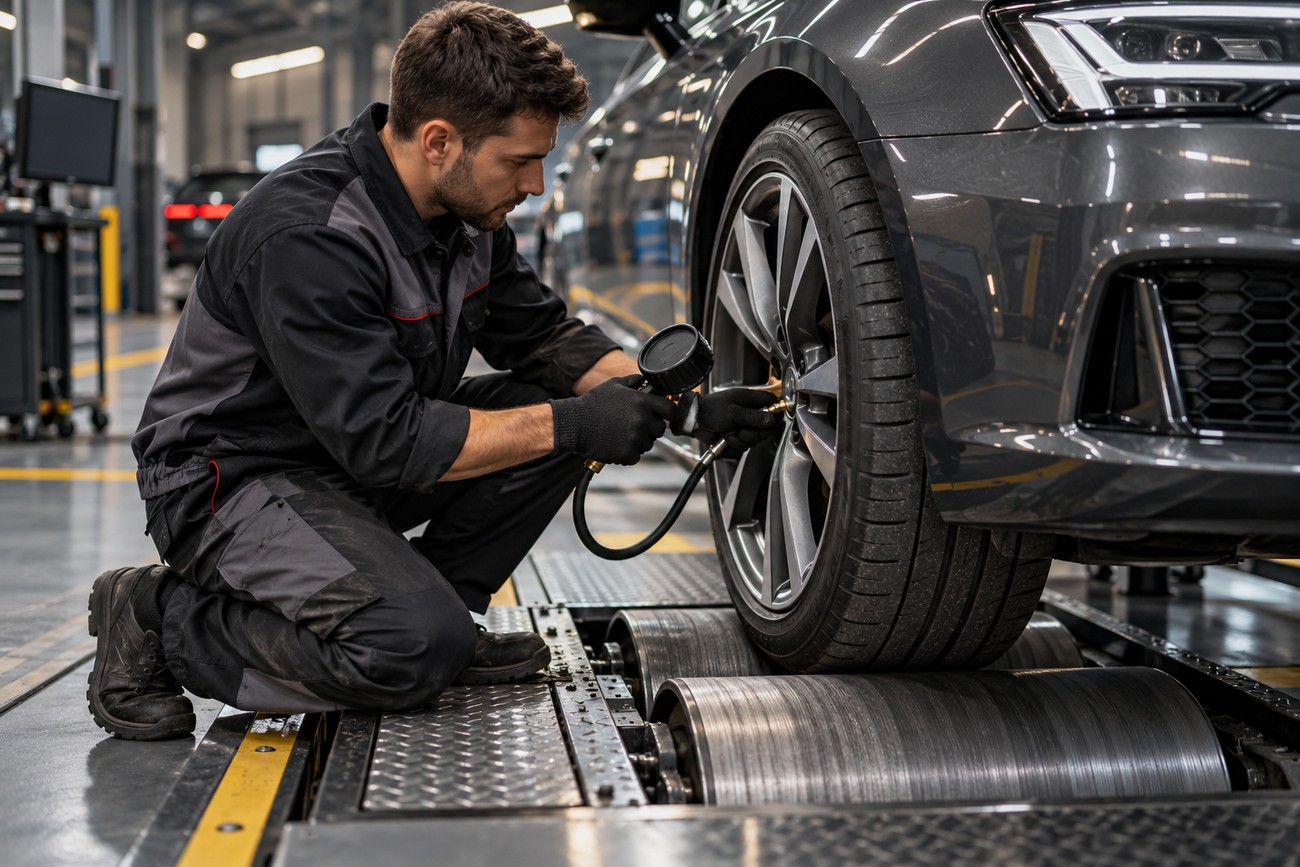
TPMS regulations set warning criteria for specified test conditions. They do not define the pressure you should aim for when inflating a tire, and they do not promise an alert at one exact pressure or the instant a leak begins. The applicable requirement also depends on the market and vehicle.
In the United States, FMVSS 138 uses a criterion of 25% below the vehicle placard pressure or a specified minimum threshold, whichever is higher. Under the applicable test conditions, a warning is required within 20 minutes. That timing is a regulatory requirement, not a countdown you can rely on during every drive.
UNECE R141 uses 20% below the reference pressure or 150 kPa, whichever is higher, with a warning required within 10 minutes of cumulative driving under applicable conditions. The different criteria are why there is no universal “TPMS triggers at 25%” rule. Neither threshold is a recommended operating pressure.
Maintain the recommended cold inflation pressure on the vehicle placard or in the manual. The tire sidewall’s MAX PRESS marking gives a tire limit, not the vehicle manufacturer’s inflation target. Using that limit as your target can leave you with the wrong pressure even if the TPMS light is off.
Check the tires before resetting the system
Use a separate, reliable gauge to check all road tires while they are cold, before driving has warmed them. Compare each reading with the recommended cold inflation pressure on the vehicle placard or in the manual; front and rear specifications may differ. Adjust the tires as needed, then look into any tire that loses pressure again.
A drop in ambient temperature can lower tire pressure without a puncture. If a light appears on a cold morning, measure the tires rather than assuming either that there is a leak or that the warning is false. Checking them at a similar temperature makes comparisons more useful than checking one tire cold and another after driving.
A warm tire normally reads higher than it did cold. Do not release air from a warm tire merely to make its reading match the cold-pressure specification; check it again when cold. If a tire is visibly low or the vehicle handles abnormally, address the condition before continuing to drive.
Correcting pressure and resetting TPMS are separate tasks. An indirect system generally needs recalibration after pressure adjustment so it learns the corrected baseline. Follow the vehicle’s instructions only after you have measured and set the tires; otherwise, it may learn an incorrect starting point.
Why the light stays on after inflation or a wheel swap
Start with the measured pressures. If they are correct, the system may need driving time to update or a reset performed as described in the manual. Repeatedly resetting a persistent warning without checking the tires can obscure a slow leak.
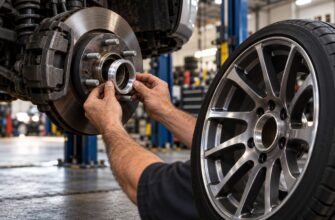
A wheel swap adds another variable. Depending on the vehicle, the system may learn wheel positions or sensor IDs automatically, require a manual relearn, or need diagnostic equipment. A sensor can be fitted and functioning yet remain unrecognized by the vehicle.
Before replacing another sensor, compare the IDs and live pressure readings received by the vehicle with the IDs installed after the wheel swap. A working sensor may simply be unlearned.
Replacement sensors also have to suit the vehicle. A universal sensor may require vehicle-specific programming, and compatibility claims do not guarantee it will learn through the standard onboard procedure. Confirm the required sensor setup and relearn method before installation.
If the warning persists, have the sensors and their reported readings checked. A direct sensor can be damaged during tire service, and its integrated battery can become depleted; battery depletion commonly means replacing the sensor. Diagnosis should distinguish those faults from an incorrect ID or incomplete relearn before parts are ordered.
What TPMS cannot tell you

An unlit warning does not rule out a leak or guarantee that every tire is at its recommended pressure. TPMS warnings have thresholds and may take time to appear under the applicable conditions. A gauge check remains the way to establish what pressure is in a tire now.
Indirect TPMS can be less effective when all tires lose pressure similarly because it infers a change from wheel-speed behavior rather than measuring each tire’s pressure. The spare tire may also be outside the factory system’s coverage; whether it is monitored depends on vehicle design. Check the spare separately where one is supplied.
Even a direct system’s displayed reading may differ from a separate gauge reading because the readings can be taken at different tire temperatures and the instruments have different accuracy. For a useful comparison, measure the tire cold and use a reliable gauge. If a warning persists despite correctly measured pressure, investigate the system rather than applying another arbitrary reset.
Frequently asked questions
These common phrases and labels can cause confusion when you are deciding whether to inflate a tire or investigate a warning. Use the vehicle’s pressure specification and system instructions as your reference.
What is the 4 psi rule for tires?
It is an informal rule of thumb about the difference between a tire’s cold pressure and its pressure after driving. A rise of around 4 psi is sometimes used as a rough comparison, but driving conditions and temperature affect that change. It is not a TPMS setting or a reliable inflation target; set pressure from a cold measurement and the vehicle placard or manual.
What are the two types of tire pressure monitoring systems?
They are direct and indirect TPMS. Direct TPMS uses sensors in the wheels to measure pressure; indirect TPMS uses wheel-speed behavior to infer pressure loss. Knowing which your vehicle has helps you choose the appropriate reset method and avoid buying wheel sensors for a system that does not use them.
What is the 4 psi rule on tires?
This is another way of referring to the informal cold-to-warm pressure-change rule, not an instruction to add or remove 4 psi. If a warm reading differs from the cold specification, do not bleed the tire to that specification while it is warm. Let it cool, measure it with a gauge, and adjust it to the vehicle’s recommended cold pressure.