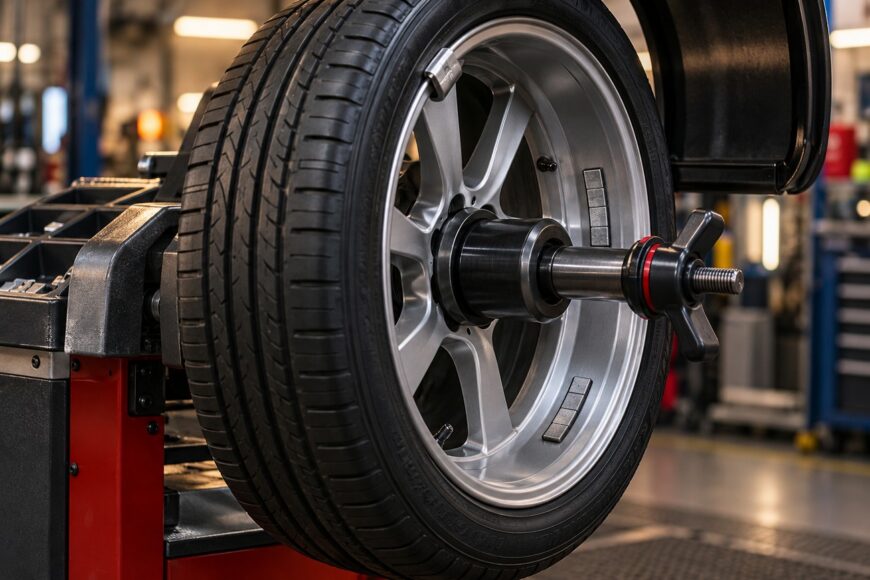
A visible weight clipped to the rim edge and a hidden adhesive strip can both correct wheel imbalance. The choice matters when a driver is dealing with vibration, a missing weight, or marks on a valued wheel finish. A tidy-looking installation is little comfort if the weight cannot stay in place or the wheel still shakes.
The better method depends on what the wheel maker permits, where the balancing machine calls for correction, and whether that position offers a sound mounting surface. A properly fitted clip needs the right flange; an adhesive weight needs careful surface preparation. Neither is a substitute for measuring the assembled wheel and tire.
- What clip-on and stick-on weights actually do
- Clip-on vs stick-on weights at a glance
- Start with the rim, not the weight
- Why the mounting position changes the result
- Installation details that determine whether weights stay put
- When vibration returns: diagnose before adding weight
- Finish damage and removal: the less visible trade-off
- Which wheel weight should you choose?
- Frequently asked questions
- Do wheels need balancing when tires are replaced?
- What is the difference between stick-on and clip-on wheel weights?
- What are clip-on wheel weights used for?
- What wheel weights are better?
What clip-on and stick-on weights actually do
Clip-on weights attach to a compatible rim flange; stick-on weights bond to a suitable inner wheel surface. Both add a measured amount of mass at a selected position to offset an uneven distribution of mass in the wheel-and-tire assembly. The tire matters as much as the wheel: changing it changes the assembly being balanced.
A clip relies on its shape and tension to grip the flange. An adhesive strip relies on a bond to the wheel surface. Neither mounting method is universally more secure: a mismatched clip can move, while an adhesive weight can release if it is fitted over contamination or outside its application requirements.
Balancing weights correct measured imbalance, not every cause of vibration. A wheel can show a balanced reading on the machine yet still have a tire or wheel condition that causes a disturbance on the road. If vibration persists after balancing, adding more weight without checking the assembly may conceal the real problem.
Placement is part of the correction, too. The same piece of metal can have a different effect when fitted at another radius or on another side of the wheel. That is why a recommendation should identify a suitable mounting method before treating the weight shown on the machine as a simple item to attach anywhere.
Clip-on vs stick-on weights at a glance
The useful comparison is between mounting requirements, not claims that one style always holds better.
| Consideration | Clip-on | Stick-on |
|---|---|---|
| Attachment | Grips an approved rim flange | Bonds to a suitable inner surface |
| Typical fit | Common on compatible steel wheels | Favored or required on many alloy designs |
| Finish and appearance | May show or mark a vulnerable edge | Can be hidden, but removal may leave residue |
| Installation depends on | Correct flange profile and secure seating | Clean, dry surface and product instructions |
| Removal | Usually straightforward if the finish allows it | Requires care with adhesive and coating |
Start with the rim, not the weight
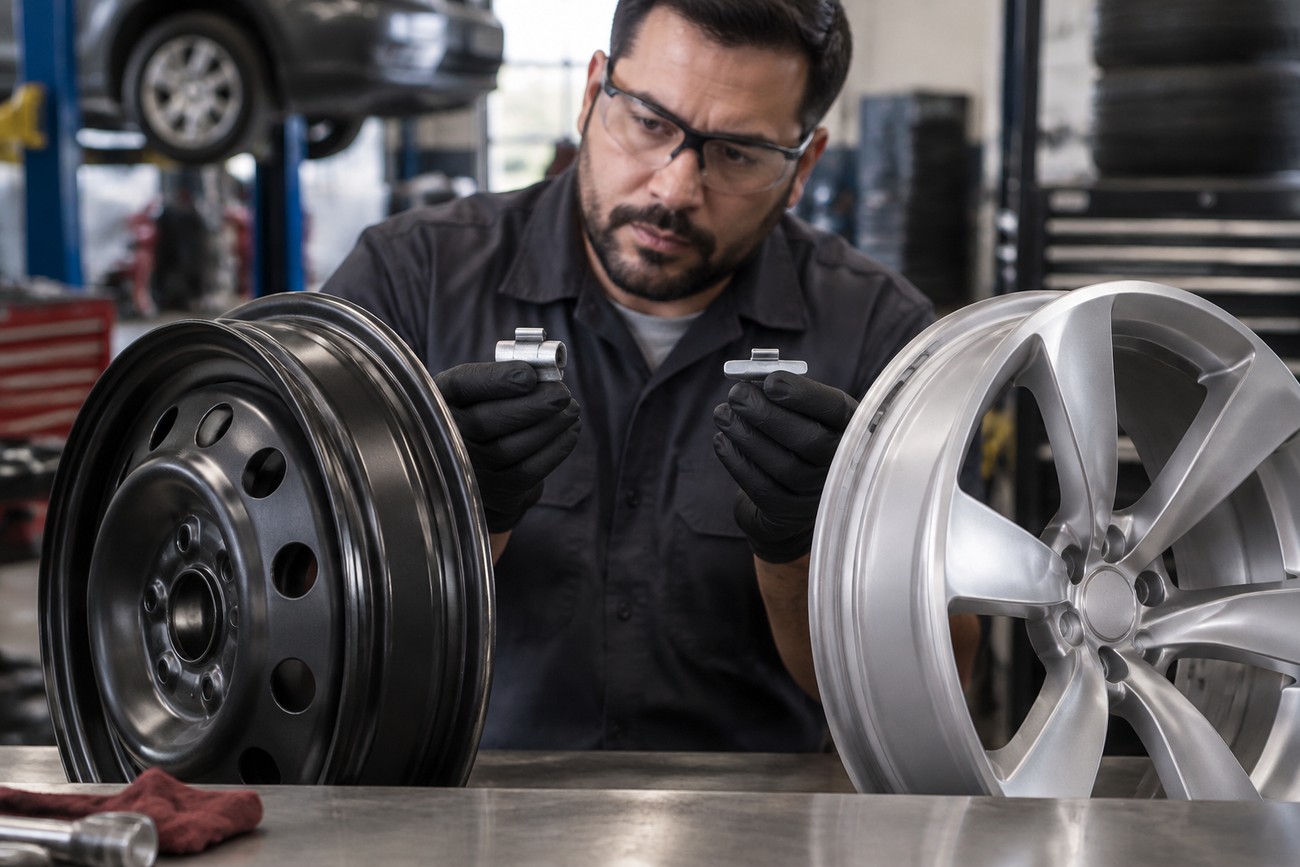
Steel wheels commonly use clip-on weights; many alloy wheels favor or require adhesive weights, depending on wheel design and manufacturer instructions. That is a useful starting point, not permission based on material alone. Check the wheel maker’s permitted mounting methods before selecting a weight, particularly if the wheel has an unusual edge or finish.
A clip-on weight must match the flange profile as well as the required mass. Flanges differ in shape and thickness, so a clip that appears to grab the edge may still sit poorly or have the wrong grip. A “universal” clip claim cannot replace a profile check; an insecure fit risks a lost weight and a return of vibration.
Some wheel makers prohibit or discourage clip-on weights on particular painted, polished, or contoured alloy rims. The clip may damage the coating as it is fitted or removed, and a smooth or unsuitable edge may offer no reliable seat. Even an alloy rim with a visible flange should be assessed against its specific instructions rather than the shop’s usual habit.
Where adhesive weights are permitted, inspect the proposed bonding area as carefully as the flange. The surface needs to accept the weight and leave room for nearby parts as the wheel turns. A hidden position behind the spokes is useful for appearance only if it remains accessible for proper installation and clear of interference.
Why the mounting position changes the result
Weight alone does not describe the correction. The same mass at a larger effective radius produces a greater corrective effect, because it sits farther from the wheel center. Move a proposed adhesive strip inward to hide it, and the balancing machine may call for a different mass to achieve the intended correction.
The side of the wheel matters as well. Dynamic balancing can require correction in two planes rather than one concentrated weight. Separating the correction across inner and outer positions can address imbalance that a single weight in one plane cannot, while an approved adhesive location may allow the outward correction to remain less visible.
These positions must be entered or measured correctly on the balancing machine. Selecting an inner adhesive location while telling the machine the dimensions of an outer flange can lead to the wrong mass or placement, even if the displayed figure looked precise. The final check is a fresh spin with the weights in their actual positions.
A hidden mounting position must still meet brake, sensor, and wheel-cover clearance requirements. This deserves particular attention on wheels with limited space around the brake or covers close to the rim. If the requested location conflicts with a nearby part, the answer is to choose another approved position and recalculate, rather than squeeze the weight into the gap.
Installation details that determine whether weights stay put
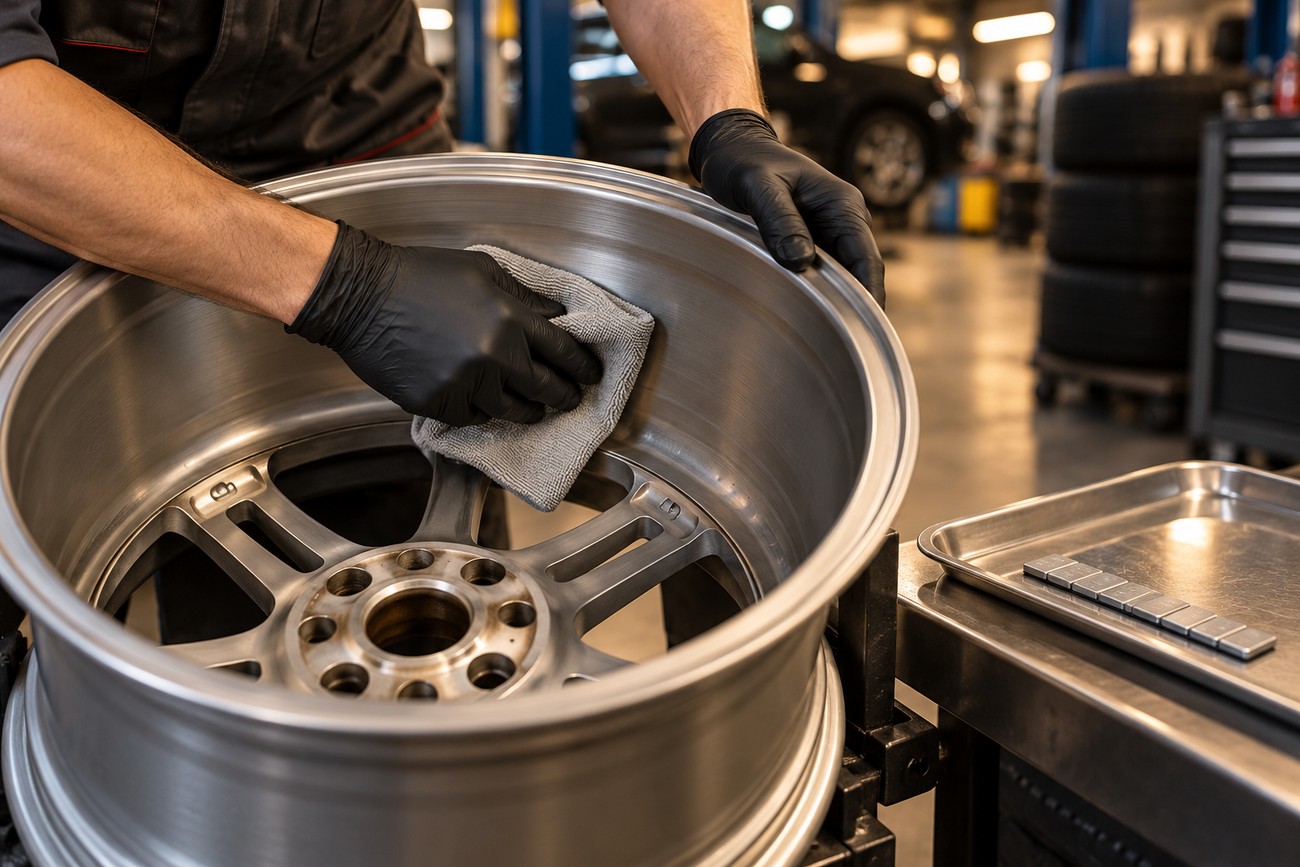
For a clip-on weight, the fitter first confirms that the clip profile suits the flange and the wheel maker allows its use. It then needs to seat squarely and securely without damaging the rim edge. A clip forced onto the wrong profile may look attached during the balancing spin but shift after an impact or normal road use.
Adhesive weights have a different failure point: the surface beneath the tape. Old adhesive, moisture, road film, wax, and silicone can all interfere with bonding. The fitter should remove residue, clean and dry the chosen area, and check that the wheel is suitably warm under the specific weight maker’s fitting instructions.
Acrylic pressure-sensitive adhesive is common on stick-on weights, but products and bonding requirements vary. Correct pressure, surface temperature, and any specified period before demanding use should come from the product instructions. There is no universal temperature or waiting time that makes every strip suitable for a cold wheel.
After either type is fitted, the assembly should be spun again to confirm the correction. The fitter can also check that clips sit securely and adhesive segments have made full contact along the wheel surface. If a strip has partly lifted during fitting, pressing its loose end back down is less dependable than correcting the preparation and fitting it as directed.
When vibration returns: diagnose before adding weight
Start with a visual inspection if a recently balanced wheel begins to vibrate again. Look for a missing clip, an empty adhesive outline, a partly detached strip, or a weight that has shifted from its original position. These signs justify a balance check, but they do not establish why the weight moved.
Next, inspect what may have changed in the wheel-and-tire assembly. An impact can disturb a weight or damage a rim; tire damage, wear, or a repair can also change how the assembly runs. Dirt packed inside the wheel may affect the reading and should be cleared before a reliable measurement is made.
Have the complete assembly measured on a balancing machine, then fit the corrective mass and position it calls for using an approved mounting location. Replacing a lost weight with a guessed amount is unreliable: the original position may no longer be right, and another change may have occurred since the last balance. A verification spin shows whether the correction has worked on the machine.
If vibration remains despite a sound balance reading, investigate beyond the weights. Balancing corrects measured imbalance, not every tire, wheel, or vehicle fault that can produce a similar sensation. Explaining when the vibration occurs and whether it began after an impact or tire change gives the shop a better starting point than asking it simply to add weight.
Finish damage and removal: the less visible trade-off
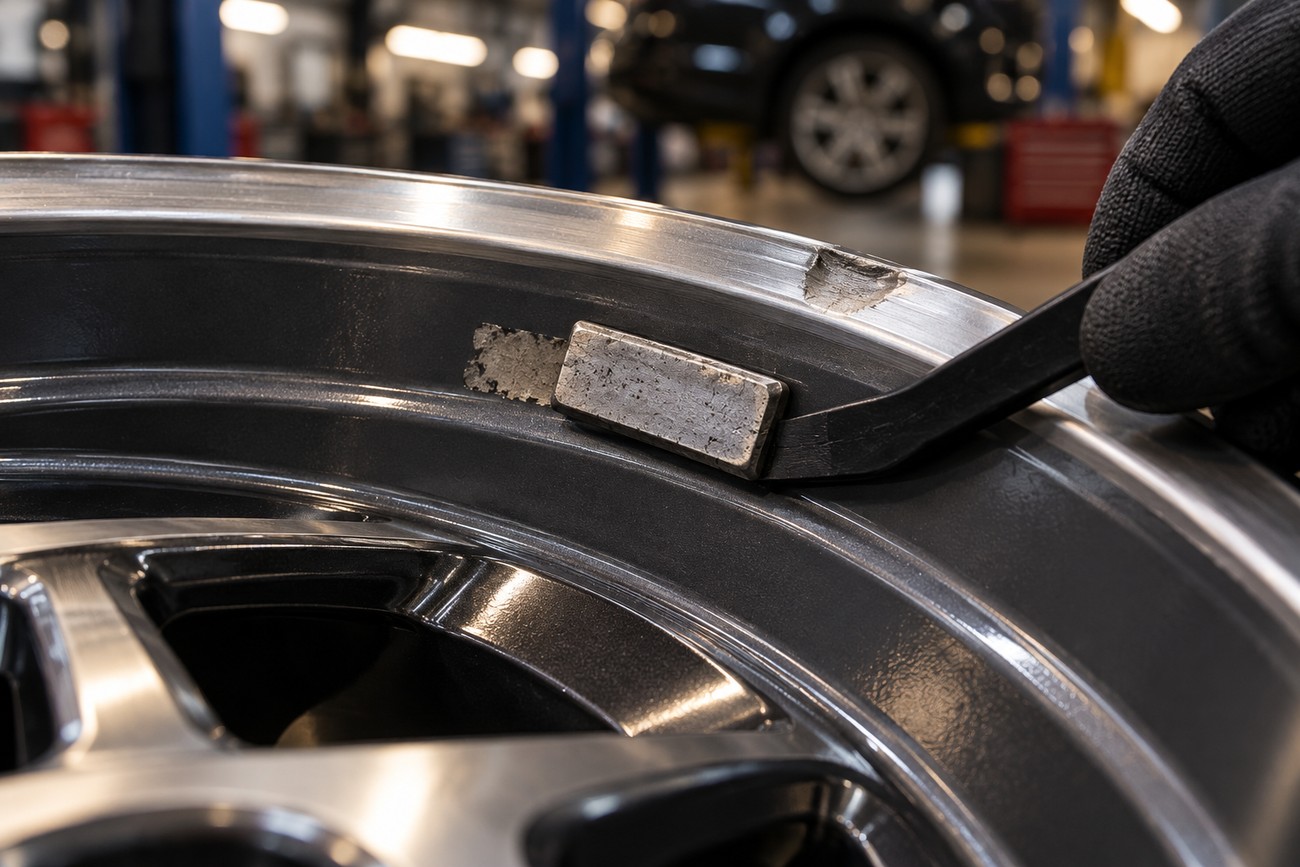
A clip grips the rim edge, which may leave a mark on a vulnerable finish during fitting or removal. Coating damage can be more noticeable on a polished or painted flange than the weight itself. Some wheel makers prohibit or discourage clips on particular finishes and contours, so a generic promise that a clip “won’t damage rims” is unreliable.
Stick-on weights avoid a clip on the visible edge, but they bring their own removal work. The strip can leave adhesive residue, and careless scraping or cleaning may damage a vulnerable coating. An older strip may take more effort to remove cleanly after exposure to heat, washing, and road grime.
Old adhesive should be removed before a new stick-on weight is fitted. Bonding fresh tape over residue leaves the new weight attached to an uncertain layer instead of a prepared wheel surface. It can also make the strip sit unevenly, which is poor practice where both precise placement and brake clearance matter.
Removal tools and cleaners should suit the wheel finish and the adhesive product. A cleaner that works on one coating should not be assumed safe on a polished or lacquered surface. If the finish is delicate or its care requirements are unclear, consult the wheel maker’s guidance before stripping residue or approving a replacement mounting method.
Which wheel weight should you choose?
Begin with the wheel maker’s permitted methods, then confirm that the chosen weight fits the mounting feature. A clip needs an approved flange with the matching profile; an adhesive weight needs a suitable bonding surface and an installation that follows its maker’s instructions. If either requirement fails, appearance or ease of fitting cannot make up for it.
Steel wheels commonly accept clip-on weights, while many alloy designs favor or require adhesive weights. Neither example is an absolute rule. A finished steel wheel may warrant extra care at its edge, and an alloy wheel should be judged by its actual design and instructions rather than a blanket claim that all alloys take the same weight.
Next, check the practical position: clearance from brakes, sensors, and covers, plus how visible the fitted weight will be. The balancing measurement then determines corrective mass and position; it should not be chosen from an estimate or moved for appearance without accounting for the new location. A final spin confirms the fitted arrangement.
Neither mounting method is universally more secure. A well-matched clip and a properly bonded strip can both serve their purpose, while poor fit or preparation can defeat either one. Choose approved fit first, then correct placement and installation, rather than assuming one style is always better.
Frequently asked questions
A change to the tire, wheel, or fitted weight can change the balance of the complete assembly. These answers cover the common decisions drivers face when arranging tire service or reviewing a shop’s recommendation.
Do wheels need balancing when tires are replaced?
Yes, the new tire-and-wheel assembly should have its balance measured. Weights left from the previous tire corrected a different assembly, so their presence does not show that the new one is balanced. The shop can remove obsolete weights and use the new measurement to select suitable positions and mass.
What is the difference between stick-on and clip-on wheel weights?
Clip-on weights grip a compatible rim flange; stick-on weights bond to a suitable inner wheel surface. The distinction affects where correction can be placed and how the wheel finish is treated. For a specific wheel, permitted mounting locations and clearance matter more than the names of the two styles.
What are clip-on wheel weights used for?
Clip-on weights provide a measured balance correction at an approved rim flange. They are common on compatible steel wheels and can be appropriate elsewhere if the wheel maker permits them and the clip matches the flange. A clip should not be forced onto an edge simply because its mass matches the machine reading.
What wheel weights are better?
The better weights are those approved for your wheel and fitted at positions that satisfy its balance measurement. A clip with the wrong profile and a strip bonded to a poorly prepared surface are both poor choices. Ask the shop to check wheel approval, mounting fit, and clearance before choosing between them.