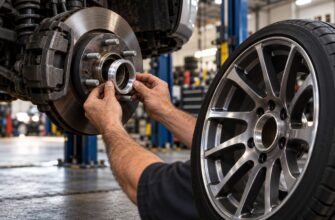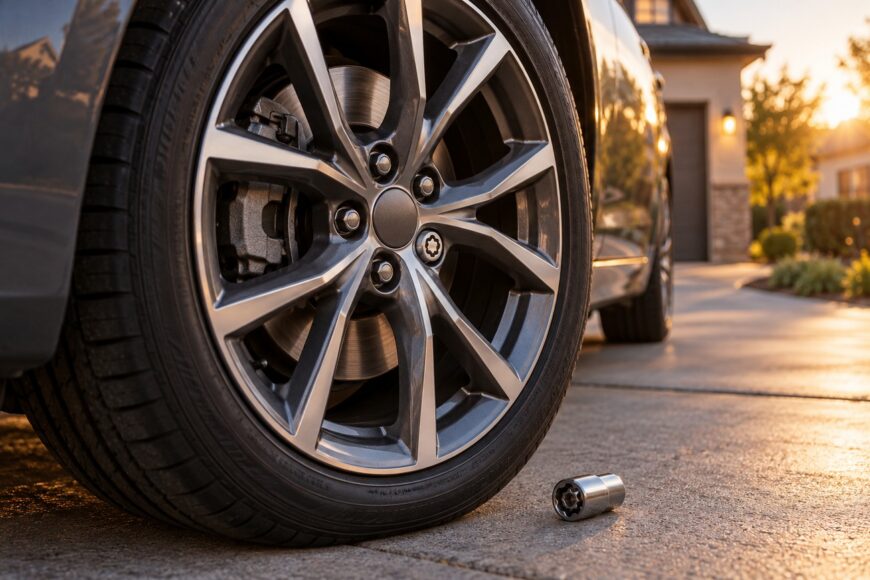
Wheel locks can slow a thief trying to remove your wheels, but they also add a key to keep track of, extra work at tire changes, and a fitment decision that matters for safety. They make the most sense for expensive aftermarket wheels or a car regularly parked where wheel theft is a concern. They are not automatically necessary for every car.
The decision depends on the wheels you have, where the car spends time, and how often the wheels need to come off. A lock that delays an opportunistic thief may be worthwhile; a mismatched or poorly managed lock can instead delay you when you need a tire changed.
- What Wheel Locks Actually Protect Against
- Do You Need Wheel Locks for Your Car?
- Choose the Right Wheel Locks for the Wheel, Not Just the Car
- Installation Mistakes That Turn Security Into a Problem
- Wheel Locks Are One Layer, Not a Complete Theft Plan
- Frequently asked questions
- What happens if I don’t have my wheel lock key?
- How many wheel locks should I use on each wheel?
- What happens if I don’t have my wheel lock?
What Wheel Locks Actually Protect Against
Wheel locks are keyed lug nuts or bolts that require a matching key socket for removal. They replace selected standard wheel fasteners so that someone using ordinary sockets cannot remove the wheel as readily. Their purpose is to slow unauthorized removal of wheels and rims.
That delay is the security benefit. Dealing with a lock may take more time, effort, and noise, which can discourage an opportunistic thief. Prepared thieves with specialized tools may still remove one, especially if they have prolonged access to the car.
Wheel locks do not prevent theft of the entire vehicle. They also do not secure tires or rims independently of the wheel assembly; their effect comes from making the assembly harder to unbolt. If whole-vehicle theft is your main concern, assess the car’s broader security measures rather than relying on its wheel fasteners.
The term “wheel blocking” can cause confusion in technical material. In GOST 33997-2016, it means stopping a wheel from rolling on a support surface or test rollers. It does not refer to the anti-theft fastener called a wheel lock.
Do You Need Wheel Locks for Your Car?
Expensive aftermarket wheels present the clearest case for wheel locks, particularly when a car is regularly parked in a poorly supervised location. A lock adds an obstacle to a quick removal attempt. Its value depends on whether that added time and noise are likely to matter where you park.
For common factory wheels in a lower-risk location, the benefit may be modest. If you also rotate tires frequently or switch seasonal wheel sets, every removal means finding the key and making sure the shop returns it. That service burden can outweigh the likely security gain for some owners.
Vehicle-theft figures provide context for assessing risk, though they do not measure wheel theft. German police recorded 30,373 vehicle theft cases, including attempts and unlawful use; separate comprehensive-insurance data recorded 14,162 thefts and €293 million in losses. Russian insurance-market data reported an almost 15% increase in vehicle thefts in 2023, while reviews from 2025–2026 note a rising share of Chinese brands among stolen vehicles. These categories differ and should not be treated as evidence that wheel locks prevent those incidents.
There is no general passenger-car technical-regulation requirement to install wheel locks. The choice is therefore a risk and maintenance decision, subject to the instructions for your particular vehicle and wheels. If your wheels have little theft appeal and the car is usually parked securely, leaving the standard fasteners in place can be reasonable.
One lock per wheel is a common arrangement, and sellers sometimes describe it as enough to defeat standard tools. That assurance is not independently confirmed here by a standard or vehicle-maker document. Follow the product instructions for the number and placement of locks, and treat the arrangement as a delay rather than a guarantee.
Choose the Right Wheel Locks for the Wheel, Not Just the Car
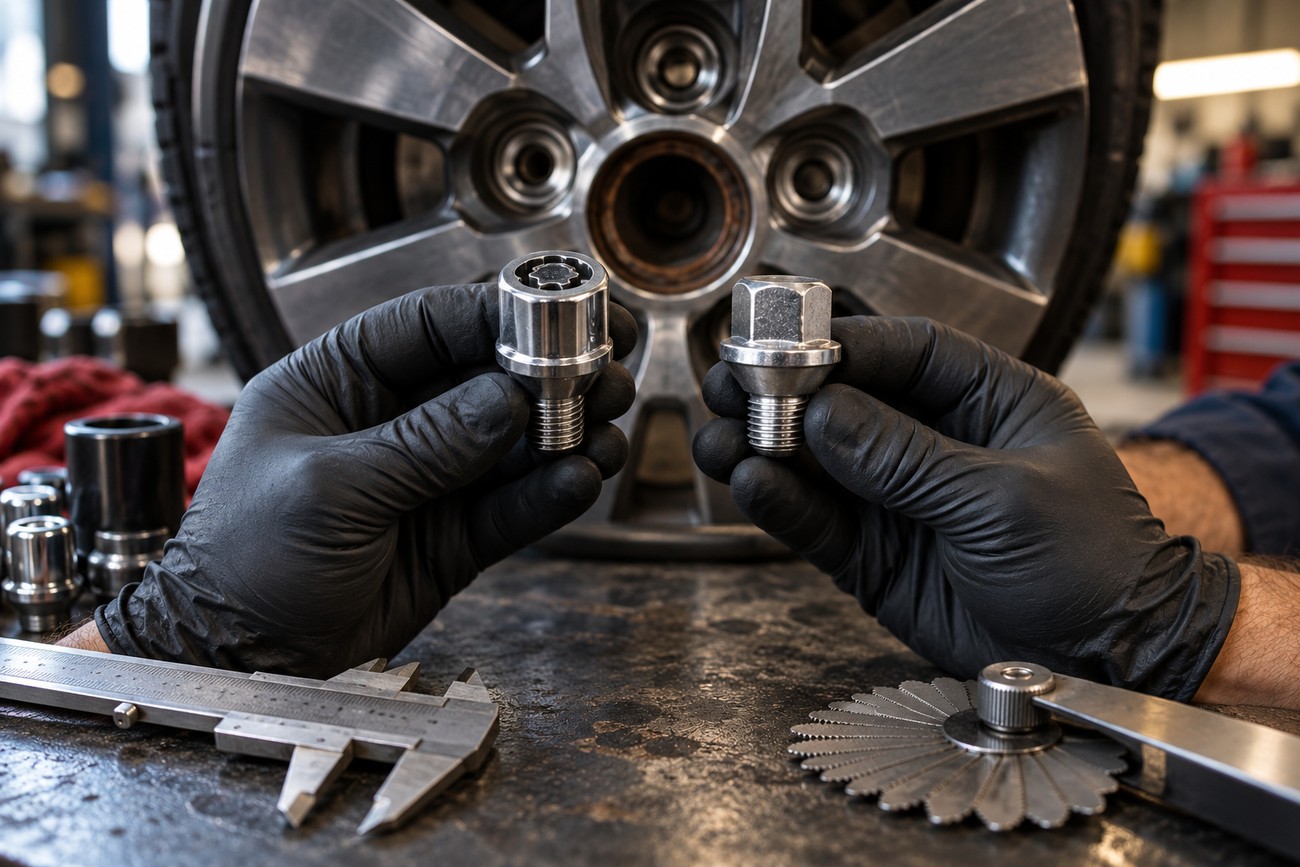
A lock that fits the car’s threads is not necessarily suitable for its wheels. Check thread size, thread pitch, fastener length, and compatibility with the specific wheel and hub. Use the vehicle and wheel specifications rather than relying solely on a listing that names your car model.
The surface where the fastener bears against the wheel must also match. Wheels may require a conical, spherical, or flat seat. A mismatch can damage the wheel or prevent proper clamping and centering, even when the threads appear to fit.
Aftermarket wheels deserve a separate fitment check because they may use a different seat or fastener length from the factory wheels. If you swap between wheel sets, do not assume the same locks suit both. Confirm the required hardware for each set before installation.
Product quality matters alongside dimensions. A cheap, poorly manufactured set may be weaker than factory hardware, although that is a product-quality risk rather than a flaw in all wheel locks. Choose hardware with clear fitment and installation instructions, and resolve any uncertainty before the car is driven.
Installation Mistakes That Turn Security Into a Problem
Using an impact wrench on a wheel lock can damage its keyed pattern or leave it so difficult to remove that the key no longer grips reliably. Seat the key fully, follow the specified tightening procedure, and use a torque wrench for final tightening. There is no universal torque value: use the specification applicable to the vehicle, wheel, and fastener.
After installation, follow the wheel or vehicle maker’s guidance on checking fastener tightness. A recheck after the first 50–100 miles is commonly recommended following installation, particularly when wheels have been changed. It is a check against a fastener loosening after the assembly settles, not a substitute for correct initial tightening.
Locate and test-fit the lock key before lifting the car. Discovering a missing key or damaged pattern while a wheel is off the ground can turn an ordinary tire change into a recovery job.
The key is a separate point of failure. Keep it accessible with the vehicle for roadside work and shop visits, and maintain a secure backup location. Keeping it only at home can leave you stranded; relying on a key buried in an inaccessible trunk can create the same problem.
Seasonal changes and rotations also create opportunities for the key to be misplaced. Before leaving a tire shop, confirm that every lock is fitted, the fasteners were tightened as specified, and the key has been returned to its usual place. If the key is lost, specialist removal or towing may be needed rather than a routine tire change.
Wheel Locks Are One Layer, Not a Complete Theft Plan

Wheel locks make rapid wheel removal harder; they do not make wheels invulnerable. A prepared thief with time and specialized tools may still remove them. That limitation matters most when a car sits unattended for long periods with easy access to its wheels.
Parking conditions shape the practical benefit. A visible space with limited access time gives a time-and-noise barrier more chance to deter an opportunistic attempt. Wheel value matters too: protecting expensive aftermarket rims may justify more service friction than protecting common factory wheels.
Secure parking, visible locations, vehicle security systems, and appropriate insurance address different parts of the risk. None guarantees protection, and wheel locks cannot replace measures aimed at theft of the whole car. Choose the combination that matches how and where you use the vehicle.
There is also a maintenance trade-off that is easy to miss when buying the locks. Every person who may need to remove a wheel must be able to find a working key. If that access cannot be managed reliably, the obstacle may be more troublesome during a roadside repair than it is useful in your usual parking situation.
Frequently asked questions
The questions below cover missing keys, the number of locks to use, and absent lock fasteners. If a key is missing, check for a backup before arranging removal. For lock count or replacement hardware, follow the fitment instructions for your wheel and vehicle.
What happens if I don’t have my wheel lock key?
First, check the key’s usual storage place and any secure backup. If you have the key code, contact the vehicle or lock manufacturer about a replacement. For an urgent tire repair, tell the tire shop or roadside provider that a lock is fitted and ask about removal options that minimize damage.
A specialist may be able to remove the lock, although replacing it may still be necessary. Forcing on a random socket or using an impact gun can damage the fastener or wheel and make extraction harder. If the wheel cannot be safely removed where the car is, recovery to a suitable shop may be the better option.
How many wheel locks should I use on each wheel?
One lock per wheel is common, but it is not a guaranteed security rule. The appropriate number depends on the lock’s design, the manufacturer’s instructions, the wheel configuration, and the level of inconvenience you are willing to accept at service visits. The claim that one lock defeats standard tools is not independently confirmed here by a standard or vehicle-maker document.
Before changing the fastener arrangement, verify that the remaining hardware and the locks all meet the wheel’s fitment requirements. Adding locks without checking their length and seat can create a clamping problem without providing dependable additional protection.
What happens if I don’t have my wheel lock?
If you mean the lock fastener itself is missing from a wheel, do not assume the remaining fasteners make the car safe to drive. Have the wheel and fastener positions checked, and fit the correct replacement hardware according to the vehicle and wheel instructions. A standard lug nut or bolt may be suitable as a replacement only if its thread, length, and seat match.
If you mean your car has no wheel locks installed, nothing needs replacing merely because they are absent. Standard, correctly fitted wheel fasteners are normal equipment on many cars; wheel locks are an optional theft-delay measure chosen according to your wheels and parking risk.