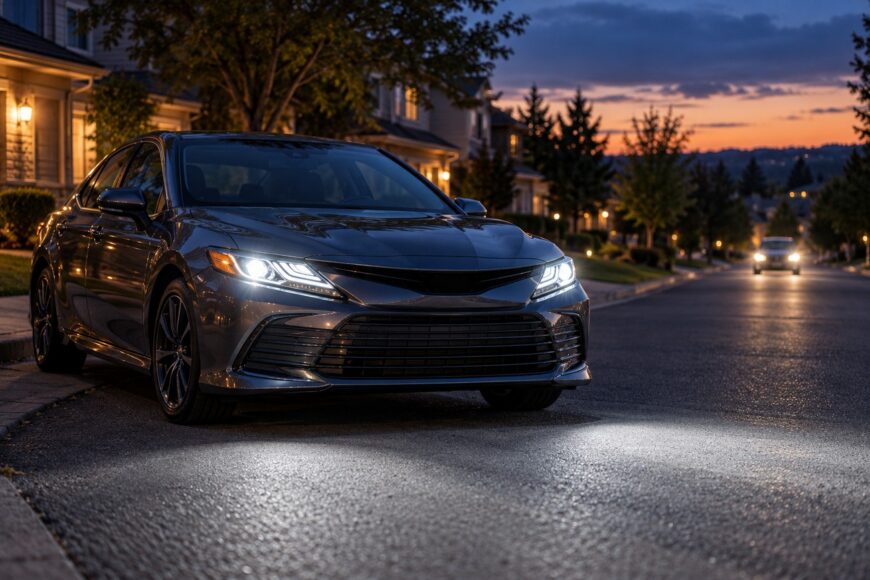
A replacement bulb can look strikingly bright from outside the car yet leave you with a patchy view of the road. It may also throw light into other drivers’ eyes. That disappointment usually comes from the way the bulb and headlight work together, rather than from a lack of advertised output.
Before buying LED headlight bulbs, check three separate things: whether installation is permitted for your vehicle and market, whether the bulb produces a suitable beam in your headlight, and whether its body and electronics actually fit. A matching bulb base answers only part of that last question. Keeping compatible halogen bulbs may be the better choice if an LED conversion cannot meet all three tests.
- Will LED bulbs improve your headlights?
- Check road legality before choosing a bulb
- Halogen bulbs, LED retrofits, or complete LED headlights?
- Confirm the bulb, housing, and electrical fit
- Choose usable light over impressive specifications
- Plan for heat, reliability, and hidden costs
- Install and evaluate the result safely
- Frequently asked questions
- How much does it cost to convert to LED headlights?
Will LED bulbs improve your headlights?
LED bulbs can make a headlight appear whiter or brighter, but useful illumination depends on where the light lands. A well-defined beam lights the road without sending excessive glare toward approaching traffic. Advertised lumens alone cannot tell you whether a replacement bulb will achieve that result.
Headlights designed around a halogen filament direct light from a particular position and shape. An LED emitter in a different position can change how a reflector or projector distributes that light, creating bright patches, dark areas, or an uneven cutoff. The result varies with the bulb and the headlight; an LED replacement that fits the socket has not necessarily reproduced the original beam.
LEDs can offer lower electrical demand and reach full output quickly. Those are genuine design advantages, though the saving in a complete headlight system depends on its driver and other components. Neither advantage compensates for glare or poor visibility in a particular installation.
Check road legality before choosing a bulb
Road legality depends on the jurisdiction and the approved vehicle, light-source, and headlight configuration. Rules for a replacement light source do not automatically authorize its use in every housing with the same socket. Check the requirements where you drive before treating a bulb as a road-use upgrade.
A package may say “certified” without establishing that the proposed retrofit is approved for your vehicle’s headlight. Likewise, references to ECE R37, R128, or R112 are not blanket permission to put an LED bulb in a halogen headlight. The relevant question is whether the specific combination has the required approval for the applicable market.
Look for documentation that identifies the supported vehicle or headlight application and any conditions attached to installation. If that evidence is unavailable or unclear, ask the relevant inspection authority or a qualified lighting installer before buying. This avoids spending money on a setup that may need to be removed even if it seems bright and can be aimed.
Halogen bulbs, LED retrofits, or complete LED headlights?
These routes differ in what they replace and what you need to verify. A complete LED headlight is a different proposition from fitting an LED bulb into an existing halogen housing.
| Route | Beam compatibility | Approval checks | Installation demands | Cost drivers |
|---|---|---|---|---|
| Retain compatible halogen bulbs | Preserves the light-source type the existing headlight was designed around, provided the correct bulb is fitted. | Confirm the specified bulb type and local requirements. | Replace and seat the bulbs correctly; check aim if needed. | Bulbs and any installation or aim-check labor. |
| Fit an approved-for-application LED retrofit, where available | Beam performance must be established for the particular bulb and headlight; a matching base alone is insufficient. | Verify approval for the vehicle, headlight configuration, and market, including any conditions. | Check cooling clearance, dust cover, driver placement, electrical behavior, and beam. | Compatible bulbs, any required components, installation, and checking labor. |
| Install a compatible complete LED headlight assembly | A purpose-built assembly has optics designed around its LED source, rather than relying on the old halogen housing. | Confirm that the assembly and its installation are approved for the particular vehicle and market. | May involve mounting, wiring, controls, and an aim check. | Complete housings, vehicle-specific components, and installation or checking labor. |
Confirm the bulb, housing, and electrical fit
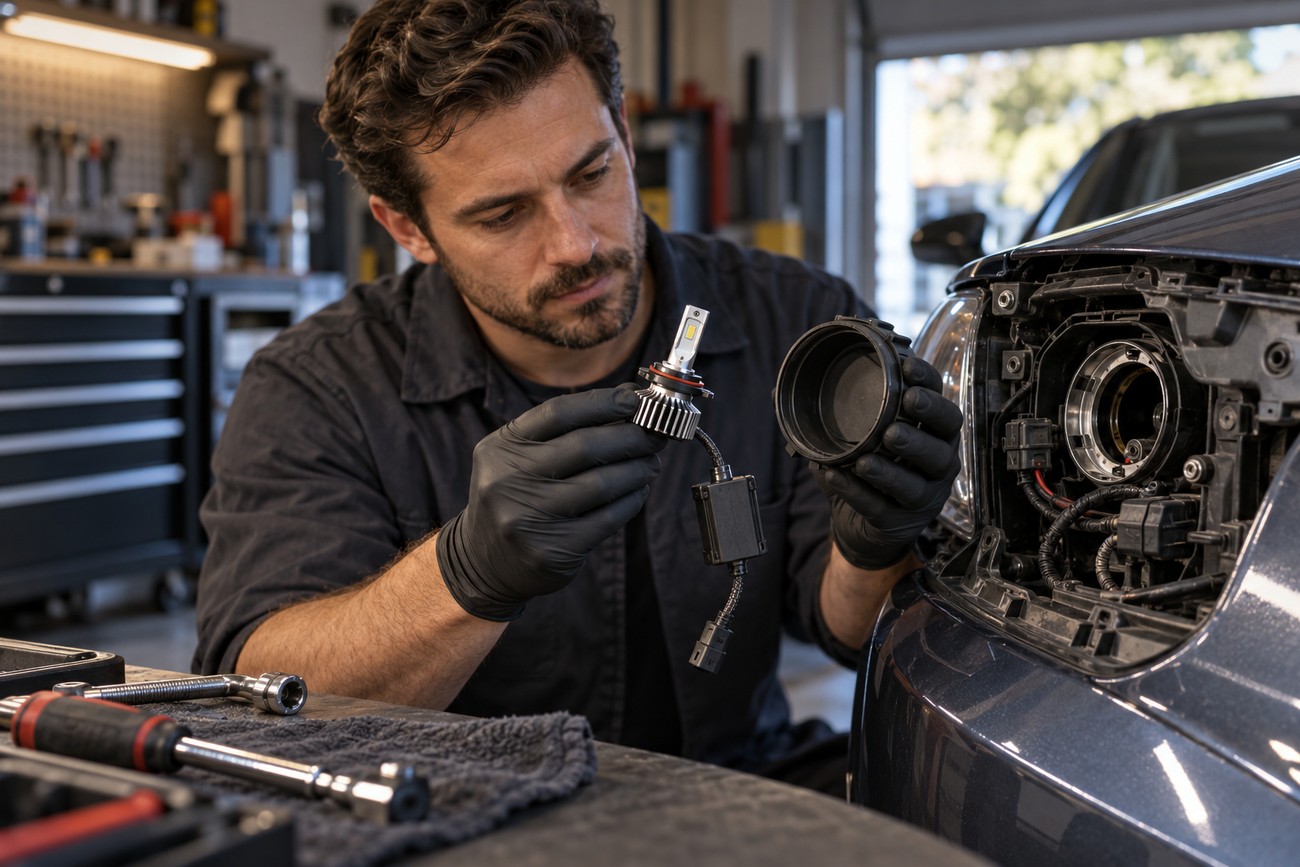
Start with the bulb base specified for your vehicle, then check the dimensions of the proposed replacement. Rear clearance matters because an LED bulb may have a heat sink or fan behind the mounting point. Allow space for its driver and confirm that the dust cover can close as intended.
The correct base can lock into a headlight while the LED emitters sit in the wrong place relative to the original filament. That small positioning difference can spoil the beam before electrical compatibility even enters the picture.
Compare the product’s stated application with your exact headlight configuration, rather than relying on a general vehicle listing. Reflector and projector housings can respond differently to the same bulb, and variations within a model range may matter. If the seller cannot establish optical suitability, physical fit alone is a weak reason to proceed.
Electrical compatibility deserves its own check. Some vehicles may show a bulb warning, flicker, or experience electrical interference with an incompatible LED driver; others will not. Confirm which additional components, if any, are specified for your application, and leave room to fit them without trapping wiring or obstructing cooling.
Choose usable light over impressive specifications
A high lumen figure describes claimed light output, not how evenly a headlight places light on the road. The beam’s distribution, cutoff, and glare depend on the LED emitter position and the headlight optics. Seek application-specific beam evidence rather than choosing the largest number on a package.
Automotive LED bulbs are commonly marketed around 3000–6500 K. Above 6500 K, the light tends to look bluer and may be less useful in rain or snow. No single color temperature is best for every condition, so the whitest-looking bulb is not automatically the easiest to drive with on a wet road.
Pay attention to what you can see beyond the brightest patch directly ahead. A sharp hotspot can make nearby pavement look well lit while leaving less light where you need to scan farther along the road. An even, controlled beam is more informative than a dramatic view of the headlight against a wall.
Plan for heat, reliability, and hidden costs
LED headlights project relatively little heat forward, but their chips, drivers, and cooling hardware still generate heat that must be managed. A cramped housing can restrict a heat sink or fan, especially if the dust cover must remain in place. Check that the proposed installation preserves the cooling arrangement specified for the bulb.
Heat and driver quality affect reliability. Poor cooling or a weak driver can contribute to reduced output, flicker, or early failure, even if the lamp initially looks bright. Claims of 30,000–70,000 hours, and sometimes 100,000 hours, are marketing figures rather than a universal service-life guarantee.
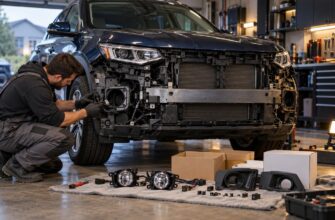
The conversion cost extends beyond the advertised bulb. Depending on the vehicle and approved route, you may need compatible components, complete housings, installation work, and a beam or aim check. Account for those items before comparing an LED option with retaining suitable halogen bulbs; there is no universal conversion price.
Install and evaluate the result safely
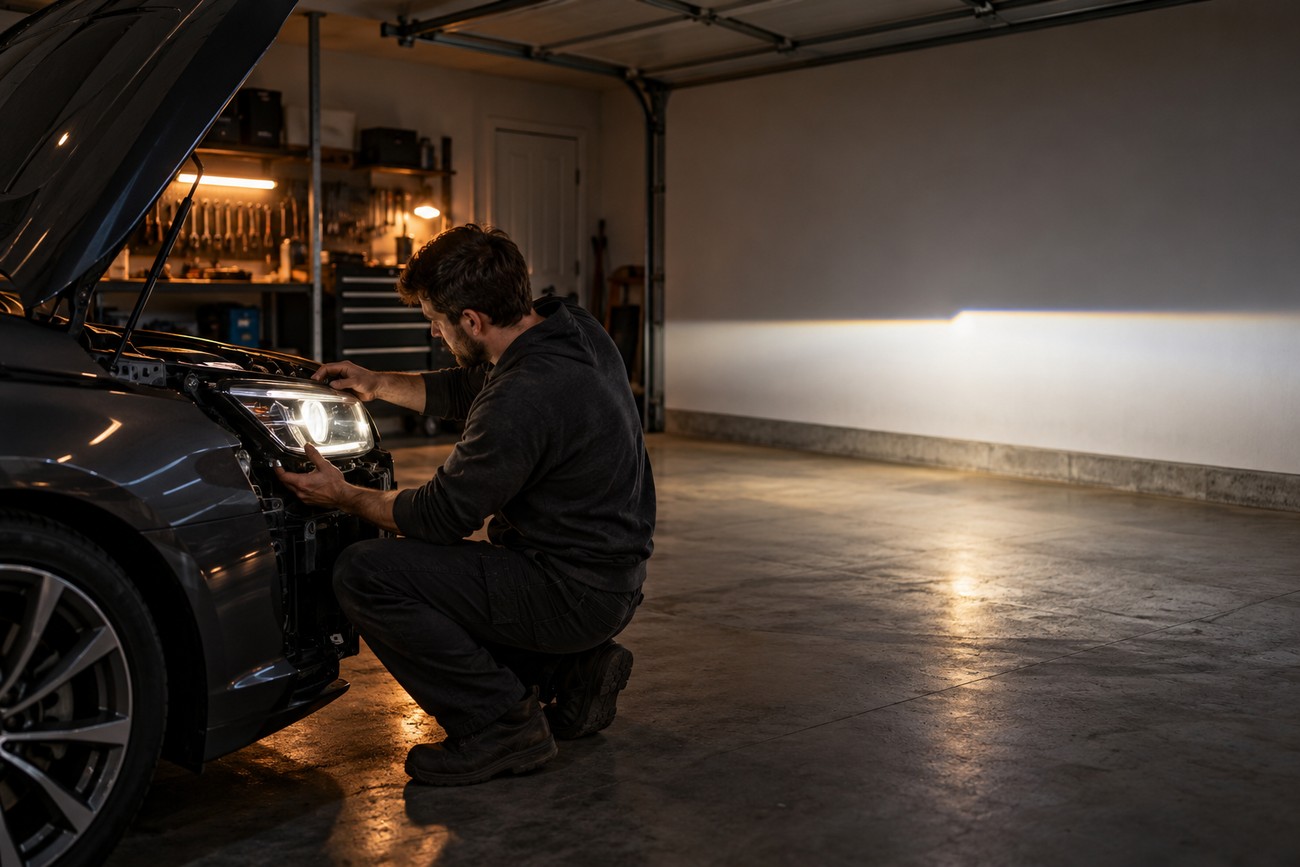
Confirm approval and compatibility before installation, then follow both the vehicle and product instructions. Seat each bulb fully and in its specified orientation, secure the wiring and driver, and make sure the cooling parts and dust cover fit as intended. Incorrect seating changes the emitter position and can alter the beam.
Assess the beam and aim using the vehicle’s specified procedure. Look for an even road pattern and a controlled cutoff, rather than judging the result by the brightness of the lamp or a single hotspot. An aim adjustment can correct pointing, but it cannot make an incompatible bulb-and-headlight combination approved or fix unsuitable optics.
If the cutoff is ragged, the road view is patchy, or other drivers face glare, reassess the installation instead of accepting it as the price of extra brightness. A warning light, flicker, or interference also calls for investigation. Where the beam or electrical behavior remains uncertain, have it assessed professionally or return to a compatible lighting option.
Frequently asked questions
A useful cost estimate starts with the approved route available for your particular vehicle. Separate the hardware from the work needed to fit and check it.
How much does it cost to convert to LED headlights?
There is no fixed price: the cost depends on whether your vehicle can use an approved LED bulb retrofit or needs compatible complete headlight assemblies. Build an estimate using the exact bulbs or housings, any required drivers, adapters, or other compatible components, and the labor to install them.
Ask the installer to include a beam and aim check in the quote, and confirm what happens if the proposed parts do not fit or produce an acceptable beam. That gives you a meaningful comparison with replacing the existing halogen bulbs and checking the current headlights.