Upgrading a clutch to handle more torque always involves a compromise. More holding capacity can bring a heavier pedal, sharper engagement, extra noise, reduced flywheel damping, and greater stress on the rest of the drivetrain. A clutch that feels excellent in traffic may have less tolerance for repeated launches, while an aggressive competition design can make a street car tiring to drive.
The correct choice depends on measured torque, where it was measured, heat, driving style, flywheel design, and installation quality. A Stage 2 or Stage 3 label provides little useful information by itself. Match the clutch system to the engine’s actual low-rpm torque and the way the car will be used, then verify that the supporting hardware can tolerate the resulting loads.
- Start With Torque, Not a Stage Number
- Match the Clutch to the Car’s Actual Use
- Clutch Upgrade Options by Use Case
- Pedal Feel, Engagement, and Flywheel Trade-Offs
- Installation, SAC Adjustment, and Break-In
- Protect the Rest of the Drivetrain
- Frequently asked questions
- How much torque can a Stage 2 clutch handle?
- How can torque be increased without overwhelming the clutch?
- How can torque be increased?
- What is better, Stage 1 or Stage 2 clutch?
Start With Torque, Not a Stage Number
Begin by recording the engine’s expected peak torque in the same units used by the clutch manufacturer. The measurement point matters just as much. Wheel torque and flywheel torque are different measurements and cannot be compared directly without accounting for where they were measured. Drivetrain losses, test equipment, and measurement location can create a misleading impression of available clutch margin.
Stage 1, Stage 2, and Stage 3 are non-standard marketing categories; their torque capacity varies by manufacturer and model. One company may use a Stage 2 label for a street-friendly organic disc, while another may apply it to a much more aggressive material or a different pressure-plate design. Treat the label as a starting description, then find the exact torque rating, friction material, flywheel requirement, and intended use.
Published ratings also require caution because manufacturers and sellers may use different testing methods and safety margins. Some ratings may describe a conservative continuous-use target, while others may represent a brief full-engagement test. The method and safety margin are often unclear, so published clutch ratings are not automatically comparable across brands.
Size the clutch for the expected low-rpm peak torque, plus a margin for temperature, repeated slipping, and the actual driving pattern. Low-rpm torque deserves particular attention because it produces high loading before the engine has gained speed, especially in a turbocharged application. A nominal rating that looks adequate on paper can become marginal after towing, hill starts, repeated launches, or a calibration change that increases torque in the lower rev range.
Match the Clutch to the Car’s Actual Use
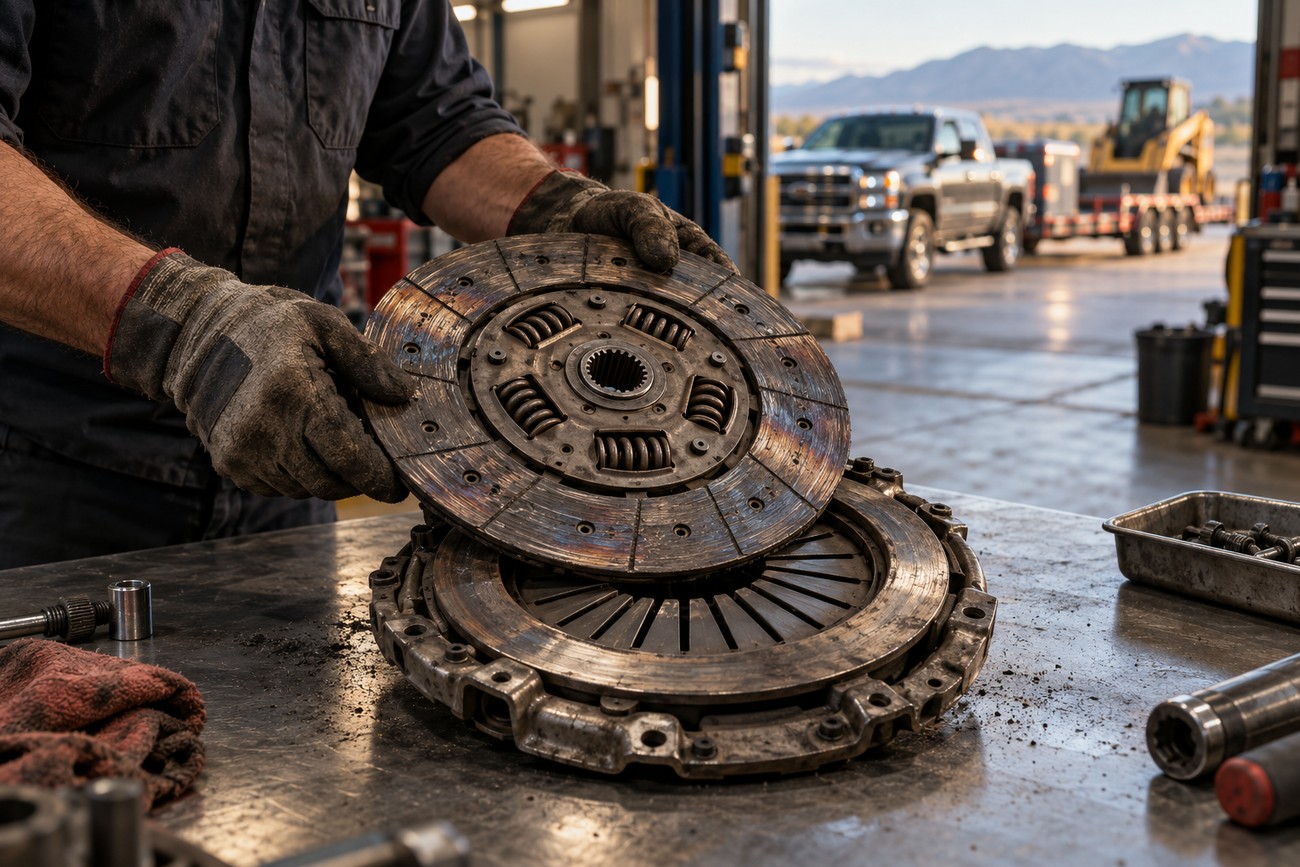
A street car usually needs controlled engagement, manageable pedal effort, and tolerance for imperfect low-speed driving. A tow vehicle spends more time generating heat through clutch slip, especially while reversing, starting on an incline, or maneuvering a loaded trailer. A track car may see repeated high-temperature cycles, while a drag-start car faces severe engagement shock even when the clutch locks quickly.
Thermal load explains why a clutch can survive a brief dyno pull and still struggle in service. Towing, track use, repeated launches, hill starts, and frequent partial engagement generate more heat than a brief full-engagement torque test. A clutch can hold its stated torque when fully engaged yet struggle with prolonged partial engagement, towing, or steep climbs.
The useful requirement combines expected low-rpm torque with the thermal load created by the driving pattern. A higher nominal torque capacity does not guarantee longer life when the clutch is overheated or used incorrectly. Excessive capacity can also reduce modulation if the design relies on a harsh friction material or very high clamp load.
For a daily-driven car, a moderate upgrade with predictable engagement often survives longer than a competition clutch that is repeatedly slipped in traffic. The driver’s habits matter as much as the parts. Resting a foot on the pedal, holding the car on an incline with clutch slip, or performing frequent hard launches can consume the available thermal margin quickly.
Clutch Upgrade Options by Use Case
These options occupy different points on the trade-off between engagement control, heat tolerance, noise, and drivetrain stress. Exact performance depends on the complete clutch-and-flywheel system, so the table should guide the shortlist rather than replace the manufacturer’s application data.
| Solution | Engagement and heat behavior | Compromises | Suitable use |
|---|---|---|---|
| Stronger organic single-disc | Usually the smoothest upgrade, with useful street modulation and moderate heat tolerance. | Less tolerant of repeated severe launches or prolonged slipping than more aggressive materials. | Modified street cars, commuting, and occasional spirited driving. |
| Ceramic or puck-style single-disc | Handles heat and fast engagement well, with strong holding ability when fully engaged. | Can engage abruptly, increase chatter, and make low-speed control tiring. | Cars that see hard use and can accept reduced refinement. |
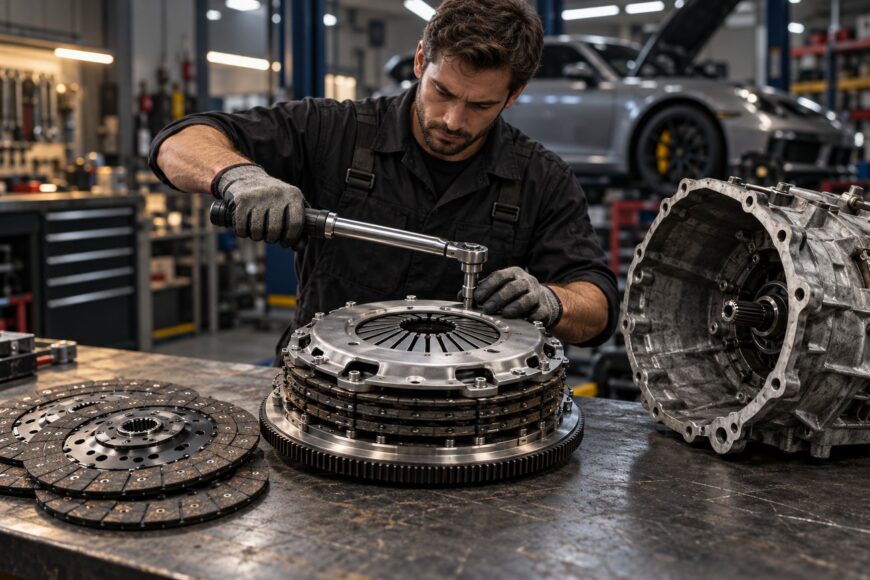
| Multi-disc | Offers substantial holding capacity and can manage high thermal demand with a suitable design. | Rigid or aggressive versions may feel like an on/off switch and can transmit sharp shock loads. | High-output, track, or competition-oriented applications. |
| Dual-mass-flywheel system | Generally provides better damping of engine and gear vibrations, with controlled street behavior. | The allowable torque is limited by the complete clutch-and-flywheel system, and the flywheel may be the limiting component. | Road cars where comfort, noise control, and drivetrain refinement matter. |
| Single-mass-flywheel system | Simple and often tolerant of higher loads, with a direct mechanical response. | May add gear rattle, noise, and drivetrain vibration, particularly at idle or during shifts. | Drivers willing to accept more NVH for durability or competition use. |
Pedal Feel, Engagement, and Flywheel Trade-Offs
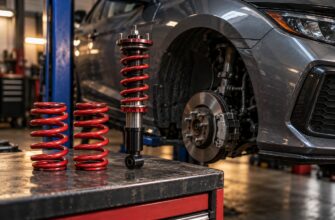
A pressure plate with substantially more clamp force can make the pedal heavy enough to cause leg fatigue or pain in traffic. The added load also reaches the release bearing, fork, hydraulic system, cable where fitted, and pedal assembly. A stronger clutch should therefore be judged by the complete release system, rather than by clamp force alone.
Rigid multi-disc and puck-style systems can feel close to an on/off switch at low speed. That behavior may be acceptable for a car used primarily for launches or track work, yet frustrating during parking, stop-and-go traffic, and hill starts. Friction material, disc spring design, pressure-plate geometry, flywheel surface condition, and the driver’s break-in procedure all affect modulation.
More pedal effort is not proof of a better clutch. SAC II designs can reduce pedal effort by approximately 15% without a claimed reduction in transmitted torque. The practical benefit is lower fatigue, provided the specific system is correctly matched to the engine and installed according to the required procedure.
Changing from a dual-mass to a single-mass flywheel can alter the car’s character even when engine power is unchanged. A dual-mass flywheel generally damps noise and vibration better, while a single-mass flywheel may add gear rattle, noise, and drivetrain vibration. The extra sound is sometimes mistaken for a fault, although severe or new mechanical noise still requires inspection.
Installation, SAC Adjustment, and Break-In
Installation quality can determine whether an expensive clutch works as intended. Inspect the flywheel for wear, cracks, incorrect resurfacing, and excessive runout, then verify the required surface geometry for the replacement clutch. A contaminated friction surface, an unsuitable finish, or a flywheel machined beyond its permitted dimensions can cause slip even when the new disc and pressure plate are rated for the engine’s torque.
Check the pilot or guide bearing, release bearing, fork, hydraulics, pedal travel, and related release hardware before final assembly. A hydraulic restriction, air in the system, a dragging release component, or incorrect travel can leave the clutch partially disengaged. Confirm compatibility with the engine’s new output, transmission input shaft, flywheel, starter arrangement, and any supplied spacer or alignment parts.
Friction material is often blamed first when slip actually comes from flywheel geometry, contamination, release-system travel, or an SAC mechanism installed without its required reset procedure.
Self-adjusting SAC clutches require the specified special tool and installation procedure. Incorrect installation can disturb self-adjustment and clamping force, leaving the clutch with poor holding ability or abnormal pedal behavior from the first drive. A generic alignment tool may position the disc, but it does not replace the manufacturer’s SAC reset or loading procedure.
Plan the break-in around the supplier’s instructions and allow the friction surfaces to bed properly before using the advertised torque rating as an operating target. The rating should not be treated as immediately available after installation. Avoid using early slip as a reason to increase clamp force or perform hard launches; stop and investigate contamination, geometry, release travel, and adjustment first.
Advice to avoid holding the clutch pedal down for more than 10 seconds appears in a user discussion, but it is not a confirmed universal rule for all clutch kits. Follow the specific manufacturer’s instructions instead. The wider principle remains sound: unnecessary pedal loading can heat or load release components, while prolonged clutch slip can damage the friction surfaces.
Protect the Rest of the Drivetrain
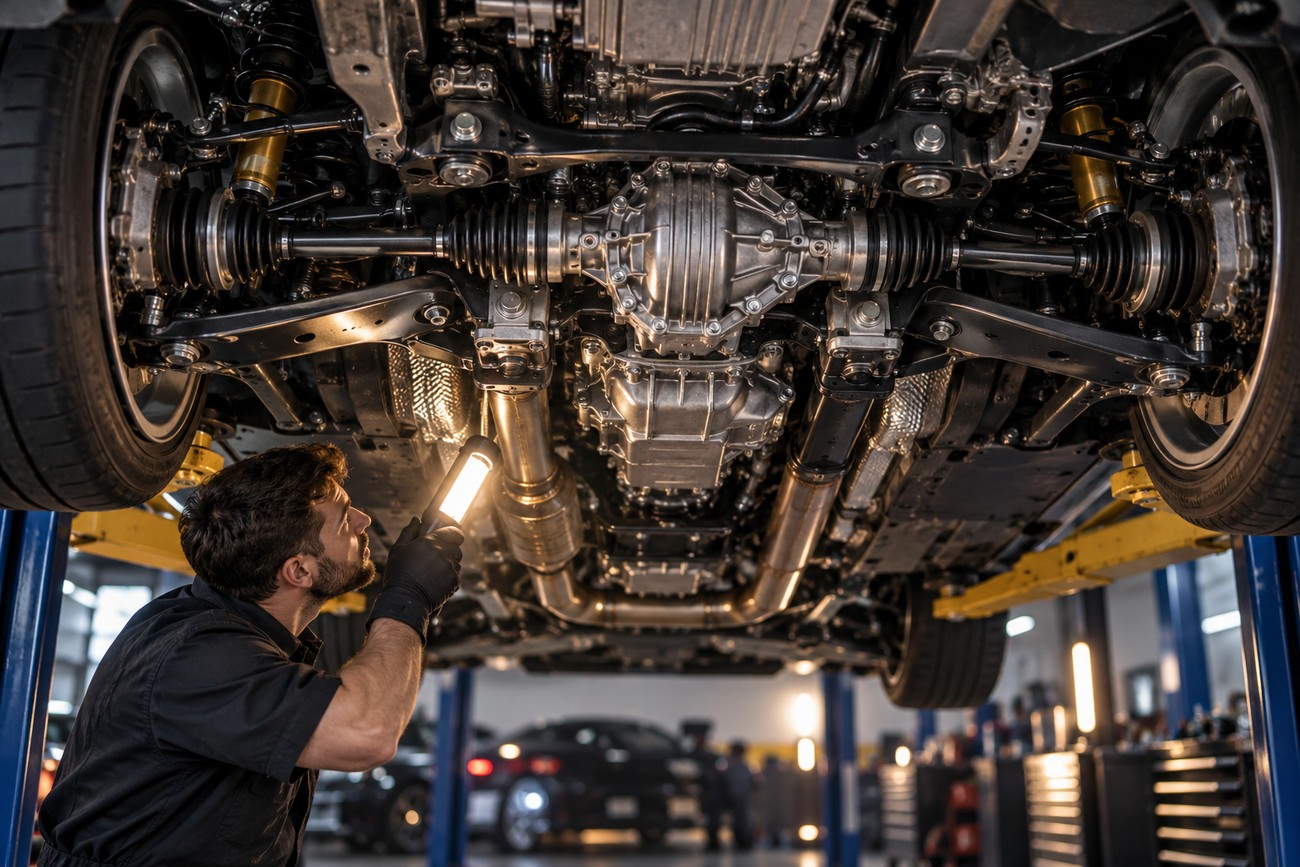
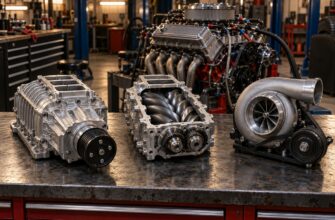
A clutch that prevents slip can move the failure point elsewhere. Axles, gears, differentials, mounts, and transmission components may have been protected by controlled clutch slip during a hard engagement. A more aggressive clutch can transmit impact loads directly into those parts, especially when the pedal is released abruptly at high engine speed.
Holding engine torque does not mean the entire transmission can tolerate launch shock. Tire grip, suspension wind-up, engine mounts, differential condition, axle design, and gear selection all influence the load reaching the drivetrain. Repeated clutch dumps can damage components even when the clutch itself shows no sign of slipping.
Higher clamp force also increases stress on the release mechanism, pedal assembly, and related hardware. If the car develops a heavy pedal, difficulty selecting gears, engagement near the top of pedal travel, vibration, or persistent slip after break-in, diagnose the system before driving harder. Those symptoms can indicate installation or hydraulic problems rather than inadequate clutch capacity.
Before ordering, verify the following points:
- Engine torque in the same units and at the same measurement point as the clutch rating.
- Expected low-rpm peak torque, temperature, towing, track, launch, and partial-engagement demands.
- The manufacturer’s testing method, safety margin, friction material, and flywheel requirements.
- Flywheel condition, surface geometry, runout, pilot bearing, hydraulics, and release hardware.
- Compatibility with the engine, transmission, starter, pedal system, and available drivetrain strength.
- Break-in requirements and the symptoms that should stop further testing after installation.
Frequently asked questions
How much torque can a Stage 2 clutch handle?
There is no universal Stage 2 torque figure. Discussions for particular kits cite approximately 400–598 lb-ft, while some owners of certain applications report early slipping. Those figures cannot be generalized because Stage 1, Stage 2, and Stage 3 are non-standard marketing categories, and manufacturers may use different measurement points, testing methods, and safety margins.
Use the exact rating for the specific kit, confirm whether it refers to flywheel or wheel torque, and allow for temperature and repeated slipping. A clutch that meets a brief full-engagement test may still be unsuitable for towing, repeated launches, or prolonged hill starts.
How can torque be increased without overwhelming the clutch?
A clutch cannot increase engine torque. Torque gains come from engine calibration or hardware, so the practical sequence is to verify the new low-rpm peak torque, compare it with the clutch rating at the same measurement point, and validate the thermal margin before increasing output further.
Smoother torque delivery can also reduce shock, but it does not remove the need for adequate clutch capacity. If the engine tune raises low-rpm torque substantially, the clutch and drivetrain should be reassessed even when peak power changes only modestly.
How can torque be increased?
Engine torque is increased through changes such as calibration, boost or airflow management, displacement, compression, or other engine hardware, depending on the powertrain. Each method changes heat, cylinder pressure, or drivetrain loading in a different way, so the clutch upgrade should follow verified engine output rather than precede it blindly.
Measure the result under conditions that represent actual use, especially if the car will tow, launch repeatedly, or operate at high temperature. The clutch manages torque transmission; it does not create the torque produced by the engine.
What is better, Stage 1 or Stage 2 clutch?
Neither label is automatically better. Choose the kit with the verified torque rating, heat tolerance, engagement quality, and testing method that match the car’s use. A street-driven car may be better served by a smooth organic design with sufficient margin, while a competition car may justify a more aggressive system.
Compare the exact models rather than the stage names. Pedal effort, flywheel compatibility, noise, break-in requirements, and drivetrain shock can matter more to ownership than a higher advertised category.