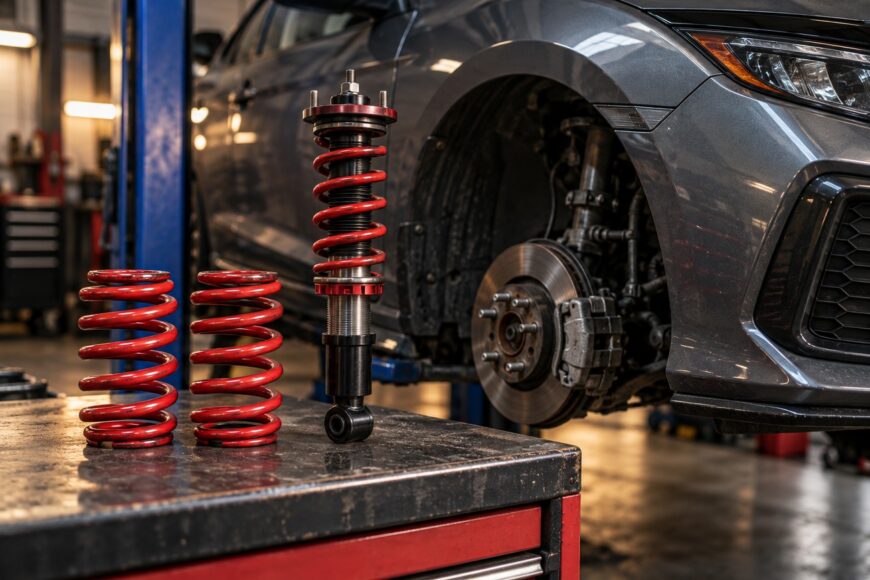
The choice often starts with an affordable fixed drop or the ability to adjust ride height. Lowering springs make sense if you know where you want the car to sit and plan to leave it there. Coilovers offer more scope to tune the setup, provided the kit has useful adjustments and you are willing to set them properly.
For a street car, the harder questions appear on rough pavement. How much suspension travel remains after lowering? Are the existing dampers in good condition and suited to the new springs? A car that looks settled in a parking space can scrape on a ramp, hit its bump stops over a dip, or feel unsettled where the road breaks up.
The purchase price is only part of the decision. Springs may call for replacement dampers; coilovers take more setup and need care if their adjusters are to remain usable. Either route can work well at a moderate height. Neither makes a lower stance proof of better handling.
- What Changes When You Fit Springs or Coilovers?
- Coilovers vs Lowering Springs for Daily Driving
- Ride Comfort: Why Stiffer Does Not Always Mean Better
- Handling on Real Roads, Not Just Smooth Corners
- The Real Cost: Dampers, Setup, and Upkeep
- When the Drop Becomes the Problem
- How to Install and Set Up Either Option
- Which Setup Fits Your Street Car?
- Frequently asked questions
- How can I tell whether my dampers are worn rather than the springs being too stiff?
- What are the downsides of using coilovers?
- How can I avoid losing suspension travel after lowering a car?
What Changes When You Fit Springs or Coilovers?
Lowering springs replace the original springs and give the car a fixed drop, commonly about 25–50 mm (roughly 1–2 inches). They do not adjust damping. You keep the existing dampers unless you replace them separately, so their condition and compatibility have a large say in how the car rides.
A coilover is an adjustable spring-and-damper assembly. The available height, preload, and damping controls depend on the kit’s design: some offer a damping adjuster, while others have fewer useful settings. Read the specifications for the actual kit rather than assuming that “adjustable” covers every part of the suspension’s behavior.
Spring rate describes how strongly a spring resists compression. Damping controls the speed of suspension movement, so turning a damper adjuster does not change the spring rate. A firm spring can still be poorly controlled, and an aggressive damper setting can make a sensible spring feel harsh over sharp bumps.
Height adjustment deserves the same care with terminology. On some coilovers, moving the spring perch to lower the car also changes spring preload or the position from which the damper works. Other designs provide a more separate means of setting height. Neither design grants unlimited travel: at a low setting, the suspension may have little room left to absorb a pothole.
Coilovers vs Lowering Springs for Daily Driving
The useful comparison is between complete setups on your car, rather than two boxes of parts at checkout.
| Street-use factor | Lowering springs | Coilovers |
|---|---|---|
| Cost and setup | Generally cheaper to buy; damper replacement may add to the installed cost. | Generally cost more and require more setup. |
| Ride height | Fixed drop once installed. | Adjustable within the kit’s usable range; changes may affect preload or travel. |
| Damping | No adjustment from the springs; depends on the fitted dampers. | Adjustment is available on some kits, with the controls depending on design. |
| Ride quality | Can work well with suitable dampers and a moderate drop. | Depends on spring and damper quality, settings, height, and road surface. |
| Upkeep | Inspect dampers and suspension parts as usual. | Also clean and protect exposed threads to keep adjusters usable. |
| Best fit | Driver who wants a modest, fixed change. | Driver with a genuine need to adjust height and time to maintain the setup. |
Ride Comfort: Why Stiffer Does Not Always Mean Better

Lowering springs are generally firmer than the original springs, which can make the car feel more controlled over broad road undulations. Their ride still depends heavily on the dampers. If a damper is worn or poorly matched to the spring, the car may bounce after a bump or feel abrupt even though the springs themselves are suitable.
On broken pavement, the wheel needs room to move upward and a damper that lets it respond without repeated, excessive motion. Lowering reduces that room on many setups. Once the suspension reaches its bump stop, the impact feels much harsher than the spring rate alone would suggest. A car can therefore feel acceptable on smooth roads yet strike its bump stops repeatedly on an ordinary commute.
A well-matched moderate spring-and-damper combination may ride better than a budget coilover kit with excessive spring rate or poorly chosen damping. Coilovers give you potential ways to tune the response, though an adjuster cannot make a mismatched kit well matched. More adjustment also means more opportunity to choose a setting that feels tidy on smooth pavement and tiring elsewhere.
Turning the damping toward soft will not restore missing bump travel. It may even let the suspension use its remaining travel sooner over certain bumps. If harsh impacts persist, check ride height, available travel, bump-stop contact, and damper suitability before treating the adjuster as the cure.
Handling on Real Roads, Not Just Smooth Corners
A moderate drop with appropriately matched parts can reduce body roll and make steering responses feel more immediate. That is a useful change if the car remains composed through a sequence of bends and bumps. A flatter-looking cornering stance, however, tells you little about how consistently the tires stay in contact with an uneven road.
When a low car runs out of bump travel, a sharp impact can disturb its path through a corner. Excessively firm springs or damping can likewise make a wheel reluctant to follow broken pavement. The driver may feel less roll while having less confidence to maintain a steady line. Neither lowering springs nor coilovers automatically add grip.
Lowering also changes the positions in which suspension links operate and can alter wheel alignment. On some cars, a substantial drop leaves limited adjustment to bring the geometry back into a suitable range. Excessive deviations may increase tire wear and stress on joints, even if the steering initially feels sharper.
Judge a street setup across the roads you actually use: a smooth bend, a rough bend, a mid-corner dip, and routine braking over imperfect pavement. A car that settles promptly and keeps its tires working is more useful than one that feels rigid for the first few minutes. Tire condition and sound suspension joints matter in that assessment, too.
The Real Cost: Dampers, Setup, and Upkeep
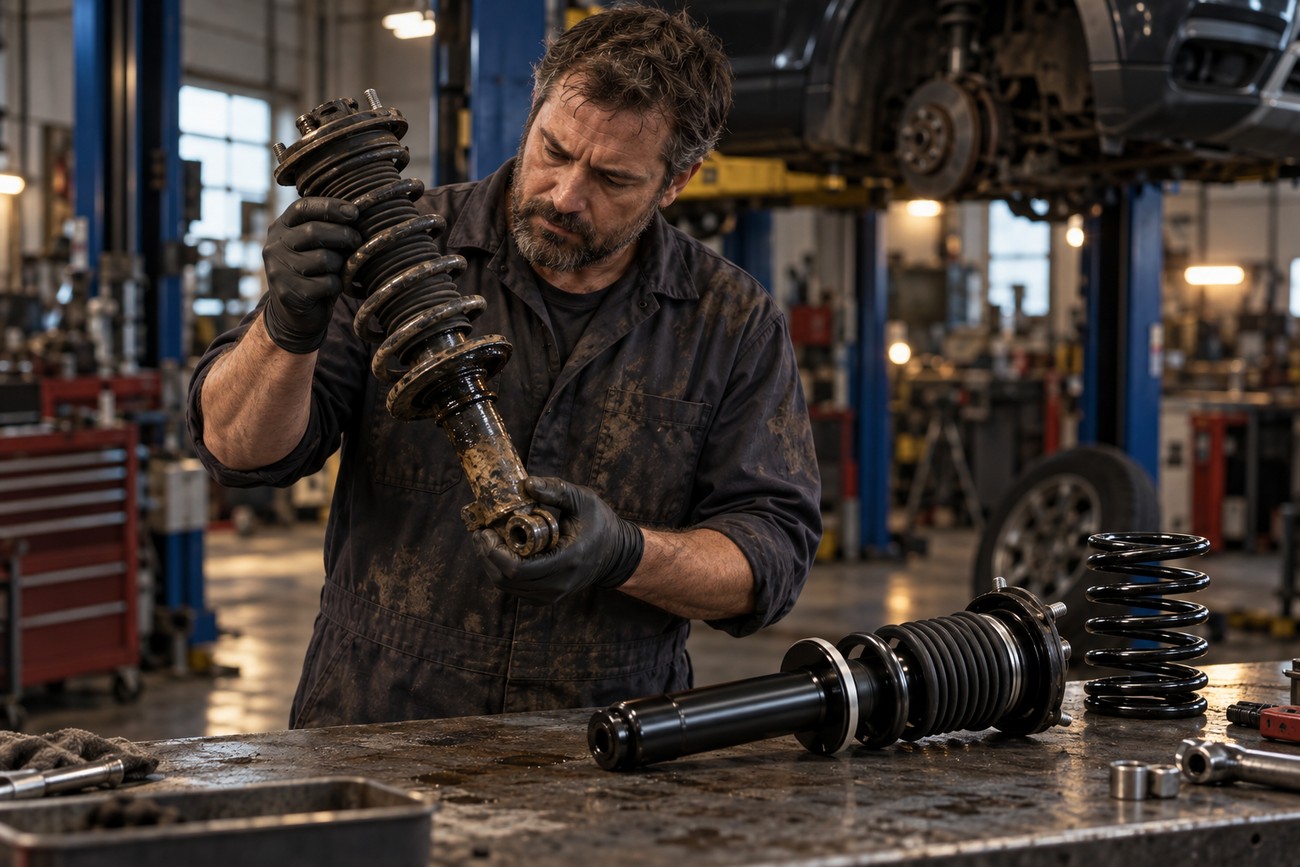
Lowering springs generally cost less to buy, but the relevant figure is the cost of an installed, usable setup. If the existing dampers are worn or unsuitable for the chosen springs, replacing them may be the sensible part of the job. That does not mean lowering springs cause stock dampers to fail on a fixed timetable; condition and matching matter more than a blanket prediction.
Look for clues before ordering parts. Fluid leakage at a damper, repeated bouncing after a road dip, or poor control over successive bumps calls for inspection. A knock can have several causes elsewhere in the suspension, so treating every new noise as a failed strut can lead to the wrong purchase.
Coilovers generally cost more and require time to set height and any available damping controls. Installation is followed by clearance checks and alignment, just as it should be with springs. If you expect to revisit the settings, allow for the effort of recording a baseline, making measured changes, and checking how the car behaves afterward.
Exposed coilover threads collect road dirt and, in salty conditions, can corrode enough to seize the adjusters. Cleaning and protecting them according to the kit’s instructions helps preserve the adjustment you paid for. A neglected adjustable kit may still hold the car up, yet lose its main practical advantage when you need to change height.
When the Drop Becomes the Problem
The first warning may be mundane: the bumper catches a ramp or the underside scrapes a speed bump taken at normal street speed. Low ground clearance can put underbody parts at risk as well as bodywork. If routine routes require constant avoidance or awkward approaches, the chosen height is already imposing a daily cost.
The less visible limit is suspension travel. At an extreme low setting, the wheel may reach the bump stop frequently, leaving the car to absorb bumps with little useful movement remaining. An adjustable kit does not restore clearance or travel while the car stays at that setting. Raising it can help, if the kit and vehicle allow a sound setup at the new height.
As the car moves away from its intended ride height, link and joint angles change. Alignment can shift, and excessive deviations may contribute to uneven tire wear or added stress on joints. The extent varies by vehicle and suspension design; it is a reason to inspect the results rather than assume every lowered car will suffer the same damage.
A low stance is easiest to assess with the car loaded as it normally travels, not empty on a level workshop floor. Check ramps, steering clearance, and the space available for suspension movement. If the desired appearance requires frequent scraping or bump-stop contact, changing from springs to coilovers alone will not make that height practical.
How to Install and Set Up Either Option
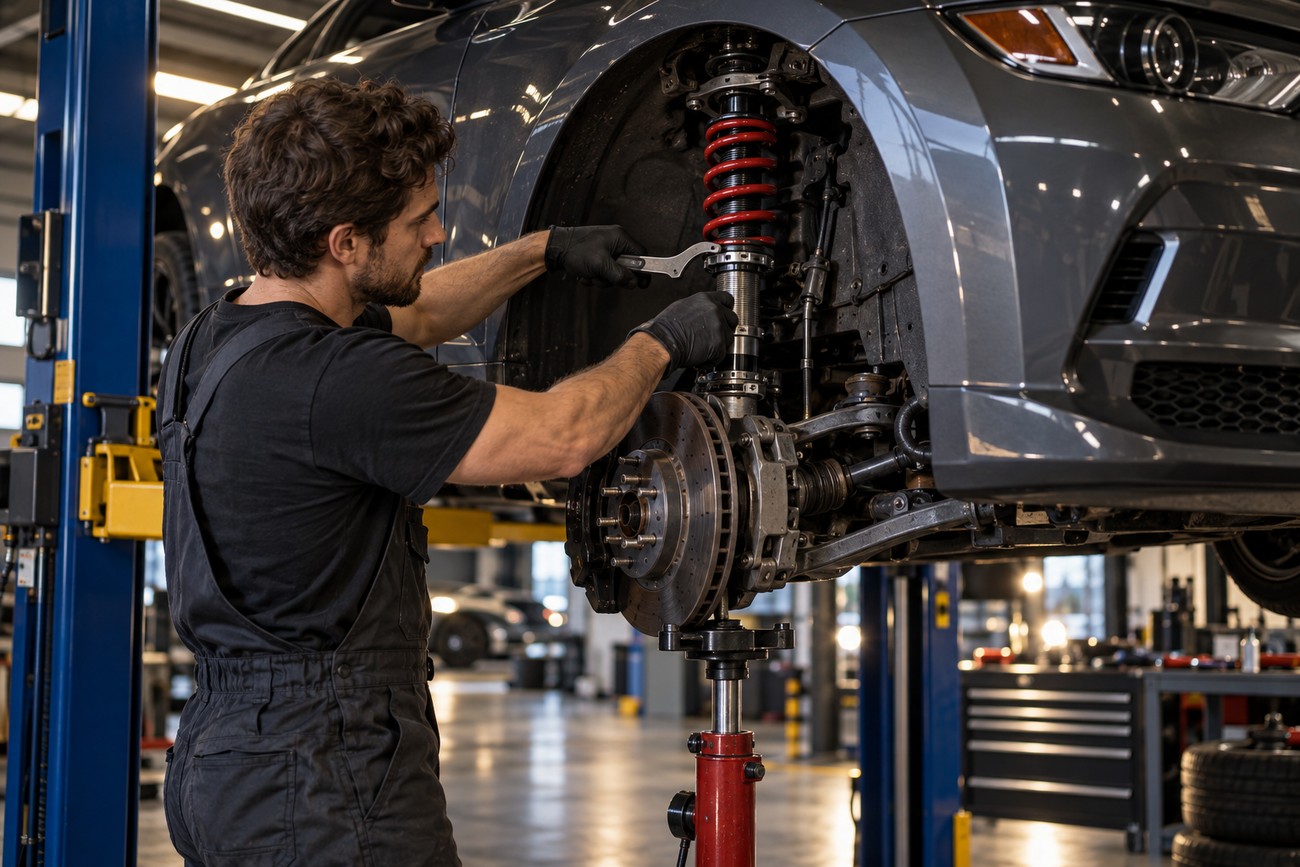
Start with an inspection of dampers, mounts, bushings, joints, and tires. Existing play or poor damper control can obscure the effect of new parts and may need attention first. Then verify that the springs or coilovers suit the specific vehicle and its intended street use, including any product requirements for associated parts.
Install the components according to the product and vehicle instructions, with particular care around spring tension and required fastener procedures. On coilovers, identify what each adjuster actually does before moving it. Set an initial height and, where provided, preload and damping according to the kit’s guidance; record the starting settings so later changes have a reference.
After installation, let the suspension settle as directed, then check tire and underbody clearance through steering and normal loading. Obtain an alignment after installation and after relevant height changes. If the available adjustment cannot produce a suitable result, investigate the vehicle-specific options rather than accepting rapid tire wear as part of lowering.
Make subsequent changes one at a time and test them on familiar roads. Corner balancing, where appropriate, requires suitable equipment and expertise and can refine a setup with adjustable heights. It is an optional specialist step for an ordinary street car, and it cannot replace correct installation, sufficient travel, or alignment.
Which Setup Fits Your Street Car?
For a commuter seeking a modest fixed drop, lowering springs are often the simpler choice if suitable dampers are already fitted or included in the plan. Choose a height that preserves clearance on your regular routes. The appeal is a defined result with less setup, rather than a promise that any spring will improve comfort or grip.
If you genuinely need to alter ride height, coilovers give you a way to do it within the kit’s usable range. That can matter when road conditions or the car’s use change. Check which controls the kit provides, budget for setup and alignment, and accept that each meaningful height change deserves a clearance and geometry check.
The lowest-cost coilover kit deserves particular scrutiny. Its advertised adjustment is of limited value if the spring and damper combination rides poorly on your roads or the threads seize before you use it. A well-matched spring-and-damper setup can be the better street purchase, even though it offers no height adjustment.
Let road quality, existing damper condition, genuine adjustment needs, and willingness to maintain the setup decide. Appearance belongs in the decision, but it should not override usable travel or everyday clearance. Neither option guarantees better handling; the complete setup has to work on the pavement under your tires.
Frequently asked questions
These checks can help narrow down a problem, although ride feel alone cannot identify a failed part with certainty.
How can I tell whether my dampers are worn rather than the springs being too stiff?
A damper that leaks fluid or lets the car bounce repeatedly after a dip warrants inspection. A ride that feels sharp mainly over individual bumps may instead involve spring rate, limited travel, or bump-stop contact. Note when the symptom occurs and have the dampers and surrounding suspension inspected before replacing parts; a knock or harsh impact has more than one possible cause.
What are the downsides of using coilovers?
Coilovers add purchase cost, setup work, and maintenance, while poor component matching or an overly low setting can make a street car less comfortable and composed. Their extra controls also make it possible to move away from a setting that worked. Before buying, confirm the kit’s actual adjustments and maintenance requirements, then decide whether you will use those controls enough to justify the added work.
How can I avoid losing suspension travel after lowering a car?
Choose a moderate ride height, check the available bump travel, and inspect for bump-stop contact under normal loading. After installation, verify clearance and alignment on the roads the car will actually use; raising the car may be necessary if it repeatedly bottoms out.