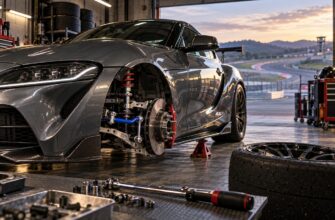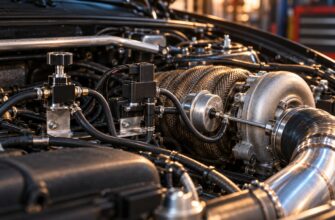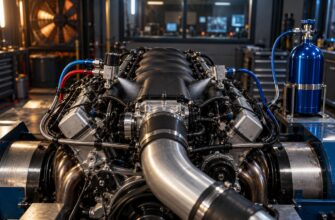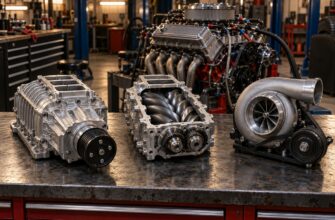
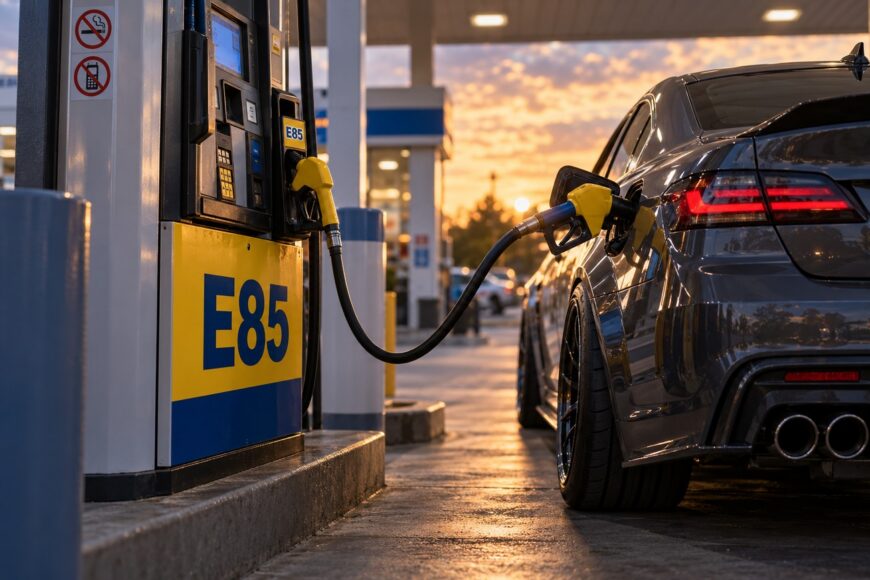
E85 appeals to drivers seeking more knock resistance, particularly in engines limited by heat and boost. The less visible cost is substantially greater fuel demand. A tune that takes advantage of E85 needs a fuel system that can deliver enough at full load through components that tolerate ethanol.
That makes an E85 conversion a decision about the whole car, rather than a fuel change alone. Potential power gains depend on the engine and its calibration; the practical result also depends on pump capacity, local fuel supply, cold-weather behavior, and how often you need to drive beyond the range of an E85 station.
- What E85 contains—and why it changes the tune
- Where an E85 tune can—and cannot—make more power
- Fuel-system capacity and ethanol-compatible parts
- Fixed E85 maps, blend maps, and flex-fuel tuning
- The ownership trade-offs: range, winter starts, and availability
- Validate the tune before a full-load pull
- Frequently asked questions
- How much HP does an E85 tune add?
- How can I tell whether E85 saves money per mile?
- What should I check if an E85 car struggles to start in winter?
What E85 contains—and why it changes the tune
The name describes a fuel category, not a guaranteed reading at the pump. Under ASTM D5798, fuel sold as E85 can contain 51–83% ethanol by volume. The blend can change with season and region, so a calibration that assumes a precise ethanol percentage needs a way to handle the fuel actually in the tank.
Gasoline’s stoichiometric air–fuel ratio is approximately 14.7:1, compared with about 9.8:1 for high-ethanol E85; the E85 figure changes with the blend. Stoichiometric means the ratio at which the fuel and air would burn completely in theory. The difference explains why gasoline fuel-delivery settings cannot simply be reused, although an engine’s commanded mixture under load is a separate calibration decision.
Ethanol also absorbs more heat as it evaporates, cooling the incoming charge and improving knock resistance. E85 is commonly quoted around 100–105 RON, but RON is a different rating from the AKI displayed on pumps in some markets. Those properties give a calibrator room to reconsider fueling, ignition timing, and sometimes boost; they do not make an unchanged gasoline tune suitable for E85.
Where an E85 tune can—and cannot—make more power
On a knock-limited turbocharged or supercharged engine, the cooler charge and greater knock resistance may allow more ignition advance or boost. The calibrator still has to confirm that the turbocharger, engine, cooling system, and fuel supply can support the change. Knock resistance is useful headroom, rather than permission to exceed a component’s limits.
An engine already close to its airflow limit may have little opportunity to use that headroom. The same applies if its gasoline calibration is not substantially constrained by knock. Filling either car with E85 changes its fueling needs, but the fuel by itself does not guarantee more horsepower.
The useful comparison is between complete, safe calibrations for the same vehicle. A larger peak figure means little if fuel pressure falls near the top of the rev range or the engine repeatedly pulls timing as temperatures rise. A sound E85 result should remain controlled through the intended load and temperature range, not merely produce an attractive single run.
Fuel-system capacity and ethanol-compatible parts
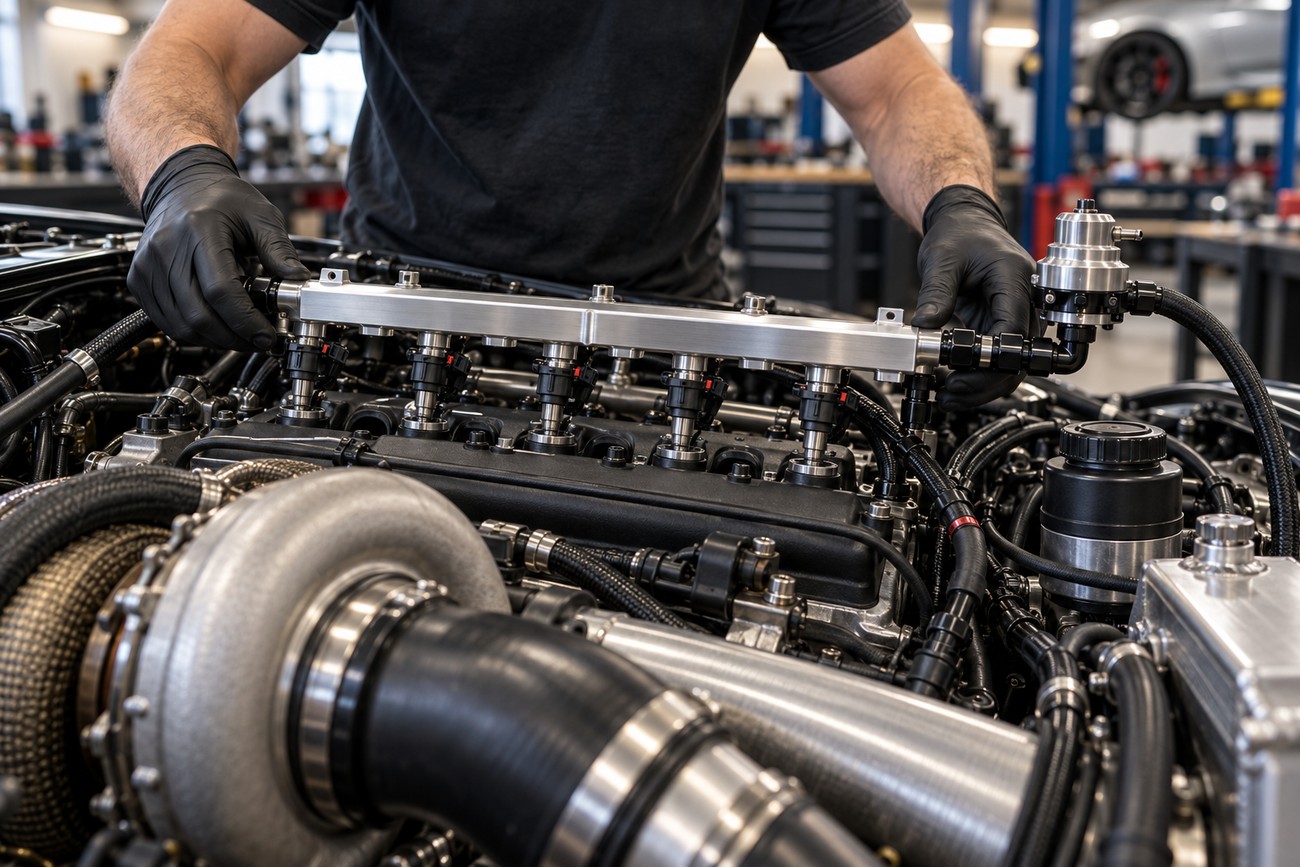
For comparable power, roughly 35–40% more fuel delivery than gasoline is a planning estimate for E85; the actual requirement depends on blend and setup. Injector capacity increases of roughly 30–40% are likewise a starting estimate, not a specification for every build. Size the system for the intended power and operating conditions, with capacity left when demand is highest.
Injectors are only one part of that system. The pump must maintain delivery at the required pressure, while wiring, connectors, and pump control must supply it reliably. A regulator or restrictive line can also limit flow. Large injectors cannot prevent a lean condition if pressure collapses upstream during a high-load pull.
Material compatibility needs its own inspection. Properly equipped flex-fuel vehicles are designed for ethanol blends; an older gasoline-only vehicle may have unsuitable hoses, seals, or regulator components that degrade and leak. Replacing a pump while leaving aging fuel lines untouched can turn a performance project into a fuel-odor or safety problem.
Check the complete path from tank to injector before deciding the hardware is ready. Capacity quoted for an individual part does not prove that the installed system maintains pressure under load. That distinction matters most when the tune is intended to use E85’s knock resistance for additional boost.
Fixed E85 maps, blend maps, and flex-fuel tuning
A fixed E85 map assumes fuel within the blend range for which it was calibrated. That assumption deserves attention when commercial E85 can contain 51–83% ethanol by volume. Fuel from a different season or station may call for different fueling and ignition targets, even though the pump carries the same E85 label.
Separate maps for gasoline, E50/E60, and E85 offer another approach, provided the driver knows the blend and selects the appropriate calibration. An intermediate blend can be a useful compromise for some cars and fuel networks, though it is not an automatic optimum. Switching maps without confirming what is in the tank defeats the purpose of having them.
A correctly configured flex-fuel system measures ethanol content and adjusts applicable fueling and ignition targets as the blend changes. The sensor, ECU strategy, and calibration all have to work together; adding a sensor alone does not create a safe flex-fuel tune. Neither a fixed map nor a flex-fuel system replaces adequate pump and injector capacity.
Ordinary closed-loop fuel trims may correct modest mixture differences during suitable operating conditions. They cannot supply fuel beyond the hardware’s limit, and they do not make an overly aggressive ignition map safe for a lower-ethanol blend. Verify the blend by measurement or reliable fuel information when validating a fixed calibration.
The ownership trade-offs: range, winter starts, and availability
Owners commonly report approximately 25–35% higher fuel consumption on E85 than on gasoline, with results varying by blend, vehicle, and driving. A lower pump price therefore does not necessarily mean a lower cost per mile. More frequent stops also matter on road trips, while a track car may need to plan its fuel load or pit stops differently.
E85 station coverage varies widely by region. A car with an E85-only calibration can become awkward to use when its usual station is closed or a route has no suitable pump. A properly validated gasoline map or flex-fuel calibration offers more options, provided the driver follows the switching procedure and stays within the appropriate load limits.
Cold starts can be harder because ethanol vaporizes less readily in low temperatures. Seasonal fuel blends may help, but starting still depends on the actual blend, cranking condition, and cold-start calibration. For a car stored for long periods, moisture and corrosion deserve attention, particularly where the tank or fuel-system materials are unsuitable or fuel condition is uncertain.
Environmental claims need a similarly qualified reading. Some local exhaust or evaporative emissions may fall, while the lifecycle carbon impact depends strongly on ethanol feedstock and production. E85 should not be treated as cleaner on every measure solely because the engine burns less gasoline.
Validate the tune before a full-load pull
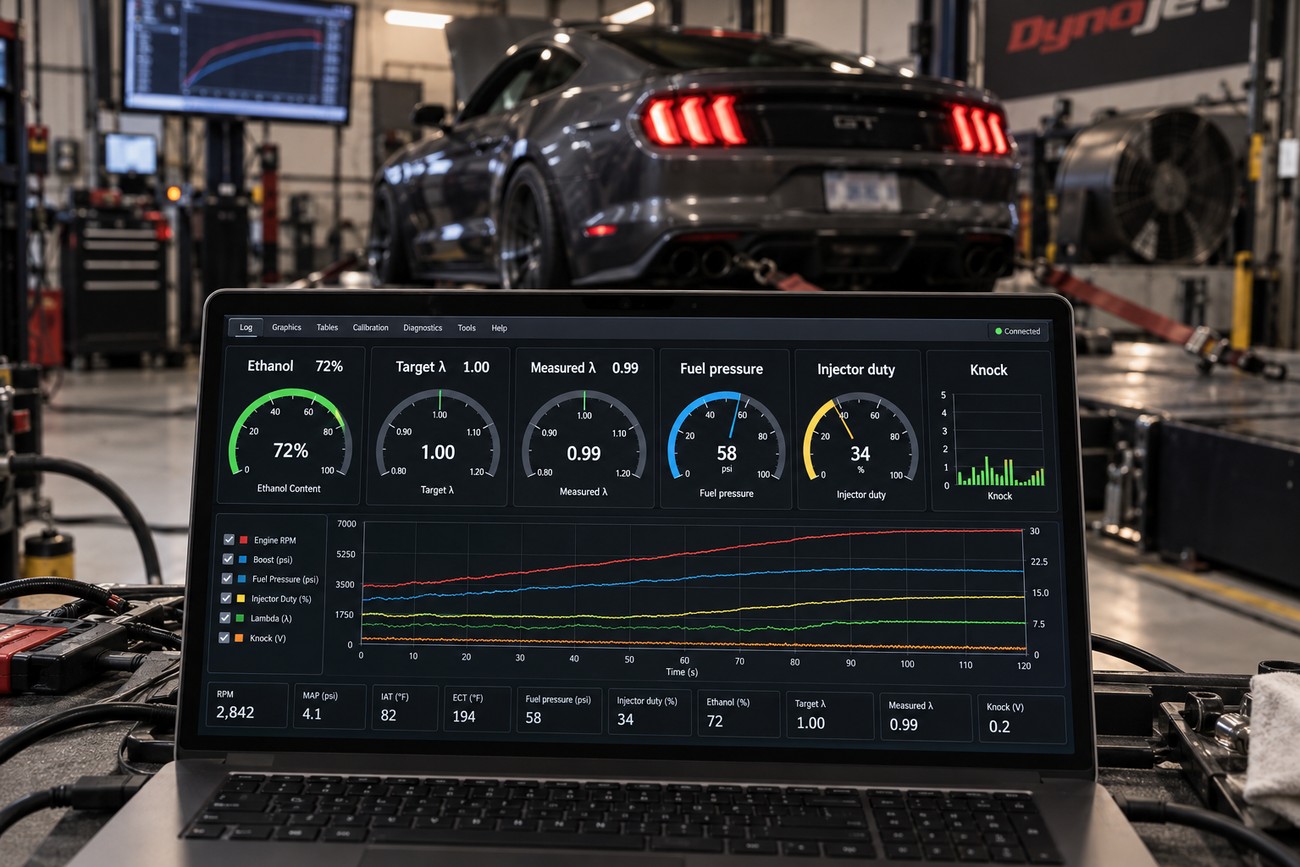
Begin by confirming the fuel blend and checking the hardware for ethanol compatibility, leaks, and adequate delivery capacity. Verify that the ethanol-content sensor, if fitted, reports plausibly and that the ECU selects the intended calibration behavior. At light load, review measured lambda against its target before asking the engine to do more work.
Increase load in controlled stages while logging lambda, fuel pressure, injector duty, knock activity, and relevant intake and fuel temperatures. Commanded lambda is the ECU’s target; measured lambda shows how the engine responded. Injector duty indicates how long the injectors are being asked to operate, while pressure shows whether fuel is reaching them as expected.
Log fuel pressure alongside injector duty. A plausible commanded mixture can conceal a supply problem until rising demand exposes pressure loss.
If measured lambda goes lean or pressure falls, stop the pull and diagnose the supply or calibration issue. Adding boost or ignition advance at that point increases risk rather than solving the fault. Recheck the fuel blend when results change between fills: a gasoline-only tune or an aggressive E85 map used without logging leaves too much to assumption.
Frequently asked questions
The useful answer depends on the vehicle, the fuel actually used, and a comparison made under similar conditions. These checks help separate a measurable benefit from a change in pump label.
How much HP does an E85 tune add?
There is no guaranteed increase. Gains of roughly 5–15% have been reported for some configurations, but the result depends on existing knock limits, available airflow, hardware, and safe calibration changes. Judge a claim using before-and-after results from the same vehicle under comparable test conditions, including the fuel blend and operating temperatures.
How can I tell whether E85 saves money per mile?
Divide the actual price per gallon by the measured miles per gallon for each fuel, then compare the two costs per mile. Use several representative fill-ups rather than a single short trip. Owners commonly report approximately 25–35% higher consumption on E85, but your blend, vehicle, and driving determine whether its pump-price difference offsets that increase.
What should I check if an E85 car struggles to start in winter?
Check battery health and cranking condition first, then confirm the actual fuel blend. If those are satisfactory, review cold-start calibration logs for the commanded fueling and how the engine responds during cranking and warm-up. That order helps avoid changing the tune to compensate for a weak electrical system or an unexpected blend.