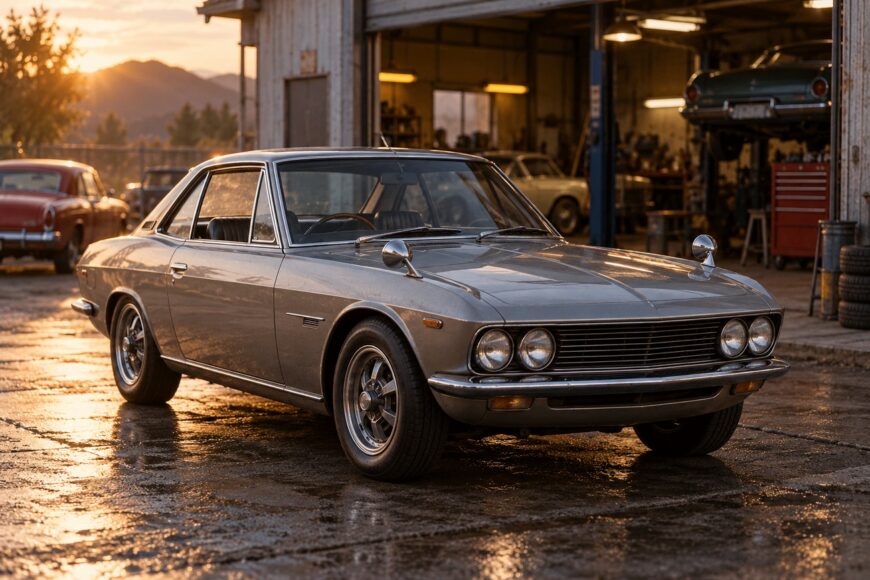
The Silvia name is familiar, but the CSP311 that first carried it remains unfamiliar even to many Nissan enthusiasts. Its limited production and hand-fitted bodywork attract collectors. Those same qualities make an attractive example difficult to assess: a missing trim piece or poorly repaired panel may be far harder to put right than a mechanical fault.
The original Silvia deserves attention for its place in Nissan’s history and for the way its compact coupe body was made. Beneath that body, however, lies a chassis related to the Datsun Fairlady 1600 SP311. Understanding that division between distinctive coachwork and familiar period engineering is the starting point for judging one honestly.
- From Datsun Coupé 1500 to the First Silvia
- What Was Actually Hand-Built?
- Nissan Silvia CSP311: Factory Specifications at a Glance
- How the Original Silvia Drives—and Where Its Limits Show
- Buying and Restoring a CSP311 Without Costly Assumptions
- Why Collectors Prize It—and Which Claims Need Checking
- Frequently asked questions
- What is the rarest original color for a Nissan Silvia CSP311?
- How can I check whether a claimed CSP311 is the car shown in its history file?
- What should an overseas buyer confirm before shipping a CSP311?
From Datsun Coupé 1500 to the First Silvia
The car made its public debut in 1964 as the Datsun Coupé 1500. The production Nissan Silvia appeared in 1965, giving the name its first road-going form. Its sharp-edged coupe body established an identity quite separate from the open Fairlady to which its chassis was related.
CSP311 production ran approximately from 1965 to 1968. Nissan Heritage puts the total at about 550 cars; other accounts give 554 or 584. Without a definitive factory register to reconcile those figures, “about 550” is the sounder description than an exact count.
The CSP311’s connection to the Datsun Fairlady 1600 SP311 matters more to an owner than its place in a model-name timeline. It helps explain the Silvia’s underlying layout and provides a sensible starting point when researching mechanical parts. It does not establish that any particular Fairlady component will fit.
Later Silvia generations built on S-chassis engineering should not be read backward into this car. The CSP311 is the first Silvia by name, rather than a technical ancestor of those later platforms. That distinction prevents mistaken expectations about its suspension, performance, and parts supply.
What Was Actually Hand-Built?
Nissan describes CSP311 production as semi-handmade. Some body panels were produced with presses, while fitting and assembly involved substantial handwork. Calling the car hand-built is reasonable shorthand, provided it does not imply that every panel and component was formed from scratch.
That method gave the coupe its unusual production character, but it has a practical consequence. A replacement panel cannot be assumed to line up without adjustment, and original body pieces are scarce. Damage that would call for a routine panel replacement on a more common car may require careful metal repair or new fabrication here.
The contrast extends beneath the body. The mechanical foundation is related to the Fairlady SP311, while the coupe-specific metal, trim, and fittings are much harder to source. A restorer may therefore find the most demanding work in the body and its details, even if the engine and running gear appear more familiar.
Hand fitting also complicates the judgment of an old repair. Slight differences between sides are worth recording before work begins, rather than automatically treating every variation as later damage. What matters is whether the structure is sound, the panels fit as intended, and previous repairs have preserved the car’s identifiable details.
Nissan Silvia CSP311: Factory Specifications at a Glance
These are Nissan Heritage’s factory figures and the period layout; they do not describe the condition or measured output of an individual surviving car.
| Specification | Factory description |
|---|---|
| Engine | Nissan R, inline-four OHV, 1,595 cm³, twin SU carburetors |
| Power | 90 PS (66 kW) at 6,000 rpm |
| Torque | 132 N·m at 4,000 rpm |
| Transmission | Four-speed, fully synchronized manual |
| Weight | 980 kg |
| Length × width × height | 3,985 × 1,510 × 1,275 mm |
| Wheelbase | 2,280 mm |
| Front suspension and brakes | Independent double wishbones; discs |
| Rear suspension and brakes | Live axle on longitudinal leaf springs; drums |
The two SU carburetors and modest weight help explain the car’s appeal as a period coupe. They should be considered alongside the leaf-sprung rear axle and rear drums, which set equally important limits on how it behaves.
How the Original Silvia Drives—and Where Its Limits Show
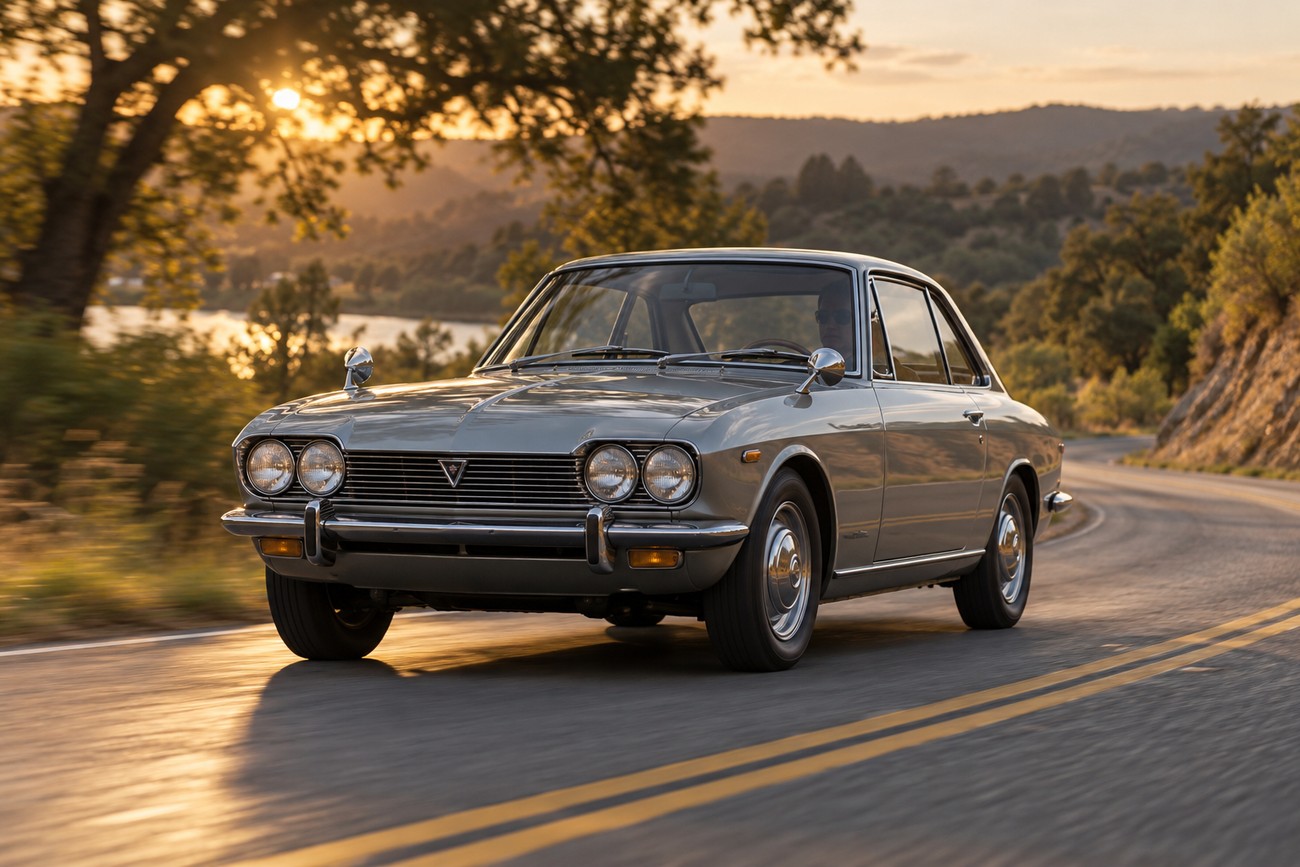
At a factory weight of 980 kg, the CSP311 has relatively little mass for its 90 PS (66 kW) Nissan R engine to move. Its fully synchronized four-speed gearbox was a welcome feature for the period and should make ordinary gear changes less demanding than an unsynchronized design. Neither fact promises the acceleration associated with later cars wearing the Silvia badge.
Factory torque is 132 N·m at 4,000 rpm, a useful reference when setting expectations for a healthy engine. Published power figures are historical engine specifications, not a prediction of what a decades-old example will produce at its wheels. Carburetor adjustment, ignition condition, and general wear can change the experience substantially.
Up front, independent double wishbones and disc brakes sit alongside a live rear axle, longitudinal leaf springs, and rear drums. The rear arrangement can feel less settled over broken pavement than a modern independent suspension, while narrow period-type tires limit available grip. Braking expectations should likewise reflect the original tire and brake layout rather than those of a modern car.
A particular car may depart from that factory character for better or worse. Worn suspension joints, aged tires, or maladjusted brakes can make an example feel less composed than its design permits; later modifications can mask its original behavior. A road test is most useful when the fitted parts and their condition are known, rather than when impressions are attributed to the model as a whole.
Buying and Restoring a CSP311 Without Costly Assumptions
Begin with structure, regardless of paint quality. Check chassis geometry, panel alignment, hidden cavities, and evidence of corrosion or earlier collision repair. Fresh paint can conceal work that will be expensive to revisit once the car is dismantled, particularly where a rare body panel has been reshaped or replaced.
Next, establish what is actually present. Record the badges, trim, fasteners, instruments, interior pieces, wiring, and body fittings before disassembly, and make a separate list of missing items. Seals and aging electrical components may need repair or fabrication; a visually complete cabin is no guarantee that its instruments and switches work.
Before authorizing bodywork, compare both sides of the car and photograph trim mounting points and signs of earlier hand fitting. Finding a scarce fastener after a panel has been painted can mean altering the finished metal to install it.
Only then assess the more familiar mechanical systems. The twin SU carburetors need sound linkages, a working choke, and careful synchronization; an engine brought back after long storage may run unevenly until those basics are addressed. Confirm the condition of the brakes and suspension as fitted, especially where previous owners have changed parts.
Use the Fairlady SP311 relationship as a research lead, not a parts order. Compare dimensions, mounting points, and part identification against the component removed from the CSP311; later Silvia parts deserve the same scrutiny. This is particularly important when a restoration depends on a piece that will be difficult to return or modify.
There are too few well-documented, publicly available owner reports to rank the model’s common failures quantitatively. A condition survey of the actual car is more useful than a generic fault list. It also gives a restorer a defensible order of work: secure the structure and scarce details before committing to paint and final assembly.
Why Collectors Prize It—and Which Claims Need Checking
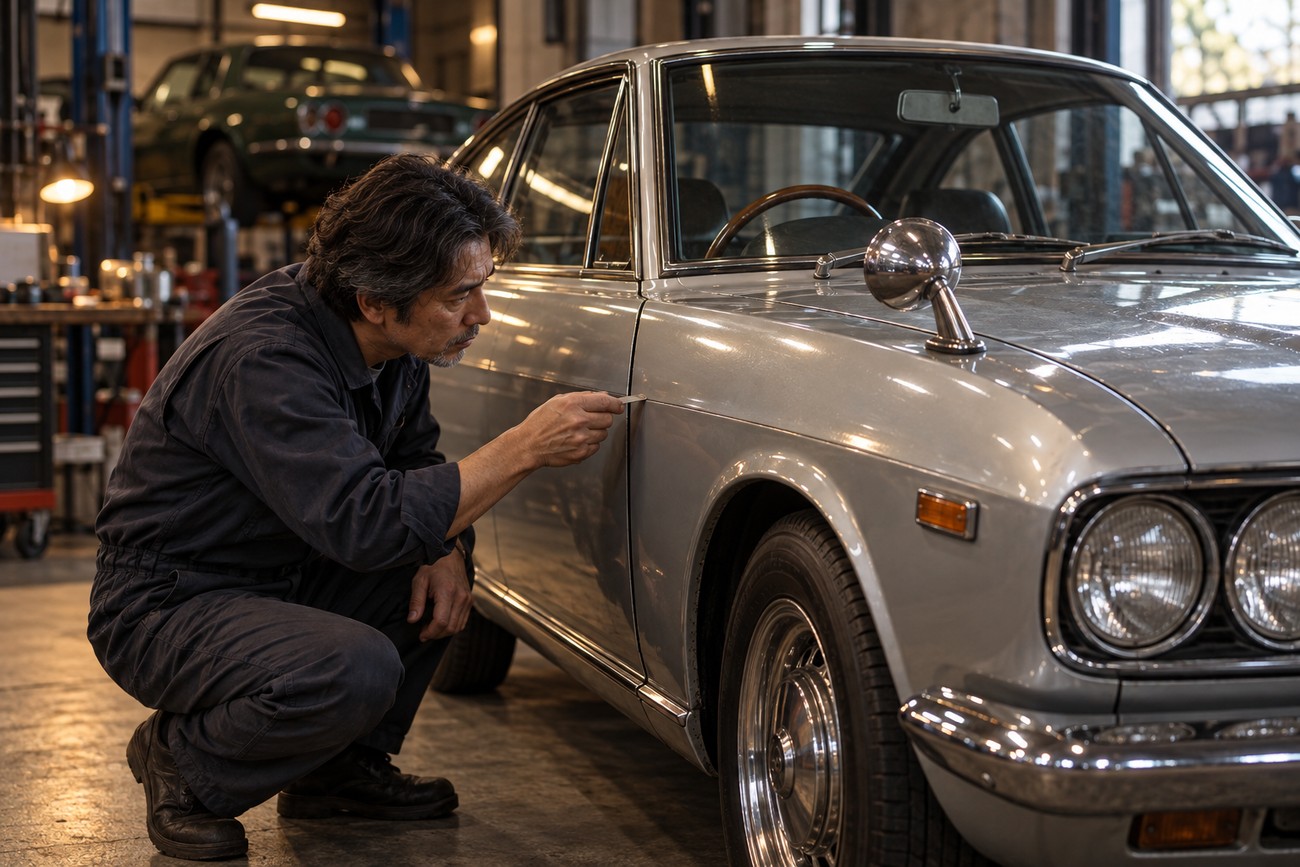
The CSP311 combines the first use of the Silvia name with a distinctive coupe body and a production run Nissan Heritage describes as about 550 cars. Its significance does not depend on exceptional engine output. For a collector, the appeal lies partly in how much of that early body, trim, and assembly character an example still retains.
Three recurring claims deserve care. “Fully handmade” overstates Nissan’s semi-handmade production, which combined pressed panels with hand fitting and assembly. “Exactly 554 built” presents one published total as settled fact, despite Nissan’s approximate figure and another account of 584.
Power figures need the same discipline. Nissan Heritage specifies 90 PS (66 kW) at 6,000 rpm, while some third-party descriptions state 96 hp (72 kW). Those are different stated values, not interchangeable versions of a single confirmed factory rating; a listing should identify which source it follows.
Finally, an original badge does not establish an original car throughout. Engines, carburetors, brakes, interiors, and body pieces can all have changed during decades of use or restoration. Photographs, records, and a careful inspection of the surviving components give the word “original” a meaning that a model designation alone cannot supply.
Frequently asked questions
For individual cars, paperwork and physical evidence often answer more than broad model statistics. The checks below help test specific claims while keeping the limits of the surviving information in view.
What is the rarest original color for a Nissan Silvia CSP311?
No original CSP311 color can be identified reliably as the rarest without a dependable production breakdown by paint color. A low number of surviving cars in a shade would not, by itself, establish how many left the factory that way.
To assess a seller’s claim, compare any surviving factory paint information and early records with traces of older finish in sheltered areas, such as beneath trim or inside enclosed body spaces. Look for consistency across several locations: repainting and panel replacement can make a single paint trace misleading.
How can I check whether a claimed CSP311 is the car shown in its history file?
Compare the car’s identification markings with old registration and ownership documents, then examine whether archived photographs show the same enduring details and changes over time. Check dates and transfers for gaps or contradictions, and inspect the markings themselves for signs of alteration.
No single matching feature proves the whole history. A number on a document may have been copied incorrectly, while trim or a panel visible in a photograph may have been replaced. The strongest case is a consistent chain of identifiers, records, and images that also agrees with the car in front of you.
What should an overseas buyer confirm before shipping a CSP311?
Confirm that the seller can provide the documents needed to establish ownership and export the car, and check the destination’s applicable import, registration, and vehicle requirements before arranging transport. Requirements vary by jurisdiction, so obtain current guidance from the relevant authorities and shipping provider rather than relying on the car’s age alone.
Arrange suitable transport insurance and document the car’s condition before collection. Make an inventory of loose, removed, or spare parts traveling with it, with photographs where practical, and agree how those items will be packed and declared. For a CSP311, an overlooked original fitting can be much harder to replace than its small size suggests.