
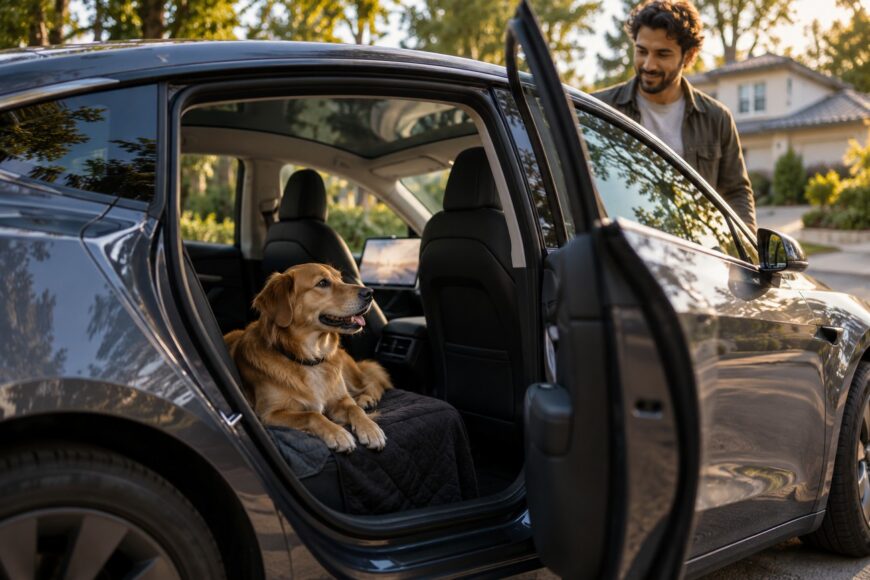
A short stop can create a difficult choice: leave your dog in the Model 3 with Dog Mode running, or take the dog with you and change your plans. The screen may show a reassuring cabin temperature, yet the dog still depends on the vehicle, its battery, the climate system, and your judgment.
Dog Mode can help manage cabin temperature during a brief, closely monitored absence. It does not verify that the dog is comfortable, guarantee that climate control will keep operating, or remove the need for a prompt response if conditions change.
The practical verdict is conditional: Dog Mode is a useful aid, provided the car is adequately charged, the weather is manageable, the system is verified before you leave, and you remain close enough to return quickly. It should never be treated as proof that leaving a dog unattended is safe in every situation.
- Is Dog Mode safe enough to leave your dog in a Model 3?
- What Dog Mode does—and what to verify before you walk away
- Battery level and climate failures: the risks the screen cannot rule out
- Why a comfortable reading may not match your dog’s experience
- A safer decision before a short stop
- The message on the screen does not settle legal or public concerns
- Frequently asked questions
- How long can a Tesla Model 3 stay in Dog Mode?
- How much battery does Dog Mode drain?
- What should I do if my dog looks distressed while Dog Mode is running?
Is Dog Mode safe enough to leave your dog in a Model 3?
Dog Mode maintains a selected cabin temperature while the owner is away, subject to available battery power and system operation. It can reduce the risk created by a hot or cold cabin during a short absence, especially when the vehicle is parked in a suitable location and the dog is calm and healthy.
The large message on the display can reassure passersby, but it is only a message. It does not independently verify conditions where the dog is resting, confirm that the animal has water, or show that the climate system will continue working after a fault.
Weather can change the risk quickly. Direct sun can heat particular areas of the cabin and increase HVAC demand, while cold weather can leave the floor or cargo area colder than the displayed cabin temperature. A puppy, senior dog, brachycephalic dog, or animal with a health condition may also cope differently from a healthy adult dog.
There is no promised number of hours that makes the arrangement safe. Your ability to return promptly, the current battery charge, the vehicle’s condition, and repeated checks matter more than a general runtime expectation. Dog Mode is an aid, not a guarantee of animal safety; you remain responsible for checking your dog.
What Dog Mode does—and what to verify before you walk away
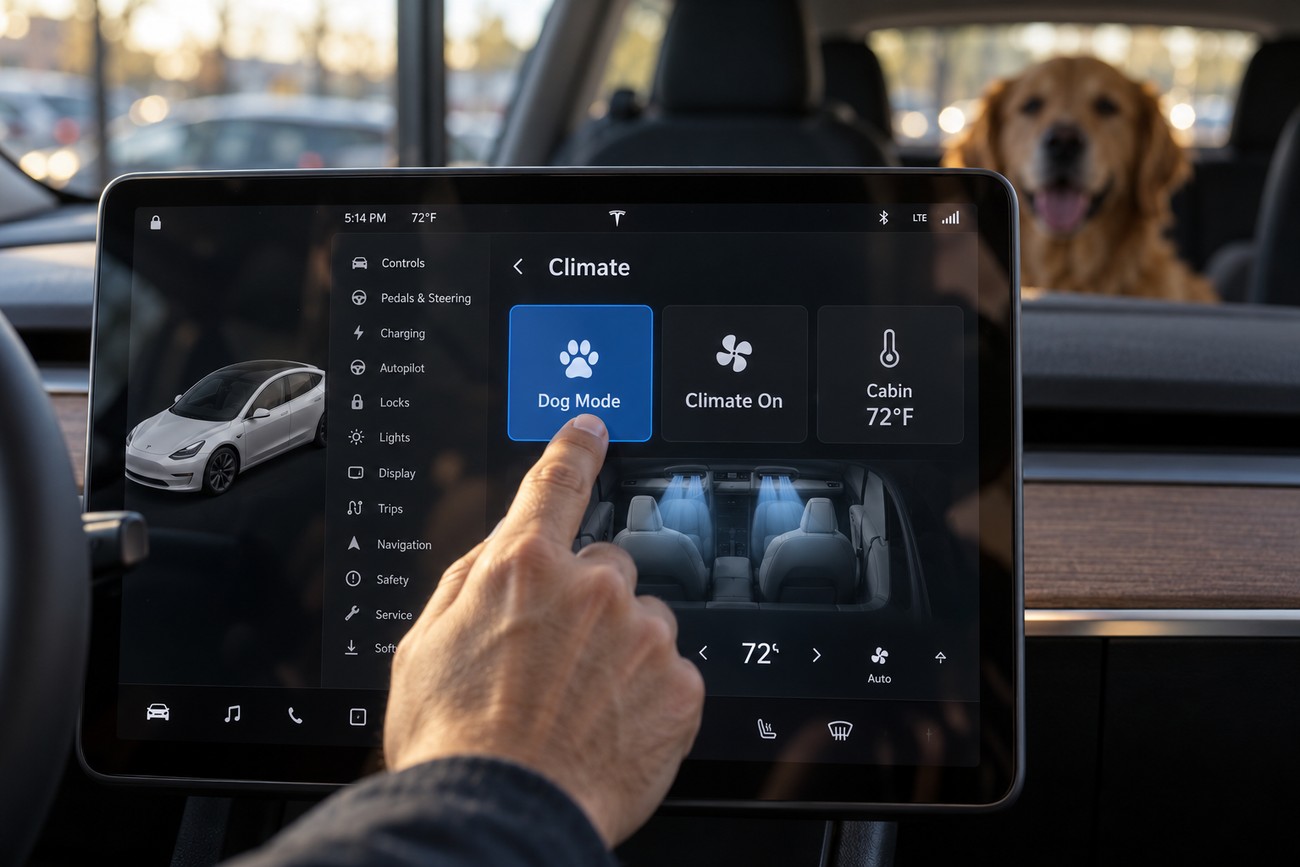
Dog Mode has been available on the Model 3 since 2019 software updates. You activate it through the climate controls, including the relevant quick-access climate option on the vehicle’s screen. The system then uses the vehicle’s battery to run heating or cooling while you are away.
Once active, the display shows a message that the owner will return and shows the cabin temperature. That information helps explain the situation to someone looking through the window, but it represents the vehicle’s reading rather than a complete assessment of the dog’s environment.
Before leaving, set a temperature appropriate to the conditions and your dog. Then confirm that Dog Mode is active after you exit: check the visible message and temperature, and make sure the climate system is operating as expected. A previously saved preference or familiar screen layout does not prove that the mode is running now.
- Check the battery charge and the weather before parking.
- Activate Dog Mode through the climate controls.
- Confirm the message and current temperature on the display after leaving the car.
- Provide water and a suitable place for the dog to rest away from direct sun where possible.
- Recheck the setup after software updates or whenever another person has access to the vehicle.
Software behavior can vary by version, and owner reports describe changes after updates, including altered temperature settings or unexpected exits from the mode. Access by another person also matters because opening doors or changing vehicle settings can affect the situation. Treat every departure as a fresh check rather than relying on a previous successful use.
Battery level and climate failures: the risks the screen cannot rule out
Dog Mode depends on the high-voltage battery to power heating or cooling. As the battery charge falls, the margin for continued climate operation becomes smaller, while hot or cold conditions can increase HVAC demand. Tesla’s guidance is not to leave a dog relying on Dog Mode when the battery state of charge is below 20%.
That 20% figure is a conservative do-not-leave threshold, not a guaranteed shutdown point or a promise of remaining runtime. Battery condition, outside temperature, HVAC performance, and other active vehicle functions affect how much reserve remains available. Running Sentry Mode at the same time can also increase energy use.
Climate control can be interrupted by a software issue, a hardware fault, low charge, or another critical vehicle problem. Owners report missed or delayed alerts and changes in behavior after software updates, although these reports do not establish a failure rate. A phone notification can supplement an in-person check, but it should not be the only protection.
The displayed temperature has the same limitation. It may look stable while a dog is lying in a warmer sunlit area or a colder section near the floor. If the charge begins falling unexpectedly, the climate status changes, or an alert is unclear, return to the vehicle rather than waiting for the system to resolve the problem.
Why a comfortable reading may not match your dog’s experience
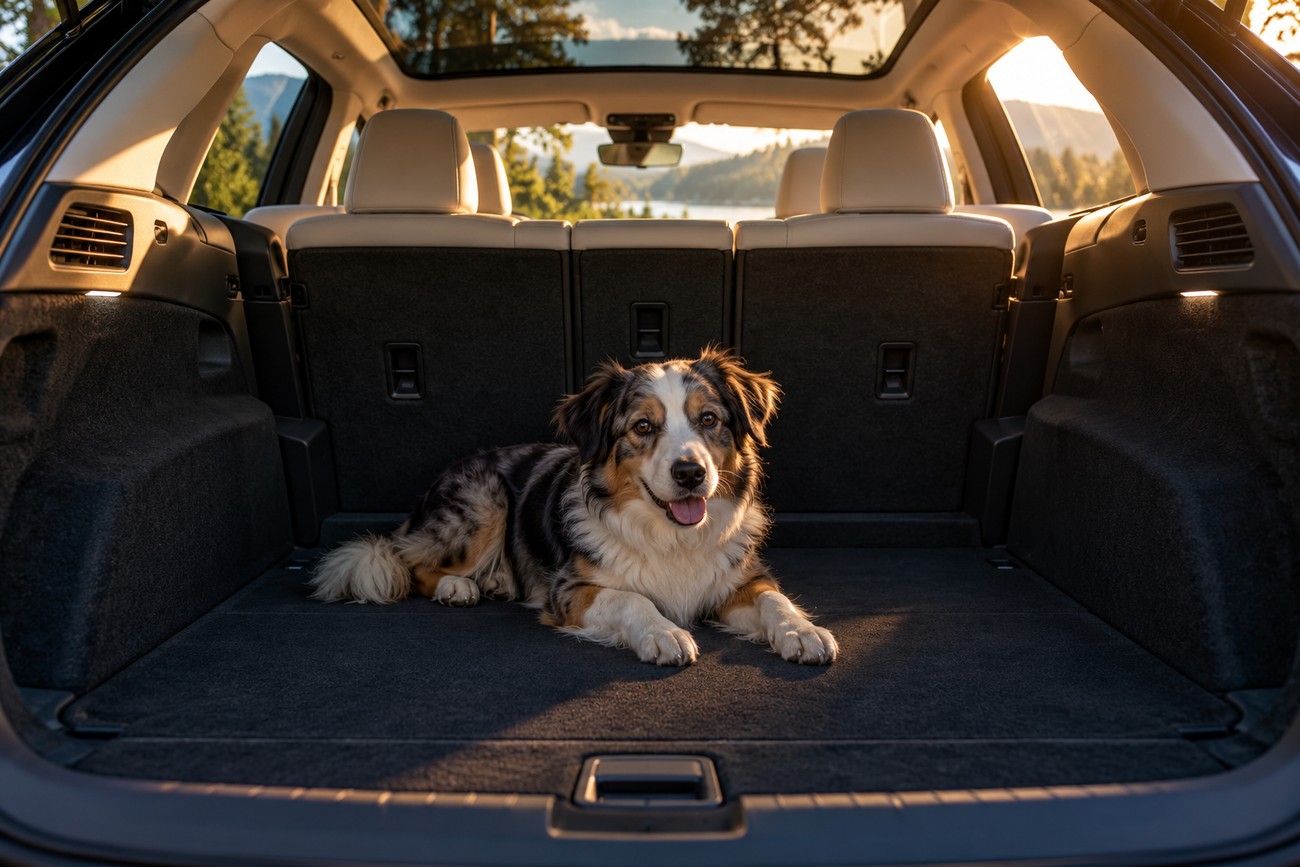
A cabin temperature is a single reading in a space with several microclimates. Sunlight through the glass can heat seats and other surfaces, while airflow may differ between the front, rear, floor, and cargo areas. The displayed cabin temperature may not represent conditions in every area where the dog rests.
Direct sun and extreme weather can increase HVAC demand and make a failure more consequential. In cold conditions, heat may not reach the floor or cargo space in the same way as the upper cabin. A small dog resting low in the vehicle can therefore experience a different environment from the one suggested by the display.
The animal’s size, age, breed, coat, health, and stress level all affect tolerance. Access to water remains important even when climate control is operating, especially if the dog is anxious or panting. Position the dog where it can change posture and avoid the hottest or coldest available surface.
Extreme heat or cold calls for greater caution rather than simply selecting a more aggressive temperature setting. If the weather is severe, the dog has a known sensitivity, or you cannot check the vehicle promptly, taking the dog with you or postponing the stop is the safer decision.
A safer decision before a short stop
Start with the simplest option: take the dog with you if the destination allows it. If that is impossible, consider whether the stop is genuinely brief, whether you can remain nearby, and whether another responsible person can return to the vehicle if your plans change.
Check the battery, outside conditions, parking position, and vehicle access before activating Dog Mode. Do not leave a dog relying on the system when the battery state of charge is below 20%. Direct sun, extreme temperatures, and additional energy-consuming features reduce the margin for error.
Activate the mode, exit the vehicle, and verify the message, displayed temperature, and climate status. Give the dog water and a suitable resting area. Remain close enough to return promptly, and use remote information as a supplement to physical checks rather than a substitute for them.
Return immediately if the climate status is unexpected, the battery is falling faster than anticipated, an alert is delayed or unclear, or the dog appears restless, weak, excessively panting, shivering, or otherwise uncomfortable. Move the animal out of the unsafe situation and seek veterinary guidance promptly if symptoms persist or appear serious. Dog Mode remains an aid, and you remain responsible for checking your dog.
The message on the screen does not settle legal or public concerns
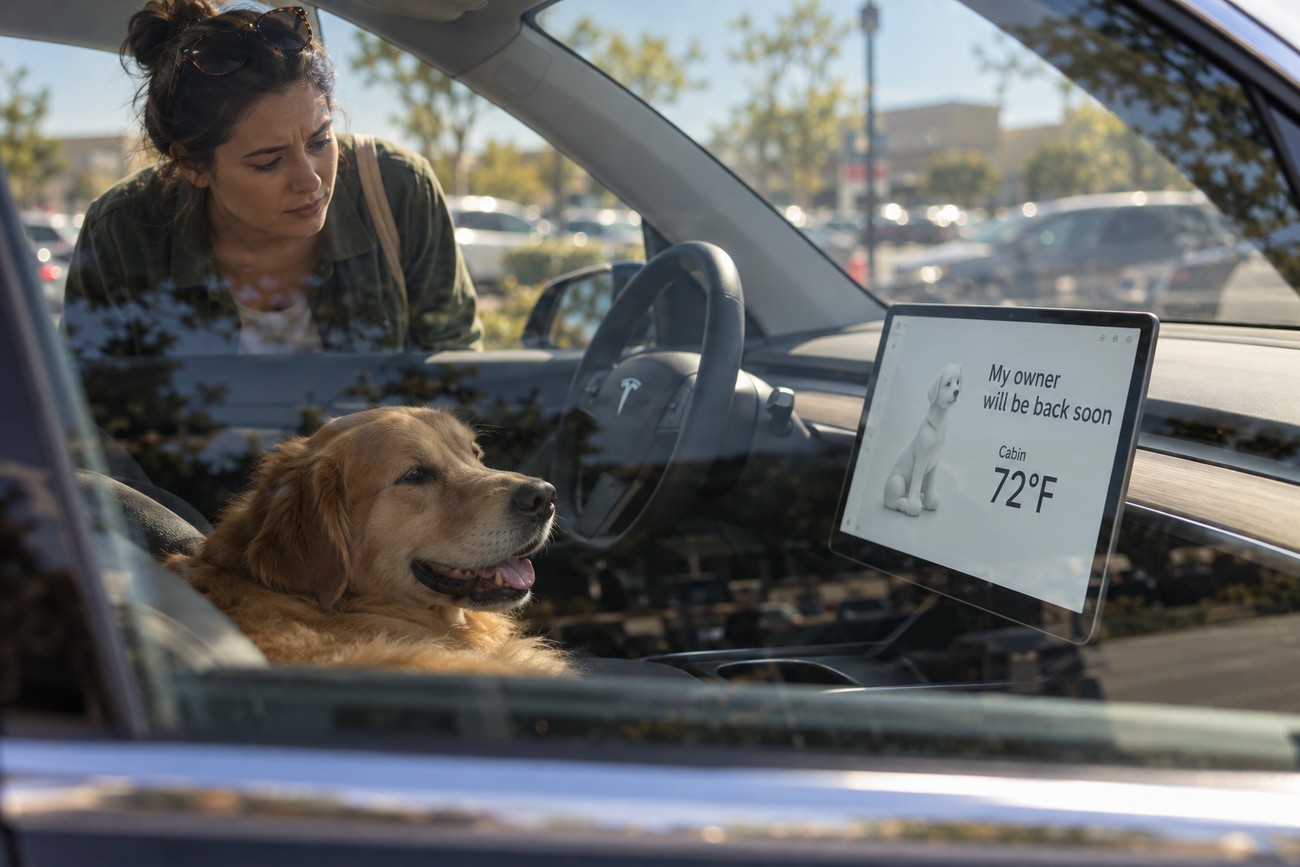
The display shows a message that the owner will return and shows the cabin temperature. A passerby may still fail to see it, may not trust the message, or may interpret the dog’s behavior as distress. People can seek help when they believe an animal is in danger, even if Dog Mode is operating normally.
Animal-welfare rules vary by location and depend on the circumstances. Some laws focus on heat, cold, distress, or the general condition of the animal rather than on whether a vehicle has a special climate feature. Dog Mode does not automatically make leaving a dog unattended lawful.
Your responsibility remains central. Keep the stop short, stay close, and be prepared to explain that the system is active without treating the screen as proof that the dog is safe. If someone raises a concern, respond calmly and check the dog rather than assuming the display settles the matter.
Frequently asked questions
Dog Mode’s runtime and battery use vary with charge, weather, and climate demand. Monitor the vehicle during a brief stop rather than relying on a fixed time or drain rate. If your dog seems distressed, return immediately, regardless of the displayed temperature.
How long can a Tesla Model 3 stay in Dog Mode?
There is no dependable universal duration. Available time depends on the current battery charge, battery condition, weather, HVAC demand, other active vehicle features, and whether the system continues operating normally.
Plan around a brief stop, close proximity to the car, and repeated checks rather than a claimed maximum runtime. Leave with a substantial charge reserve, avoid relying on Dog Mode below 20% state of charge, and return as soon as conditions or your plans become uncertain.
How much battery does Dog Mode drain?
Dog Mode’s battery use varies because heating and cooling demand changes with outside conditions, direct sun, cabin insulation, battery condition, and the settings of other vehicle features. A single drain rate can therefore give a misleading impression of how long the battery will last.
Check the charge trend during use instead of extrapolating from a fixed figure. A faster-than-expected decline, an unexpected climate status, or a low reserve is a reason to return immediately.
What should I do if my dog looks distressed while Dog Mode is running?
Return to the dog immediately and move it out of the unsafe situation. Do not assume that the displayed cabin temperature rules out heat stress, cold exposure, poor airflow, anxiety, or another problem.
Provide water and a safer environment, then seek veterinary guidance promptly if the dog remains distressed or shows serious symptoms. The vehicle’s screen can support your assessment, but it should not delay direct help.







