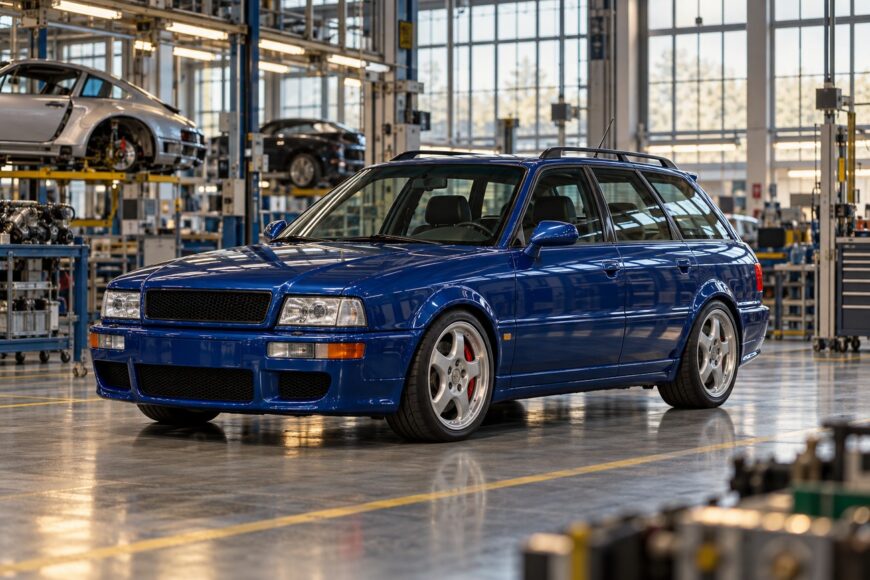
A Porsche-assembled performance wagon sounds like an unusually useful classic: space for luggage, quattro traction, and the pace to embarrass contemporary sports cars. The Audi RS2 Avant earned that reputation through a collaboration that gave an Audi 80-based estate substantially more power and a distinct set of Porsche-influenced parts.
Those same parts complicate ownership. An original brake or trim component may be difficult to replace, while aging Audi wiring, turbo hardware, and bodywork still need attention. The appeal makes most sense once you separate what Audi supplied, what Porsche changed, and what remains on the particular car for sale.
- How Audi and Porsche built the RS2 Avant
- The five-cylinder engine, quattro, and real-world speed
- What makes an RS2 more than a fast Audi 80
- Living with the RS2: the estate-car compromise
- Buying one: inspect the car, not just the legend
- Rarity, originality, and the RS badge legacy
- Frequently asked questions
- How much is an Audi RS2 worth today?
- How should you choose tires for an RS2’s quattro system?
- What should you ask a workshop before booking an RS2 inspection?
How Audi and Porsche built the RS2 Avant
The RS2 was a 1994–1995 Audi–Porsche collaboration assembled at Porsche in Zuffenhausen. Its starting point was the Audi 80 Avant, giving the project an established estate body and Audi’s permanent all-wheel-drive layout. That origin matters: underneath the rare badges is a recognizable Audi platform, with both its strengths and its age-related vulnerabilities.
Audi supplied the underlying car, including the basis of its 2.2-liter turbocharged inline-five. Porsche’s role was substantial, covering assembly and revisions to the brakes, wheels, suspension components, and exterior. Describing the RS2 as wholly designed by Porsche obscures how the two companies’ work fits together.
That division also helps explain why a specialist inspection cannot focus on one marque alone. Engine management and much of the car’s hardware have Audi roots, while several costly identifying parts are RS2-specific. A workshop familiar only with an ordinary Audi 80, or only with period Porsches, may miss an important part of the picture.
The result was an estate engineered for unusually high performance without abandoning its practical shape. It retained a usable rear compartment and five-door access, yet its mechanical specification was far removed from that of a standard Avant. The transformation was extensive; it was not a clean-sheet Porsche design.
The five-cylinder engine, quattro, and real-world speed
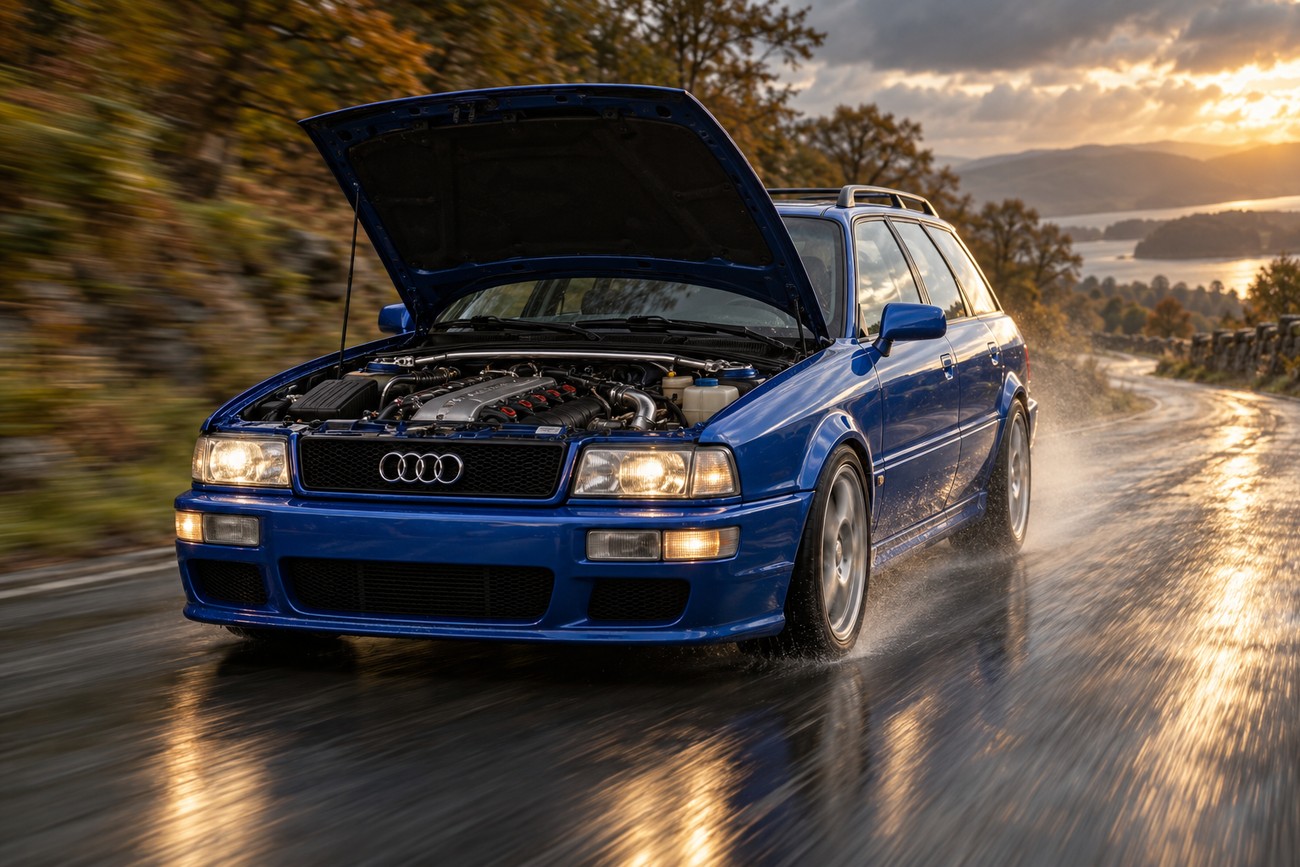
The Audi-based 2.2-liter turbocharged inline-five was rated at 315 PS at 6,500 rpm and 410 Nm at approximately 3,000–3,600 rpm. Those figures describe a car that rewards a driver willing to use its rev range, while the broad torque delivery helps it gather speed without constant gear changes.
A six-speed manual transmission sends power through permanent quattro all-wheel drive. The combination gives the RS2 assured traction when accelerating, particularly on imperfect roads. It does not erase the mass and responses of a 1990s estate; tire choice, suspension condition, and driver inputs remain evident from behind the wheel.
Published 0–100 km/h times range from approximately 4.8 to 5.4 seconds, depending on the source and test conditions. Treat that spread as a reminder that a single acceleration claim cannot describe every surface, launch, or surviving car. Condition matters far more to a buyer than a best-case run recorded decades ago.
The commonly cited official top speed is approximately 262 km/h; some tests and owners report 270 km/h or more. Those claims should remain separate rather than being blended into a definitive figure. Either way, the RS2’s historical significance rests on how much performance it brought to an estate, not on a disputed maximum.
What makes an RS2 more than a fast Audi 80
Porsche’s work is visible as well as mechanical. Revised brakes, distinctive wheels, selected suspension components, mirrors, and Porsche badging separate the RS2 from an ordinary Audi 80 Avant. Together they give the car its recognizable appearance and help it cope with the output of the five-cylinder engine.
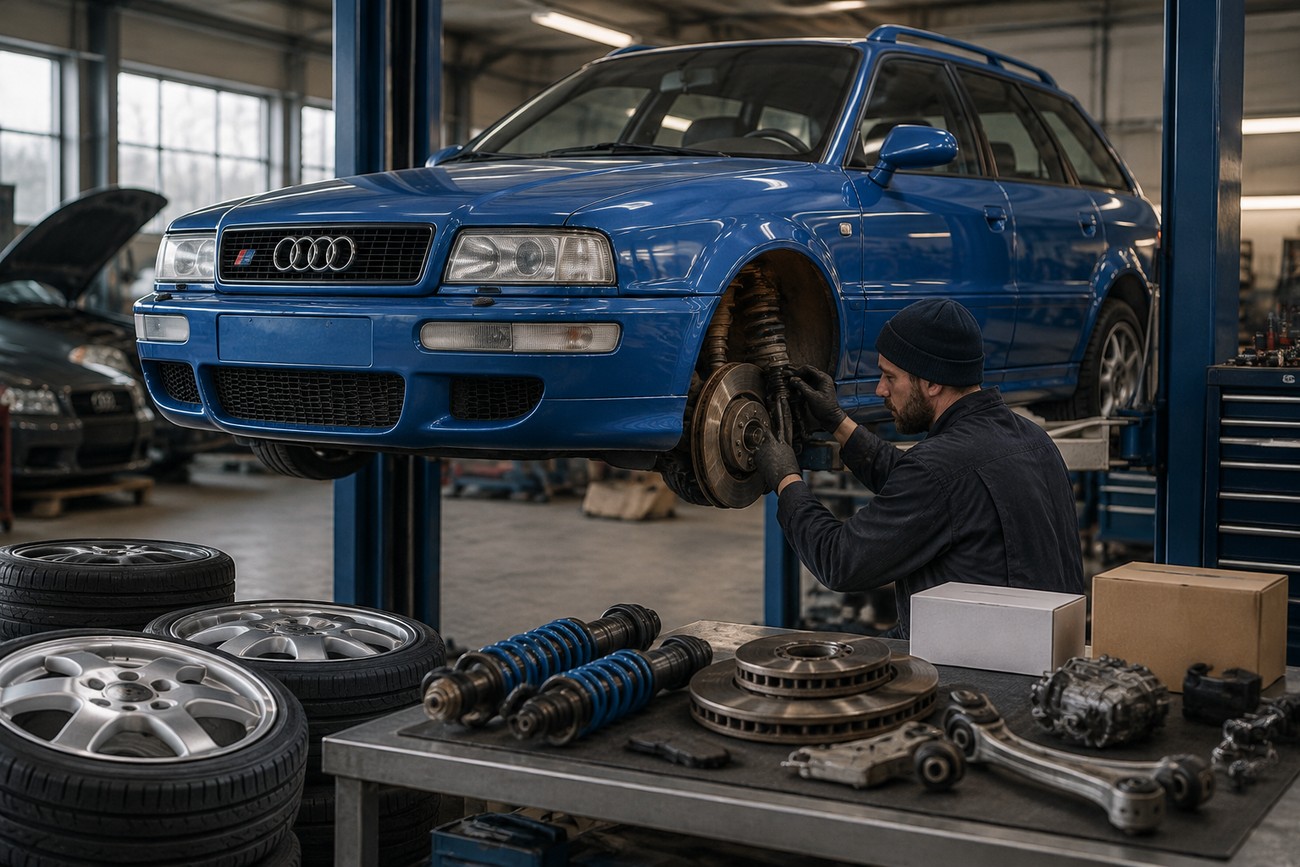
These components also change the arithmetic of restoration. Missing original wheels, mirrors, brake parts, or exterior trim can be expensive to address, and some RS2-specific pieces are difficult to find new. A replacement may make a car roadworthy without restoring its factory specification or its appeal to a collector.
Do not assume a visually similar part from a Porsche 964 or 968 is an interchangeable repair. The RS2 drew on Porsche components and design work, but fitment and specification need checking against the car itself. That distinction is especially important if a seller describes substituted parts simply as “Porsche brakes.”
Small details deserve the same scrutiny as headline hardware. Original badges, bumper pieces, and interior plastics can be harder to source than their modest size suggests. For a driver-focused purchase, a sound replacement may be acceptable; for an originality-focused purchase, its presence should inform both your assessment and the paperwork you keep.
Living with the RS2: the estate-car compromise

The RS2 still offers the access and flexibility of an estate, so it can carry passengers and luggage in a way a period sports coupe cannot. Its firmer suspension, however, can be tiring on broken roads, especially with a full load. The practical body does not turn it into a low-effort family daily driver.
Cabin noise and vibration are part of the experience, particularly when the five-cylinder engine and turbo are working hard. Active city driving can push fuel consumption beyond 15–18 l/100 km, according to reported real-world use; that is not an official rating. Slow traffic therefore offers few of the rewards that make the running costs easier to accept.
Maintenance must account for an aging, turbocharged performance car rather than an ordinary Audi 80. Oil, filters, cooling, fuel delivery, and competent diagnosis all matter, while electrical faults may trace to old sensors, wiring, or connectors. Insurance terms may also differ from those for a conventional 1990s estate, so check them before committing.
Brake fade has been reported during sustained hard driving, particularly where components are aged or poorly maintained. It is a reason to assess brake condition and intended use, not proof that every original system is inadequate. A car that feels composed on a short road test still needs a thorough braking inspection before repeated hard use.
Buying one: inspect the car, not just the legend
Start with the VIN, registration documents, and a continuous ownership and service history where available. Confirm that the car is an RS2, rather than a converted Audi 80 Avant, and reconcile major repairs with the paperwork. A plausible odometer reading is weak evidence if identity, earlier maintenance, or accident history cannot be established.
Next, inspect the body before getting absorbed in the engine bay. Check the wheel arches, rocker panels, and suspension mounting areas for corrosion or repairs, and look for signs of poorly documented accident work. Structural condition can consume a restoration budget while leaving the car’s attractive Porsche-influenced details untouched.
Then compare the brakes, wheels, mirrors, trim, and other identifying components with the car’s recorded specification. Ask for evidence of work on the engine, turbo, drivetrain, and brakes, alongside diagnosis of wiring, sensors, and connectors. An independent specialist who knows the RS2 can distinguish a manageable fault from several expensive jobs arriving together.
Finally, establish whether the engine software and boost settings remain standard. Increasing boost on a tired engine, especially without addressing fuel delivery and cooling, raises failure risk. A modified car can still be evaluated on its merits, but the work needs credible records and inspection; an appealing mileage figure cannot supply either.
Rarity, originality, and the RS badge legacy
The commonly cited production total is 2,891 cars, often rounded to about 2,900; some accounts use broader estimates approaching 3,000. Whichever count appears in an advertisement, the RS2 is scarce enough that finding the right example may take patience. Rarity alone does not establish condition or justify overlooking missing parts.
The RS2 is widely regarded as Audi’s first series-production high-performance estate and a forerunner of later RS estates. Its place in that lineage is clear, even though newer performance wagons surpass its measured speed. Calling it the fastest estate of all time confuses its impact in the 1990s with an enduring performance record.
For collectors, documented originality carries weight: RS2-specific mechanical and trim components, factory engine calibration, and a coherent repair history all help establish what a car is. Aggressive tuning or hard-to-reverse substitutions may narrow its appeal, even when they promise more power. Keep records for any necessary replacement work.
A buyer seeking regular use may reasonably accept a carefully maintained departure from factory specification. Someone paying for a preserved RS2 should apply a stricter test and budget for the difficulty of sourcing correct parts. Either approach is defensible when the car’s condition and documentation support the asking price.
Frequently asked questions
Current value, tire fitment, and the quality of an inspection all depend on the individual car. Settle these points with evidence from the relevant market and the vehicle’s documentation. General RS2 specifications cannot replace those checks.
How much is an Audi RS2 worth today?
Use recent completed sales of comparable cars in the same market, rather than a universal price or unsold advertisements. Adjust for provenance, original RS2 components, documented condition, and the cost of correcting any departures from factory specification.
How should you choose tires for an RS2’s quattro system?
Verify the car’s approved tire fitment and the specification of its installed wheels before ordering. Choose appropriate load and speed ratings, and avoid mismatched rolling circumferences across the driven wheels; correct sizing matters to both handling and the quattro drivetrain.
What should you ask a workshop before booking an RS2 inspection?
Ask how it identifies RS2-specific parts and whether it can assess turbo operation, quattro components, and corrosion at structural mounting areas. Agree in advance on the scope of a written report, including photographs, fault findings, and prioritized repair estimates.