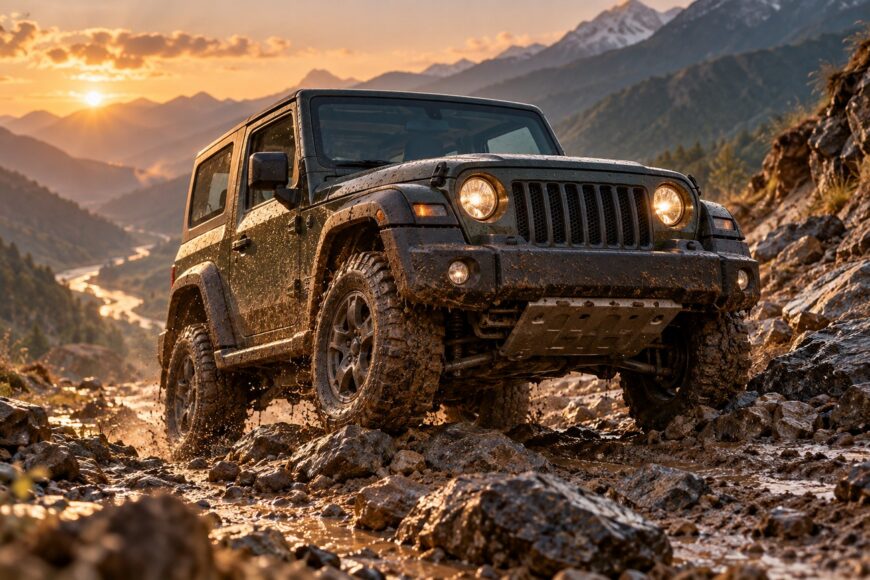
The Mahindra Thar has the proportions and hardware many buyers associate with a compact Jeep Wrangler: a high-riding body, short overhangs, removable-roof character on relevant versions, and a chassis designed to leave the pavement. That makes it appealing to drivers who want a genuine trail vehicle without moving into a large SUV.
The ownership equation changes once the commute, family use, and local registration process enter the picture. A Thar may suit rough tracks better than it suits a long highway journey, while an attractive Indian-market purchase price says little about whether the exact vehicle can be legally registered in your country. The sensible approach is to assess one specific version for one specific destination before discussing shipping or a deposit.
- What the Mahindra Thar offers off road
- Three-door Thar or five-door Roxx: buy the right version
- The daily-driving compromises a short test drive can miss
- Can you legally import and register a Mahindra Thar?
- The costs that survive a successful import
- Thar versus Wrangler: who should make the leap?
- Frequently asked questions
- Can I drive a right-hand-drive Thar where I live?
- What should I check before buying a modified used Thar?
- What documents should a seller provide before I pay a deposit?
What the Mahindra Thar offers off road
The Thar is a body-on-frame, off-road-focused SUV. Its construction separates the body from a ladder-type chassis, giving the vehicle the tough, utilitarian layout expected of a dedicated off-roader rather than a conventional crossover. That architecture also helps explain its upright driving position, firm ride, and heavier road manners.
Relevant variants are equipped with four-wheel drive and low range, with selectable drive modes depending on the exact specification. Low range gives the driver more control at low speed on steep, loose, or uneven ground. It is a meaningful part of the Wrangler comparison because the Thar is designed around off-road traction and control, rather than receiving all-wheel drive mainly for poor-weather road use.
Clearance, approach and departure angles, and wading claims vary by generation, version, and market. Treating a figure from one brochure as a universal Thar specification can lead to the wrong expectations, especially when comparing a three-door model with a five-door Roxx or checking an imported vehicle against local equipment.
Capability still has a price on the road. The same solid, purposeful layout that helps on a trail can bring more noise, less polished body control, and greater fatigue during long highway trips. The Thar is therefore a credible Wrangler-style rival in concept, while its strongest case remains recreational and mixed-surface driving rather than quiet urban commuting.
Three-door Thar or five-door Roxx: buy the right version
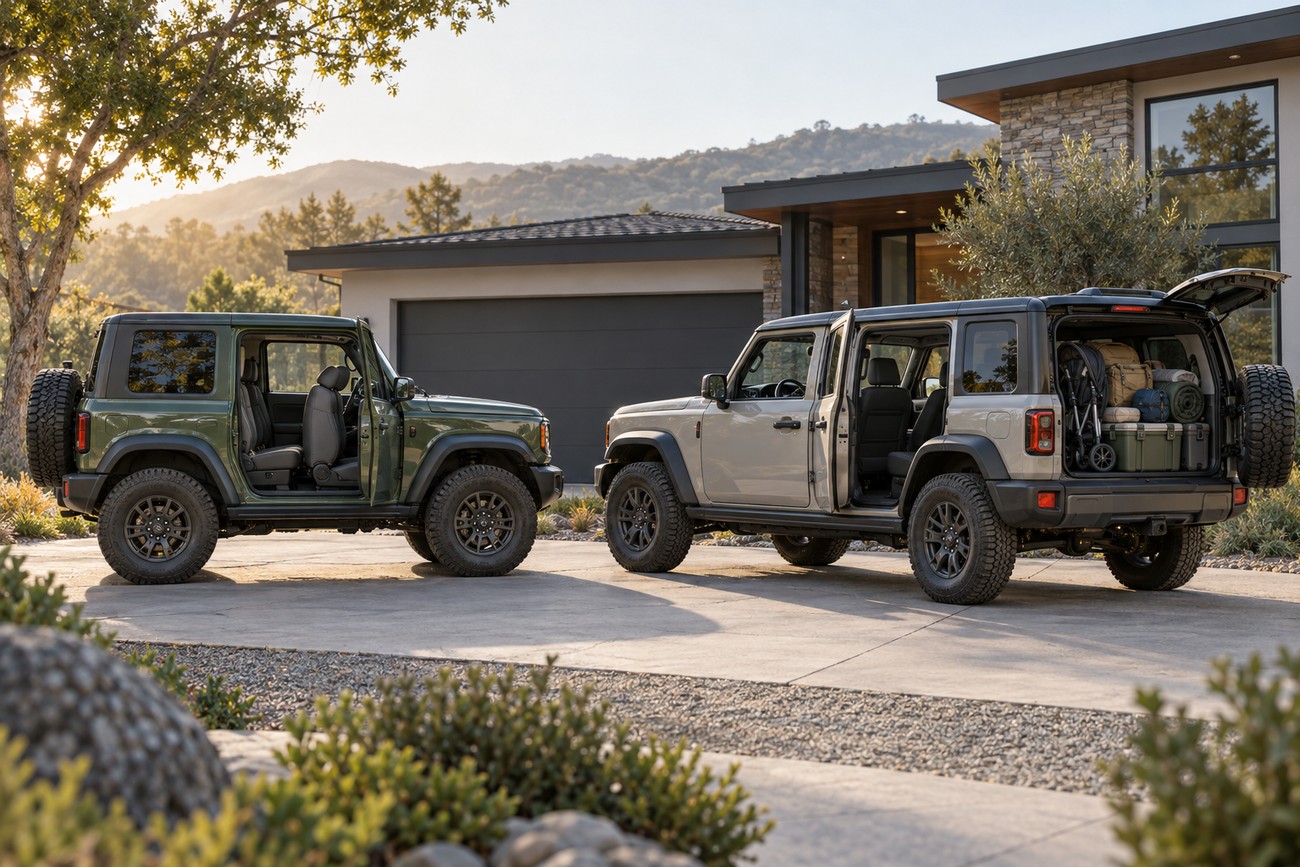
The current Thar family includes the familiar three-door Thar and the five-door Thar Roxx. The shorter model has the more focused off-road character and a simpler lifestyle appeal, yet its rear-seat access is a serious everyday limitation. Passengers climb through the front doors and fold the front seats, which becomes tiring when adults or child-seat users ride in back regularly.
Luggage space is another recurring weakness of the three-door design. It can work for light weekend equipment, especially when the rear seats are used flexibly, but family luggage, a stroller, or bulky outdoor gear quickly exposes the short cabin. The Roxx improves access and carrying ability, giving the Thar a wider range of daily uses, although it remains an off-road-oriented SUV rather than a conventional family crossover.
Indian-market powertrains include a 2.0-liter turbo petrol and a 2.2-liter diesel. Manual and automatic transmissions, along with rear-wheel-drive and four-wheel-drive arrangements where offered, depend on the exact version. A buyer who expects regular trail work may value the diesel’s low-speed pulling character, while a driver spending more time on asphalt may prefer the petrol’s smoother, quieter feel; the right choice depends on the route and maintenance support available locally.
Do not compare engines by name alone. Confirm the gearbox, drive system, safety equipment, body style, and source-market specification on the vehicle you are actually considering. Two Thars can carry the same badge while offering different ownership implications after import.
The daily-driving compromises a short test drive can miss
A brief drive around a dealership can hide the practical cost of the three-door layout. Rear-seat entry takes effort, child-seat installation can be awkward, and luggage loading requires more planning than it does in a similarly sized crossover. If you regularly carry adults, children, or sports equipment, test those tasks with the real items you use rather than relying on a quick seat adjustment.
Owners commonly report wind and tire noise, a firm ride, and a cabin that feels busy on broken urban surfaces. The high stance and body-on-frame construction contribute to the character buyers often like, though they also make the Thar less settled than a road-focused SUV. On a long highway run, noise, steering corrections, and road irregularities can add fatigue that a short urban drive never reveals.
Fuel use depends heavily on the engine, transmission, traffic, terrain, and how often four-wheel drive is engaged. Petrol versions and sustained off-road work can cost more at the pump than some buyers expect. Running costs should be considered alongside the purchase decision, particularly if the vehicle will spend most of its life in city traffic.
Modifications deserve restraint during the first months of ownership. Larger wheels or an immediate lift can change steering response, fuel use, ride quality, and suspension durability, while poorly matched parts may reduce the balance that made the standard vehicle predictable. The large aftermarket is useful, but its availability is a reason to plan carefully rather than modify automatically.
Can you legally import and register a Mahindra Thar?
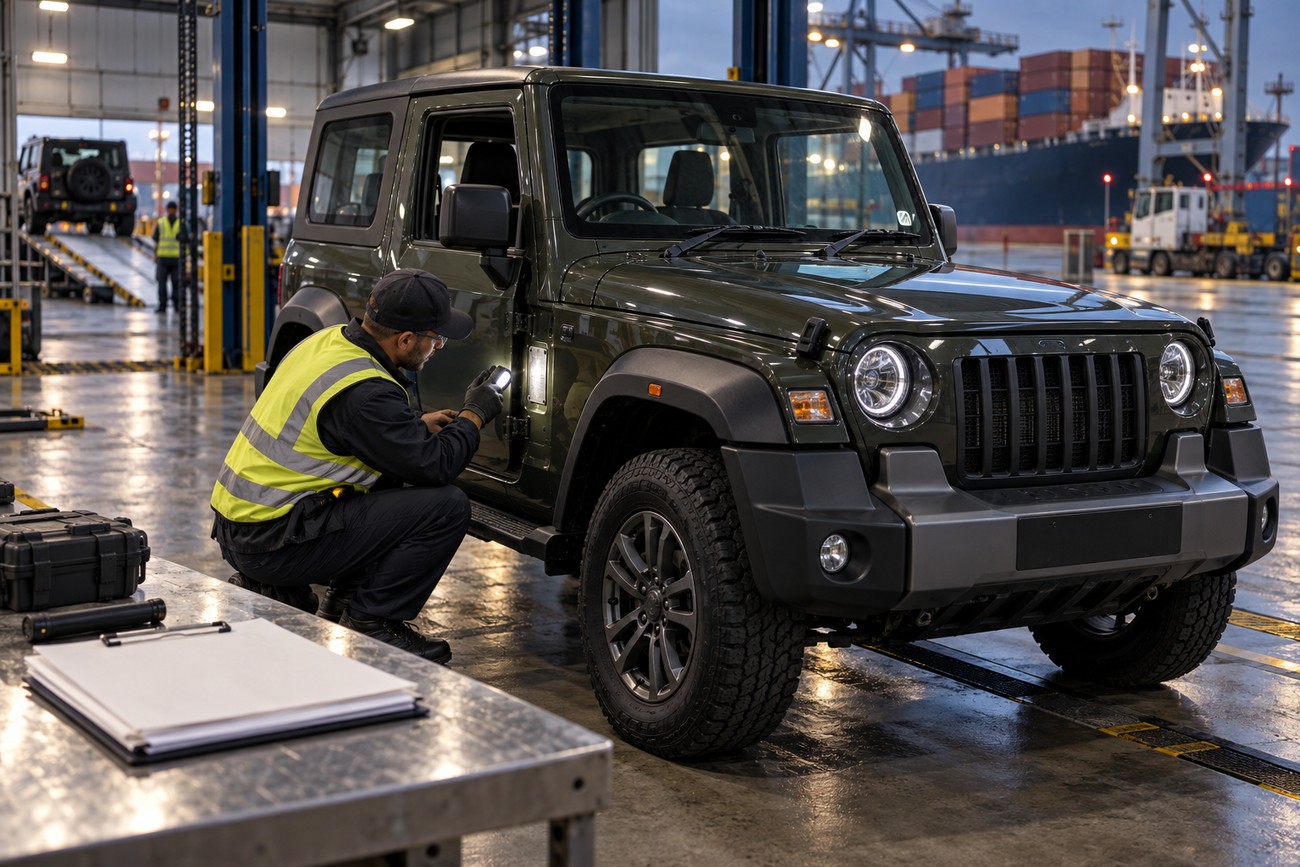
Destination-country eligibility is the first gate. The Thar is sold through Mahindra’s Indian dealer network, yet it is not a standard mass-market offering in the United States or the European Union. A vehicle being officially sold in India does not establish that the same specification is approved for ordinary sale, import, or registration elsewhere.
Before shopping seriously, identify the exact vehicle, its VIN, source market, steering position, engine and transmission, and intended registration category. Then ask the relevant authority or a qualified importer whether that specific vehicle can meet local rules. Emissions and OBD requirements, lighting, glass and tire markings, airbags, electronic safety equipment, child-seat provisions, and documentation may all affect the result.
A deposit based on model-level claims is risky until the specific VIN, fitted equipment, and supporting documents have been checked against the destination’s requirements. “Export ready” can describe a seller’s process without proving local approval.
A practical sequence is to obtain the VIN and build details, request the registration or title history, confirm the applicable emissions and safety pathway, and check whether the lights and other equipment match local standards. Ask for written guidance where possible. Shipping the vehicle before this review can leave you paying storage, modification, or re-export costs without a clear route to registration.
Local modifications may help with compliance, but they do not guarantee approval. Some countries restrict the age, origin, or type of imported vehicle, while others require testing by an approved facility. The final answer depends on local law and the exact Thar, so a general statement about the model cannot replace a destination-specific check.
The costs that survive a successful import
The vehicle price is only the first line of the calculation. Add shipping, duties and taxes where applicable, port or handling charges, compliance work, registration, insurance, and any inspection fees. These items vary by destination and vehicle specification, so a low advertised price should be treated as an opening figure rather than the ownership cost.
Service support matters after the vehicle is registered. Confirm who can diagnose the engine, transmission, four-wheel-drive system, and electronic equipment, and identify a credible source for model-specific parts before buying. A routine component that must be ordered internationally can turn a minor repair into a long period off the road.
The same assessment applies to a used Thar. Mileage provides useful context, but evidence of off-road use, water crossings, underbody impacts, suspension changes, oversized tires, and recovery equipment may tell you more about future costs. Inspect the chassis, steering, suspension, drivetrain, and underbody carefully, and ask for the modification history rather than accepting a clean exterior as proof of gentle use.
Insurance can also be less straightforward for a rare import. The insurer may need evidence of specification, valuation, safety equipment, and parts availability before offering normal cover. Obtain an indication of insurance and repair support early; otherwise, a successfully registered Thar can still prove expensive to keep on the road.
Thar versus Wrangler: who should make the leap?

The Thar deserves the Wrangler comparison because its body-on-frame construction and available low-range four-wheel drive give it a genuine off-road identity. That does not make the two vehicles interchangeable. Comfort, cabin finish, safety equipment, parts networks, and export readiness depend on the exact model and market, and a Thar should not be treated as a compromise-free Wrangler substitute.
The best candidate is a buyer who values trail ability, distinctive design, and the scope for carefully chosen aftermarket equipment. That buyer must also have a confirmed legal route into the country and a realistic plan for servicing and parts. The five-door Roxx broadens the use case, while the three-door version remains harder to justify for frequent family transport.
Buyers who prioritize easy rear access, quiet highway travel, predictable fuel costs, or nearby dealer support should approach with caution. A conventional crossover may serve those needs with less effort, even if it lacks the Thar’s low-range hardware and character. Four-wheel drive alone does not make a vehicle the better daily choice.
The decision order should be clear: verify that the exact VIN can be imported and registered, confirm the total landed and ownership costs, check parts and service access, and only then choose the body style, engine, gearbox, and modifications. If any of those foundations remains uncertain, the Thar is an interesting vehicle to admire rather than a safe purchase to commit to.
Frequently asked questions
Can I drive a right-hand-drive Thar where I live?
Possibly, but the answer depends on two separate rules: whether your country permits driving a right-hand-drive vehicle, and whether that specific Thar can be imported and registered. Steering-wheel position may be acceptable for road use while the vehicle still fails requirements for lighting, emissions, safety equipment, documentation, or registration category.
Check the rules for both use and registration with the relevant authority before buying. Confirm the VIN, source-market specification, headlamp pattern, visibility equipment, and required safety systems rather than relying on another owner’s experience with a different vehicle.
What should I check before buying a modified used Thar?
Request records for every major change, including suspension lifts, wheels, tires, bumpers, recovery equipment, lighting, snorkels, and drivetrain work. Verify whether the fitted parts remain road-legal locally and whether the modifications were declared to the insurer or registration authority.
Inspect the underbody, chassis, suspension mounts, steering, transfer case, and differentials for impact or water damage. On a modified Thar, the quality and purpose of the changes can matter more than mileage, especially when the vehicle has clear evidence of demanding off-road use.
What documents should a seller provide before I pay a deposit?
Ask for the VIN, registration or title records, build details, ownership history, and available evidence of emissions, safety, and export compliance. Also request the exact equipment list, including engine, gearbox, drivetrain, airbags, electronic safety systems, lighting, and any recorded modifications.
Those documents support a proper review, but they do not by themselves prove that the vehicle can be imported or registered in your destination. Have the records checked against local requirements before transferring a deposit, and ensure the purchase agreement explains what happens if approval is refused.