A freshly dressed sidewall can make a car look cared for, yet the same product may leave sticky residue, sling onto the bodywork, or raise concerns about rubber damage. Appearance and tire health are separate questions: a darker finish does not show whether the rubber is in better condition.
Tire shine changes the surface you see. Its ingredients, the tire’s rubber compound, and the way you apply it determine whether the finish stays tidy. None of those cosmetic results can repair a crack or tell you that an aging tire is sound.
- What tire shine does—and does not do for rubber
- UV protection claims versus the causes of tire aging
- Why the ingredient label cannot settle compatibility
- Apply tire shine without sling or slippery overspray
- What sticky, streaky, or darkened sidewalls may be telling you
- When tire condition matters more than a finish
- Frequently asked questions
- What do car dealerships put on tires to make them shine?
- What is a good alternative to tire shine?
What tire shine does—and does not do for rubber
Tire shine is a cosmetic coating for the sidewall. It can deepen the color of clean rubber and leave a matte, satin, or glossy finish, depending on the product and amount used. It does not restore aged rubber, repair cracks, or protect the tire carcass.
A dark finish is easy to mistake for a healthy sidewall. Dressing can fill shallow surface texture and make small marks harder to see, especially under a wet-looking layer. If you want to judge the tire’s condition, inspect it clean and dry rather than relying on how it looks immediately after treatment.
The coating also has limits as maintenance. A tire may look freshly dressed while its rubber continues to age through exposure to heat, air, and sunlight. Claims about appearance therefore need to stay separate from claims about service life.
Use tire shine if you prefer its finish, provided your vehicle guidance permits it and you can keep it on the sidewall. Treat any change in the tire’s actual condition as an inspection issue, not a reason to apply another coat.
UV protection claims versus the causes of tire aging
Ozone, ultraviolet (UV) light, oxygen, and heat all contribute to rubber aging. Ozone can produce cracks across stressed areas, while UV damage mainly affects the surface. A product aimed at the visible sidewall cannot, by its appearance alone, show what is happening throughout the tire.
Some dressings claim UV protection. A surface coating may be designed to limit exposure while it remains in place, but that claim does not establish that every tire shine extends tire life. The outcome depends on the formulation, the tire, exposure, and how long an effective coating persists.
Test terminology can also be misleading in advertising. ASTM D1149 evaluates ozone resistance, and ASTM D573 evaluates rubber aging under laboratory conditions. Neither method is an approval of a particular tire shine product or proof of longer tire life on a vehicle.
The practical distinction is between a plausible surface-protection claim and demonstrated performance of a specific product. If a label promises longer tire life, look for evidence tied to that product rather than assuming a glossier sidewall means stronger protection.
Why the ingredient label cannot settle compatibility
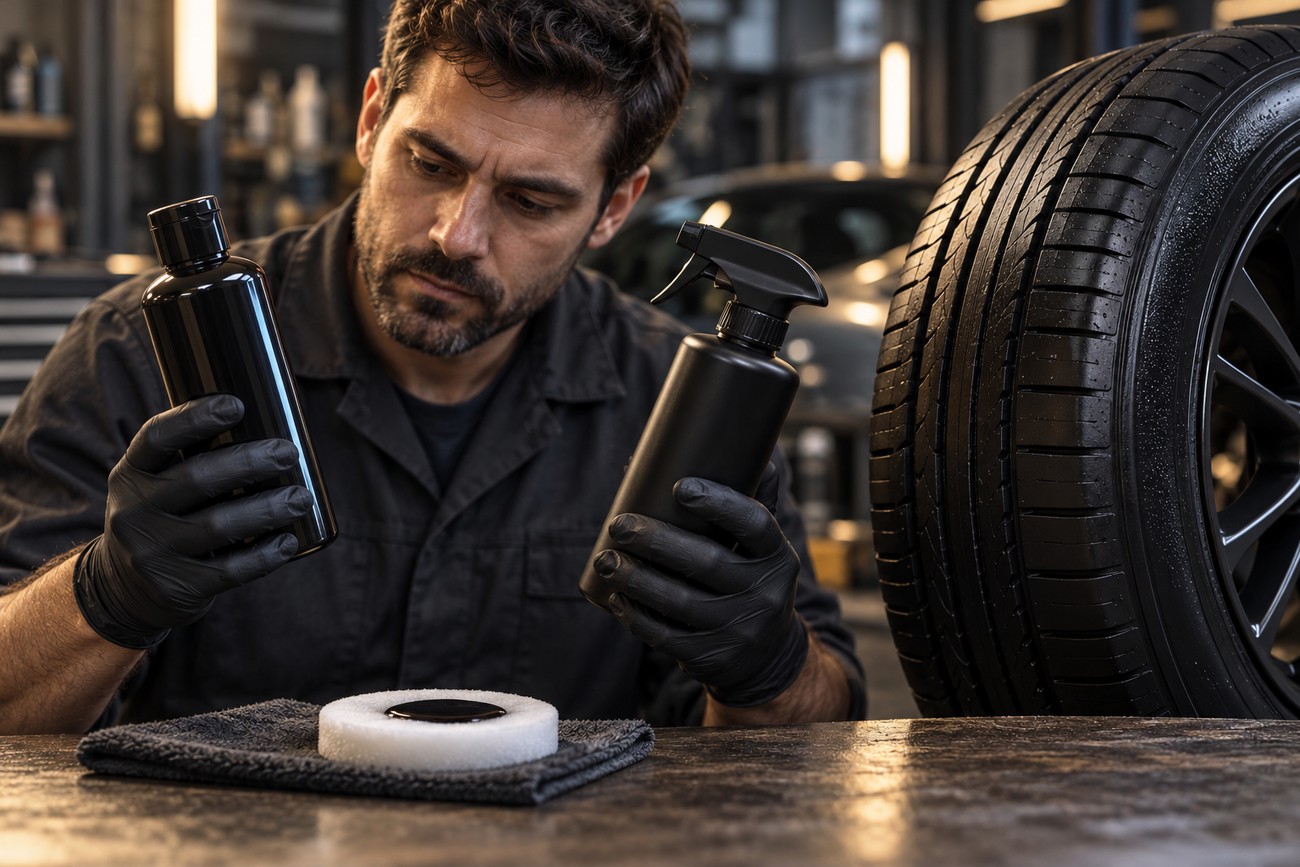
“Water-based” describes part of a product’s formulation; it does not guarantee compatibility with every tire compound or factory coating. “Silicone” is similarly incomplete. Either label leaves out other ingredients and tells you little about how the finished product will behave on your tire.
Petroleum distillates are a broad class of solvents, so their presence alone does not prove a dressing will damage rubber. Some solvents can extract protective components from some rubber compounds, however. The complete formulation, the tire compound, and the amount and duration of exposure all matter.
Manufacturer advice can be more useful than a broad ingredient rule. Nissan does not recommend tire dressing because it may react with a factory coating. If dressing is used, Nissan advises a water-based formula, a thin layer, and removal of excess. That is guidance for its vehicles, not a universal verdict on other tires.
Check your vehicle guidance and the product directions before use. For a new dressing, apply a small amount to an inconspicuous sidewall area, let it dry as directed, and check for tackiness, streaks, or color change. A tidy test patch cannot prove long-term compatibility, but a poor result gives you a reason to stop.
Apply tire shine without sling or slippery overspray
Start with a clean sidewall and let it dry. Dirt or leftover dressing can interfere with an even coat, while water may carry fresh product into places you did not intend to treat. Keep the work area limited to the sidewall as you prepare the applicator.
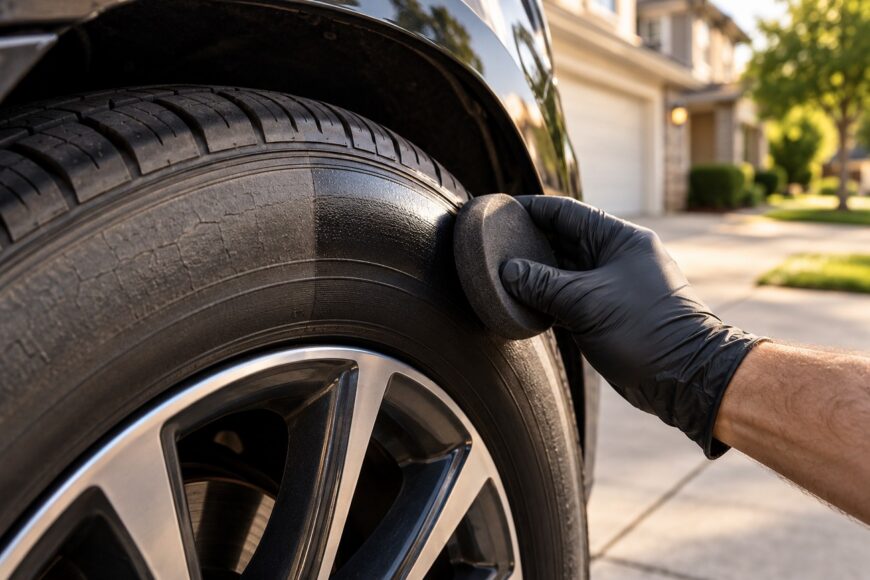
Put a controlled amount of product on an applicator, spread a thin coat, and wipe away excess. This gives you more control than spraying directly at the tire. Follow the specific product’s drying instructions before driving; there is no drying time that fits every formula.
A heavy coat can remain tacky, catch road dust, and sling onto wheels, doors, or fenders during the first drive. Product that runs into grooves is harder to remove and may be redistributed later. More gloss is therefore a poor reason to leave visible excess behind.
Keep dressing off the tread, tread grooves, and brake components. Excess on the tread may reduce grip, and overspray near the brakes creates avoidable contamination. If product reaches those areas, address it before driving rather than waiting for it to wear away.
What sticky, streaky, or darkened sidewalls may be telling you
A sticky film that gathers dust often points to excess product, incomplete drying, or dressing layered over old residue. Uneven dark patches and streaks can have several causes; appearance alone does not identify a chemical reaction or prove that the rubber has been damaged.
Check a small test patch after several hours, then again after the first drive. Note whether it dried evenly, stayed tacky, or slung onto nearby surfaces. A finish that looks controlled while parked may behave differently once the tire is moving.
Before changing products or judging a darkened area, thoroughly clean away the old dressing and let the tire dry. Residue trapped in sidewall texture or grooves can affect the next application and obscure the surface beneath it.
One untidy coat may be an application problem. If careful cleaning, a thin test coat, and proper drying still leave repeated tackiness, streaks, or sling, stop using that product on the tire rather than covering the result with another layer.
When tire condition matters more than a finish
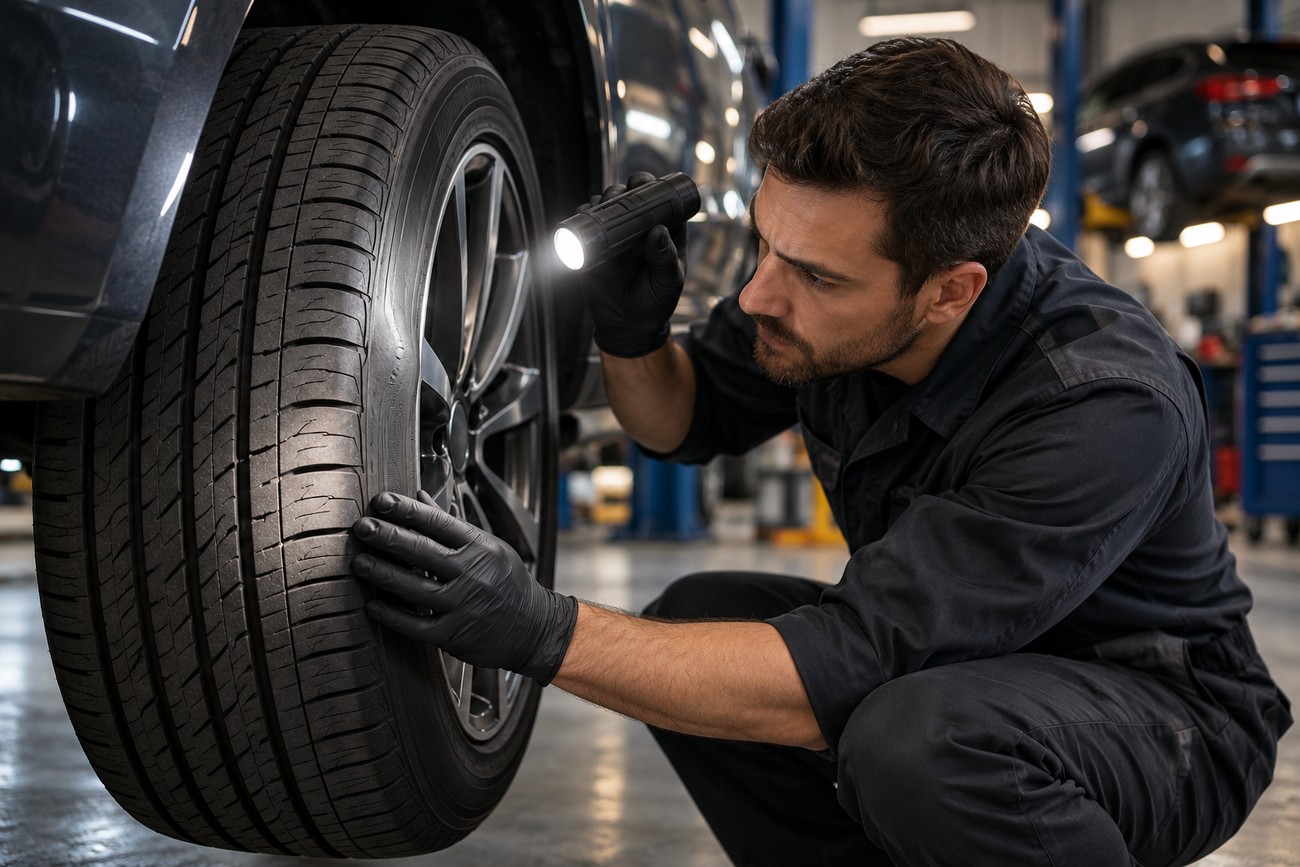
Inspect the tire while it is clean, dry, and free of accumulated dressing. Look across the sidewall and into the tread grooves, where a glossy coating may otherwise make changes harder to assess. A tire that looks uniformly black after treatment has not necessarily become healthier.
Cracks at the base of tread grooves, deep sidewall cuts, or bulges call for assessment by a tire professional rather than cosmetic treatment. Do not use dressing to conceal these signs. Tire shine cannot restore aged rubber, repair cracks, or protect the tire carcass.
Minor changes in appearance are different from visible structural concerns, but a coating is not a diagnostic tool for either. If you are unsure whether a mark is residue or damage, clean the area first and have the tire assessed if the concern remains.
A restrained finish is an appearance choice. Regular inspection and appropriate tire maintenance still matter, whether you prefer a satin sidewall, a high-gloss one, or no dressing at all.
Frequently asked questions
The finish on a tire offers few clues about which product created it. These short answers distinguish common appearance choices from what you can establish about ingredients and rubber condition.
What do car dealerships put on tires to make them shine?
There is no single dealership formula. A glossy tire may have been treated with any of several commercial dressings, so its appearance cannot identify the ingredients or show that the product is compatible with your tire. Ask what was applied if you need to remove it or plan to add another coating.
What is a good alternative to tire shine?
A thoroughly cleaned, undressed sidewall is a low-residue alternative. It avoids dressing-related tackiness and sling and leaves the rubber easier to inspect. Cleaning alone does not repair aged rubber or establish UV protection; follow suitable tire-care instructions for the tire and vehicle.