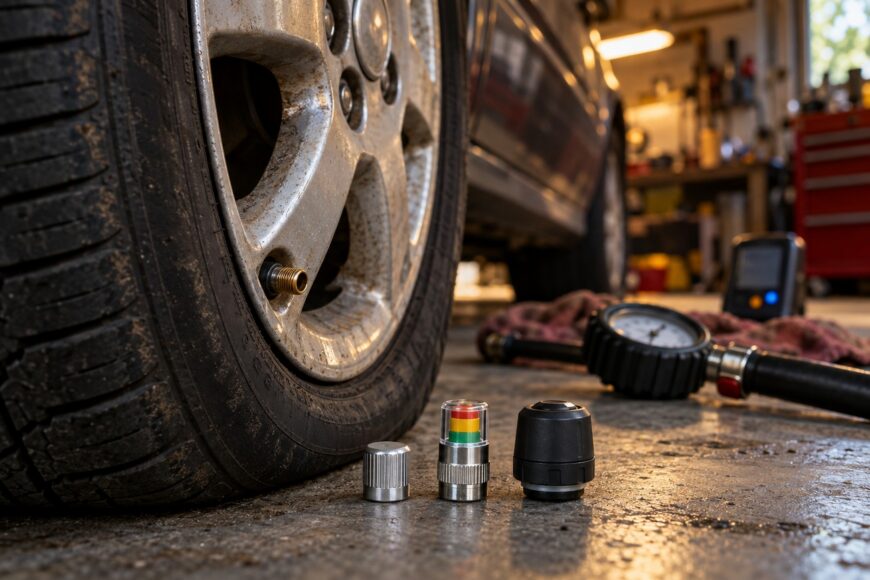
Adding a pressure warning to an older car sounds simple: screw something onto each tire valve and check it before driving. The purchasing trap is that a decorative cap, a visual pressure indicator, and an electronic sensor may all be advertised as a “sensor cap.” Only the latter two respond to pressure, and they tell you about it in different ways.
Choose according to the job you need done. A visible reminder may help you notice a low tire, while an electronic kit can send readings or alerts to its own display or app. Neither makes a reliable handheld gauge redundant. The safest starting point is a routine that tells you the actual pressure, with any cap serving a defined supporting role.
- What does a tire pressure sensor cap actually do?
- Visual caps, electronic sensors, or a gauge: which solves your problem?
- Check the valve before buying or fitting a cap
- Why a reassuring cap can still miss a low tire
- How to use caps without relying on them for safety
- When an electronic retrofit makes more sense
- Frequently asked questions
- What should I do if I lose a tire valve cap?
- What should I do if a sensor cap will not unscrew?
- How can I tell whether a sensor cap is causing a slow leak?
What does a tire pressure sensor cap actually do?
A decorative cap covers the valve opening but does not measure pressure. A mechanical pressure-indicator cap provides a visual cue, usually one you must walk around the car to see. A battery-powered external electronic sensor can measure pressure and transmit it to a compatible receiver or app. Check which of these you are buying before treating “sensor” in a listing as a technical description.
Factory tire pressure monitoring systems, or TPMS, work differently. Direct TPMS measures pressure at the wheel; indirect TPMS infers changes from wheel-speed data. A screw-on aftermarket sensor does not automatically connect to either factory system or put a warning on the car’s dashboard.
That distinction matters if an older car has no factory warning light. In the United States, FMVSS No. 138 was phased in for applicable new light vehicles through 2007–08; it does not automatically require older vehicles to be retrofitted. An owner can still choose an aftermarket kit, but should judge it by its own display, alerts, fit, and upkeep rather than assuming factory-system behavior.
Visual caps, electronic sensors, or a gauge: which solves your problem?
Match the device to the information you need while driving and the checks you are willing to make yourself.
| Option | What it tells you | Main limitation | Suitable use |
|---|---|---|---|
| Decorative cap | Nothing about pressure | No measurement or warning | Protecting the valve opening with a properly fitting cap |
| Mechanical pressure-indicator cap | A visual cue at the wheel | No dependable substitute for a gauge reading; you must look at it | Supplemental reminder during a walk-around |
| External electronic sensor kit | Pressure readings and potential alerts through its compatible receiver or app | Requires that receiver or app and does not automatically integrate with factory TPMS | Remote monitoring on a car without a suitable built-in system |
| Handheld gauge | A pressure reading when you use it | Manual check, with no automatic warning between checks | Setting and verifying tire pressure |
A gauge is the baseline for a sound routine because it lets you compare a reading with the car’s specified cold-tire pressure. An indicator cap can add a prompt between checks, provided you can see it and understand what its indication means. It should never be the only reason you decide a tire is correctly inflated.
If you need an alert without walking around the car, consider an electronic kit whose receiver or app you will actually use. Confirm how it reports a problem before buying; the presence of an electronic sensor alone does not tell you whether its warning will be useful to you.
Check the valve before buying or fitting a cap

Start with the valve already on the wheel. Identify its type, check that the threads are intact and clean, and confirm you can reach the cap without it crowding the wheel or valve. Age alone does not establish whether an accessory will fit an older car.
Look for corrosion, damage, or a valve that seems loose before adding a pressure-indicator or electronic cap. If the valve is compromised, have it repaired or replaced first. An accessory screwed onto a faulty valve makes later diagnosis harder and may add another point where air can escape.
A cap that resists turning can reveal a damaged thread or a valve stem that is starting to move with it. Check what is moving before applying more force; protecting the valve matters more than saving the accessory.
Metal caps can seize on valve stems, particularly after exposure to moisture and road salt, although that will not happen to every cap. Remove and inspect accessories periodically rather than leaving them untouched through repeated seasons. A seasonal wheel change is a useful opportunity to check the threads, clean accessible dirt, and confirm each cap still comes off by hand.
Why a reassuring cap can still miss a low tire
A mechanical indicator can appear reassuring even when it has not given you a useful warning. Its threshold may be unclear, and an indication that changes inconsistently is difficult to interpret. A slow leak could leave the tire below the vehicle’s recommended pressure before the cap gives you a cue you notice.
Dirt or water around an exposed mechanism can also affect how readily an indicator moves or how easily you can read it. External electronic sensors have different designs, but they too sit outside the wheel, where exposure and physical damage deserve consideration. Inspect either type rather than assuming that a fitted cap is still functioning as intended.
A cold morning reading and a reading after driving need not match: temperature and driving can change tire pressure without a puncture. Compare a gauge reading with the vehicle’s specified cold-tire pressure when setting inflation. If pressure repeatedly falls under comparable conditions, investigate the loss instead of attributing every change to weather.
Some sellers claim factory-like accuracy, but price and marketing do not establish verified accuracy, repeatability, or dependable warning behavior. After fitting a cap, compare what it shows with a reliable gauge, then see whether its indication remains consistent during ordinary use. If the two disagree, use the gauge to check the tire and treat the cap as suspect.
How to use caps without relying on them for safety
Find the vehicle’s specified cold-tire pressure and use that as your target, rather than a generic threshold printed on cap packaging. Check the tires with a reliable gauge when they are cold, adjust the pressure as needed, and then note what each installed indicator shows. That gives you a known starting point for judging a later change.
Keep making periodic manual checks even if every cap looks normal. A mechanical indicator is a supplemental visual cue, not a replacement for a gauge reading. If one tire looks low or the car’s handling changes, check it promptly instead of waiting for an indicator to change.
After fitting an accessory, pay attention to any new pressure loss and inspect the cap and valve for looseness, damage, or corrosion. Repeat that inspection during seasonal wheel changes, when the caps are already being handled. A damaged or corroded valve needs attention before another indicator or sensor is installed.
When an electronic retrofit makes more sense
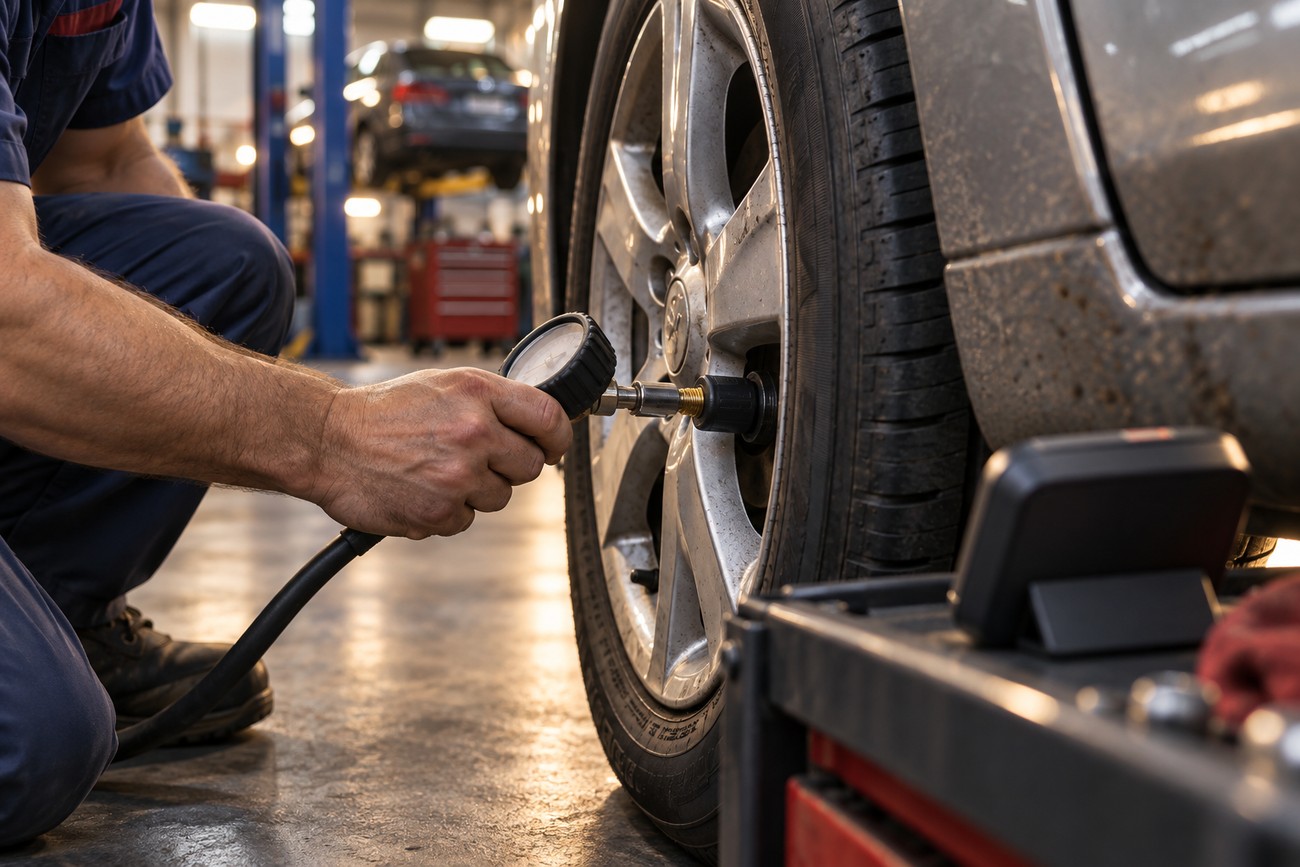
If you mainly want a cue during a walk-around, a mechanical indicator may meet that limited need alongside gauge checks. If you need pressure information or alerts away from the wheel, an external electronic kit is the more relevant product. A dependable gauge routine remains useful either way, but it provides a manual reading rather than continuous monitoring.
An external electronic kit needs its compatible receiver or app; it does not automatically connect to factory TPMS. Before choosing one, consider where you will see alerts and whether you are prepared to maintain batteries and inspect sensors exposed to dirt, water, and possible knocks. Those practical details determine whether the extra information will help you act.
A factory-style retrofit is a separate installation and compatibility decision. Where integration with a vehicle is involved, matching a radio frequency is insufficient: protocol matters too. Although 315 MHz and 433 MHz are common TPMS frequencies, neither is a universal guarantee that a sensor will work with a particular car or receiver.
Frequently asked questions
A missing, stuck, or leaking cap calls for a different response in each case. The immediate priority is to protect the valve and establish whether the tire is holding pressure. Use a gauge when pressure is in doubt, and avoid forcing parts that may already be damaged.
What should I do if I lose a tire valve cap?
Replace it with a cap that fits the valve and protects its opening from dirt and moisture. A missing protective cap does not by itself confirm that air is leaking; the valve core normally seals the tire. Check pressure with a gauge, and have the valve inspected if pressure is falling or you suspect damage.
What should I do if a sensor cap will not unscrew?
Stop if the valve stem begins to twist or the cap requires substantial force. Forcing it can damage or break the valve and turn a stuck accessory into a flat tire. Ask a tire shop to remove the cap and assess whether the valve needs replacement, especially if corrosion is visible.
How can I tell whether a sensor cap is causing a slow leak?
Record the tire’s cold pressure with a gauge, then recheck it under similar conditions to confirm a loss. Look and listen for air escaping around the cap or valve; bubbles from soapy water can help reveal a leak at an accessible point. If pressure continues to drop, have the valve and tire inspected rather than relying on the cap’s indication to locate the fault.