Fitting a larger throttle body and feeling almost no difference is a common result. A sharper pedal can make the car seem more responsive, yet that sensation does not prove the engine is making more power. A useful starting point is whether the original throttle body was a meaningful airflow restriction at the engine’s operating point.
The answer depends on the engine, its airflow demand, the rest of the intake system, and the calibration controlling the throttle. A larger bore can help when those factors align. It can also create drivability and adaptation problems when the part is oversize or poorly matched.
- What a throttle body upgrade can—and cannot—change
- When a larger throttle body helps a naturally aspirated engine
- Why turbo engines often need a different upgrade first
- How to tell whether the stock throttle body is holding you back
- The sizing trade-off: peak flow versus drivability
- Fitment, relearning, and tuning after installation
- Frequently asked questions
- What will upgrading my throttle body do?
- How much horsepower does an upgraded throttle body add?
- When do throttle body upgrades help a Ford?
What a throttle body upgrade can—and cannot—change
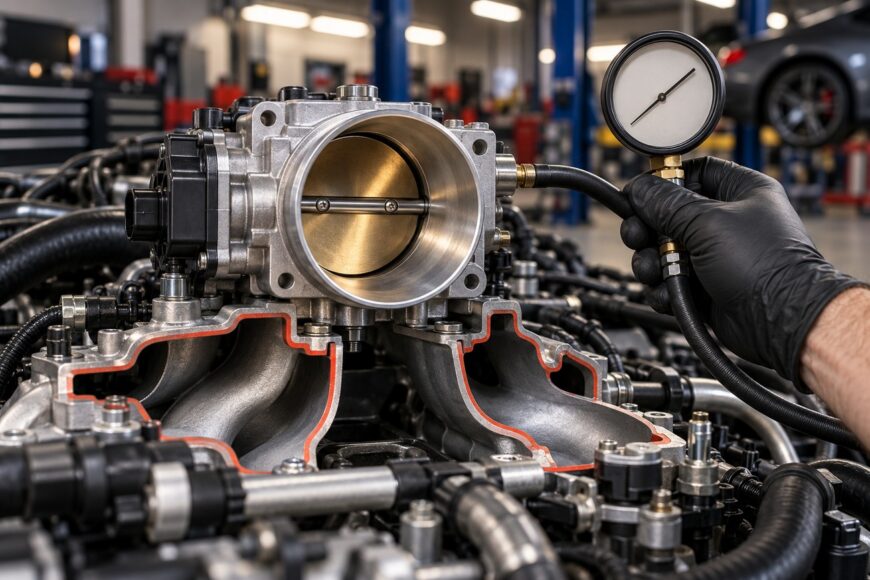
At wide-open throttle, the throttle body becomes part of the engine’s air path. If the original plate, bore, or entry shape creates a meaningful pressure drop while the engine is demanding maximum airflow, a better-flowing unit can reduce that restriction. The potential benefit appears as the engine approaches its highest airflow demand, rather than automatically across the entire rev range.
At partial throttle, the situation is different. The plate controls airflow through a relatively small opening, and the engine computer may also adjust its position to meet a torque request. A larger throttle can therefore alter how much air enters for a given pedal movement without adding measurable peak power.
Advertised gains of 10–20+ hp conflict with the often negligible or dyno-variability-level gains reported on otherwise stock engines. Small claimed gains may be indistinguishable from dyno variability, especially when testing conditions, correction factors, fuel, and temperature change between runs.
Pedal mapping can make a modified car feel quicker because the same pedal movement commands a different throttle position. That may improve response or make it jumpy, depending on the calibration. A change in pedal response is not the same as a measured increase in peak power.
When a larger throttle body helps a naturally aspirated engine
On a stock naturally aspirated street engine, the factory throttle body is often already adequate for the engine’s airflow demand. A larger unit may produce little change at low and mid-range rpm, where the engine is moving less air and the throttle is only partly open. The car can feel much the same in ordinary traffic.
The case becomes stronger when other modifications increase airflow demand. A higher-revving engine with improved intake flow, cylinder-head work, and a less restrictive exhaust may use a larger throttle body near the top of the rev range. Even then, the original unit must be a meaningful airflow restriction at that operating point before the hardware can add power.
The manifold entrance and the transitions around the throttle body deserve inspection. A larger bore feeding a smaller opening can leave a step in the path, while a poor entry radius can disturb flow before it reaches the manifold. Enlarging the throttle body does not automatically cure those restrictions.
That is why a matching intake system matters more than a large advertised bore. The useful question is whether the complete path can support the engine’s demand at high rpm. If the manifold, head, or intake transition remains the limiting section, the larger throttle body may simply move the restriction elsewhere.
Why turbo engines often need a different upgrade first
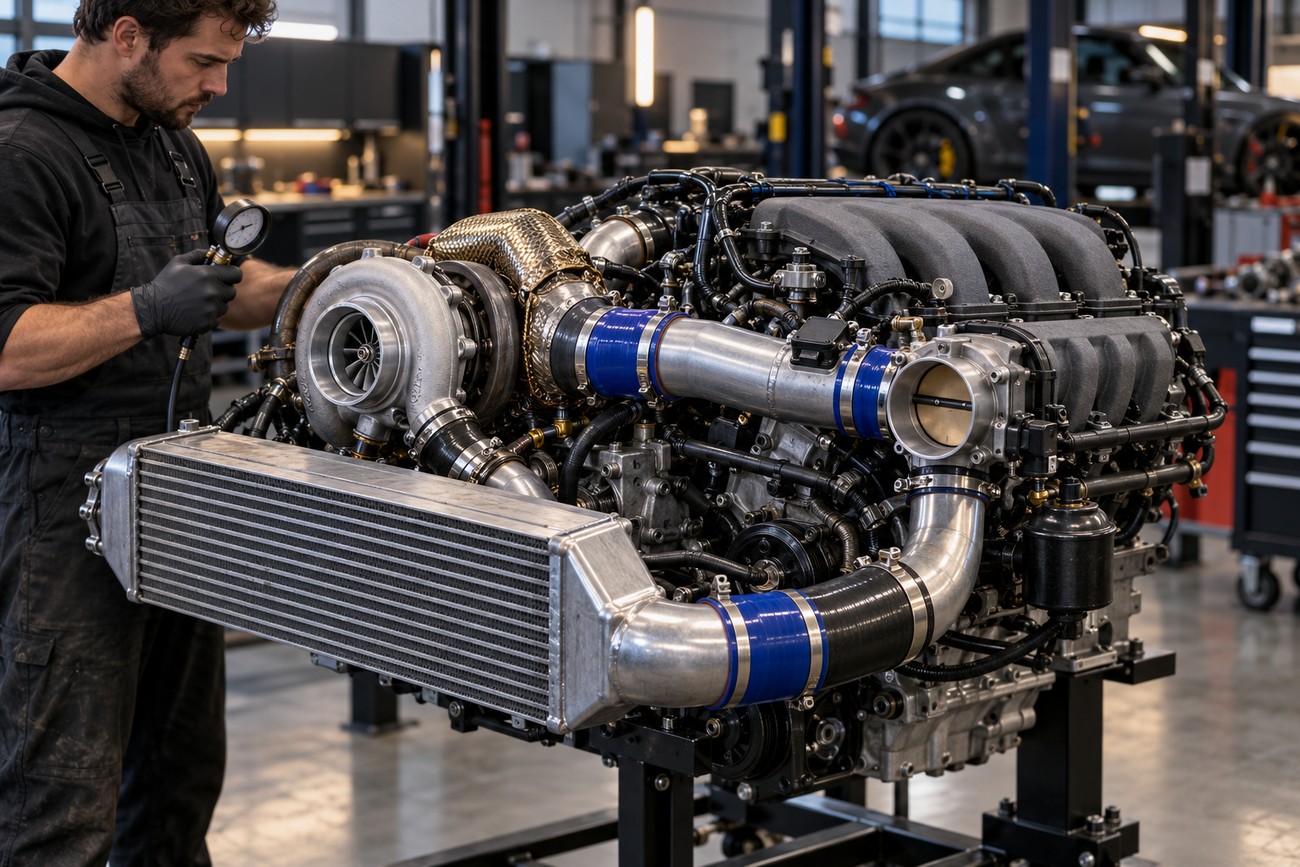
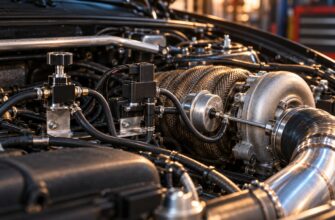
A turbocharged engine moves air through the compressor, intercooler, pipes, throttle body, and intake manifold before it reaches the cylinders. Replacing one component does not guarantee higher delivered airflow if another section still limits the system. Compressor capacity, intercooler pressure drop, pipe diameter, manifold design, or calibration can be more important than the throttle body.
On a largely stock turbo setup, the original throttle body may already support the airflow required at the factory power level. A larger unit can then produce little measurable change unless the rest of the system has been upgraded and the engine is actually demanding more air. Increasing boost alone also does not guarantee a throttle-body gain; the calibration and pressure losses still determine the result.
The upgrade becomes more credible when a higher-flow compressor, intake plumbing, intercooler, and manifold expose a restriction at the throttle. That conclusion should come from pressure and airflow evidence or comparable testing, rather than from bore diameter alone.
Electronic throttle control adds another limit. The ECU may reduce commanded opening for torque management, engine protection, detonation control, temperature protection, or transmission protection. A larger throttle body cannot add airflow that the control strategy is deliberately refusing to request.
How to tell whether the stock throttle body is holding you back
Start by identifying the original bore and the proposed replacement, then inspect the openings on both sides of the assembly. Check the manifold entrance, adapter plates, intake tube, and any abrupt steps. Bore diameter alone does not establish flow capacity; entry shape, butterfly geometry, and adjacent intake openings also matter.
Review the engine’s existing modifications and available logs before buying parts. Useful information can include commanded and actual throttle angle, manifold pressure, airflow, engine speed, torque intervention, and relevant temperature data. No single sensor reading proves that the throttle body is restrictive, so the readings need to be interpreted within the vehicle’s control strategy.
ECU-commanded throttle closure must be separated from a physical flow restriction before a larger part is recommended. A throttle that is not fully open may be responding to torque control, protection logic, or the vehicle’s specific calibration rather than running out of airflow capacity.
If the expense matters, seek comparable before-and-after testing with the same fuel, operating temperature, correction method, and test procedure. A dyno result is more useful when the runs are repeatable and the modification is the only meaningful change. Small claimed gains on an otherwise stock engine may be indistinguishable from dyno variability.
The sizing trade-off: peak flow versus drivability
A larger throttle body can reduce restriction near full load, yet an oversize unit can make airflow harder to meter at small openings. A small movement of the butterfly then represents a larger change in available area. The result may be a jumpy launch, an abrupt response in traffic, or a pedal that feels less linear.
This does not mean a larger throttle body always reduces low-end torque. The more common issue is control: the engine may still produce similar torque, while the driver has less precise command over it. Electronic mapping can soften or worsen that behavior, depending on how the ECU translates pedal position into throttle angle.
Entry shape, butterfly geometry, shaft design, and the transition into the manifold all affect flow. A carefully designed smaller unit can outperform a larger unit with a poor entry profile. Diameter is therefore a sizing clue, not a complete description of the part’s capacity.
Separate the feel of the pedal from the engine’s output when judging the result. A more aggressive map can improve the first response to your foot without changing airflow at wide-open throttle. If the goal is power, use repeatable testing; if the goal is response, judge smoothness and control across normal driving conditions.
Fitment, relearning, and tuning after installation
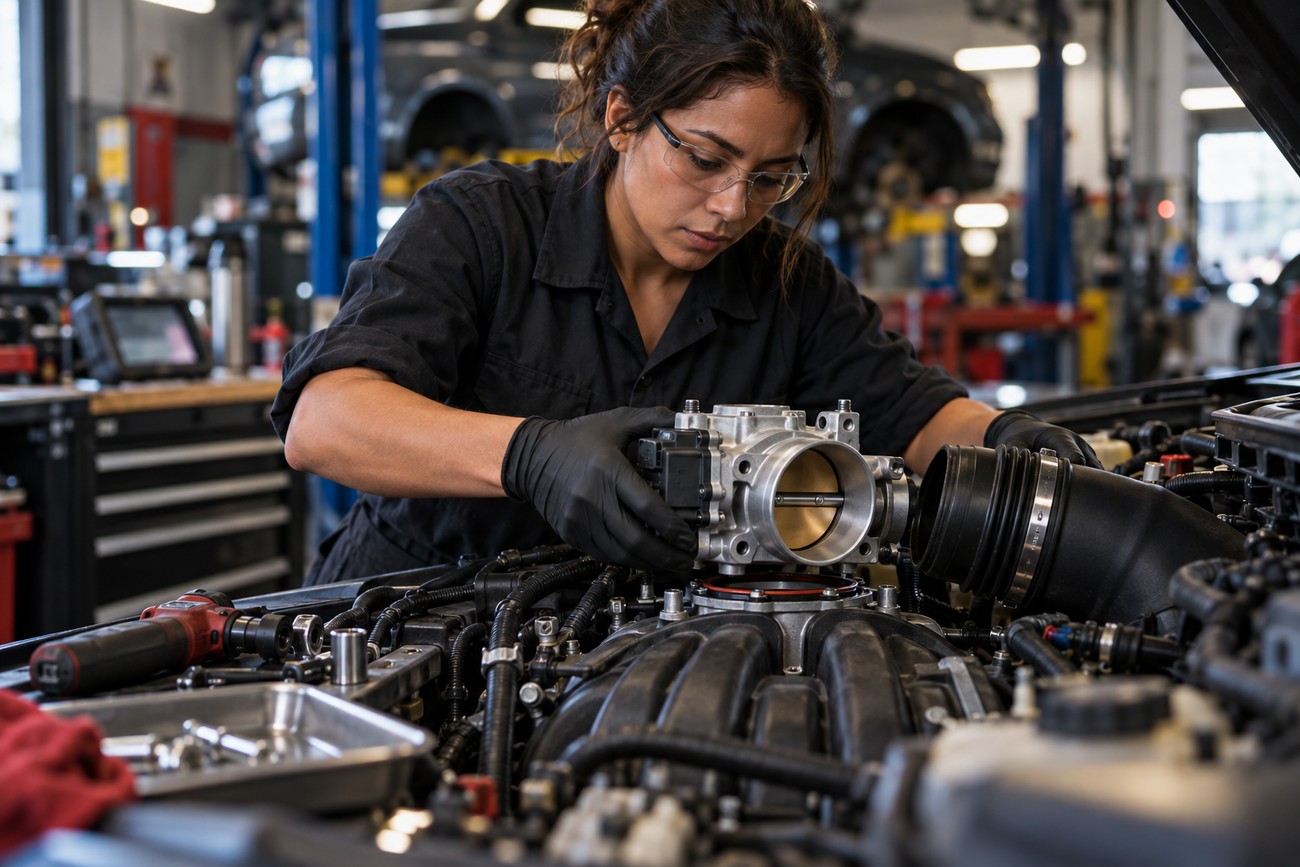
Before installation, match the actuator, position sensors, intake connection, manifold opening, and gasket. Confirm that the connector, bolt pattern, throttle plate direction, and hose or tube diameter are correct for the vehicle. A part that physically bolts on may still send incompatible signals or leave an air leak at the gasket.
Many vehicles require a throttle or idle relearn after replacement, and the procedure depends on the platform. It may involve a scan tool, a prescribed ignition sequence, or a specific warm-up routine. Follow the service information for that vehicle rather than assuming that clearing fault codes completes the adaptation.
Skipping the relearn can contribute to hunting or hanging idle, stalling, poor throttle response, and fault codes. An electronic throttle may also need calibration so the ECU understands the new closed-stop and operating range. If the computer limits commanded opening, the engine may never use the replacement unit’s potential.
Custom tuning is not required for every installation, but it can be needed when the throttle geometry changes the relationship between pedal position, airflow, and torque. Calibration may also be necessary after larger engine or turbocharger changes. If the car runs poorly after installation, diagnose the cause instead of treating a code reset as a repair.
Frequently asked questions
What will upgrading my throttle body do?
It can reduce airflow restriction at high demand if the original unit is the limiting part of the intake path. On some vehicles, the main change is pedal response or throttle mapping, while peak power remains nearly unchanged.
How much horsepower does an upgraded throttle body add?
There is no universal horsepower figure. On an otherwise stock engine, the gain is often negligible or within dyno variability; a modified engine that genuinely outgrows its original throttle body has a stronger case for a measurable result.
When do throttle body upgrades help a Ford?
For a Ford, check the exact engine, throttle actuator, sensors, connector, manifold opening, and ECU strategy before choosing a part. Some applications need a throttle or idle relearn, and the benefit depends on whether the stock unit restricts the complete intake system.