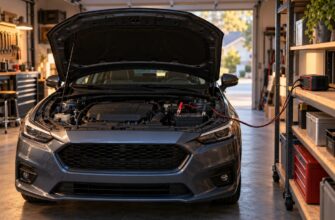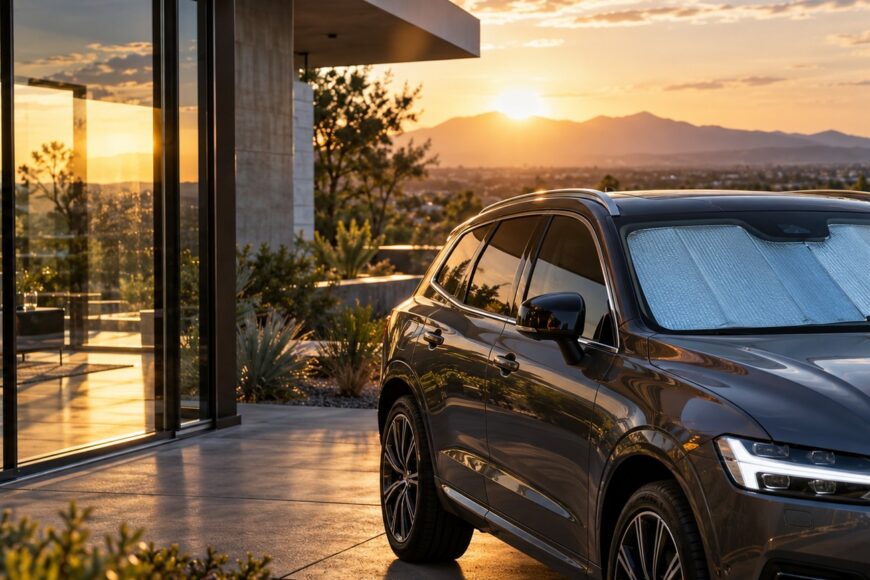
Sunshades and window tint film can reduce glare, solar heat, fading, and unwanted exposure, yet darker or more reflective glass is not automatically better. A removable sunshade gives targeted coverage when needed; automotive film provides continuous treatment for vehicle glass; architectural film does the same for homes and commercial buildings.
The right choice depends on more than appearance. VLT, TSER, UV performance, glass compatibility, local tint rules, electronics compatibility, installation quality, and nighttime visibility determine whether a product works well in daily use. A film that feels comfortable in bright daytime conditions may create a safety or maintenance problem after dark.
- What Are Sunshades and Window Tint Film Used For?
- How to Judge Window Film Performance: VLT, TSER, and UV
- Automotive Window Tint Uses—and the Trade-Offs
- Window Film for Homes and Buildings: Heat, Glazing, and Orientation
- The Downsides People Notice After Installation
- How to Choose and Install Film Without Costly Mistakes
- Sunshades vs. Window Film: Which Solution Fits the Use?
- Frequently asked questions
- Why can tinted windows look much worse in rain or at night?
- What should I ask an installer before approving the job?
- What are the downsides of using window film?
- What is window film used for?
What Are Sunshades and Window Tint Film Used For?
Portable sunshades provide removable or targeted shading. They are common on parked vehicles’ windshields, side windows, skylights, and selected building windows where coverage is needed only during strong sunlight. Because they can be removed, they involve less permanent commitment and usually create fewer compatibility concerns than applied film.
Window film is a fixed treatment bonded to glass. In vehicles, it can reduce cabin glare, solar heat, unwanted visibility, and fading of upholstery. In homes and buildings, it can improve visual comfort near sunlit windows and reduce the solar load reaching furniture, flooring, artwork, and interior finishes.
Heat reduction is only one use. Lower glare can make a dashboard, computer screen, or living space easier to use, while reduced visibility from outside can provide privacy without installing curtains or blinds. The result depends on the film’s construction, the glass, the direction of sunlight, and how well the product is installed.
UV-related protection also requires careful wording. UV performance depends on the film composition and installation quality, so products should be compared using documented specifications rather than assuming every tint offers identical or complete protection. A sunshade can add useful short-term protection, but it does not change the properties of the glass when it is removed.
How to Judge Window Film Performance: VLT, TSER, and UV
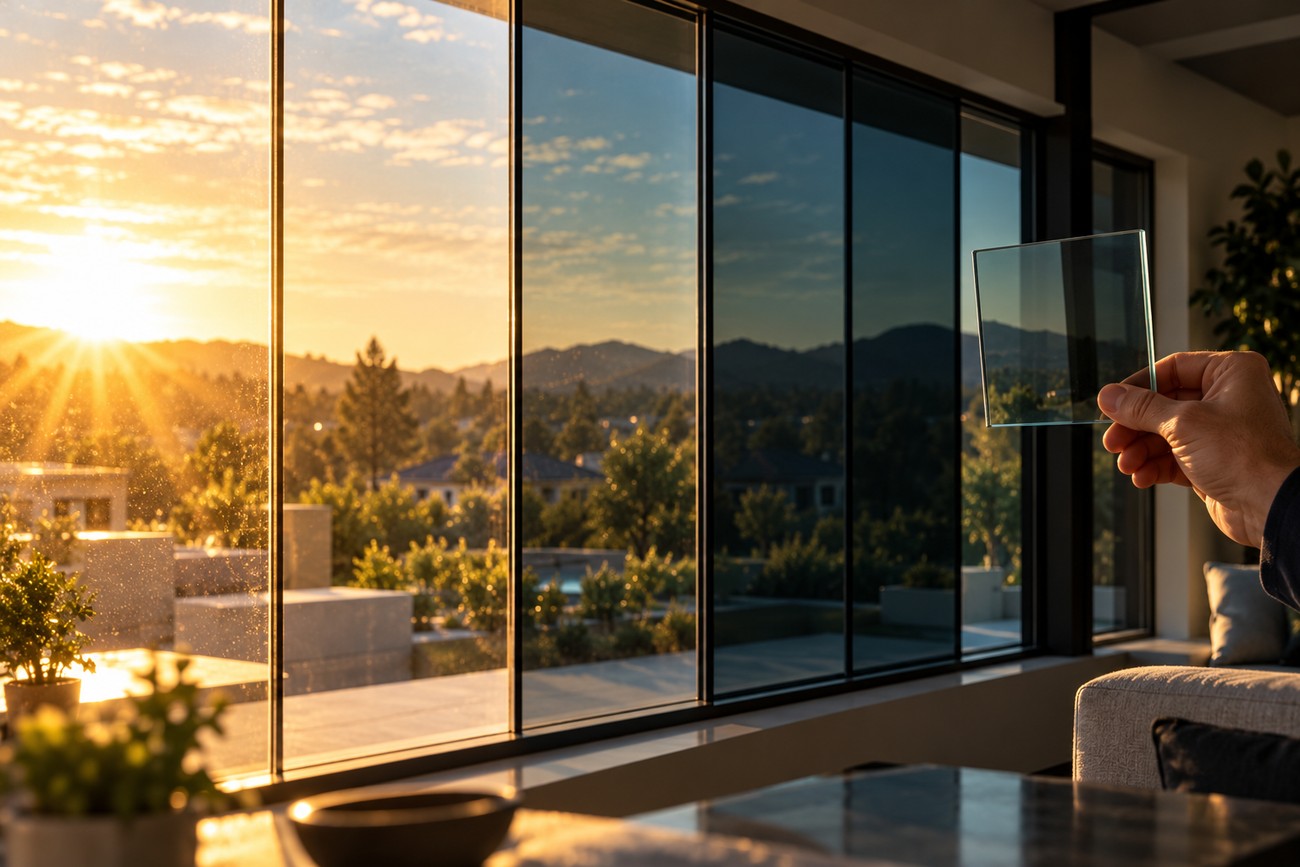
“Tint percentage” is an incomplete buying metric because it often describes appearance rather than heat control. Visible Light Transmission, or VLT, measures how much visible light passes through the glass. Lower VLT means less visible light passes through and the glass appears darker.
Total Solar Energy Rejected, or TSER, is a more useful indicator of overall solar heat rejection than tint darkness alone. Two films can look similarly dark while producing different levels of solar control. Conversely, a relatively light film may reject substantial solar energy if its construction is designed for infrared control.
UV performance should be reviewed separately. A product may reduce UV exposure while also controlling glare or heat, but the actual result depends on its composition and the quality of the installation. Ask for technical documentation rather than treating a broad advertising claim as a complete performance description.
Where available, spectral information gives a clearer comparison. It can show how the film performs across visible light, infrared, and UV ranges, helping you distinguish a balanced product from one that mainly changes the glass’s appearance. This is especially useful when you want heat reduction without making the cabin or room unnecessarily dark.
Automotive Window Tint Uses—and the Trade-Offs
Automotive film can make a cabin more comfortable by reducing glare and solar heat, particularly on large side windows or vehicles with extensive glazing. It can also limit unwanted visibility into the cabin and help reduce fading of seats, trim, and other interior materials. The practical benefit depends on the vehicle’s glass area, body color, climate control, and any panoramic roof.
Front side windows and windshields commonly have strict VLT requirements, although the exact limits vary by jurisdiction. The issue is often the measured light transmission rather than the mere presence of film. Check the rules where the vehicle is registered and driven before selecting a shade, particularly for front glass.
Ceramic and metallized films generally offer stronger infrared and glare control than inexpensive dyed films. Metallized construction, however, may interfere with GPS, LTE, radio, RFID, or other electronics. A vehicle with a windshield-mounted transponder, integrated antenna, or weak signal reception deserves a compatibility check before installation.
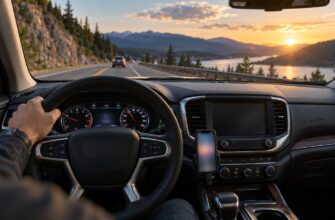
Dark film can improve daytime comfort while reducing visibility at night or in rain. The effect is more noticeable on unlit roads, when reversing, and when the glass has dust, oily residue, or wiper marks. A moderate VLT with good heat performance is often a safer compromise than choosing the darkest available appearance.
Window Film for Homes and Buildings: Heat, Glazing, and Orientation
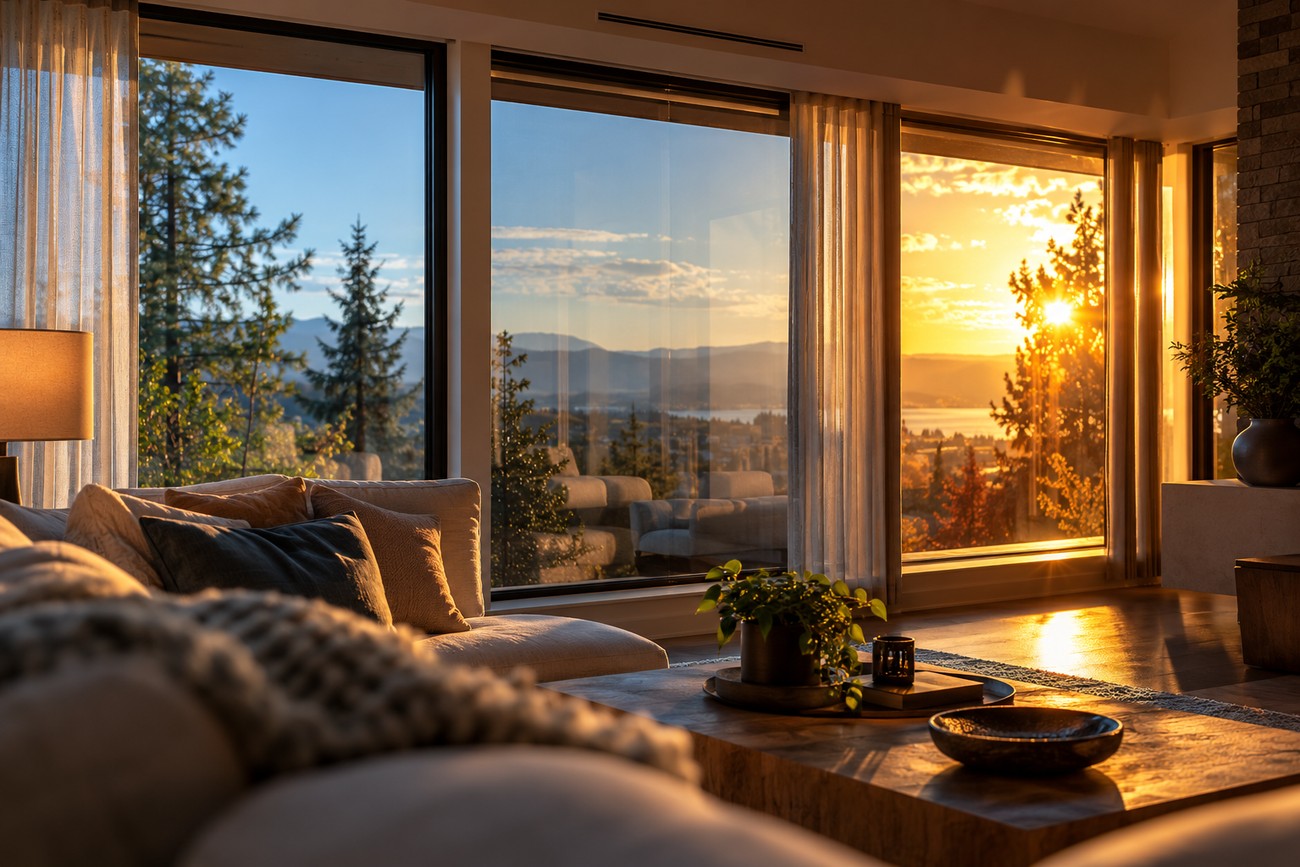
Architectural film can reduce solar heat gain, glare, and fading, but its performance is tied to the building rather than the film alone. A west-facing window exposed to low afternoon sun behaves differently from a shaded north-facing opening. Room ventilation, window size, curtains, and air-conditioning capacity also affect the comfort you actually feel.
Building-film performance depends substantially on façade orientation, glazing type, existing tint, and Low-E construction. Clear, tinted, laminated, double-glazed, and Low-E units absorb and reflect solar energy differently. There is no universal energy-saving result that can be transferred from one building to another without checking the glass assembly.
Glass compatibility matters because an incorrectly selected film can increase thermal stress. In some double-glazed units, already tinted panes, or otherwise stressed glass, that added stress can contribute to cracking or seal failure. The risk is not visible from a product sample, so the glass and film manufacturers’ compatibility guidance should be reviewed before work begins.
Exterior shading can sometimes outperform interior film because it blocks sunlight before it reaches the glass. Overhangs, exterior screens, shutters, and adjustable shades may therefore be better for a particularly exposed façade. Interior film remains useful where external changes are impractical, but it should be evaluated as part of the whole shading strategy.
The Downsides People Notice After Installation
Heat reduction can disappoint when a laboratory claim is treated as a promise for every real-world setting. Direct sun, a poorly ventilated cabin or room, extensive glazing, and limited air-conditioning capacity can leave the space hot even after film is installed. A darker appearance does not guarantee greater TSER or a cooler interior.
Bubbles, dust, edge lift, haze, and optical distortion usually point to preparation or application problems, although product quality also matters. Dirty glass, inadequate edge work, or rushed installation can leave defects that become more noticeable as the film dries. Distortion at corners and rainbow effects when viewed at an angle are practical reasons to inspect the finished glass from several positions.
Metallized films can create signal problems that are absent from a sample viewed in a showroom. GPS, LTE, radio, RFID, and other electronics may behave differently once the film covers a larger area of glass. Confirm compatibility with the specific vehicle or device rather than relying on a general statement that the film is “signal safe.”
Nighttime visibility is another common complaint. Dark film can make daytime driving or room use more comfortable, yet reduce contrast after dark, especially in rain. Dirty glass, water on the surface, weak headlight contrast, and reflections can intensify the problem, so cleaning and lighting conditions should be checked before blaming the film alone.
How to Choose and Install Film Without Costly Mistakes
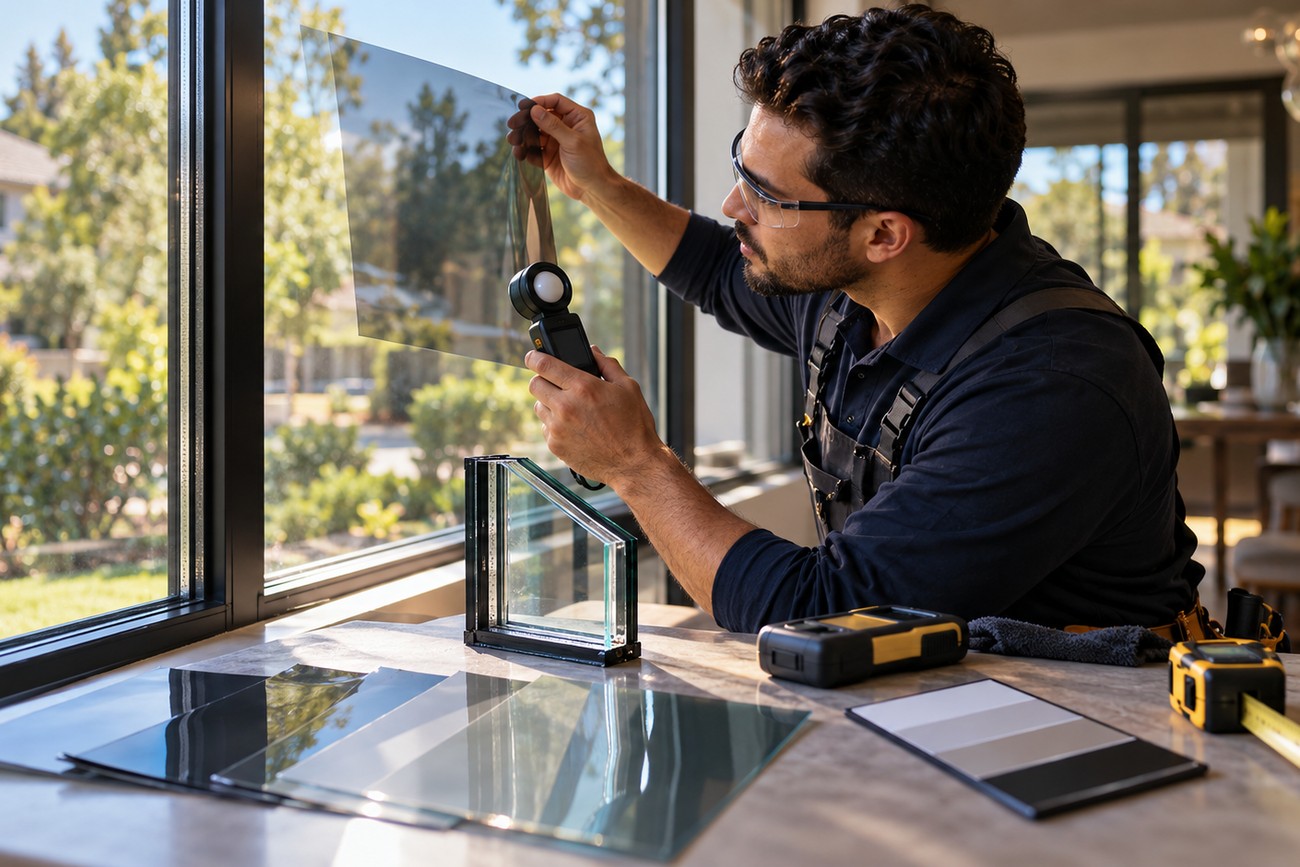
Start with the actual use case and the glass. For a vehicle, compare VLT, TSER, UV performance, optical quality, privacy, and electronics compatibility. For a building, add façade orientation, pane construction, existing tint, Low-E features, and whether exterior shading could provide a better result.
Request documented specifications before purchase. Look for VLT and TSER data, information about UV performance, spectral data where available, and a clear statement about signal behavior. Ask how the product changes color rendition and whether the installer will measure the finished VLT where local compliance matters.
Require a documented glass-and-film compatibility check for insulated, Low-E, already tinted, or otherwise stressed glass instead of accepting an informal assurance from an installer.
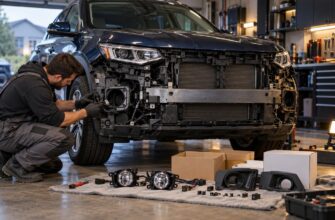
Installation quality strongly affects durability, appearance, and delivered performance. The glass should be thoroughly cleaned and prepared, with careful control of dust, moisture, edges, and contamination. A warranty should explain what happens if bubbles, edge separation, haze, or distortion remain after the normal curing period.
For insulated or specially coated glass, compare the proposed film with the glass and film manufacturers’ recommendations. Installer experience is useful, but it should not replace documented compatibility information. A short pre-installation inspection can prevent a costly replacement or a dispute about whether a cracked or failed unit was related to the film.
Sunshades vs. Window Film: Which Solution Fits the Use?
Each option solves a different shading problem. The table focuses on practical trade-offs rather than appearance alone.
| Solution | Permanence | Heat and glare control | Privacy | Nighttime impact | Glass risk | Electronics risk | Best-use scenario |
|---|---|---|---|---|---|---|---|
| Portable sunshades | Removable and targeted | Useful where placed; coverage is limited | Temporary and location-specific | None when removed; may obstruct the view if left in place | Low, because no permanent treatment is applied | None from the shade itself | Temporary shading for parked-vehicle windshields, side windows, or selected rooms |
| Automotive window film | Fixed once installed | Continuous glare and solar control across treated glass | Privacy depends on VLT and lighting | Dark film can reduce visibility in darkness and rain | Requires compatibility with the vehicle glass | Metallized film may affect GPS, LTE, radio, RFID, or other electronics | Permanent cabin comfort, glare reduction, and interior protection |
| Architectural window film | Fixed once installed | Can reduce solar heat, glare, and fading; results depend on the building | Can reduce unwanted visibility, depending on the product and lighting | May alter interior brightness and nighttime privacy | Compatibility must be checked, especially for double-glazed or Low-E units | Usually limited, but product construction should be confirmed | Homes and buildings where fixed glass treatment is practical |
| External shading | Fixed or adjustable, depending on the system | Can block solar load before it reaches the glass | Can provide strong privacy when positioned correctly | Usually no film-related visibility loss; design may affect views | Generally avoids film-induced thermal stress, but the structure needs proper design | None from film; motorized systems have separate electrical considerations | Strongly exposed façades where maximum solar control is needed |
Frequently asked questions
The questions below address visibility, installation, and product selection. They also cover the main trade-offs between permanent film and removable or external shading. Use the answers to compare performance claims with the conditions in which the glass will be used.
Why can tinted windows look much worse in rain or at night?
Dark film reduces the light reaching your eyes, while rain scatters light across the glass and weakens contrast from headlights, road markings, and nearby objects. Dirt, oily residue, wiper haze, and interior reflections can further reduce clarity. The combination may make a previously acceptable tint seem unsafe even though the film has not changed.
Clean both sides of the glass and check the view from the driver’s normal position before deciding whether the issue is excessive darkness, surface contamination, or optical distortion. If visibility remains poor on unlit roads or during reversing, reducing darkness on the affected windows may be the sensible correction.
What should I ask an installer before approving the job?
Ask for the film’s VLT, the expected VLT of the finished glass, documented TSER data, UV performance information, optical-quality details, and confirmation that the product will not create an unacceptable electronics problem. For building glass, request a compatibility check covering the pane type, double glazing, Low-E coatings, existing tint, and any signs that the unit is already stressed.
Clarify the warranty, curing and inspection process, and the correction procedure for bubbles, edge lift, haze, or distortion. A reliable approval process should identify who will inspect the finished work, what defects are covered, and how local tint requirements will be verified.
What are the downsides of using window film?
Possible downsides include poorer nighttime visibility, altered color rendition, installation defects, disappointing heat reduction, and a darker interior than expected. Some metallized products can interfere with GPS, LTE, radio, RFID, or other electronics. On certain glass assemblies, an unsuitable product can increase thermal stress and contribute to cracking or seal failure.
These risks are manageable when the film is selected for the actual glass and use, installed on properly prepared surfaces, and inspected in daylight, darkness, and rain where relevant. A removable sunshade or exterior shading may be a better fit when permanent treatment creates too many trade-offs.
What is window film used for?
Window film is used to reduce solar heat, glare, unwanted visibility, and fading while changing the appearance and light transmission of glass. In vehicles, it can improve cabin comfort and protect interior materials. In buildings, it can support solar control and visual comfort, subject to the orientation and construction of the glazing.
Its value depends on measurable performance and compatibility rather than darkness alone. Check VLT, TSER, UV information, optical quality, electronics considerations, and the manufacturer’s guidance for the actual glass before installation.