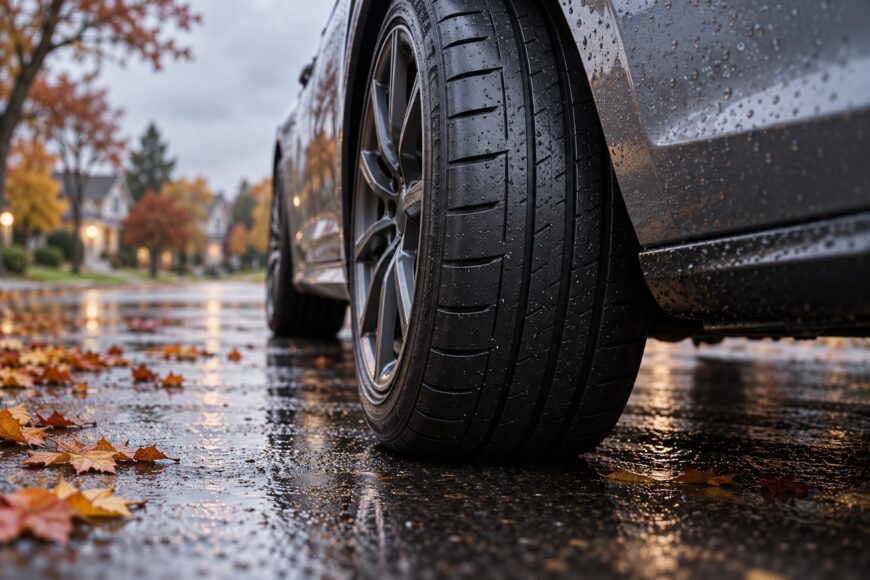
On a clear autumn morning, summer performance tires can suddenly feel hard, vague, and slow to respond. The steering loses some of its usual road feel, bumps come through more sharply, and a familiar braking maneuver may require more distance. The change can appear even when the road is dry and there is no snow in sight.
The main issue is temperature and moisture, rather than snow alone. Near 0°C, summer tires may still work acceptably on dry, rough asphalt, where their stiff construction can feel precise. Cold, smooth, or wet pavement changes the situation quickly: a hardened summer compound generates less predictable grip, especially during braking and cornering.
- What Cold Weather Does to Summer Performance Tires
- How Cold Is Too Cold for Summer Tires?
- Why Cold, Wet Roads Are the Real Danger
- Summer vs. Winter Tires in Borderline Cold Conditions
- The Mistakes That Keep Drivers on Summer Tires Too Long
- A Practical Rule for Deciding When to Switch
- Summer and Winter Tires Across Cold-Weather Conditions
- Frequently asked questions
- What should I do when afternoons are warm but mornings are near freezing?
- What happens if you drive summer tires in the winter?
What Cold Weather Does to Summer Performance Tires
Summer tires are designed for an approximate operating range of +5°C to +50°C. Their compound is made firmer to remain stable in warm conditions, resist excessive movement, and deliver precise handling on hot pavement. As temperatures fall, the rubber gradually loses elasticity rather than becoming unsafe at one exact reading.
Manufacturers and tire authorities commonly use +7°C as a point to watch for noticeable hardening. The practical symptoms include a less informative steering wheel, slower response to small corrections, and reduced cornering confidence. Some drivers describe the sensation as driving on plastic-like tires because the tread follows the road surface less readily.
Below 0°C, summer rubber becomes noticeably harder and follows road microtexture less effectively. That reduces the tire’s ability to conform to small irregularities in the pavement, which can affect braking, acceleration, and lateral grip. Vibration and sharper impacts over rough surfaces may also become more noticeable, although those symptoms can have other causes, such as incorrect pressure, wheel damage, or suspension problems.
Short urban trips add a practical complication. Frequent stops, low speeds, and brief journeys often leave summer tires cold rather than bringing them to an ideal warm operating condition. A tire that feels acceptable after a longer drive on a dry road may offer less predictable grip during a short, cold commute.
How Cold Is Too Cold for Summer Tires?
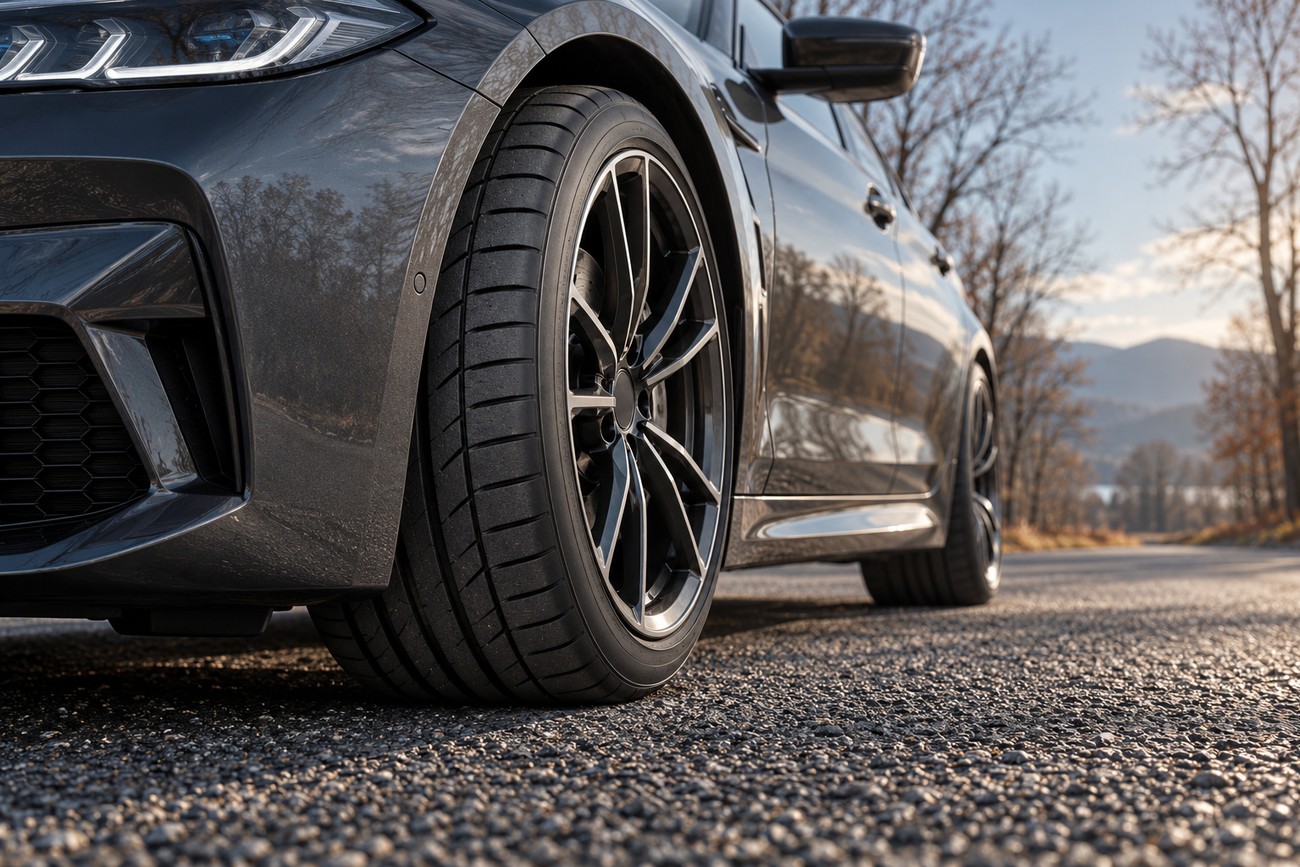
+7°C is a useful practical benchmark, not a universal legal cutoff. Manufacturers and road authorities generally recommend switching when the average temperature is consistently below approximately +5°C to +7°C. This approach recognizes that seasonal safety depends on a repeated pattern of conditions rather than one unusually cold morning or one warm afternoon.
Near 0°C on dry, rough asphalt, summer tires may retain acceptable grip. Their stiffer carcass and lower deformation can sometimes make them feel more precise than winter tires on that particular surface. This dry-road exception explains why some drivers report satisfactory handling during a short cold spell.
The exception has limited value for ordinary cold-season driving. Wet or smooth pavement, frost, shaded sections, and early-morning moisture can remove the advantage quickly. Drivers should assess the conditions they encounter most often, especially on their first and last trips of the day, rather than rely on a mild daytime forecast.
There is no benefit in waiting for the first snow. If temperatures remain above the threshold during a brief dry period, keeping summer tires temporarily may be reasonable for some drivers. Once cold mornings and nights become consistent, switching supports more predictable grip across the range of surfaces encountered on public roads.
Why Cold, Wet Roads Are the Real Danger
The highest-risk combination is a cold road surface, a film of water, and a summer compound that has hardened. Water reduces the tire’s ability to use the pavement texture, while the stiffened rubber conforms to that texture less effectively. Cold, smooth, wet pavement can therefore reduce summer-tire performance sharply even without snow or ice.
On cold, wet asphalt, braking distance with hardened summer tires may increase by 15–30% compared with the tire’s normal warm operating range. That is an indicative comparison, not a result that applies identically to every tire, vehicle, speed, or road. It shows why a braking maneuver that felt routine in warm weather can become uncomfortably close to the vehicle ahead.
Cornering can expose the same loss of grip. A front-wheel-drive car may push wide at the front, while another vehicle may slide when braking and turning at the same time. The driver may have used the same speed and steering input as in summer, yet the tire now has less available friction to support those inputs.
ABS and ESP remain functional, but they cannot overcome the physical loss of tire-road grip. ABS can help prevent wheel lock, and stability control can reduce some loss of control, but neither system can create traction that the hardened compound cannot generate. Extra following distance and lower corner-entry speed reduce the consequences; they do not restore warm-weather performance.
Summer vs. Winter Tires in Borderline Cold Conditions
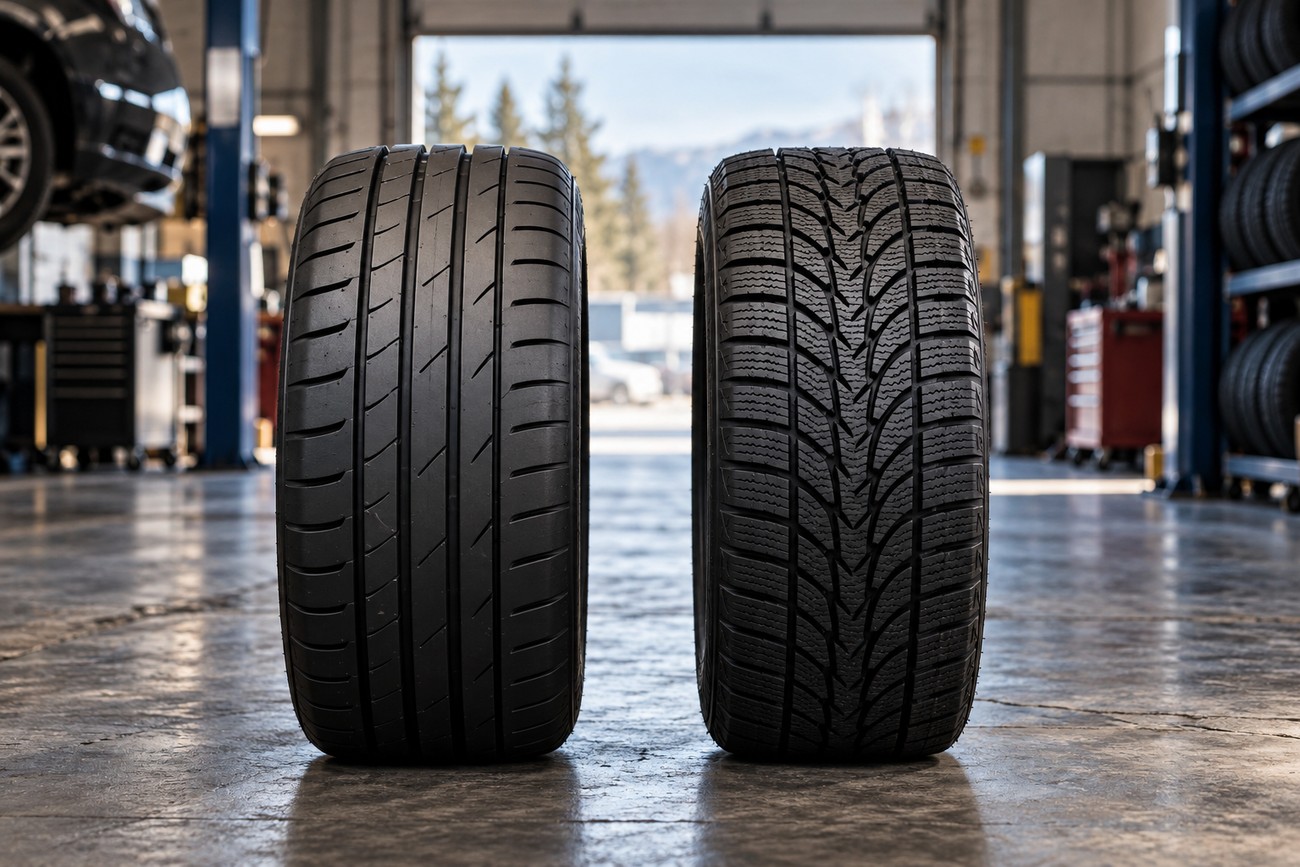
Winter tires use more rubber and resins intended to preserve flexibility in freezing conditions. Their tread and compound are designed to keep working as temperatures fall, including on cold pavement where a summer compound becomes increasingly stiff. Summer compounds are made firmer for stability and performance in warm conditions, which gives them an advantage in their intended temperature range.
Near 0°C on dry, rough asphalt, a summer tire can sometimes outperform a winter tire through a stiffer carcass and lower deformation. The summer tire may feel more direct, with less tread movement during steering. That result applies to a narrow set of conditions and should not be treated as a general winter recommendation.
Moisture changes the comparison quickly. On cold, wet, frosted, or icy pavement, the winter tire’s ability to remain flexible becomes more important than the summer tire’s dry-road precision. The surface may look merely damp, while the available grip has already fallen enough to affect braking and cornering.
Sporty and UHP summer tires may have an even narrower practical temperature range than ordinary summer tires. Their focus on warm-weather response, stiff construction, and dry-road handling does not turn them into all-season products. Premium summer tires can deliver excellent performance in heat and still lose cold-weather predictability once temperatures fall.
The Mistakes That Keep Drivers on Summer Tires Too Long
Waiting for snow or ice is the most common timing error. This can leave a driver exposed for weeks to cold mornings, rain, frost, and summer tires that have already lost flexibility. Snow is an obvious warning sign, while cold, wet pavement is often the earlier and more frequent hazard.
Daytime temperatures of +10°C to +12°C can conceal much colder morning, night, and road-surface conditions. The tire responds to the pavement beneath it, so a road that remained cold overnight may provide less grip even after the air warms slightly. Repeated early commutes deserve more weight than a warm afternoon forecast.
Dry conditions also deserve careful interpretation. Dry, rough asphalt near freezing can allow acceptable summer-tire performance, but smooth surfaces, damp patches, and shaded areas reduce that margin. Expensive performance branding does not change the material behavior, and careful driving cannot remove the increase in braking distance caused by reduced tire-road friction.
The effect can be more pronounced on heavier vehicles such as crossovers and minivans. Greater mass increases the demands placed on the contact patches during braking and direction changes, while the cold compound has less ability to maintain consistent contact. Drivers of these vehicles should be particularly cautious about postponing the seasonal change.
A Practical Rule for Deciding When to Switch
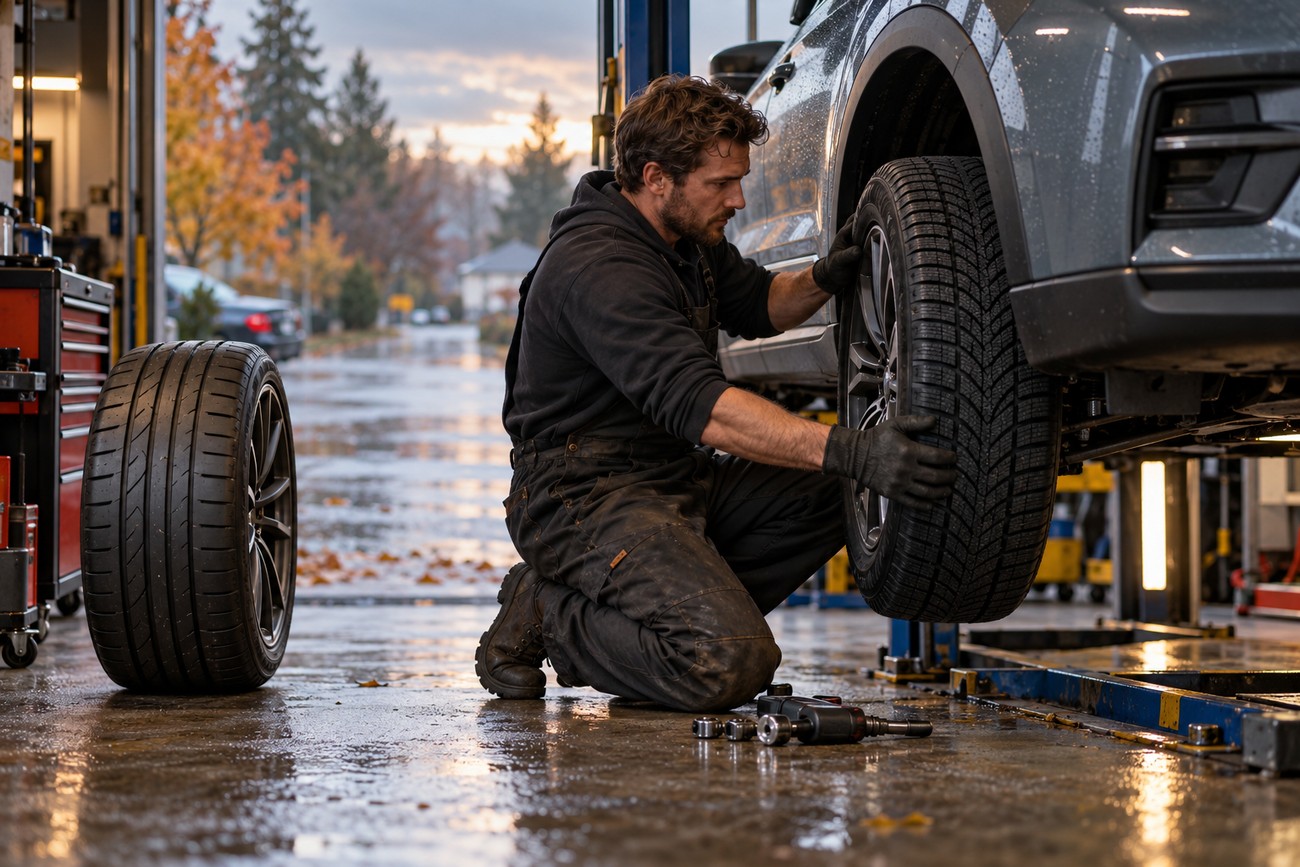
Use the sustained temperature pattern as the main decision rule. The recommended change point is a stable average below approximately +5°C to +7°C, rather than the first snowfall. Track the coldest regular journeys, including early mornings, evenings, and routes that remain shaded or wet.
Repeated wet trips near the threshold are a stronger warning than one isolated warm day. A week of mild afternoons does not offset several cold, damp starts if those are the conditions in which the vehicle is used. Road-surface temperature and moisture can matter more than the warmest air reading.
Switching earlier supports predictable grip across changing conditions. Continuing on summer tires may be tolerable during a short, dry transition on suitable roads, but the risk rises as cold and moisture become routine. In some insurance disputes, using summer tires in clearly winter-like conditions may be treated as driver negligence, depending on the circumstances and local rules.
Summer and Winter Tires Across Cold-Weather Conditions
The comparison below shows why the same tire choice can feel acceptable in one borderline condition and unsuitable in another.
| Driving condition | Summer tires | Winter tires |
|---|---|---|
| Warm, dry roads | Optimized for this environment, with a firm compound and precise handling. | Remain capable, but their flexible compound and tread movement may give less dry-road precision. |
| Near 0°C on dry, rough asphalt | May retain acceptable grip and can sometimes feel more precise because of a stiffer carcass and lower deformation. | Remain flexible and may feel less direct, while still offering a cold-weather compound advantage. |
| Cold, wet asphalt | Performance can deteriorate sharply; braking distance may increase by 15–30% versus the warm operating range. | Designed to remain more flexible in freezing conditions, improving predictability on cold, damp surfaces. |
| Snow or ice | Hardens and provides poor traction and control. | Designed for freezing conditions and provides the appropriate seasonal compound and tread behavior. |
The trade-off depends on the surface. A summer tire may have a dry-road handling advantage near freezing, while a winter tire offers a more dependable margin as moisture, frost, snow, or ice appears.
Frequently asked questions
Two common questions are when to switch during fluctuating temperatures and what to expect if summer tires stay on through winter. Regular morning conditions matter more than a single warm afternoon. As cold and moisture become routine, reduced grip can affect braking and cornering.
What should I do when afternoons are warm but mornings are near freezing?
Base the decision on the coldest repeated trips, especially if they include wet roads, shaded sections, or frost. A warm afternoon does not bring a cold morning commute into the summer tire’s preferred conditions, and short trips may leave the tires cold throughout.
If mornings repeatedly sit near freezing and the road is often damp, the safer seasonal choice is to switch rather than wait for snow. One isolated cold morning may be an exception; a stable pattern calls for a change.
What happens if you drive summer tires in the winter?
Summer tires become harder as temperatures fall, reducing their ability to follow road microtexture. The vehicle may feel less communicative, braking can require more distance, and cornering becomes less predictable, especially on cold, wet, frosted, snowy, or icy pavement.
ABS and ESP continue to operate, but electronic aids cannot replace tire-road friction. In clearly winter-like conditions, summer tires can also create safety and insurance concerns, with the legal or claims outcome depending on the circumstances and local requirements.