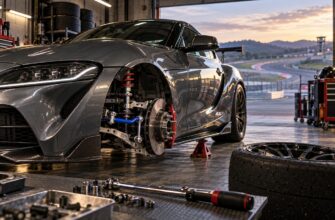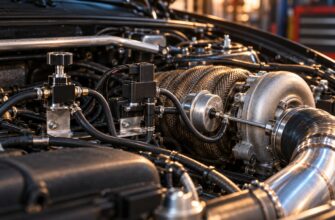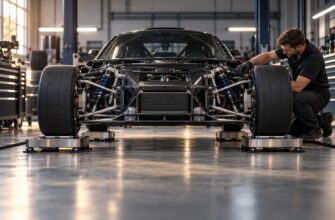
A strut tower brace can feel transformative on one car and pointless on another. The difference usually comes from the chassis, suspension layout, tires, and applied loads rather than the badge on the brace.
A strut tower brace is a rigid link between upper strut tower mounting areas that limits their relative movement. It does not stiffen the springs or anti-roll bars, and it does not eliminate body roll. Its purpose is to keep the upper strut mounts more consistent under load, which can make camber and toe behavior more predictable.
That makes the decision more involved than buying the stiffest-looking bar. The potential benefit must be weighed against cosmetic appeal, service-access compromises, extra noise and vibration, load redistribution, crash behavior, and the condition of the body receiving the part.
- What a Strut Tower Brace Actually Does
- Which Cars Benefit Most?
- Car and Brace Types: A Practical Fit Comparison
- Why You May Feel Nothing After Installation
- Choosing and Installing a Brace Without Creating New Problems
- The Trade-Offs Marketers Often Leave Out
- How to Judge the Upgrade Properly
- Common Myths About Chassis Stiffness
- Frequently asked questions
- What are the symptoms of a bad strut tower?
- What is a strut tower brace good for?
What a Strut Tower Brace Actually Does
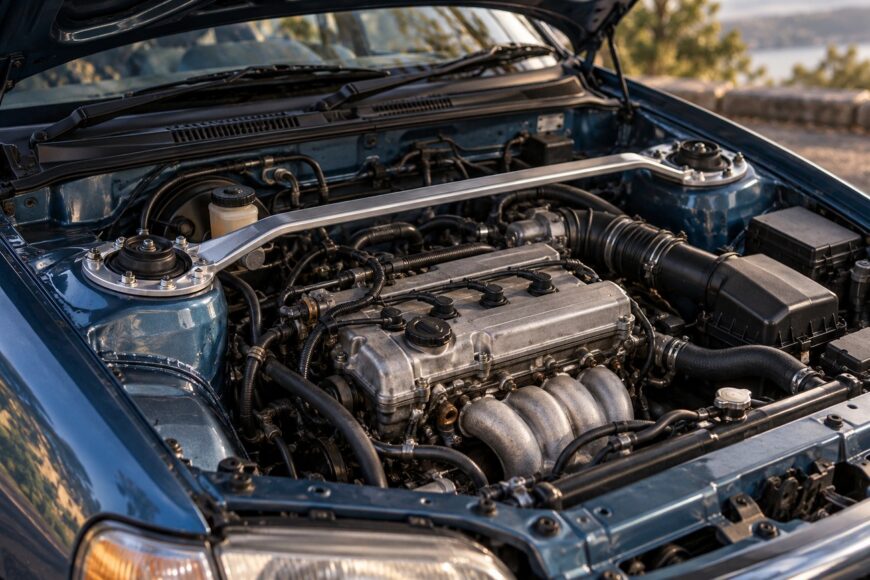
On a McPherson-strut platform, the strut forms a major part of the wheel-location and upper-mount structure. During cornering, braking, and rapid direction changes, loads at the tire travel through the hub, strut, upper mount, and body. If the two upper mounting areas move relative to each other, the suspension geometry can change as the chassis is loaded.
A brace connects those upper strut tower areas and limits their relative movement. The primary handling effect is a more consistent upper-mount position and wheel-alignment behavior under load. This can make steering response feel cleaner and make the car easier to drive consistently from one corner or track session to the next.
The brace does not replace stiffer springs or anti-roll bars. Body roll is controlled mainly by springs, anti-roll bars, suspension geometry, and tires, so a car can retain the same amount of visible roll while responding with greater precision.
A basic upper brace also has a defined limitation: it mainly adds stiffness in the direction between the towers. It does little to reduce whole-body diagonal torsion. Floor structure, sills, subframe mounts, rear reinforcement, and other load paths remain important if the goal is broader chassis stiffness.
Which Cars Benefit Most?
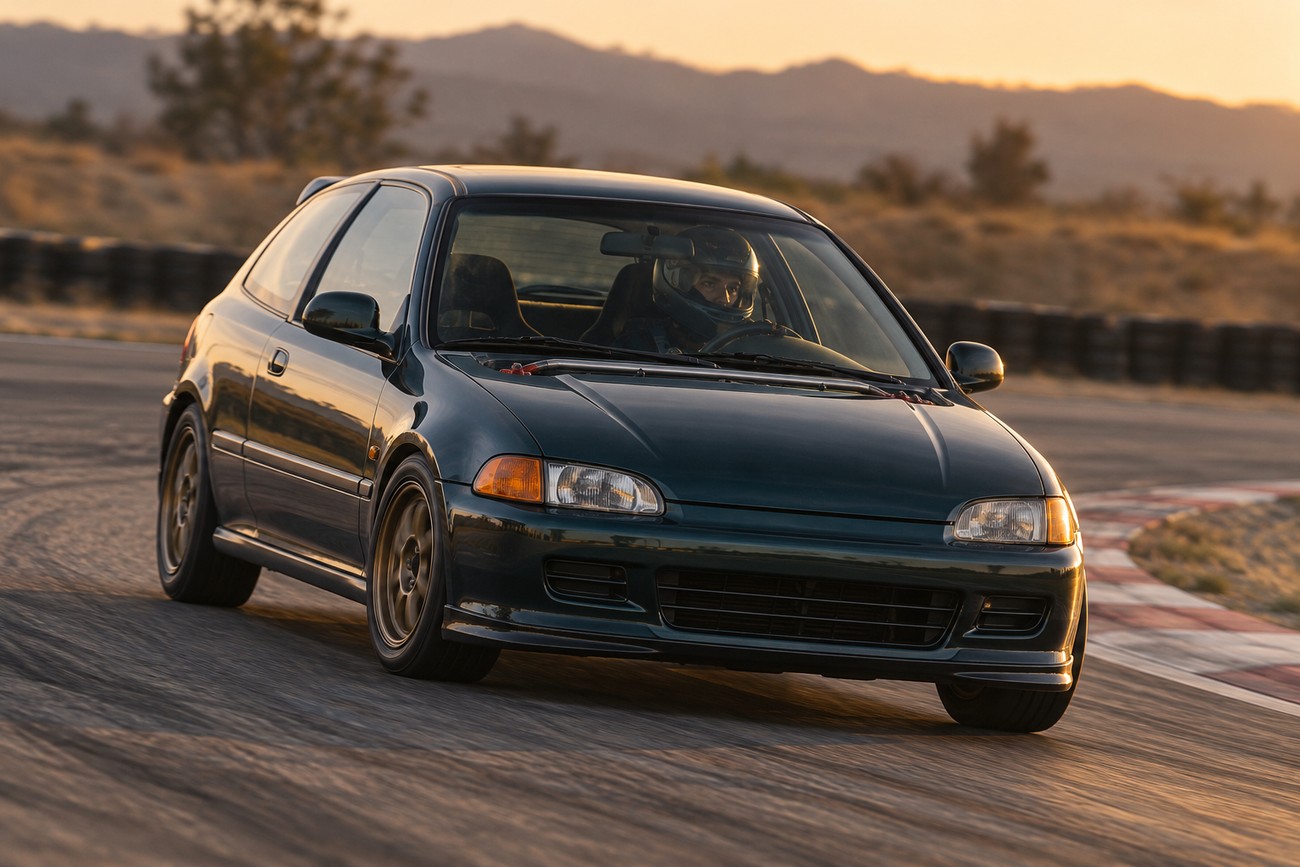
The clearest candidates are older McPherson-strut bodies without substantial factory reinforcement. Many older Japanese and European platforms have relatively flexible front structures, particularly compared with later bodies that use reinforced towers, firewall structures, and complex front-end load paths.
On such cars, the change can be noticeable with ordinary street tires during turn-in or a quick lane change. The improvement is usually a more settled and repeatable response rather than a dramatic increase in grip. Tire condition, alignment, worn bushings, and the condition of the strut mounts can easily mask it.
Modern reinforced platforms often gain little from a simple bolt-on brace because the factory structure already controls much of the relevant movement. Prepared-car testing also tends to place the detectable benefit under high lateral loads and with semi-slicks or slicks, where the tires can generate enough force to challenge the upper structure.
Factory performance versions sometimes use strut braces or integrated front-end frames on the same basic model. That is useful evidence that upper-mount stiffness can matter in demanding driving, although it does not prove that an aftermarket bar will reproduce the complete factory engineering package.
Car and Brace Types: A Practical Fit Comparison
Use the table as a screening tool rather than a substitute for inspecting the actual car. The same brace can be relevant on a flexible, healthy shell and largely cosmetic on a reinforced platform.
| Vehicle or brace situation | Likely benefit | Suitable use case | Checks before purchase | Principal risk |
|---|---|---|---|---|
| Older, unreinforced McPherson platform | Potentially noticeable improvement in response consistency and alignment behavior | Street driving with spirited cornering, autocross, and track use | Body condition, tower geometry, mount condition, clearance, and brace rigidity | Exposing weakness in old seams, mounts, or other chassis areas |
| Modern reinforced platform | Usually small gain from a basic bolt-on brace | Specific track use where repeatability is being measured | Existing factory braces, firewall structures, tower design, and documented fitment | Paying for a part that adds weight, service problems, or noise with little measurable benefit |
| Bent, cracked, or previously damaged tower | No appropriate reinforcement benefit until the structure is repaired | Repair and geometry verification before any performance modification | Visual inspection, alignment results, and professional structural measurement where needed | Locking incorrect geometry into place or hiding a structural fault |
| Heavily modified or old track car | Possible benefit only as part of coordinated chassis reinforcement | Repeated high-load track use with compatible subframe, rear, and underbody reinforcement | Load paths, seams, bushings, subframes, mounts, tires, and alignment retention | Redistributing loads into weakened areas and accelerating cracks |
Why You May Feel Nothing After Installation
Ordinary city driving rarely loads the front structure enough to reveal a small change in upper-mount movement. Highway cruising is even less informative. The effect is more likely during sharp turn-in, high-speed lane changes, high-grip tire use, and repeated track loading.
A brace can improve response precision and repeatability without producing a dramatic subjective change. On a modern chassis, the factory structure may already be stiff enough that the difference is below the driver’s ability to separate from tire temperature, road surface, steering input, or suspension compliance.
The useful evidence may appear in alignment retention, tire wear, steering consistency, or data recorded over repeated sessions. A technician may find that camber and toe settings stay closer to their intended values between runs even when the driver cannot identify a clear first-drive transformation.
Track enthusiasts sometimes feel a meaningful improvement on older cars with street tires, while testing on prepared cars may show an effect mainly with semi-slicks or slicks and high lateral loads. Both observations can be valid because the chassis and operating conditions are different.
Choosing and Installing a Brace Without Creating New Problems
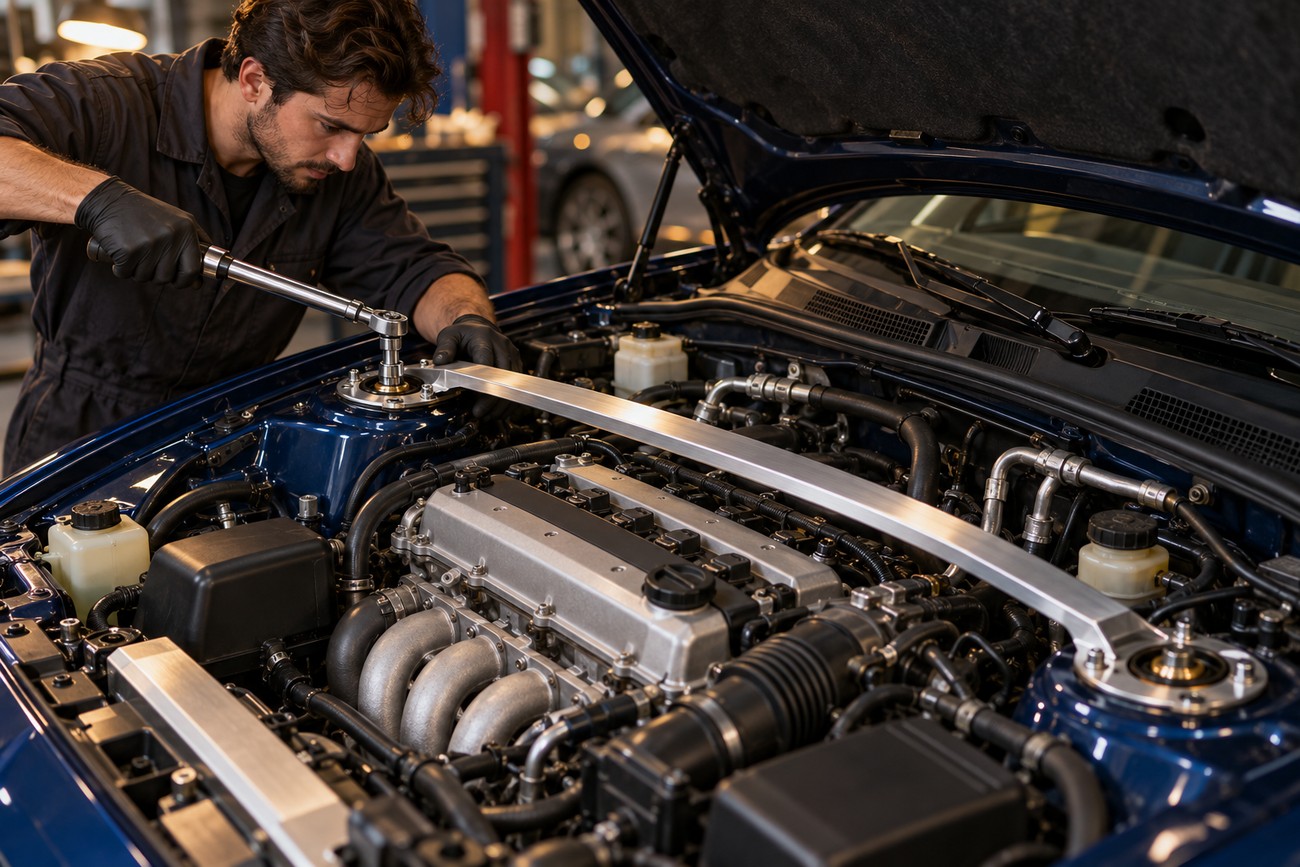
Construction matters more than appearance. A rigid, well-fitted design with minimal play is preferable to a thin decorative section supported by numerous adjustment joints. Excessive joints can introduce compliance and looseness, especially when the brace is expected to control movement under repeated load.
Cheap no-name parts may produce rattles, squeaks, or movement at the mounting points because of poor fit or inadequate stiffness. Check whether the bar clears the intake, valve cover, spark-plug access, oil-filler neck, air-conditioning lines, and other engine hardware. Also verify clearance for gas hood struts and any factory hood mechanism.
Service access is a practical concern. A brace that blocks the valve cover, ignition components, or routine fluid service can turn ordinary maintenance into a removal job. That cost is easy to overlook when the part is inspected only with the hood open and the engine stationary.
Use the vehicle or component specifications and a torque wrench for the fasteners. Tightening by feel can leave the brace loose enough to rattle or tight enough to damage threads, distort mounting areas, or pull on strut studs. After installation, inspect for contact with hoses, wiring, manifolds, and the hood through its full range of movement.
A bent, cracked, or collision-damaged tower must be repaired and its geometry checked before reinforcement is installed. A brace should preserve a correct structure; it should not be used to lock a displaced tower in the wrong position.
The Trade-Offs Marketers Often Leave Out
A rigid brace redirects force into other chassis areas. It does not make deformation disappear. Depending on the body, the additional load may be carried more heavily by the towers, sills, subframe mounting points, seams, or other weak sections.
This matters on old or heavily modified shells. Strengthening the towers alone can expose cracks, lifted paint, or fatigue around nearby mounting points, particularly when stiff engine mounts, stiff suspension bushings, or high-grip tires raise the loads entering the body.
On an old shell, the first sign of excessive local loading may be lifted paint or a fine crack around a mounting point rather than an obvious change in handling.
Rigid aftermarket bracing can also transmit more vibration and noise into the body, especially when the engine or suspension mounts are already firm. It may reduce access to service items, and poor fitment can create contact noises that are mistaken for suspension faults.
Crash behavior deserves attention. A brace can alter front-end load paths and may interfere with hood deformation, folding hardware, or pyrotechnic components. Local rules may also affect the use of uncertified under-hood modifications, with possible inspection, legal, or insurance complications depending on the jurisdiction.
How to Judge the Upgrade Properly
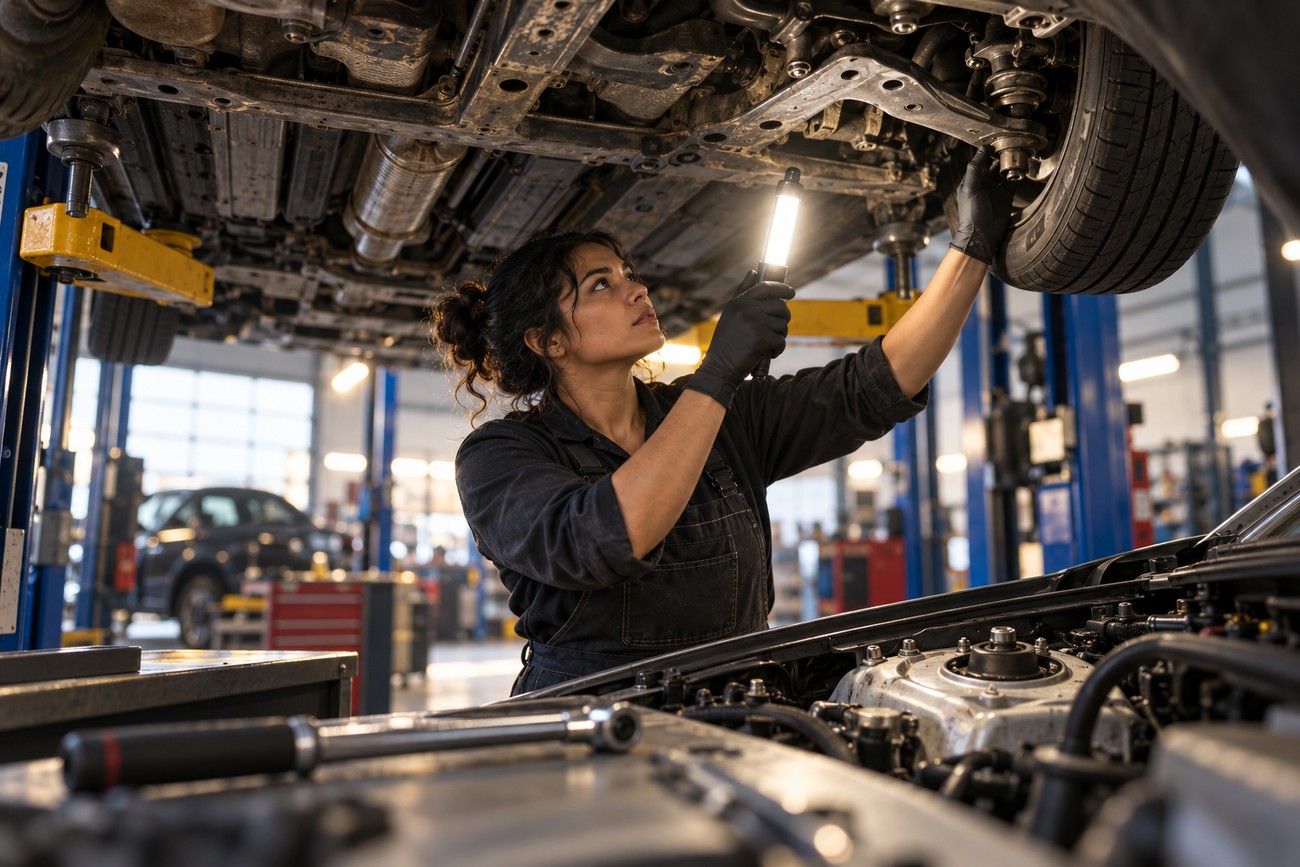
Begin with the body, not the catalog. Inspect the towers, strut mounts, seams, subframes, bushings, and existing factory reinforcement. A healthy chassis with a clear movement-related symptom is a stronger candidate than a structurally tired car receiving a brace as a repair substitute.
Define the goal before installation. More accurate turn-in, better alignment retention, and repeatable track behavior are measurable objectives; a general expectation that the car should feel “tighter” is harder to assess. Confirm fitment, fastener access, clearance, and the manufacturer’s installation requirements before buying.
Compare the car before and after under repeatable conditions. Use the same tires, pressures, alignment, route, and warm-up where possible, then examine steering response, tire behavior, alignment retention, and lap timing or telemetry if available.
System-level reinforcement may deliver more value than one isolated upper brace. Lower underbody braces, subframe plates, rear reinforcement, sound bushings, suitable tires, and correct alignment should be considered together. A front brace may feel cosmetic if the rear structure and the rest of the chassis remain compliant.
Common Myths About Chassis Stiffness
A brace does not automatically improve every vehicle. Older McPherson-strut bodies without substantial factory reinforcement are the most plausible candidates for a noticeable response improvement, while modern reinforced platforms may show little change from a simple bolt-on part.
Body roll does not disappear because a tower brace is installed. Roll is controlled mainly by springs and anti-roll bars, along with suspension geometry and tires. The brace influences the consistency of the upper strut mounting position while those systems continue to control roll.
Marketing claims such as “up to 30–40% greater rigidity” are not interpretable without a defined measurement method, load direction, mounting condition, and test setup. A broad local stiffness figure does not automatically describe whole-body torsional stiffness, and the relevant torsional gain can be much smaller.
The upgrade can still provide a genuine, non-dramatic response improvement on some older McPherson-strut cars. Its value depends on the movement being controlled, the quality of the installation, and whether the rest of the chassis can carry the redistributed loads.
Frequently asked questions
What are the symptoms of a bad strut tower?
Common warning signs include a visible crease or displacement around the tower, cracked metal or paint, repeated alignment changes, uneven tire wear, and clunks that appear during steering or suspension movement. A tower damaged by a collision, pothole impact, or severe track use may also show a strut mount that no longer sits symmetrically.
These symptoms need separation from other faults. A worn strut mount can clunk without the tower being damaged, while a simple alignment problem may produce tire wear without visible structural deformation. If alignment will not hold, inspect the tower, mount, control-arm bushings, subframe, and fasteners before adding reinforcement; a brace cannot correct a structural or mounting problem.
What is a strut tower brace good for?
It is good for limiting relative movement between the upper strut towers so the upper-mount position and wheel-alignment behavior remain more consistent under load. The benefit is most relevant on older, healthy McPherson-strut bodies without substantial factory reinforcement, especially during sharp turn-in, high lateral loads, and repeated track use.
It does not increase tire grip by itself, remove body roll, or repair a damaged tower. On a modern reinforced platform, the gain may be too small to justify the cost or service compromises. The best decision follows an inspection of the body, existing reinforcement, suspension condition, fitment, and the specific driving problem.