A steering wheel cover can make a slick rim easier to hold, yet a cover that slips or makes the rim too thick can leave you with less control and tired hands. The difference often becomes clear during ordinary turns, when your hands need to move around the wheel without the cover moving beneath them.
Surface texture, fit, and added bulk deserve more attention than labels such as “breathable” or “non-slip.” A cover may improve comfort for your hands, but it does not automatically make driving safer. Start with the wheel you have, then judge both how the cover feels in your hands and how firmly it stays in place.
- What a Cover Can—and Cannot—Change About Your Grip
- Steering Wheel Cover Materials: Grip and Comfort Trade-Offs
- Measure the Wheel Before Choosing a Size
- Check the Fit Before You Drive
- Choose Comfort for Your Hands and Driving Conditions
- Common Cover Failures and When to Replace One
- Frequently asked questions
- What should someone with arthritis look for in a steering wheel cover?
- What should I do if a new steering wheel cover has a strong smell?
- What are the best steering wheel covers for people with arthritis?
- What is the best car steering wheel grip cover?
- How to make a steering wheel more comfortable?
What a Cover Can—and Cannot—Change About Your Grip
A textured cover can make a smooth wheel feel more secure in your hands. Modest cushioning may also ease pressure where your palms rest during a long drive. Neither benefit is guaranteed: sweat, heat, and the way you hold the wheel can change the result.
Every cover increases the rim’s grip diameter. A little extra thickness may feel comfortable if the original rim is narrow, while a bulky cover can make it harder to wrap your fingers around the wheel. Padding can also soften the sense of steering effort through your hands, so the thickest option is not necessarily the easiest to use.
Grip has two separate contact points: your hands against the cover, and the cover against the original wheel. A pleasant, tacky surface addresses only the first. The inner contact surface and the cover’s size must keep it fixed when you steer.
Judge a cover by those two checks rather than by a general safety promise. If your hands slide on its surface, it has missed its main purpose. If the cover rotates relative to the wheel, it should not be used while driving, however secure the outside feels.
Steering Wheel Cover Materials: Grip and Comfort Trade-Offs
These are tendencies, not performance rankings. Finish, texture, and seam placement can matter more than a premium-sounding material name; “breathable” and “non-slip” are descriptions, not proof under a shared standard.
| Material | Surface feel | Potential drawback | Care consideration |
|---|---|---|---|
| Leather | Firm, with a feel that varies by finish | A glossy or worn surface may feel slick | Clean and condition as the maker directs |
| Suede-like microfiber or Alcantara-style material | Soft, often with noticeable texture | Oils and wear can alter the surface | Follow material-specific cleaning guidance |
| Synthetic leather or microfiber | Ranges from smooth to patterned | Some finishes may become sticky or split with wear | Clean gently and inspect the finish |
| Textured elastomer | Usually pronounced surface pattern | Heat or cold may change how it feels | Remove grime from the texture |
Measure the Wheel Before Choosing a Size

Measure the steering wheel’s outside diameter across its widest point, from outer edge to outer edge. Do this on your own vehicle rather than relying on its model name or choosing by eye. Compare the measurement with the seller’s stated fit range, including any instructions on how that range was determined.
14.5–15 inches (about 36.8–38.1 cm) is a commonly listed retail range, not a universal steering-wheel size. Being near that range does not settle the choice: a cover must also accommodate the thickness of the rim. Check the product’s rim-thickness guidance where it is available, especially if the factory wheel is already substantial.
Shape can rule out an otherwise plausible size. A round cover may sit unevenly on a D-shaped wheel, while thumb rests or other molded protrusions can stretch it in one area and leave it loose elsewhere. Look for fit information that addresses those features, rather than assuming “universal” includes them.
Check the area around spokes and nearby controls, too. The cover should not crowd a button, catch at a spoke, or obscure a control you need to find by touch. If the seller gives only a broad diameter range and no guidance for your wheel’s shape, confirm compatibility before ordering or choose a product with clearer measurements.
Check the Fit Before You Drive
Inspect the original rim before fitting anything over it. Remove dirt and skin oils using cleaning guidance suitable for the wheel, and let it dry. A cover can hide worn or damaged trim from view, but it cannot repair it; a loose or deteriorating underlying surface deserves separate attention.
Install the cover according to its instructions, then check that its edges and seams sit evenly around the rim. It may take effort to fit a snug cover, but excessive force can damage the cover or wheel. A cover that goes on easily yet has slack may be too large, even if its advertised diameter matches your measurement.
With the vehicle stationary, hold the wheel and try to twist the cover independently by hand at several points. Check for bunching near the spokes as well as rotation around the rim. If it shifts, remove it and reassess the fit; do not rely on its outer texture or an improvised packing layer to keep it in place while driving.
Choose Comfort for Your Hands and Driving Conditions
A thin, textured cover changes the surface while preserving more of the factory rim’s shape. Light padding may relieve palm pressure, but it also adds bulk and can reduce the sense of the wheel through your hands. Consider which trade-off matters during your normal drives, rather than choosing softness in isolation.
Your hand size and the original rim deserve equal attention. If the factory thickness already lets your fingers settle comfortably, adding a cover may make your grip feel strained. A cover is more promising when you can identify a specific issue, such as a slick finish or pressure from a narrow rim.
Assess the surface in conditions you actually encounter. A finish that feels pleasant with dry hands may be less agreeable when your palms sweat; summer heat can make some surfaces feel sticky, while cold can make others feel harder. Material properties vary by product, so a brief touch in a shop cannot settle every seasonal concern.
Feel for seams and joins at your usual hand positions. A raised seam that barely registers at first may press into a palm over a longer trip, particularly if you frequently adjust your grip. If you use a heated steering wheel, check both the vehicle and cover instructions for compatibility rather than assuming heat will pass through a cover as expected.
Common Cover Failures and When to Replace One
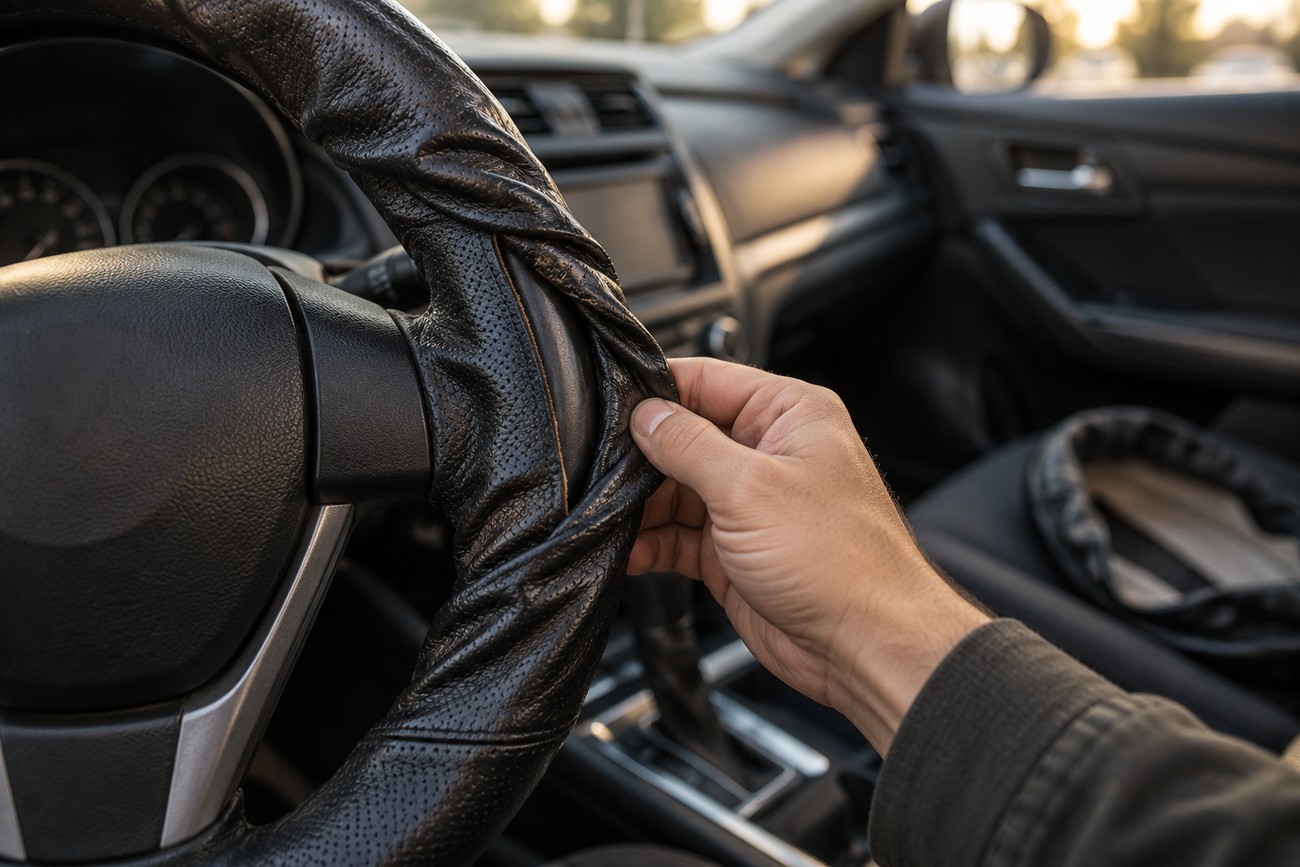
Reassess a cover as soon as it starts shifting on the wheel. Movement at the inner surface is a fit failure, even if the outside still feels grippy. Remove a cover that rotates or bunches, and do not drive with it in the hope that it will settle into place.
A slick or sticky surface calls for a different check. Dirt, skin oils, and sweat can reduce grip even on a textured cover, so clean it according to its care instructions and let it dry before judging the result. If the surface remains unpleasant or difficult to hold, cleaning may no longer be enough.
Inspect the places your hands touch most often. A split synthetic finish, lifting edge, or raised seam can catch or press into your palm; heat and wear may also change how a surface feels. Durability varies by product, so its condition matters more than a fixed replacement schedule.
When removing a worn cover, look at the steering wheel underneath. A cover may have concealed damage or a sticky surface, neither of which it repairs. Address the underlying problem separately before fitting another cover, then repeat the stationary fit check rather than assuming a new outer layer will hold.
Frequently asked questions
Personal comfort and a secure fit should guide the final choice. The answers below cover needs that a size label or material description alone cannot resolve.
What should someone with arthritis look for in a steering wheel cover?
Look for a surface you can hold without squeezing hard, then weigh any cushioning against the effort needed to wrap your fingers around the thicker rim. If possible, handle a fitted sample before buying. A cover may change pressure and grip, but it is not a medical solution; seek individualized advice if hand pain affects your driving.
What should I do if a new steering wheel cover has a strong smell?
Check the seller’s care guidance before cleaning or treating it. If the material permits, leave the cover to ventilate outside the vehicle in a suitable dry place. Avoid installing it while the odor makes the cabin unpleasant, and consider returning it if the smell remains objectionable.
What are the best steering wheel covers for people with arthritis?
There is no single best material or thickness for everyone with arthritis. A lightly cushioned, textured option may be worth trying if palm pressure is the main problem; a thinner option may suit you better if closing your fingers around the rim is difficult. Choose one you can test for comfort and secure fit, ideally with a workable return policy.
What is the best car steering wheel grip cover?
The best choice for your car stays fixed on its wheel and gives your hands reliable traction in the conditions you drive in. Narrow the options using the wheel’s outside diameter, rim thickness, and shape, then inspect the inner contact surface and outer texture. Reject a cover that moves on the wheel, regardless of its grip claims.
How to make a steering wheel more comfortable?
Start by cleaning the rim and identifying what feels uncomfortable: slipperiness, palm pressure, temperature, or thickness. A thin textured cover may help with a slick surface; light padding may help with pressure, provided the added diameter still suits your hands. For a heated wheel, check the vehicle and cover instructions before adding a layer over it.