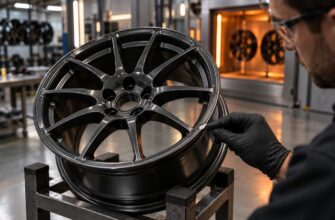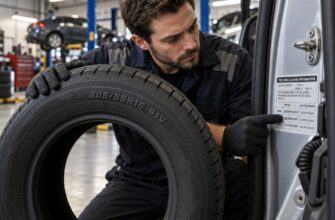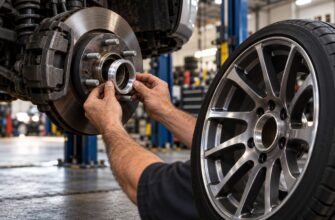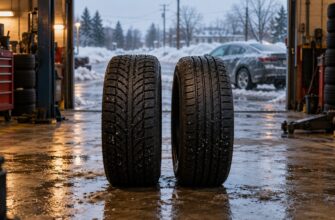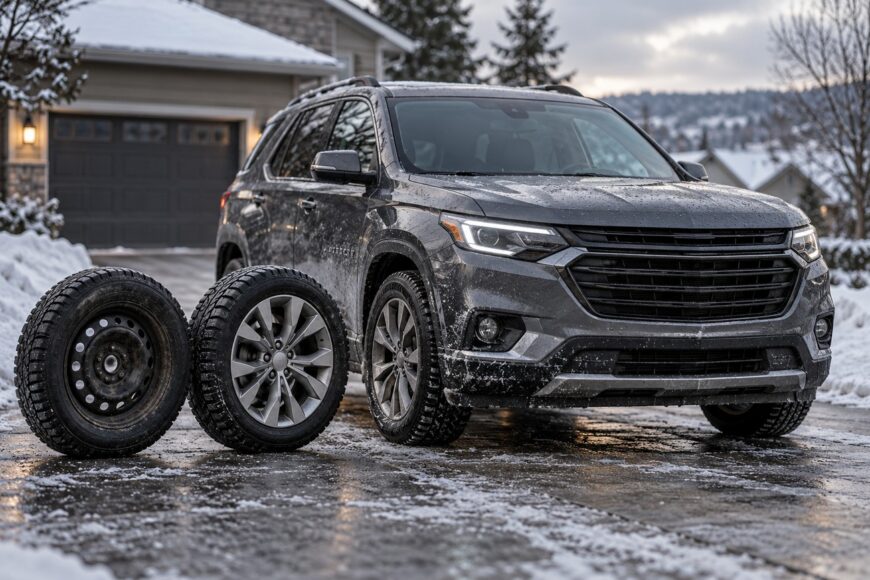
Steel wheels can make a winter set less expensive, though road salt may leave them visibly rusty. Alloy wheels often look better, but a chipped finish can let salt and moisture reach the metal, sometimes leading to coating damage or, if corrosion reaches the bead seat, a slow air leak. Neither choice is automatically trouble-free.
Winter tyres provide the crucial traction: their type, size, compound, and condition matter more than the material of the wheel beneath them. Once suitable tyres are chosen, the decision is about how each wheel will withstand your roads, whether it fits the vehicle correctly, and what the full set will cost to own. A sound wheel you can maintain is worth more than a bargain that arrives with questionable fit or hidden damage.
- The short answer: which wheels make sense for winter?
- Steel vs alloy winter wheels at a glance
- Potholes, bends and cracks: what actually fails?
- Road salt, finish damage and slow air leaks
- Fitment checks before buying a second set
- The real cost of a dedicated winter wheel set
- Choosing between steel and alloy for your driving
- Winter fitting, cleaning and off-season storage
- Frequently asked questions
- What should I check when buying used winter wheels?
- What should I do if a wheel is stuck to the hub during a seasonal swap?
The short answer: which wheels make sense for winter?
Steel wheels often make sense for a cost-focused second set, particularly where salt and cosmetic wear are expected. Their lower typical purchase cost can leave more of the budget for suitable winter tyres. Expect surface rust if the finish is neglected, and do not treat steel as indestructible.
Sound, correctly specified alloy wheels are also suitable for winter. An owner who already has a suitable set may gain little by replacing it solely because the wheels are alloy. The important checks are wheel condition, load capacity, fit, and whether the coating and tyre-sealing areas remain sound.
Wheel material alone does not determine winter grip. Winter tyre type, size, compound, and condition are the relevant factors, and winter tyres should be fitted on all four wheels. Fitting them only to the driven axle can leave the other axle with a different level of traction and upset the vehicle’s balance.
Neither material is automatically safer after a pothole strike or a season on salted roads. Steel may bend, while cast alloy may crack or suffer other damage; the result depends on the wheel’s design, condition, and the force of the impact. Choose a wheel that meets the vehicle’s requirements, then keep checking it as you would any other safety-critical component.
Steel vs alloy winter wheels at a glance
These are common ownership trade-offs, not promises about how an individual wheel will perform.
| Factor | Steel wheels | Alloy wheels |
|---|---|---|
| Purchase cost | Often the cheaper second-set option. | Often costs more; sound existing wheels avoid another purchase. |
| Impact damage | May bend; a serious bend can require replacement. | Cast wheels may crack or deform; inspection determines serviceability. |
| Salt exposure | Finish damage can lead to visible rust. | Chipped coating can blister or corrode, sometimes affecting bead sealing. |
| Appearance and care | Simple finish; clean salt from rims and covers. | More finish choices; inspect chips and coating edges. |
| Second-set needs | Either may need separate fasteners, compatible direct-TPMS parts, balancing, and storage. | |
Potholes, bends and cracks: what actually fails?
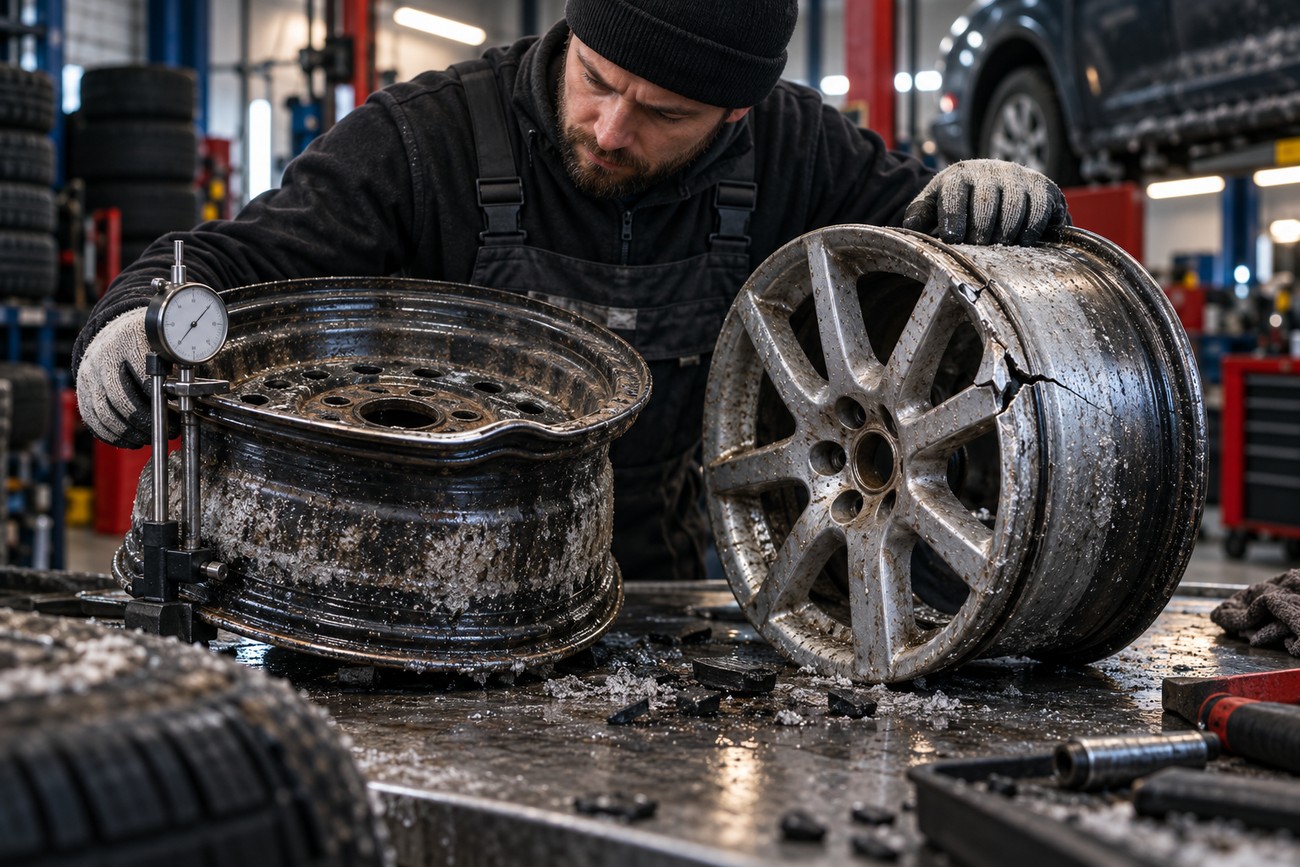
A hard pothole strike can damage either type of wheel. A steel rim may bend at its edge, while a cast alloy wheel may crack or deform elsewhere. Those are possible failure patterns, not rules: construction, existing condition, and impact severity all affect what happens.
A bent steel wheel is not automatically a straightforward repair. Deformation can disturb the tyre bead, cause an air leak, or leave the wheel with unacceptable runout. A severe bend may make replacement the safer option, even if the tyre still holds air immediately after the impact.
Alloy damage can be less obvious from the outside. A wheel that looks presentable may still have a crack or enough runout to cause vibration; a mark on the finish alone does not establish that it is unsafe, either. New vibration, a recurring pressure loss, or a substantial impact warrants an inspection of the wheel and tyre, including runout where appropriate.
Do not rely on a material-based rule to decide whether to continue using a damaged wheel. Both steel and alloy wheels need to be free of disqualifying cracks, serious deformation, and corrosion severe enough to affect serviceability. Each must also meet the vehicle’s load requirement. If serviceability is uncertain, have a qualified wheel or tyre professional assess it before further use.
Road salt, finish damage and slow air leaks
Steel reacts to salt and moisture by developing rust, often where paint has chipped or around exposed edges. Early surface rust is easy to see, which gives you a chance to clean the wheel and assess the finish. Heavy corrosion is a different matter: appearance alone cannot establish whether the wheel remains suitable for service.
Aluminium alloy does not rust like steel, but its protective coating can fail. A stone chip can expose metal to salty water; moisture beneath the finish may then produce white oxidation, blisters, and peeling. Exposed edges on a diamond-cut finish and already-damaged coating deserve particular attention after winter use.
Corrosion where the tyre bead meets an alloy wheel can prevent a consistent seal and cause a gradual pressure loss. Some workshops observe fewer bead-area leaks with steel wheels in salty conditions, but that is a tendency, not a guarantee that steel cannot leak. Pressure loss also has other causes, so repeated top-ups should lead to an inspection rather than an assumption that the tyre alone is at fault.
Keeping a finish intact matters more than choosing a material on the strength of its label. Wash away salt, look closely at chipped areas, and check whether a wheel losing air needs professional cleaning, refinishing, or replacement. A fresh coat on the visible face will not resolve deterioration at a sealing surface that has not been inspected.
Fitment checks before buying a second set
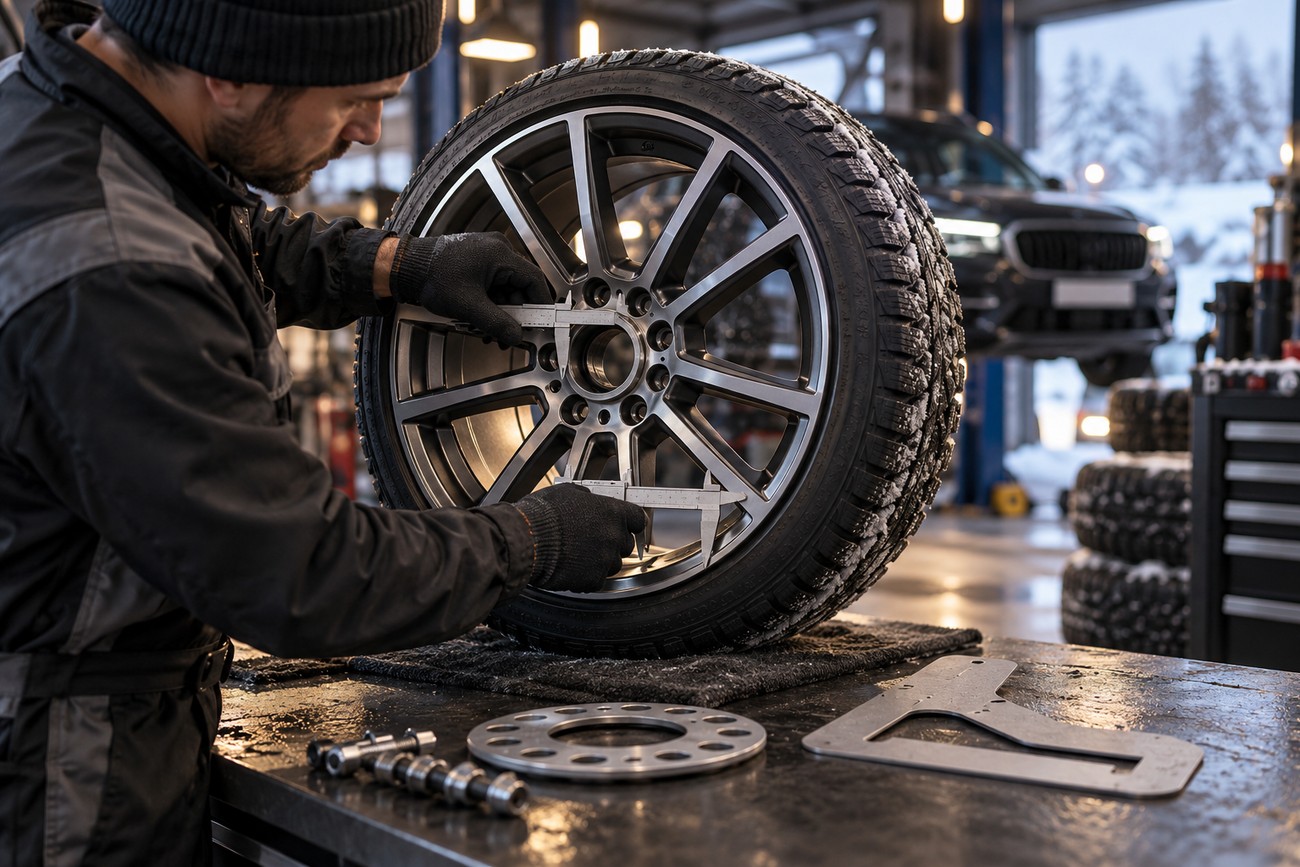
Start with the vehicle placard or manual for approved tyre sizes and load requirements, then confirm the tyre maker’s permitted rim-width range for the chosen size. The tyre must suit the wheel diameter and width. A shared diameter, such as “17-inch,” says too little about whether a particular tyre and wheel work together.
Next, match the wheel to the vehicle. Check its diameter, bolt pattern, offset, center bore, and brake-caliper clearance against reliable vehicle and wheel specifications. Diameter and bolt pattern alone do not establish compatibility: a wheel may bolt up yet sit incorrectly or interfere with the brakes. Verify identifying markings before buying, especially on a used or aftermarket set.
Neither the wheel nor the tyre may have a load capacity below the vehicle’s requirements. Compare the vehicle information with the tyre and wheel markings rather than assuming that a wheel of the right diameter is adequately rated. If a rating or marking cannot be confirmed, resolve that uncertainty before fitting tyres to the wheels.
Check the fasteners at the same time. Wheel seats can be conical, spherical, or flat, so original nuts or bolts may be wrong for an aftermarket wheel even when their threads appear to fit. The seat, thread engagement, and any wheel-maker instructions need to agree; using an unsuitable fastener can compromise how the wheel is secured.
A narrower winter tyre is not automatically better. Any alternative must be an approved size for the vehicle and compatible with the wheel’s rim width. On an AWD/4WD vehicle, maintain the required tyre size and appropriately matching rolling circumference at all four positions. Changing from alloy to steel does not remove that requirement.
The real cost of a dedicated winter wheel set
Steel wheels are often cheaper to buy for a dedicated winter set. If you already own sound, suitable alloys, however, buying steel wheels may add an expense you do not need. Compare the condition and likely upkeep of the wheels you have with the cost of another set, rather than comparing purchase prices alone.
Budget for the winter tyres, mounting and balancing, seasonal changeovers, and a place to store the set. Wheels may need cleaning or finish attention, while damaged alloy coating can bring refinishing or sealing work. Steel wheels may need rust care; optional covers add another item to buy and maintain.
Direct tyre pressure monitoring systems can change the calculation. A separate set on a direct-TPMS vehicle may need sensors and valves compatible with its model and year, followed by programming or a relearn procedure. Requirements vary, so check the vehicle’s procedure before assuming the new set will work without setup or that every swap requires new sensors.
Aftermarket wheels may also require different, correctly seated fasteners. Account for those parts before placing an order, along with any balancing or fitting charges associated with the complete set. The practical saving is the one left after the wheels are ready to install and maintain, not the price printed beside bare rims.
Choosing between steel and alloy for your driving
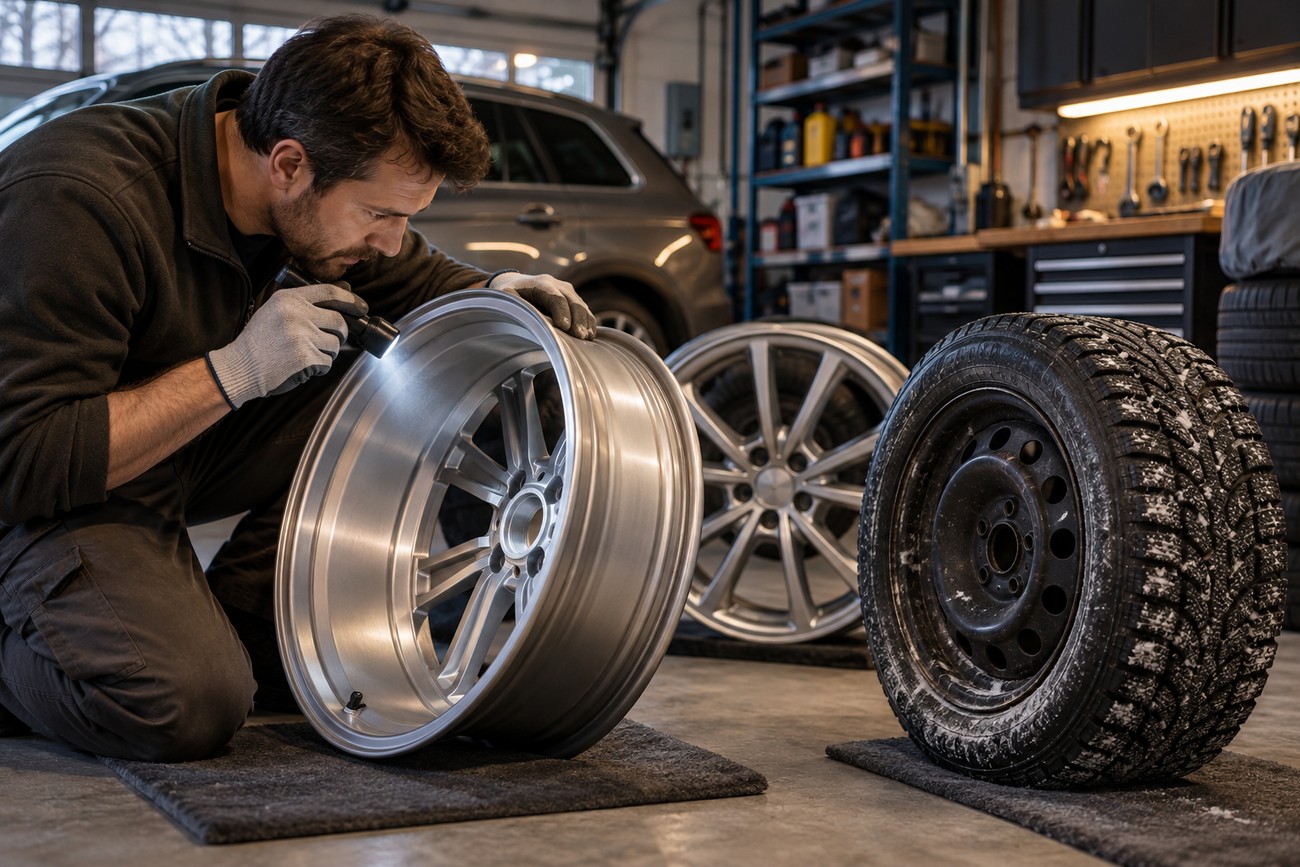
If your priority is an economical second set for regularly salted roads, correctly specified steel wheels are a reasonable choice. Visible rust and finish wear still need attention, and a pothole can render a steel wheel unfit for service. Buy on confirmed fit and sound condition rather than an expectation that the wheels can take any impact.
If you plan to reuse original alloys, inspect them before winter tyres go on. An intact finish, sound bead seats, and no signs of damage make them a viable winter option. A wheel with persistent pressure loss or spreading coating failure deserves investigation before another season of salt exposure.
Frequent potholes make inspection and replacement options more important than a simple steel-versus-alloy claim. With aftermarket wheels, confirm brake clearance, load rating, fasteners, and all other fitment details before considering appearance. A wheel that fits securely and can be kept in good condition is the better choice for your vehicle, whichever material it uses.
Winter fitting, cleaning and off-season storage
Before installation, clean the hub and wheel mating surfaces so the wheel sits flat. Rust or debris trapped between them can contribute to runout and fastening problems. If corrosion is substantial or a wheel will not seat correctly, have the contact surfaces assessed rather than forcing the installation.
Use the correct fasteners and tighten them to the torque specified for the vehicle and wheel, following the applicable tightening procedure. Check whether either manufacturer calls for a torque recheck after initial driving, and follow that instruction if it applies. A seasonal swap is also a useful point to inspect the tyres, valves, and wheels for damage or pressure loss.
During winter, wash salt from both types of wheel and look for fresh chips, rust, blisters, or signs that a tyre is slowly losing air. Clean behind removable covers where grime can collect. Poorly maintained covers can retain dirt and moisture against a steel wheel, undermining the protection an owner may expect from them.
Before storage, clean and dry the wheels rather than putting away a salty set. Inspect the finish and bead area so that a leak or damaged coating does not become a surprise at the next changeover. Store the wheels according to the tyre and wheel makers’ guidance, in a place where they will remain dry and protected from damage.
Frequently asked questions
A final check at purchase or during a seasonal swap can prevent a questionable wheel from going back on the road. These two situations call for care beyond the usual steel-versus-alloy comparison.
What should I check when buying used winter wheels?
Verify the identifying markings against your vehicle’s fitment and load requirements, and confirm exactly which fasteners are included. Examine each wheel for cracks, evidence of repair, serious bends, corrosion, and bead-seat damage; inspect the tyres separately rather than judging them from the wheel’s appearance. If a wheel’s condition is questionable, ask a qualified wheel or tyre professional to check it, including runout where appropriate, before you pay.
What should I do if a wheel is stuck to the hub during a seasonal swap?
Do not drive with loosened fasteners to free it, and do not strike the wheel indiscriminately; either approach can cause injury or damage. If it will not release using the proper removal method, have a qualified professional remove it. Before refitting, have the hub and wheel contact surfaces cleaned and checked so the wheel can seat flat and be secured as specified.