A flat tire is frustrating enough without discovering that the equipment in the car cannot handle the damage. A sealant kit will not help with a torn sidewall, while a spare that has sat untouched for years may be flat itself. Even a usable spare can be the wrong fit for a particular vehicle.
The right response depends on what failed, what the vehicle permits, and how far you need to go. A compact spare or sealant kit may get you to tire service; a compatible full-size spare may support ordinary driving. None of those outcomes should be assumed until you have checked the tire, wheel, equipment, and vehicle instructions.
- Full-size spare vs donut vs repair kit: what each can do
- When a full-size spare is—and is not—a lasting replacement
- Donut spares: speed, pressure, and handling limits
- Tire repair kits: the damage they leave you stranded with
- Before buying or fitting a spare, check the whole vehicle
- The unused spare can still fail: a readiness check
- After a flat, decide whether to fit, inflate, or call for help
- Frequently asked questions
- What cars still come with a full-size spare tire?
- How can I tell what spare equipment my car originally had?
- Where can I keep a full-size spare that does not fit in the spare-wheel well?
Full-size spare vs donut vs repair kit: what each can do
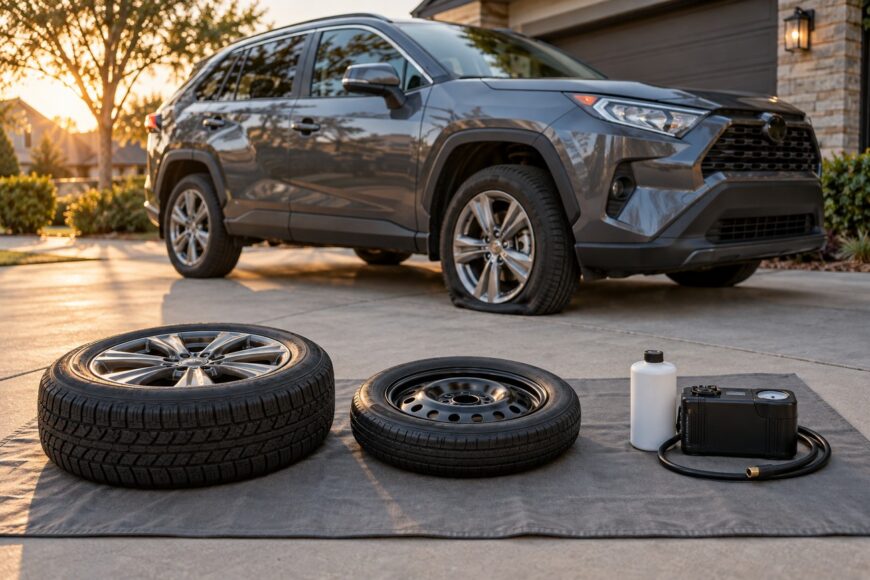
Each option solves a different part of a flat-tire problem. The key distinction is whether it replaces the damaged wheel, temporarily inflates a suitable tire, or can serve as a lasting replacement.
| Equipment | Likely use and space trade-off | Decisive limits and checks | What happens next |
|---|---|---|---|
| Full-size spare | Replaces the flat wheel and can handle damage a sealant kit cannot; takes the most cargo space. | Suitable for ordinary driving only if its size, specifications, load capacity, and condition are compatible with the vehicle and its other tires. Check fit, tread wear, and vehicle-specific restrictions. | Have the damaged tire and wheel assessed. Confirm that the fitted spare is suitable for continued use. |
| Compact spare or donut | Provides temporary mobility while using less space than a full-size spare. | Follow the tire markings and vehicle manual for speed, distance, pressure, and permitted placement. It is not a substitute for normal driving. | Reach tire service and restore a compatible road wheel. |
| Compressor-and-sealant kit | May inflate an eligible punctured tire without carrying a spare wheel; saves weight and cargo space. | Cannot address sidewall damage, large punctures, tears, an unseated tire, or wheel damage. Check that the sealant and compressor are usable. | Arrange professional inspection promptly; sealant is a temporary mobility measure, not a permanent repair. |
A spare replaces the damaged tire and wheel as an assembly, which makes it less dependent on the type of tire puncture. It still has to fit the vehicle and be safe to use. A kit leaves the original wheel and tire in place, so its usefulness depends closely on where and how they were damaged.
Space matters too. A full-size wheel may take up much of the cargo area or fail to fit beneath its floor, while a kit occupies relatively little room. That saving is less useful if the damage is outside the kit’s stated limits.
When a full-size spare is—and is not—a lasting replacement
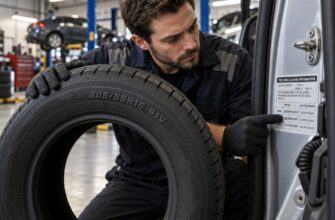
A full-size wheel can look identical in diameter to the road wheels without being equivalent in use. Ordinary driving is appropriate only if its size, specifications, load capacity, and condition are compatible with the vehicle and its other tires. Confirm the tire’s speed rating and specified pressure as well; its appearance alone cannot establish suitability.
Tread design and wear affect grip, particularly during braking or on wet pavement. Wear can also change a tire’s actual rolling diameter even when its marked size matches. That difference deserves particular attention on all-wheel-drive (AWD) vehicles, where the manual may impose limits on tire matching.
An eligible spare included in the vehicle’s tire rotation is more likely to stay comparable to the tires in service. If it spends years unused, it can age separately while the road tires wear down. Rotation must still follow the vehicle and tire requirements; it is not permission to put an unsuitable spare into regular use.
The practical cost is space and the need to secure the wheel properly. A full-size spare may not fit the factory spare-wheel well or allow the cargo floor to close. Before choosing one, establish both where it can be carried and whether it can serve the vehicle.
Donut spares: speed, pressure, and handling limits
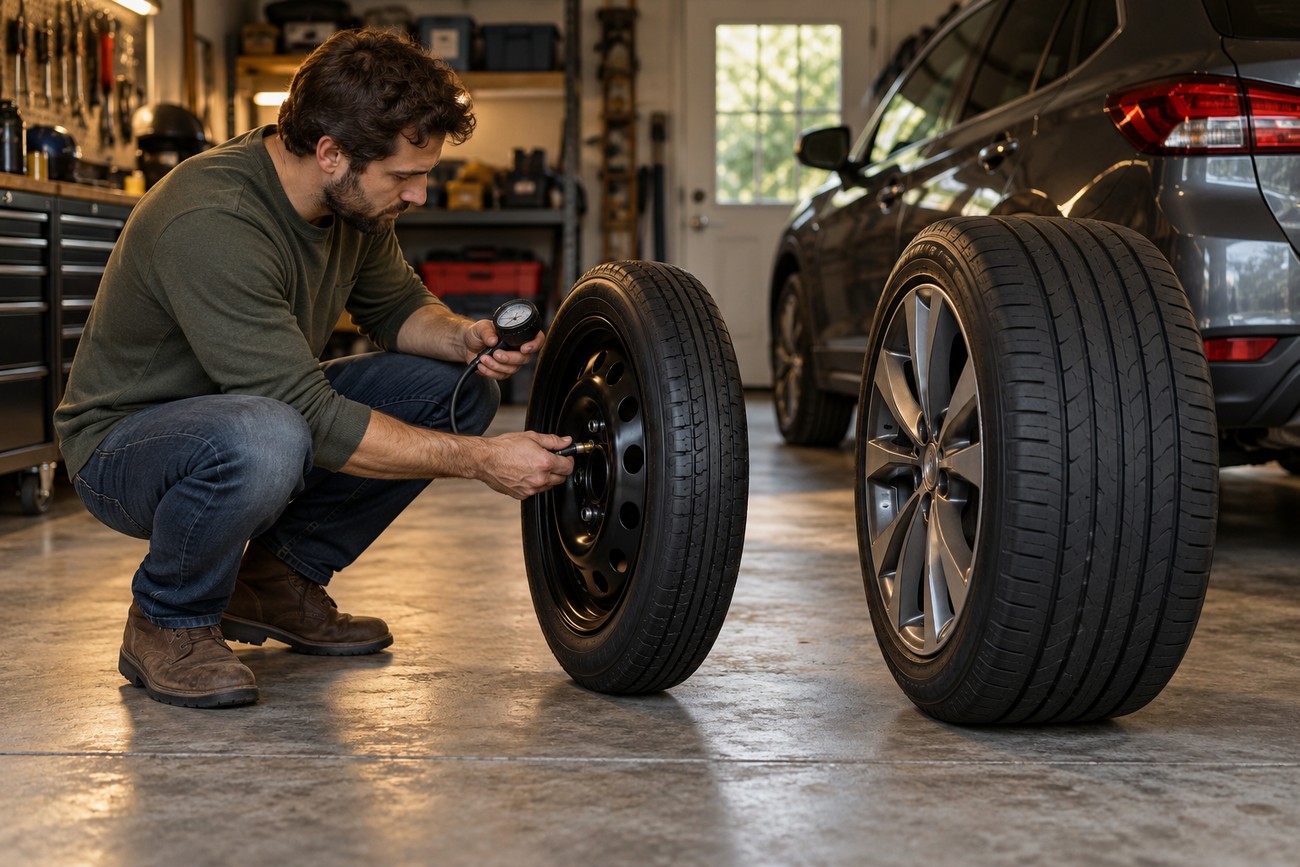
A compact spare is a temporary-use tire for reaching a place where the regular tire can be assessed. Michelin advises no more than 50 mph (about 80 km/h), but follow the applicable tire markings and vehicle manual. There is no universal 50-mile driving allowance; check the limits for the tire and vehicle you have.
Compact-spare inflation pressure is often higher than road-tire pressure. Use the spare’s specified value rather than assuming the driver-door placard gives its pressure. If the markings are unclear or give only a maximum, consult the vehicle manual instead of treating a commonly quoted pressure as universal.
The different tire size and construction can change steering, braking feel, and grip. Drivers may also notice different responses from ABS or stability control. Leave more room to slow down, avoid hard acceleration and abrupt cornering, and do not resume ordinary driving simply because the car feels manageable.
Placement can matter as much as speed. Some vehicles restrict which axle can carry a temporary spare, and AWD systems may have strict rolling-diameter requirements. Follow the vehicle-specific procedure before fitting the wheel; a tire that bolts on is not automatically approved for use.
Tire repair kits: the damage they leave you stranded with
A compressor-and-sealant kit may provide temporary mobility for an eligible puncture in the tire tread. It appeals to drivers who want to save the weight and cargo space of a spare wheel. Its instructions matter: the location and extent of damage determine whether treatment should be attempted.
Sealant cannot address sidewall damage, large punctures, or tears. A compressor will not solve an unseated tire or a damaged wheel, and a single kit may leave you without a solution if multiple tires are damaged. A tire that has gone flat may also have unseen damage that needs professional inspection.
Driving after applying sealant does not complete a repair. The tire and wheel still need assessment, and the sealant may complicate internal inspection or repair. Do not assume a treated tire can always be repaired and returned to service.
The kit itself needs checking before a flat occurs. Sealant can become unusable in storage, while a compressor may fail or lack a compatible connection. Those failures remove the kit’s potential route back to mobility.
Before buying or fitting a spare, check the whole vehicle
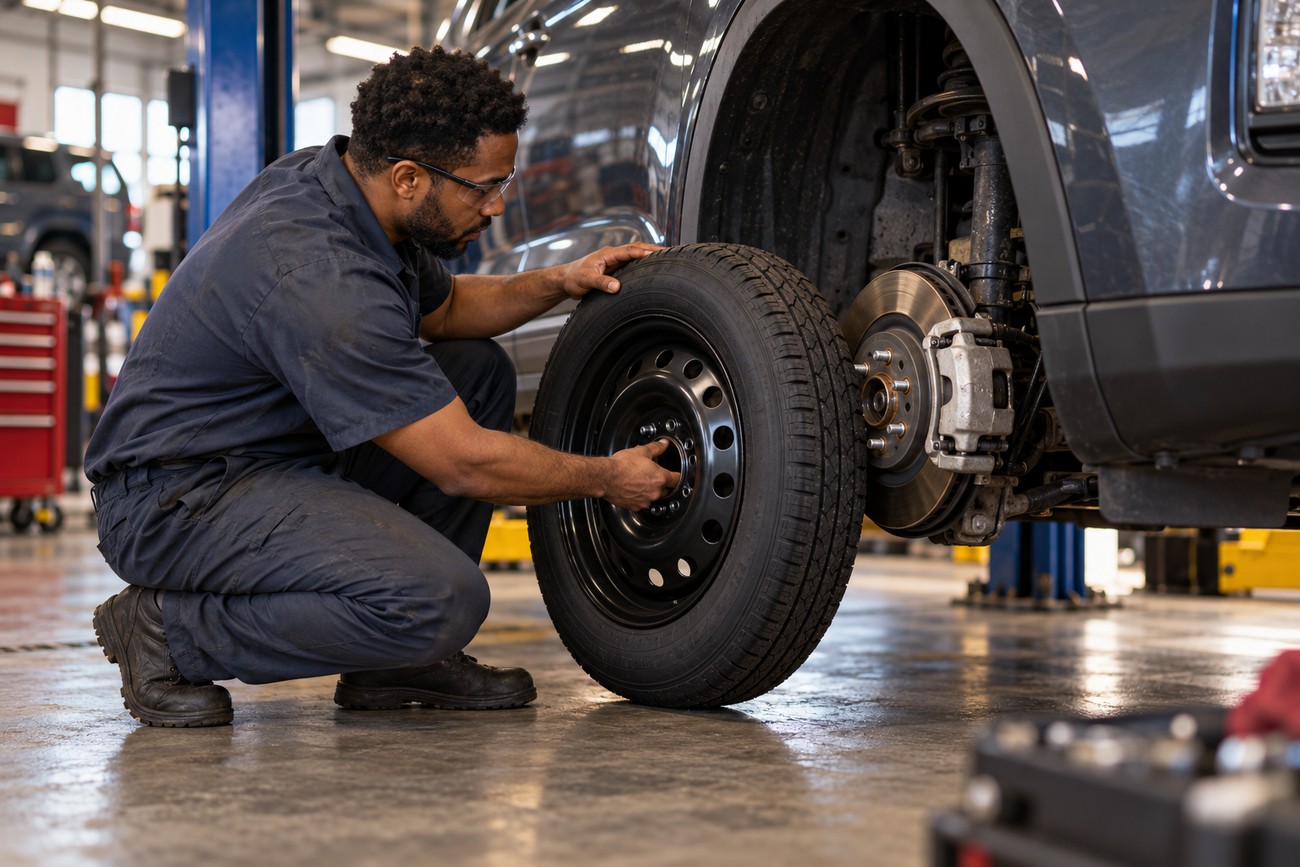
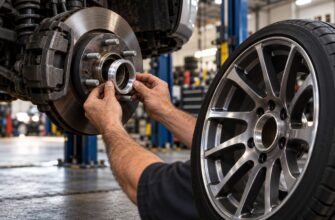
Start with the vehicle’s approved wheel and tire specifications, rather than buying a wheel because its diameter looks right. Verify the bolt pattern, offset, center bore, brake-caliper clearance, and load capacity. The tire must also have an appropriate diameter and meet the vehicle’s requirements.
Next, check where the spare is permitted to go. A temporary wheel may have axle-placement instructions, and a nominally matching full-size tire can still differ from the road tires in tread wear and actual rolling diameter. AWD and differential-related restrictions make the owner’s manual especially important.
Confirm that the wheel can be fitted with the equipment carried in the car, including any required locking-lug adapter. If the vehicle’s instructions require a particular axle procedure or prohibit a proposed spare, choose equipment that meets those instructions rather than improvising at the roadside.
Finally, check its storage location. A wheel that fits the hubs may still be too large for the spare-wheel well or may prevent the cargo floor from closing. It needs a vehicle-approved way to travel securely whenever it is carried.
The unused spare can still fail: a readiness check
NHTSA includes the spare in its guidance to check tire pressure at least monthly, when tires are cold. A stored tire can lose pressure without ever being driven. For a compact spare, use its specified pressure, which is often higher than road-tire pressure, rather than assuming the driver-door placard supplies the answer.
Inspect the spare for visible cracking, damage, and other signs of deterioration. Lack of mileage does not establish that an older tire is fit to use. If its condition is uncertain, have it assessed before depending on it.
Check the equipment needed to fit the wheel: the jack, wheel wrench, and locking-lug adapter, if applicable. A sound spare provides little help if a missing tool prevents removal of the flat wheel. Make sure the stored equipment is accessible beneath your usual cargo, too.
For a repair kit, inspect the sealant according to its instructions and test that the compressor works and connects to the tire valve. There is no useful universal shelf-life assumption for every kit. Its components must be usable when the puncture happens.
After a flat, decide whether to fit, inflate, or call for help

First, stop somewhere safe and assess the visible damage without placing yourself in traffic. A suitable tread puncture may be within a kit’s instructions. Sidewall damage, a large puncture, a tear, an unseated tire, or wheel damage rules out relying on sealant; multiple damaged tires can exceed what either a single spare or kit can solve.
A compatible spare may replace a damaged tire and wheel if the vehicle is otherwise safe to drive and you can fit it safely. A compact spare remains temporary: follow its tire markings and the vehicle manual for speed, distance, and placement. If compatibility is uncertain or roadside conditions make a change unsafe, arrange assistance instead.
Wheel damage calls for particular care. A spare can replace a damaged wheel, but it does not resolve damage elsewhere on the vehicle or make an unsafe wheel change advisable. If the vehicle has struck an obstacle or you cannot determine what is damaged, seek professional help before driving.
After reaching service, have the damaged tire and wheel assessed. Tell the technician if sealant was used, because it can complicate inspection or repair. Driving on a donut or a sealant-treated tire is a way to reach that assessment, not a completed repair.
Frequently asked questions
Factory equipment and storage arrangements differ between vehicles. Checking the specific car is more reliable than assuming that every example of a model left the factory with the same flat-tire equipment.
What cars still come with a full-size spare tire?
Some vehicles do, but a current list of model names can mislead. Spare equipment may vary by model year, market, and trim, and may change with an equipment package. Check the specific vehicle’s build information and owner’s manual, then confirm what is physically supplied before relying on a listing.
How can I tell what spare equipment my car originally had?
Start with the owner’s manual and the vehicle’s original equipment or build information. If a used car’s cargo area is empty, inspect the storage well and its supplied hardware: hold-downs, tool locations, and kit mounts may help identify what belonged there. Confirm the finding against vehicle-specific information before buying a replacement.
Where can I keep a full-size spare that does not fit in the spare-wheel well?
Use a vehicle-approved storage location and securing method. A heavy wheel left loose in the cargo area can move during hard braking or a collision, so simply placing it behind the seats is not an adequate solution. If there is no approved place to secure it without obstructing passengers or necessary equipment, reconsider how the spare will be carried.