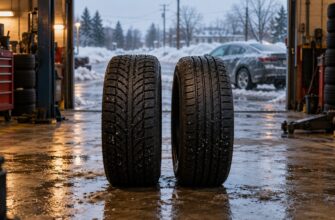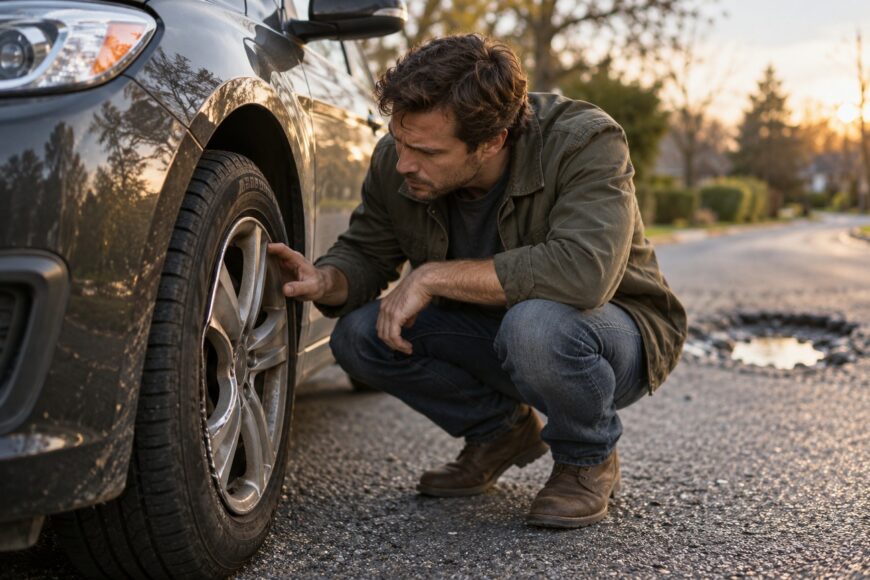
The steering wheel starts to shake after a pothole, even though the wheel looks round. A balance service may quiet the vibration for a while, only for it to return. A bent wheel is one possibility, but the tire and other parts of the vehicle can produce similar symptoms.
The first step is to separate clues from proof. Notice when the vibration happens, check for visible impact damage while the vehicle is parked, and take any sign of tire failure seriously. A shop can then determine whether the trouble lies in the rim, tire, or vehicle before you spend money on the wrong repair.
- Signs of a Bent Wheel While Driving
- What to Check After a Pothole or Curb Strike
- Bent Wheel, Bad Tire, or Something Else?
- How a Shop Confirms a Bent Wheel
- When to Stop Driving—and When to Arrange an Inspection
- Repair or Replace a Bent Wheel?
- Frequently asked questions
- How expensive is it to fix a bent rim?
- What should I check before buying a used replacement wheel?
Signs of a Bent Wheel While Driving
A slight bend may be invisible, yet vibration is often most noticeable around 60–100 km/h, though the range varies. You may feel it through the steering wheel at one speed and find that it fades as you slow down or speed up. That speed-specific pattern is a reason to inspect the wheel assembly, not proof that the rim is bent.
Vibration through the seat or body can be another clue, particularly after an impact. A wheel that seems to hop on smooth pavement may have radial runout, which is vertical deviation as it rotates. Lateral runout is side-to-side deviation. Either can contribute to vibration and uneven tire wear, but a damaged or irregular tire can create much the same sensation.
Look for a new patch of uneven tread wear as well as a change in how the car feels. Wear develops over time, so it may be more useful for tracing a persistent fault than for assessing a pothole strike that happened minutes ago. Steering-wheel shake also has other possible causes; its location and timing help a technician narrow the search rather than identify a bent rim on their own.
What to Check After a Pothole or Curb Strike
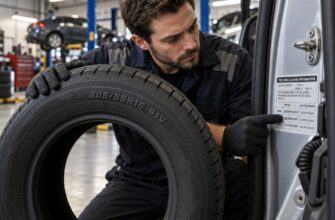
Park somewhere safe and look at the tire and wheel before driving farther. Check the accessible outer rim for a dent, sharp crease, or crack, and examine the sidewall and tread for a bulge, cut, or exposed cord. Compare the tire pressure with the vehicle’s specified pressure if you can check it safely. A visible bulge or cord damage needs attention even if the tire still holds air.
Damage can be on the inner rim or inner sidewall, where it is difficult to see with the wheel fitted. An impact may also disturb the tire’s seal against the bead seat, causing a slow leak that only becomes clear later. Do not reach beneath the vehicle to inspect the inner edge or treat a quick look from outside as clearance to continue driving.
An apparently round, inflated wheel can still have runout or a crack. If the impact was hard or a new vibration followed it, arrange a professional inspection of both tire and wheel. Recheck pressure if you notice it dropping, and tell the shop where the wheel struck the obstacle; that detail can direct attention to damage hidden from a casual view.
Bent Wheel, Bad Tire, or Something Else?
Balancing corrects uneven mass distribution; it does not straighten a wheel or eliminate geometric runout. Balancing an assembly can change how its vibration feels without resolving an underlying geometric fault, though a vibration that returns can also have other causes. If the shake remains or returns, another balance attempt alone may miss a bent rim, an irregular tire, or a mounting problem.
A tire with uneven wear or internal damage can seem to hop even when the rim runs true. Hub and suspension faults can also resemble a bent-wheel symptom. Vibration mainly felt while braking deserves a brake-related check, while vibration at a steady road speed directs attention toward the rotating wheel-and-tire assemblies without ruling out other faults.
If a shop swaps front and rear wheels and the vibration changes location or character, that implicates a wheel-and-tire assembly. It does not isolate the rim: the tire moves with it. Tell the technician when the symptom began, whether it changes with speed or braking, and what happened after any swap or balance service. Those observations are more useful than a guess about which part to replace.
How a Shop Confirms a Bent Wheel
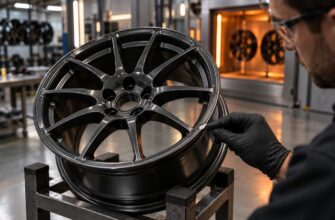
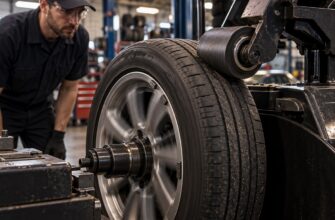
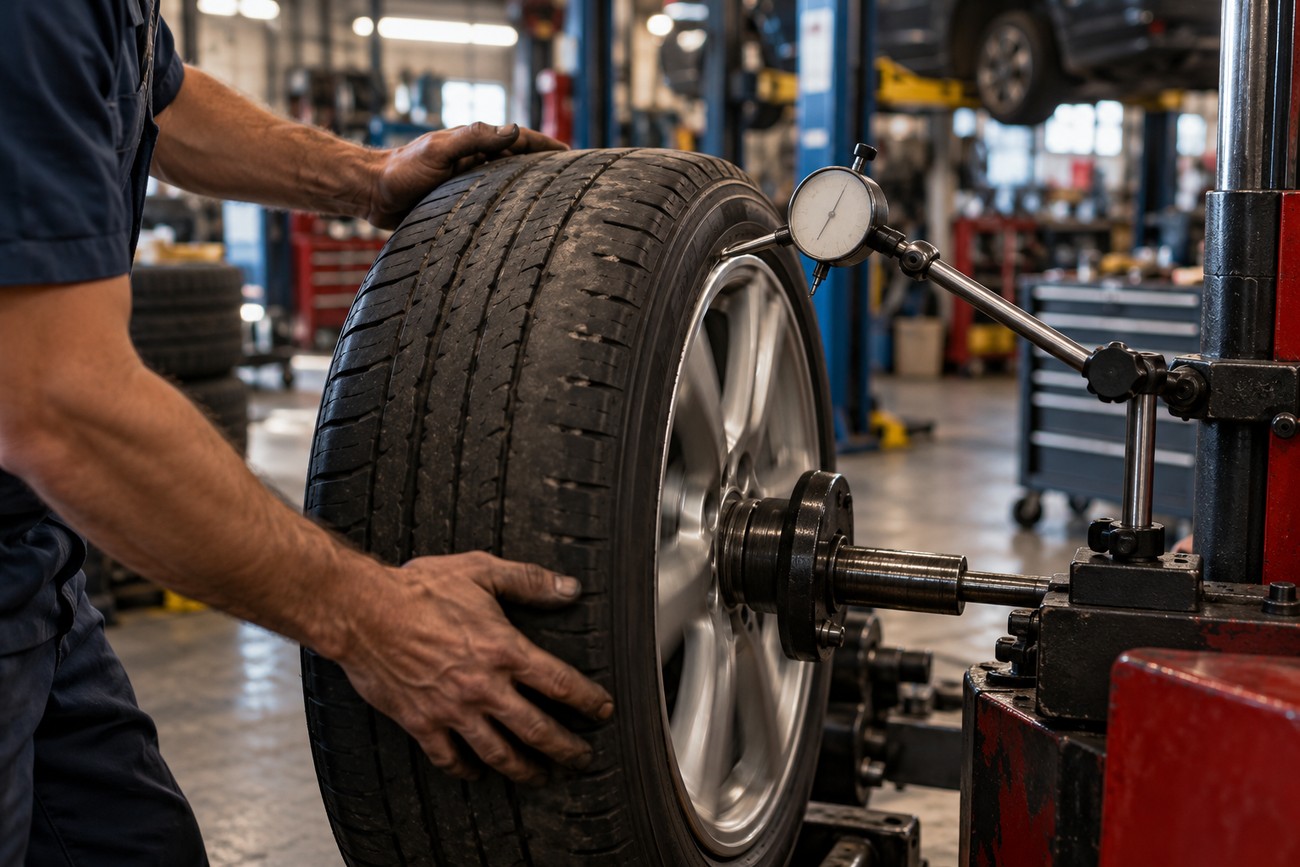
A technician can inspect a properly mounted assembly on a wheel balance or measure it with a dial indicator. These checks can reveal radial runout, or vertical deviation, and lateral runout, or side-to-side deviation. The technician should also examine the tire for irregularity and the wheel for cracks, particularly after a pothole or curb strike.
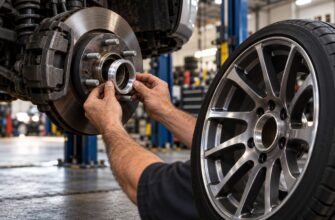
The mounting surfaces matter. Dirt, damage, or an issue at the hub can make an otherwise sound assembly appear to run poorly when fitted to the vehicle. Some service discussions cite about 0.5–1.0 mm of runout, but manufacturer limits vary; neither that range nor a larger figure is a universal pass-or-fail rule. A measurement needs to be judged against the specification for the wheel and vehicle.
Where the source of movement is unclear, checking rim runout separately from the tire helps distinguish wheel damage from tire irregularity. If the assembly measures acceptably on the machine but still vibrates on the car, the shop may need to check how it seats on the hub and inspect related vehicle parts. A visual-only verdict cannot settle those questions.
When to Stop Driving—and When to Arrange an Inspection
Stop safely and seek roadside help if you find a tire bulge, a visible wheel crack, rapid pressure loss, or a severe wobble. These are signs that the tire or wheel may no longer be safe to use. Avoid testing whether the vibration disappears at another speed; doing so adds load to a component that may already be damaged.
A new, persistent vibration after an impact calls for a prompt inspection even when the wheel looks straight. Continued driving can worsen tire damage, and an inflated tire is not necessarily an undamaged one. A slow leak at the bead or a defect on the inner sidewall may escape a roadside visual check.
A mild shake with no visible damage is not automatically an emergency, but it should not be ignored or repeatedly masked with balancing. If handling changes, the vibration grows, or pressure falls, stop and reassess rather than continuing to an appointment. There is no single driving speed that makes an uninspected, damaged wheel safe.
Repair or Replace a Bent Wheel?
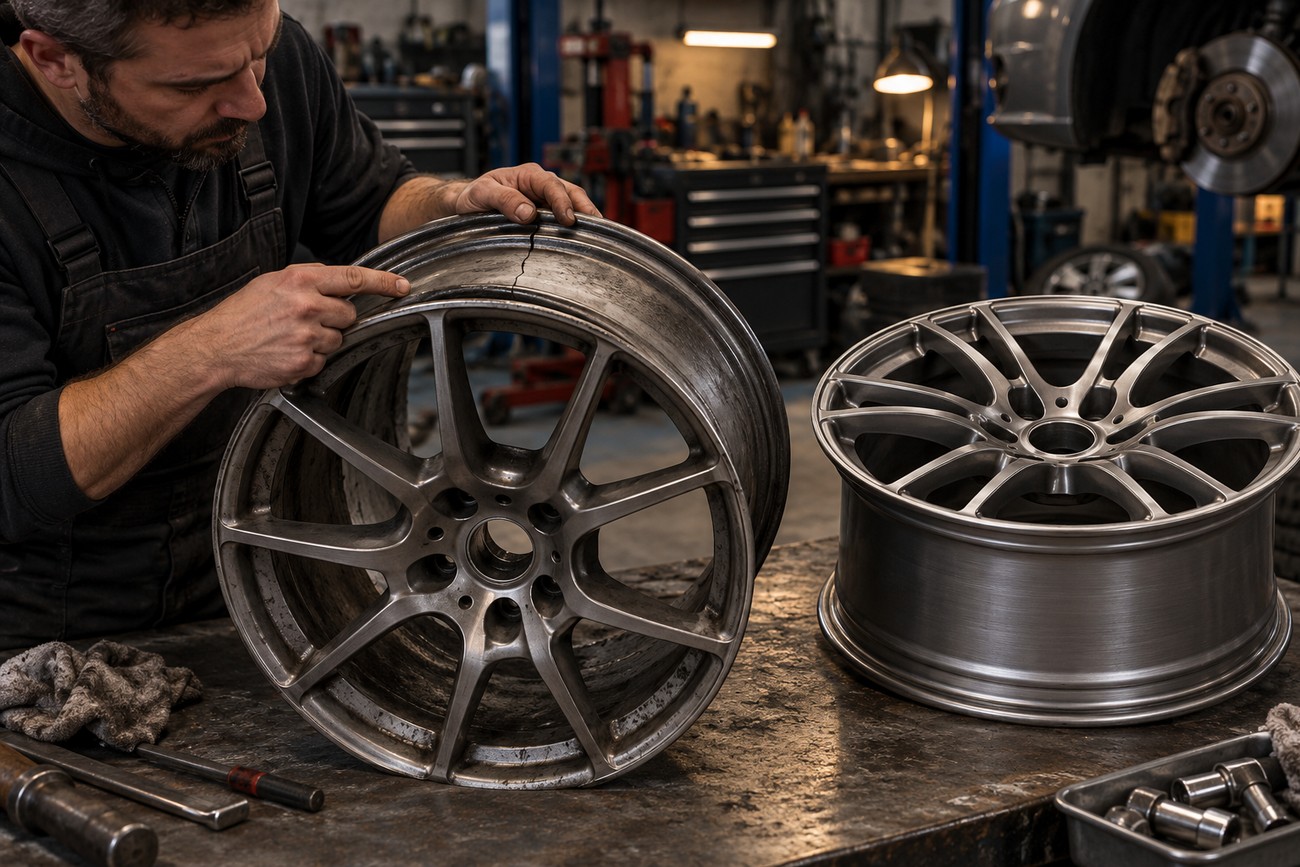
Some minor bends in steel wheels may be repairable after a professional assessment. Cracks, severe creases, and damage to the bead seat where the tire seals commonly favor replacement. The decision should account for the condition of the tire as well as the rim; fitting a sound wheel does not make an impact-damaged tire safe.
Alloy-wheel repair depends on the damage location, repair method, and inspection findings. A wheel can have cracking that is not obvious from its outward shape, while repeated straightening or excessive heat can reduce confidence in the damaged area. Ask the shop to explain what it found and why the proposed repair is suitable for that particular wheel.
Straightening may leave residual runout, so a repaired wheel needs a geometry and crack check, followed by remounting and balancing as appropriate. Check pressure and sealing during the first trips after repair, especially if the impact affected the bead area. Do not assume a wheel has regained its original condition merely because the steering shake has stopped.
Replacing a bent wheel does not itself require a wheel alignment. If the vehicle pulls, the steering wheel sits off-center, or tire wear becomes abnormal after the impact, arrange an alignment and suspension check. The same strike that damaged a wheel may have affected other parts, and a new wheel will not correct those faults.
Frequently asked questions
Cost and replacement decisions depend on what an inspection finds. Before approving work or buying another wheel, establish whether the tire is sound and whether the rim is suitable for repair or reuse.
How expensive is it to fix a bent rim?
A quote may include inspection, tire removal, straightening if appropriate, remounting, and balancing. Ask which steps are included and whether the shop will verify runout and sealing afterward. If the wheel is cracked, sharply creased, or damaged at the bead seat, replacement may be safer and more economical than attempting a repair that cannot be confidently checked.
What should I check before buying a used replacement wheel?
Confirm the wheel’s fitment for your vehicle, including its size, mounting pattern, offset, and load suitability. Have it checked for cracks, bead-seat damage, and measured runout before mounting a tire; a clean-looking used wheel can still be distorted. A successful fit does not establish that it will run true or seal properly.