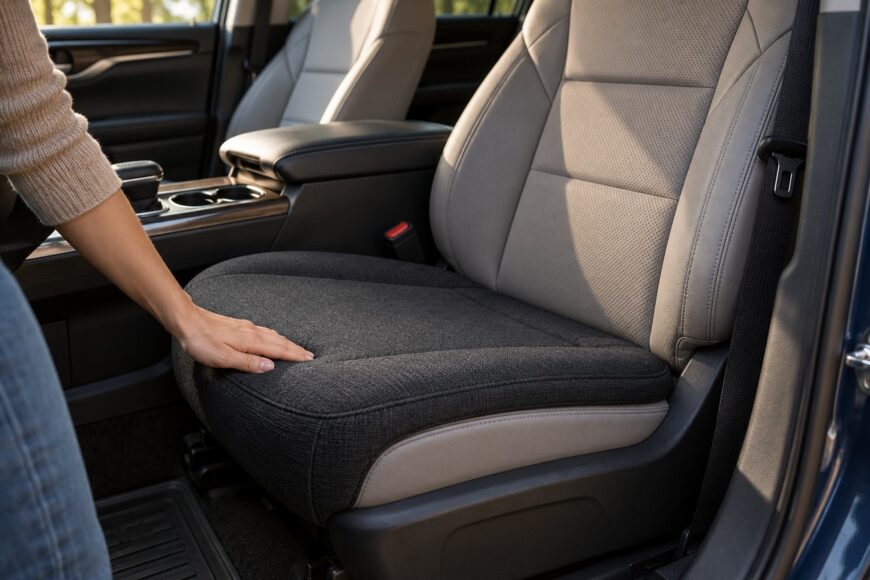
A seat cover has to protect upholstery without compromising comfort, fit, seat functions, or side-airbag deployment. That balance matters more than the amount of fabric it covers. A loose universal cover can bunch under you, while a thick waterproof layer may make a ventilated seat feel hot and damp.
Safety claims need the same scrutiny as fit claims. Side airbags are often integrated into the front seatbacks, and an “airbag compatible” label alone does not establish that a cover suits your vehicle. Start with the vehicle manual and the exact seat design, then choose the least coverage that meets your needs.
- What Seat Covers Protect—and What They Cannot
- Airbag Safety Comes Before Coverage
- Comfort Depends on Material, Breathability, and Thickness
- How to Choose a Precise Fit Without Losing Seat Functions
- Common Seat-Cover Mistakes and Hidden Drawbacks
- Installation Checks That Prevent Problems Later
- Frequently asked questions
- Who makes the most comfortable seat covers?
- What is the most comfortable car seat cover material for long drives?
- How can I verify an airbag-compatible seat cover before buying it?
- What is the best website for buying custom-fit seat covers?
What Seat Covers Protect—and What They Cannot
A removable cover can take the wear that would otherwise reach the upholstery: muddy clothing, small spills, pet hair, and repeated rubbing where people get in and out. It can also be easier to remove for cleaning than a stained factory seat. Protection depends on coverage and fit, though; a cover that slides aside leaves the fabric beneath exposed.
For routine mess from children or pets, covering the entire seatback may be unnecessary. A cushion-only protector can shield the area most likely to collect crumbs, dirt, and moisture while leaving the seatback and its side-airbag area uncovered. Check that it stays in place and does not obstruct belt buckles or a passenger-seat function.
A cover cannot prevent every kind of seat wear. Sitting on a side bolster while getting into the car can still compress the foam beneath it, and excessive loads can affect the seat structure. Fabric over the surface also cannot correct damaged padding, a loose frame, or an unsuitable seating position.
Choose the smallest effective barrier for the mess you expect. A washable cushion protector may serve a family car better than a padded full cover; a full cover may make sense for broader upholstery wear if the vehicle permits it and the fit is sound. Neither replaces prompt spill cleanup or careful use of the seat.
Airbag Safety Comes Before Coverage
Side airbags are often integrated into the seatbacks of the front seats; their exact placement varies by vehicle. Before buying a cover, check the owner’s manual and identify the relevant airbag area on your seats. An opening or seam that appears suitable on another car may be on the wrong side or in the wrong position on yours.
Vehicle-maker instructions can rule out a cover even when its packaging makes broad compatibility claims. Kia warns against accessories and seat covers in the side-airbag deployment area. Lexus warns that non-genuine material or construction can impair side-airbag operation and recommends genuine covers for relevant vehicles. Follow the guidance for your specific vehicle rather than assuming either warning applies identically to every model.
In the United States, NHTSA has no separate Federal Motor Vehicle Safety Standard directly regulating aftermarket seat covers and no mandatory certification specifically for them. That does not make safety irrelevant: a modification must not disable a factory safety device, including a side airbag, and manufacturers remain responsible for safety-related defects in their automotive equipment. “Airbag approved” is therefore not, by itself, evidence of a required government approval.
A suitable seatback-cover design needs a purpose-built tear seam aligned with the airbag location on the correct side of the seatback. Extra material, straps, or tension across that area may affect deployment even if the cover looks smooth. No label can substitute for the vehicle manual and a close look at the cover’s construction.
Keep the restraint system in perspective: an airbag is designed to work with the seat belt, not replace it. A cover must leave the belt, buckle, and seating position usable as intended. If those basics are compromised, upholstery protection is a poor trade.
Comfort Depends on Material, Breathability, and Thickness
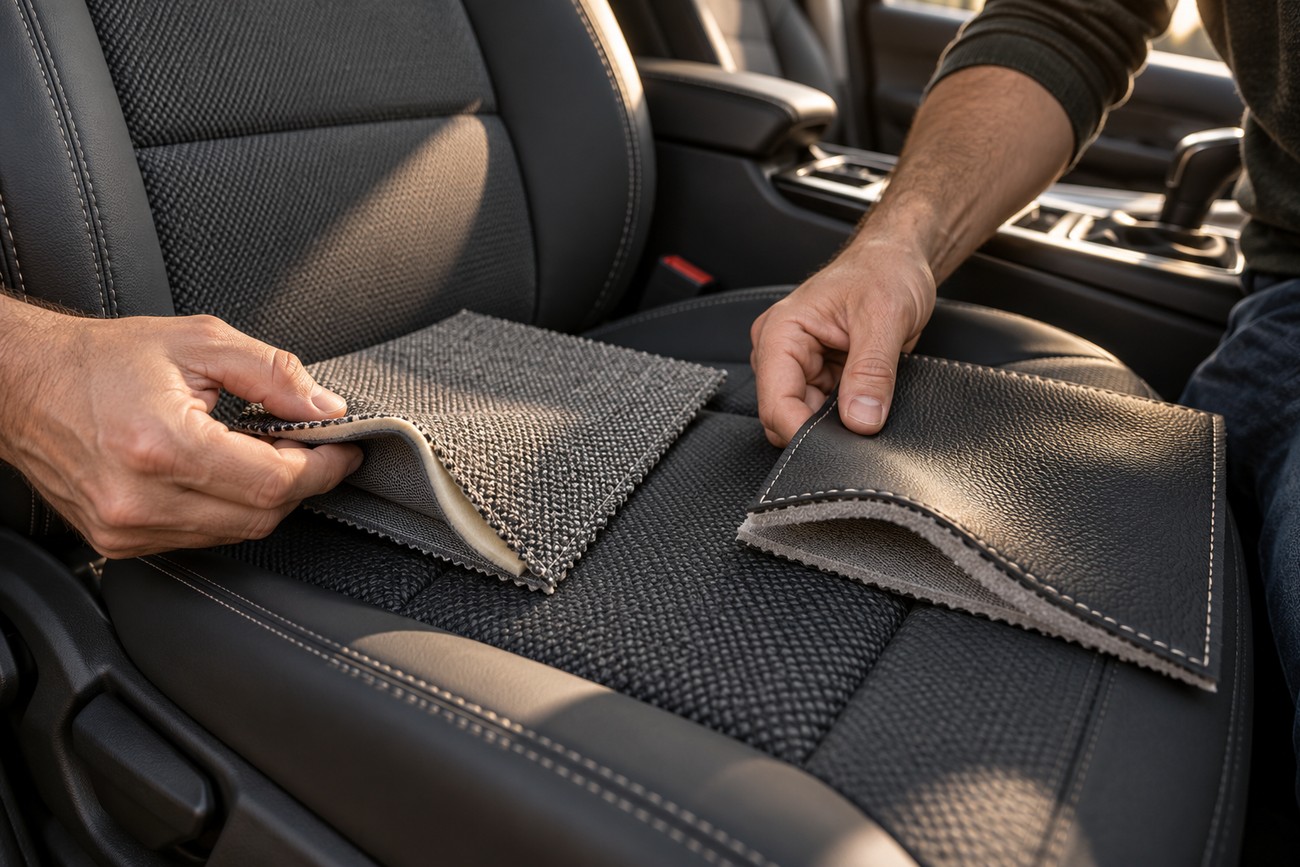
Fabric is often a sensible starting point if you want a seat surface that breathes and feels familiar over a long drive. Neoprene and synthetic leather can be easier to wipe after some messes, but dense or non-breathable versions may hold heat and moisture against your clothing. Synthetic surfaces may also feel colder than factory cloth at first in winter or produce static in dry conditions.
Read material claims separately. Water resistance describes one property; “100% waterproof” and fire resistance describe others. None proves the other two. A waterproof backing may protect the upholstery from a spill while reducing ventilation and retaining perspiration on a warm journey.
Thickness changes comfort as much as surface texture does. Heavy padding can raise you in the seat, shift where the backrest supports your lower back, and make a buckle harder to reach. Test the seating position with your usual clothing rather than judging a padded cover only by how soft it feels in your hands.
Ventilated and heated seats add another constraint. An impermeable layer can sharply reduce airflow from a ventilated cushion, while a thick cover can change how heat reaches you from a heated seat. Check compatibility before paying for a material feature that prevents a factory feature from working well.
How to Choose a Precise Fit Without Losing Seat Functions
Begin with the vehicle year, model, trim, and seat configuration, then compare the cover maker’s stated application with the owner’s manual. Confirm whether the front seatbacks contain side airbags and whether the manufacturer permits the proposed cover. “Universal” describes a broad pattern; it does not guarantee compatibility with occupancy sensors, heating, ventilation, or power-seat movement.
Measure beyond cushion width. Check backrest length, headrest shape, side bolsters, and attachment points, then locate belt buckles, adjustment levers, and controls. A tight-looking cover that hides a buckle or pulls against a lever is not a precise fit.
Locate the factory side-airbag marking or seam before routing any attachment. Keep every strap and fastener away from the deployment area before tightening the cover; tightening first can pull an otherwise aligned panel across that area.
For a seat that permits covers, favor a vehicle-specific pattern with a purpose-built, side-specific tear seam and clear installation instructions. Ask the seller how the design matches your exact seat, rather than accepting a printed compatibility label alone. Pockets, decorative straps, hook-and-loop fasteners, and extra overlays must not cover or constrain the side-airbag area.
Common Seat-Cover Mistakes and Hidden Drawbacks
Persistent slipping is a fit problem, not a maintenance routine. If the cushion creeps forward or the backrest gathers into folds after ordinary use, repeated tightening is unlikely to turn an unsuitable pattern into a good one. Folds can change how you sit and make the surface less comfortable on longer trips.
A cover can look neat yet still create a problem at the side of the backrest. Tight fabric may pull across the factory airbag seam and change the tension or resistance of the material in that area. Judge the seam’s position and freedom from obstruction, not the smoothness of the front panel.
Heat and moisture are quieter drawbacks. Dense synthetic leather or non-breathable neoprene can sharply reduce airflow from ventilated seats, while a waterproof layer can leave clothing damp with perspiration. If you mainly need protection from occasional dirt, a removable, more breathable protector may be a better match.
Thick or insulated covers can also change posture, belt access, and heat transfer. Do not use seat heating beneath one unless the vehicle or cover manufacturer confirms compatibility; overheating, heater damage, and warranty concerns are possible. A generic assurance that the cover fits the seat does not answer that heating question.
Finally, pay attention to sounds and hardware after fitting. New squeaks, a cable held taut beneath the seat, or a buckle that takes extra effort to reach are signs of interference. Removing an unsuitable cover is preferable to living with those faults because the upholstery looks protected.
Installation Checks That Prevent Problems Later
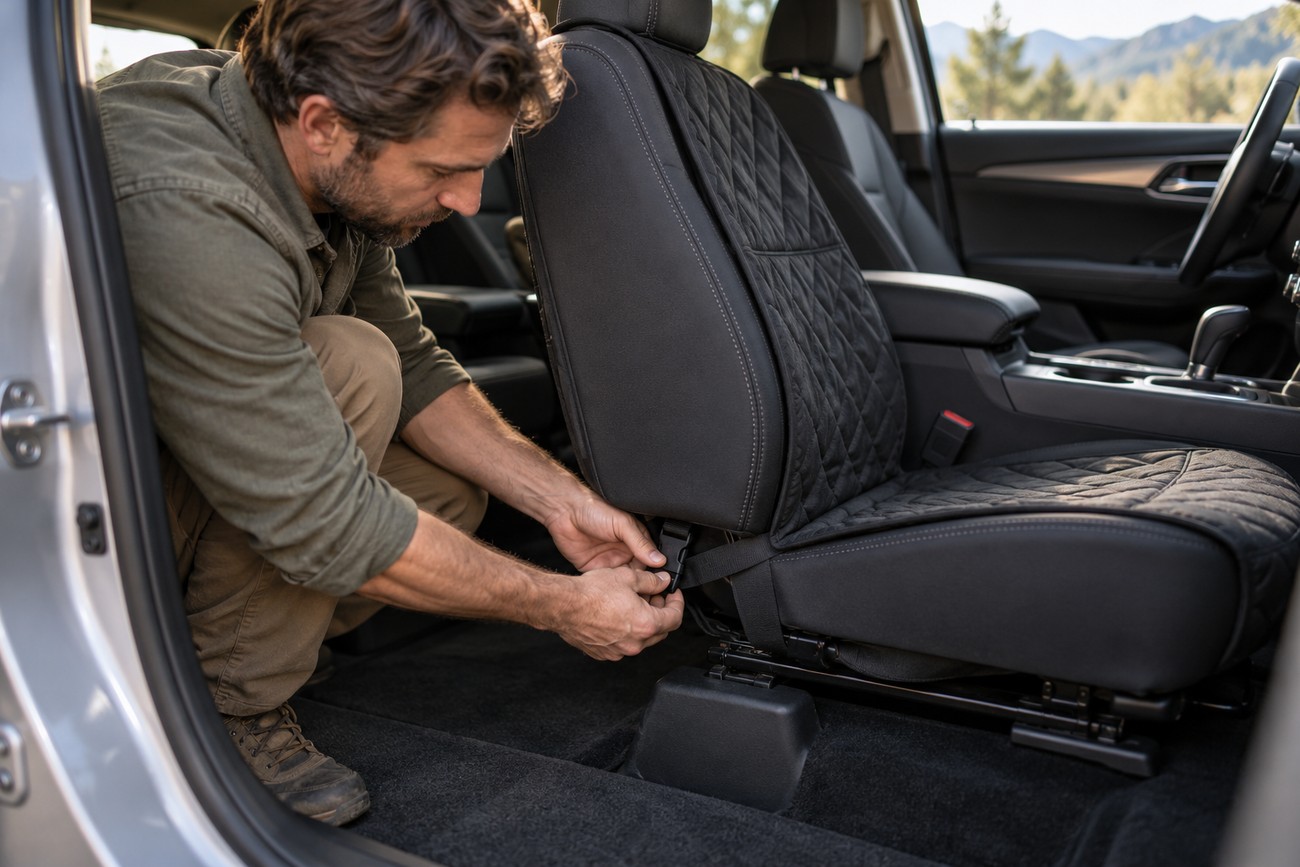
Read both the vehicle and cover instructions before installation, and confirm the side-airbag location. Fit only the panels and attachments intended for your exact seat. Keep the deployment area clear, and look beneath the seat before securing anything so a strap cannot pinch wiring or enter the seat mechanism.
Once fitted, move the seat through its full forward and backward travel and recline range. Check the belt path and buckle access in normal seating positions, then operate the adjustment levers and power controls. Look underneath again for stretched cables or attachments that have shifted into moving parts.
Test heating and ventilation only if the relevant instructions allow their use with the cover. Notice whether airflow is restricted, warmth feels uneven, or the cover changes your posture. These checks are easier to make before the cover has collected dirt and become difficult to return.
Remove a cover that shifts, squeaks against moving parts, strains wiring, blocks a buckle, or obstructs the factory airbag marking or seam. Do not cut a new opening, reroute a strap through an unapproved point, or add an overlay as an improvised fix. Seek a properly specified alternative, or use less coverage.
Frequently asked questions
The best purchase depends on your exact seats and the kind of protection you need. Treat fitment details, material information, and return terms as evidence you can check before ordering. Broad comfort or safety slogans offer much less help.
Who makes the most comfortable seat covers?
No single maker is best for every vehicle. Look for a seller with patterns specified for your model and seat configuration, breathable material options, documented compatibility with your seat functions, and instructions you can review before purchase. A usable return policy matters because you may only discover pressure points or poor fit after placing the cover on the seat.
What is the most comfortable car seat cover material for long drives?
A thin, breathable fabric is often a better starting point for long drives in warm weather, especially over a ventilated seat. If spills are frequent, weigh easier cleaning against the heat and moisture that a waterproof synthetic layer may retain. Climate, clothing, seat heating, and the shape of your existing seat all affect the result, so avoid thick padding unless you have checked how it changes your driving position.
How can I verify an airbag-compatible seat cover before buying it?
Request confirmation for your exact vehicle and seat configuration, plus clear images or instructions showing the purpose-built tear seam on the correct side of the seatback. Compare those details with the airbag location and cover guidance in your vehicle manual. “Airbag compatible” is a seller claim, not proof of mandatory government certification for aftermarket covers; if the seller cannot explain the construction, choose another product.
What is the best website for buying custom-fit seat covers?
Use a retailer that lets you select the exact trim and seat configuration, shows the side-airbag seam clearly, and provides installation documents before checkout. Check that support can answer questions about sensors, heating, and ventilation for your vehicle. Read the warranty and return conditions closely, including whether a carefully test-fitted cover can be returned if it obstructs a control or fails to fit.