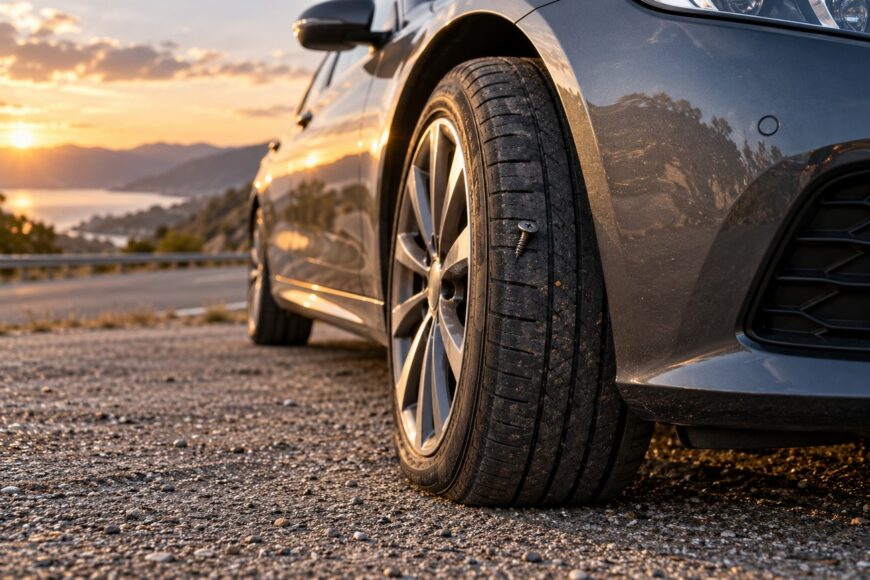
A run-flat tire can give you enough mobility to leave a dangerous stretch of road without changing a wheel beside traffic. After some punctures, you can slow down and reach a safer stopping place or a tire shop. That limited escape is its strongest advantage.
The trade-off is less obvious until you live with the tires. A run-flat driven without pressure may need replacing even if the puncture looks small, while its firmer ride and higher replacement cost affect ownership long before an emergency. The choice is whether that chance to keep moving is worth the everyday compromises on your car and your routes.
- What a run-flat tire actually does
- The advantages: mobility when stopping is risky
- The disadvantages you notice before a puncture
- What to do when the TPMS warns of pressure loss
- Why a small puncture may still mean a new tire
- Run-flat vs conventional tires: the ownership trade-offs
- Who should buy run-flats—and what to check before switching
- Frequently asked questions
- How many years should run-flat tires last?
- Why is BMW moving away from run-flat tires?
What a run-flat tire actually does
Run-flat tires use reinforced sidewalls or support structures to carry the vehicle’s weight for a limited distance after pressure loss. The tire can still be punctured; its construction helps it keep enough shape to move the car temporarily. It is an emergency mobility feature, not a puncture-proof casing.
Post-puncture driving is commonly limited to about 50 miles. Some tire designs cite up to 100 miles under specified conditions, but neither figure is a guaranteed allowance for every car or journey. The limits for your tire and vehicle take priority.
A deflated run-flat may look almost inflated when viewed from outside the car. A working tire-pressure monitoring system (TPMS) is therefore essential in practice: appearance alone cannot reliably tell you when the tire has lost air. Check pressures as directed for your vehicle rather than waiting for a warning or a visibly sagging tire.
The advantages: mobility when stopping is risky
The main benefit appears when a puncture happens somewhere you should not stop immediately. Limited mobility may let you leave a busy road and find a safer place before dealing with the tire. It can also help you reach a suitable service location if one is within the tire’s permitted range.
Some cars supplied with run-flats are designed without a spare wheel. That can change how the storage area is arranged, though any space or weight benefit depends on the vehicle. Check what your car actually carries; the absence of a spare also matters if the tire cannot support continued driving.
Run-flat capability depends on the type and extent of damage. A severe impact, sidewall cut, or structural failure can leave the car unable to continue. Even after a smaller puncture, the advantage is useful only if you can reach a safe destination within the applicable limits.
The disadvantages you notice before a puncture
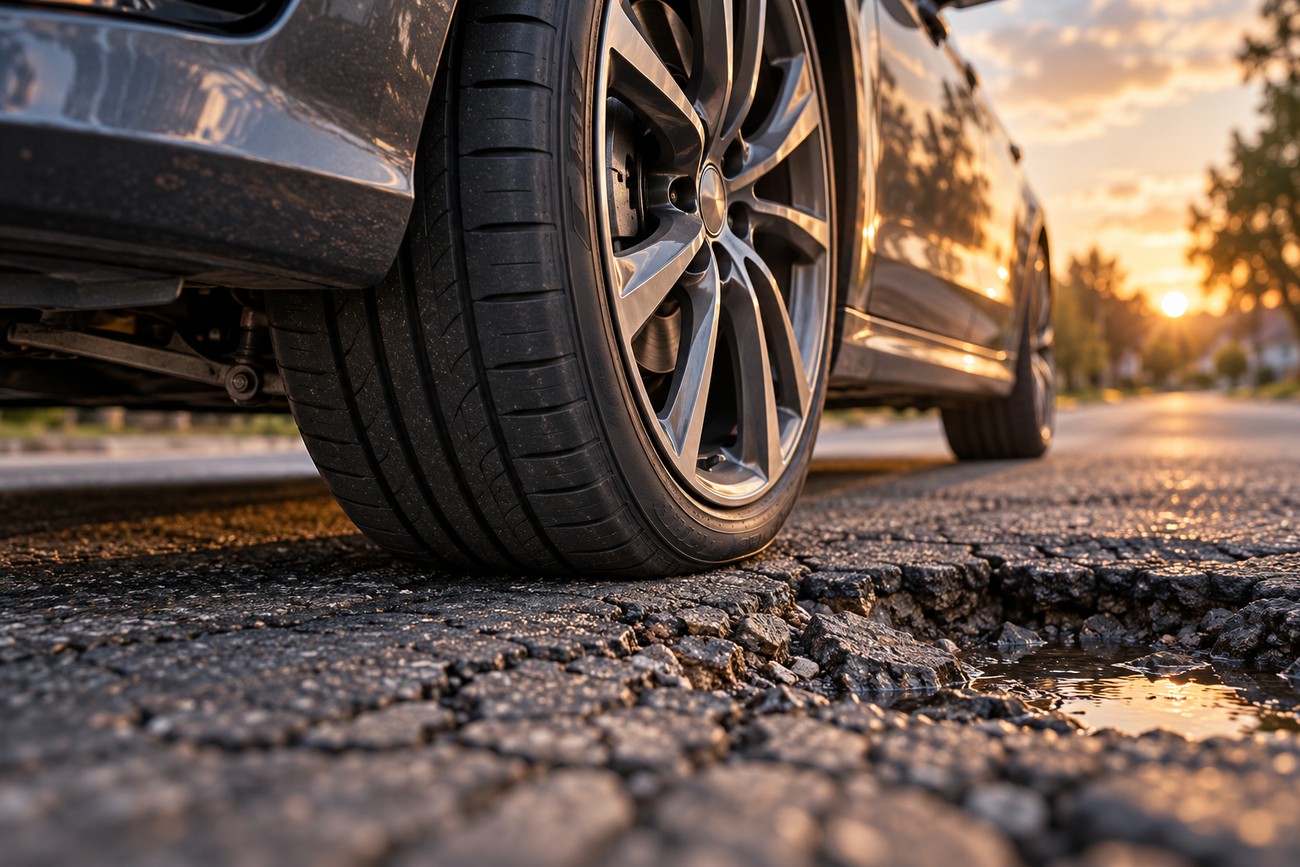
Reinforced construction can make a run-flat feel firmer over broken pavement and transmit more vibration into the cabin. Noise may also be more noticeable, particularly on rough roads or cars with large wheels. Ride complaints vary with the tire, vehicle, road surface, and state of wear.
Sharper impacts can raise concern about wheels and suspension on pothole-heavy routes. Owners report bent rims and harsh jolts, but run-flats do not inevitably damage those components. Wheel size, road conditions, and impact severity also matter.
Run-flats generally cost more to replace than conventional tires. Reported price premiums range from about 25% to 100%, depending on the tire and market; that range is context for budgeting, not a surcharge you can assume at a particular shop. One reported comparison also found run-flats lasted about 6,000 miles less on average than conventional tires, although individual tread life varies.
Availability can compound the expense. A shop may be able to service run-flats yet lack the exact size or model your car needs, leaving you waiting for a replacement. Checking local stock and service capability is especially useful if you travel through areas with few tire shops.
What to do when the TPMS warns of pressure loss
Ease off the accelerator and slow down safely when the TPMS warns you. Avoid hard braking, sharp steering, and other abrupt maneuvers while you assess where to stop. Do not dismiss the alert because the run-flat still looks properly inflated.
Check the tire-specific instructions and your vehicle guidance as soon as you can do so safely. If the tire remains capable of supporting the car, head toward a suitable service location within the stated speed and distance limits. If the car feels unstable or the tire is visibly damaged, stop in a safe place and arrange assistance instead.
About 50 miles is a commonly cited limit for post-puncture driving, while some designs cite up to 100 miles under specified conditions. Neither gives you permission to drive at normal speed. Load, temperature, speed, and time spent driving without pressure all affect the remaining safe margin.
A tire that appears to hold air again still needs assessment. Driving while it was underinflated may have damaged it internally, and adding air does not reverse that damage. Tell the tire shop about the warning and any distance driven afterward.
Why a small puncture may still mean a new tire
The visible hole is only part of a repair decision. When a run-flat carries the car without adequate pressure, its internal structure can be damaged in ways you cannot see from outside. The distance driven and the tire’s condition therefore matter alongside the puncture itself.
Repair eligibility depends on the tire maker’s guidance, damage location, and condition after inspection. Some shops decline a repair because they cannot establish that the tire remains safe, even when the hole looks minor. That does not make every run-flat automatically unrepairable, or every small puncture repairable.
If replacement is needed, the exact run-flat may not be available immediately. The shop may also need to consider the other tire on the axle, including its size, specification, and remaining tread, when advising on a suitable match. Ask about those requirements before approving a replacement that differs from what is already fitted.
Run-flat vs conventional tires: the ownership trade-offs
The practical difference depends as much on your vehicle’s equipment and nearby service options as on the tire itself.
| Consideration | Run-flat tires | Conventional tires | When it matters |
|---|---|---|---|
| After a puncture | Can provide limited mobility after some punctures, commonly about 50 miles; some designs cite up to 100 miles under specified conditions. | Driving on a deflated tire can damage it and compromise control. A spare or repair kit depends on the vehicle. | Run-flats can help you leave an unsafe stopping place, within the tire and vehicle limits. |
| Everyday ride | Stiffer construction can feel firmer and noisier, especially on rough roads or large wheels. | May offer a softer ride, depending on the tire and vehicle. | Frequent travel on poor roads makes ride feel worth checking before purchase. |
| Purchase cost | Generally more expensive; reported premiums vary by tire and market. | Often costs less for a comparable purchase, though prices vary. | Compare local replacement quotes, particularly if your size is uncommon. |
| Repair assessment | Needs assessment under the maker’s policy; hidden damage after pressure loss may rule out repair. | Repair also depends on damage location and tire condition. | A small visible hole does not guarantee an inexpensive repair for either type. |
| Local availability | The required model or size may need to be ordered. | Options may be broader, but stock still depends on the size and location. | Confirm stock and fitting capability before relying on quick service. |
Who should buy run-flats—and what to check before switching
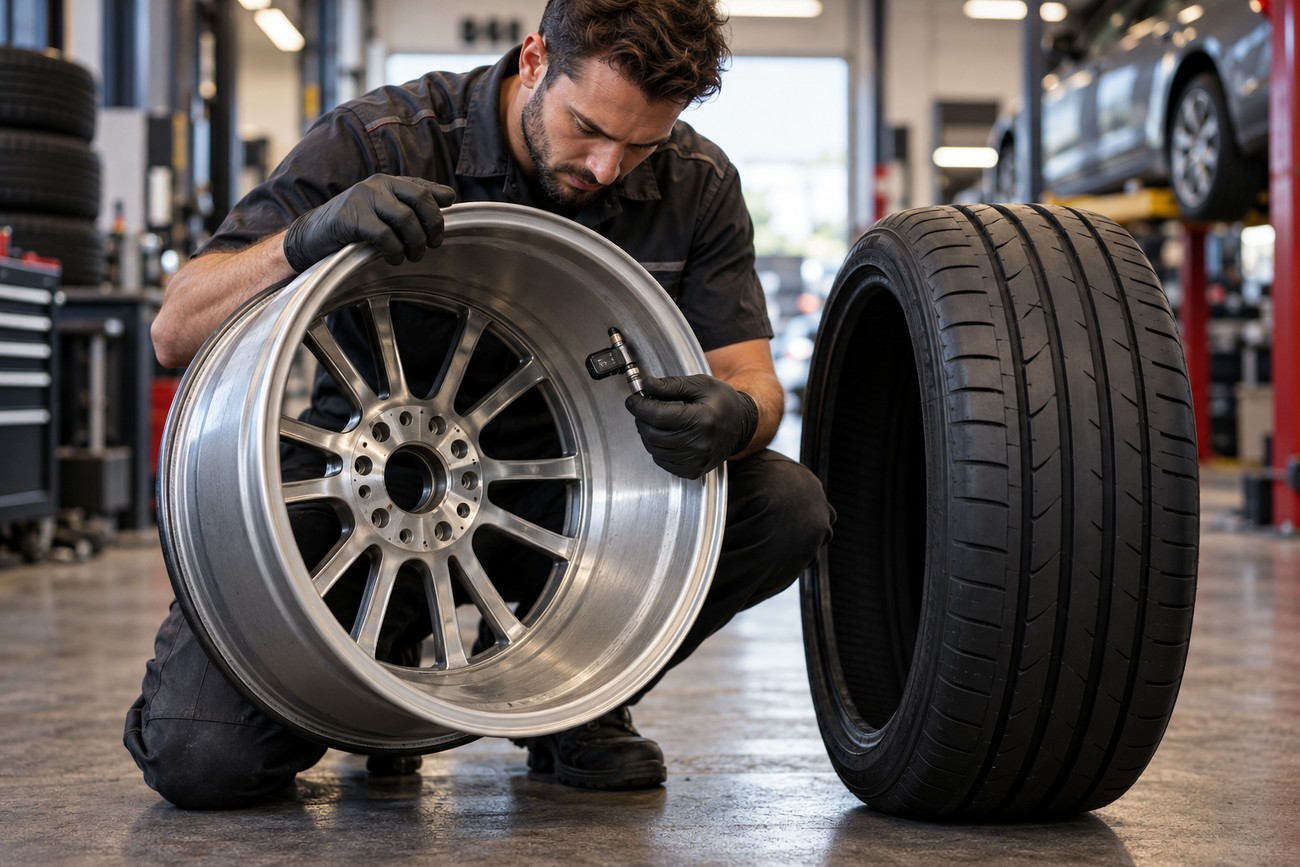
Run-flats make the strongest case if avoiding an immediate roadside stop is a high priority. Drivers who regularly use busy roads may value the chance to reach a safer place after a manageable puncture. That benefit has to be weighed against the ride and replacement costs experienced during ordinary driving.
Your usual routes also shape the decision. Rough pavement and large wheels can make a firmer tire more noticeable, while limited tire-shop coverage can turn an uncommon replacement size into a delay. Before buying, check that a reachable shop stocks or can obtain the correct tire and has the equipment to handle it.
If your car was supplied with run-flats and you want conventional tires, check the vehicle manufacturer’s guidance first. Confirm the approved tire fitment, pressure guidance, and TPMS operation. Also establish whether you will have a suitable spare-wheel arrangement or repair kit afterward; a change of tire type does not supply an emergency plan.
Any setup changes depend on the specific car and should be verified rather than assumed. Keep the TPMS working whichever tire type you choose, and seek vehicle- and tire-specific advice before mixing types or changing fitment. Run-flats are a sensible choice when limited puncture mobility outweighs their potential comfort and cost penalties for you; conventional tires may suit you better when those daily factors take priority and you have another workable puncture plan.
Frequently asked questions
Two ownership questions need vehicle- and tire-specific answers rather than a universal replacement rule.
How many years should run-flat tires last?
There is no universal calendar replacement age established by the tread-life comparison. Its reported average difference of about 6,000 miles concerns distance to wear, not how many years a tire remains fit for service.
Check the tire maker’s age and inspection guidance, and have the tires assessed for wear or damage as appropriate. A tire can require attention before its tread is used up, so mileage alone is not a complete condition check.
Why is BMW moving away from run-flat tires?
A brand-wide move away from run-flats is not established here, so there is no single confirmed reason to assign to BMW. Tire fitment can differ by model, configuration, and market; a change on one vehicle does not establish a policy for every vehicle.
For a particular BMW, check its manufacturer fitment guidance and the equipment supplied with the car. Those details will tell you more about your replacement options and puncture plan than a general claim about the brand.