A key fob can become useless with little warning: the buttons stop responding, the locks remain still, or the remote works only when you stand beside the vehicle. Before buying a replacement, troubleshoot the simple causes first. A discharged battery or poor battery contact is the most common cause of key-fob failure.
Similar symptoms can come from worn buttons, damaged contacts, radio interference, the vehicle battery, or the car’s receiver. A fob that has been dropped or exposed to moisture may also have hidden circuit-board damage. Some problems are suitable for careful home repair, while others require testing equipment and should be handled by an automotive locksmith or electronics specialist.
- Why a Key Fob Stops Working
- Replace the Battery Without Damaging the Fob
- What to Check When a New Battery Does Not Help
- Resynchronization, Programming, and Safe Testing
- Repair or Replace the Key Fob?
- Frequently asked questions
- Why did my key fob stop working out of nowhere?
- How much does it cost to get a key fob repaired?
Why a Key Fob Stops Working
A weak or discharged battery can cause a gradual reduction in range before the fob stops responding completely. Poor battery contact can create the same symptom, especially if the contacts are bent, dirty, or oxidized. If the remote works only when held close to the vehicle, the battery is one possibility, though it is not the only one.
Radio interference can disrupt fob or alarm operation near airports, restricted facilities, armored vehicles, and heavy traffic. In such places, the fob may appear dead while the vehicle and remote are both functioning. Moving the car away from the area and testing again can separate a temporary signal problem from a hardware fault.
Age and physical damage create other common failures. Worn buttons and contact pads may respond inconsistently, while a cracked housing can allow moisture inside. Corrosion, antenna damage, receiver faults, and PCB solder cracks can also interrupt the signal even when a fresh battery is installed.
The vehicle must be included in the diagnosis. A weak vehicle battery, a faulty receiver, or a problem in the alarm module can prevent a good fob from operating. Test the spare remote if one is available, and check whether the vehicle starts with the immobilizer system or emergency key; those results help distinguish a remote-control fault from a vehicle-side fault.
Replace the Battery Without Damaging the Fob
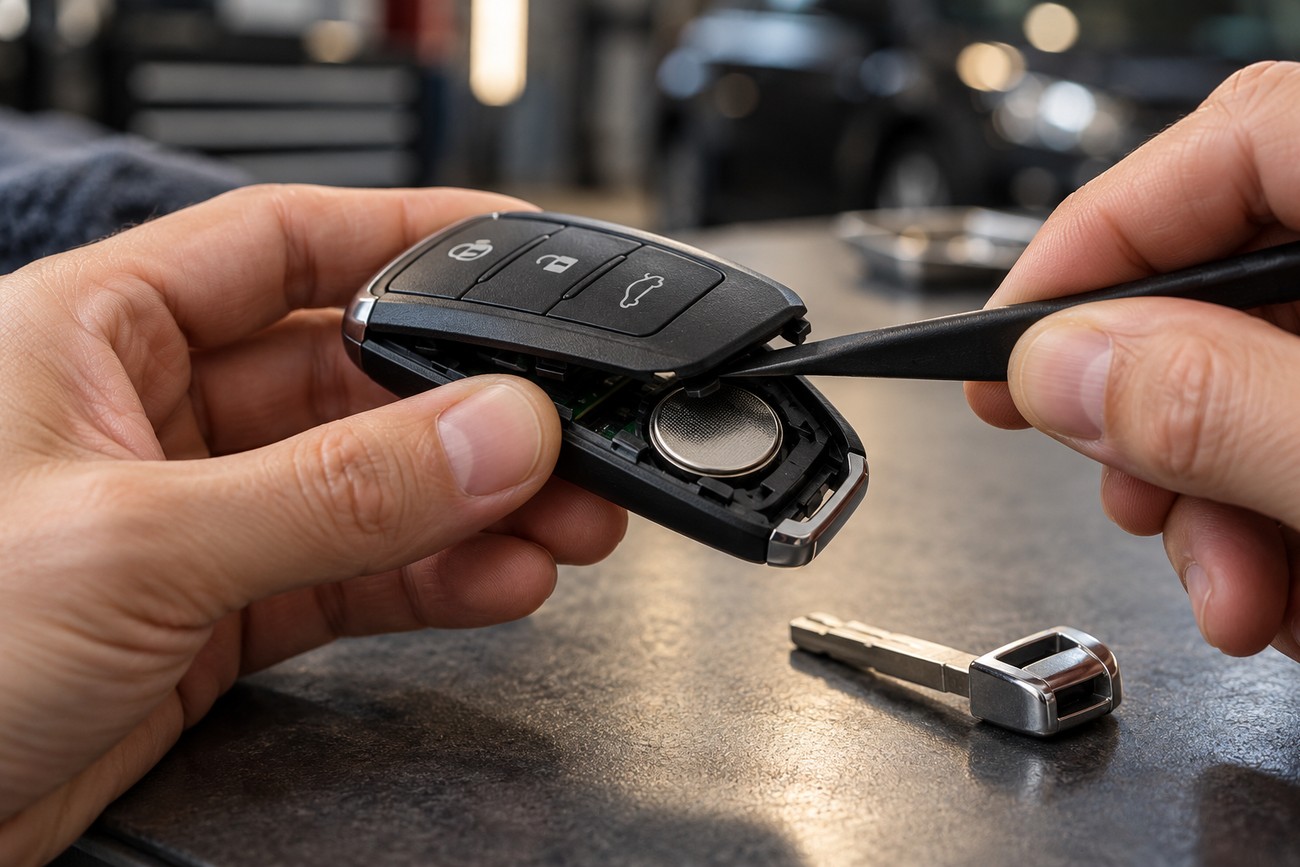
Begin by removing the emergency metal key if the fob has one. This can make some housings easier to open and reduce the force needed around the case. Look for the intended seam or opening notch rather than forcing the first gap you find.
Use a plastic pry tool or pick rather than a metal screwdriver. A plastic tool is less likely to mark the housing, break retaining clips, bridge electrical contacts, or damage the circuit board. Work around the seam gradually, applying light pressure at the designed opening points.
Before removing the old cell, note its position and polarity. CR2032 is one of the most common automotive key-fob batteries, but the replacement must match the original specification. Install the positive and negative sides exactly as shown by the original battery position.
Inspect the contacts before closing the case. They should press firmly against the battery and remain free of dirt or oxidation; gently correct a visibly displaced contact without scraping the board. Refit the housing evenly so the clips engage, then test the buttons before treating the repair as complete.
What to Check When a New Battery Does Not Help
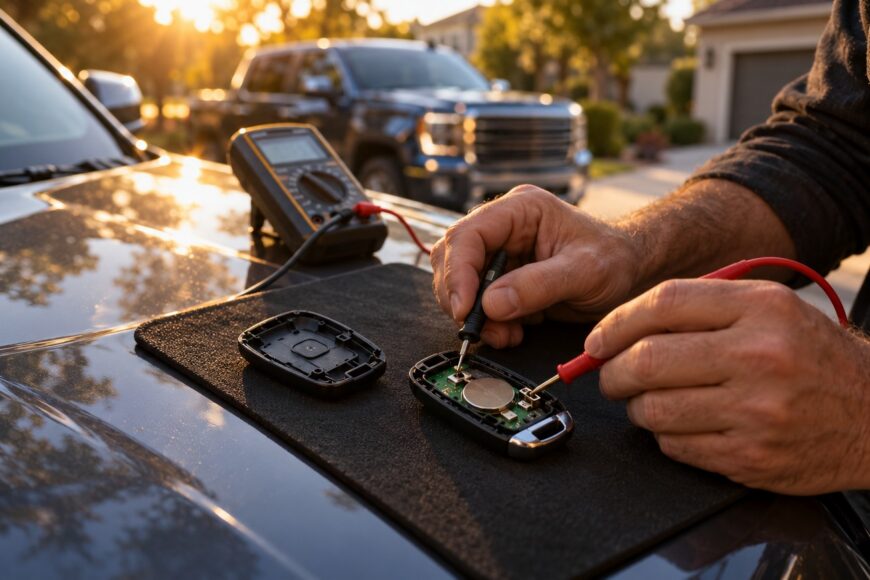
If a new battery produces no response, check whether it is seated firmly and whether the contacts are bent or oxidized. A replacement cell cannot supply power through a poor connection. Light surface contamination may be cleaned carefully, while a loose or damaged contact may require soldering or replacement.
Next, inspect the button mechanism. Rubber button membranes can wear through, and the small contact pads on the circuit board can become unreliable after repeated use. If one button fails while others work, the fault is more likely local to that button or its contact area than to the battery.
Water and impact damage need closer examination. Moisture can leave corrosion that continues spreading after the case dries, while a drop can create invisible microcracks in solder joints or detach a contact. A new shell or button membrane cannot repair a damaged circuit board, broken antenna connection, or weakened radio path.
Reduced range has several possible causes. Interference, antenna or radio-path weakness, and contact problems can all produce a remote that works only close to the vehicle. Test the fob at a different location, compare it with a spare, and verify the vehicle battery and receiver before concluding that the remote electronics have failed.
If these checks do not identify the fault, stop applying force or heat to the board. Fine solder work and radio-section diagnosis require suitable tools, and an attempted repair can turn a repairable contact or button fault into permanent board damage.
Resynchronization, Programming, and Safe Testing
Some vehicle models work immediately after battery replacement; others require resynchronization or reprogramming. The correct synchronization method depends on the vehicle and fob model, so a procedure copied from another make can waste time or create confusion. Use the vehicle-specific instructions where available.
Separate remote-control failure from key or immobilizer operation. A remote signal may fail while the emergency metal key still unlocks the door, and the vehicle may still recognize the transponder for starting. These functions can use different parts of the key system.
After the battery change or synchronization attempt, test the fob in a consistent order:
- Check lock and unlock response beside the vehicle.
- Test every button, including trunk, panic, or sliding-door controls where fitted.
- Repeat the test from increasing distances and note any sudden range limit.
- Move away from a suspected interference source and test again.
- Compare the result with a spare fob if one is available.
If the model requires diagnostic equipment, or if programming erases the only working key, use a qualified automotive locksmith or appropriate vehicle service. Battery replacement does not guarantee immediate operation on every model.
Repair or Replace the Key Fob?
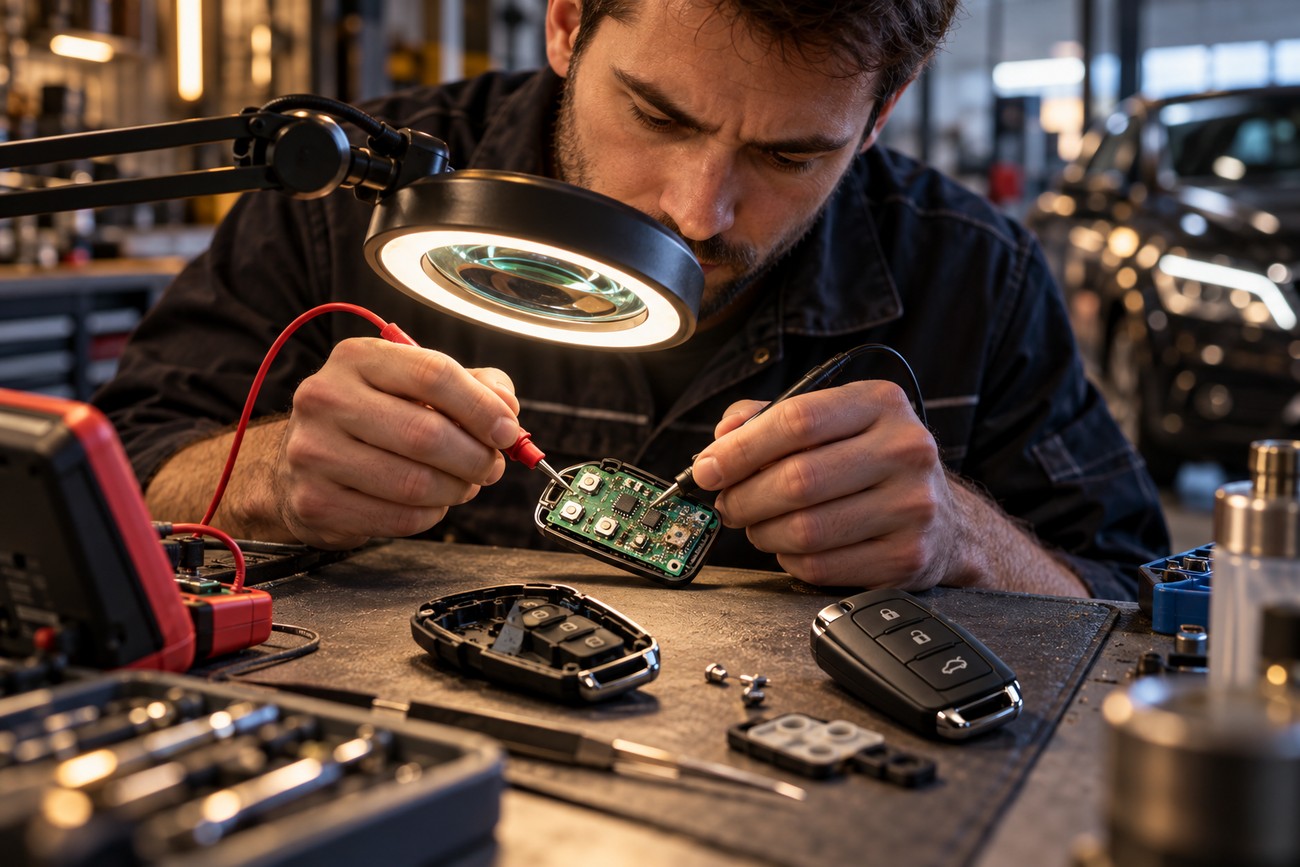
A battery, contact, button, or housing repair may avoid buying a complete replacement when the circuit board and radio functions remain sound. Some soldering faults can also be repaired after a proper inspection. The useful decision depends on the failed component rather than on the age or appearance of the case alone.
Replacement becomes more practical when the board has severe water damage, the radio section has failed, or multiple areas are damaged. A replacement housing can restore physical protection, yet it cannot solve cracked circuit-board traces or damaged soldering. Likewise, new buttons help only when the underlying electronic contacts still work.
Repair feasibility depends on the specific fault, fob model, board condition, and programming requirement. A technician may need to test the remote signal, inspect solder joints under magnification, and verify the vehicle receiver before giving a reliable recommendation.
Claims of a five- to fifteen-minute repair are marketing promises, not a universal quality or turnaround standard. Simple battery or shell work may be brief, while diagnosis, board repair, and programming can take longer. Ask what component has failed and whether programming is included in the proposed repair.
Frequently asked questions
Why did my key fob stop working out of nowhere?
A battery can decline gradually while the fob still works intermittently, making the final failure seem sudden. Start by checking the battery specification, polarity, and contact pressure. If only one button fails, inspect that button; if every button fails, consider the battery, contacts, synchronization, or board.
Interference is more likely when the fob works normally elsewhere or begins working after the vehicle is moved. A vehicle-side fault is more likely when a spare fob has the same problem, the vehicle battery is weak, or the receiver and antenna do not respond to any remote.
How much does it cost to get a key fob repaired?
There is no universal repair price because the quote depends on the failed component and the vehicle system. Battery and contact work usually involves less work than board repair, while buttons, a housing, radio-section damage, and programming each change the diagnosis.
The fob model, board condition, required testing, and whether resynchronization or diagnostic programming is needed also affect the final cost. Ask for a fault-based estimate rather than accepting a fixed promise before the remote and vehicle have been tested.