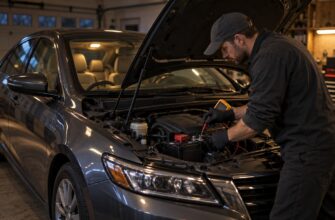
The steering wheel feels heavy as you turn into a parking space, then easier once the car starts moving. Tires resist turning more when they are nearly stationary, so parking can expose a developing problem before you notice it on the road. That pattern alone does not identify the cause.
Low front-tire pressure may be enough to increase the effort. A hydraulic system may be low on fluid or have reduced pump output, while an electric system may be receiving too little voltage or reporting a fault. Catching or uneven resistance can point toward a mechanical restriction. The safest fix starts with what the steering is doing, followed by checks you can make without dismantling anything.
- When hard steering means you should stop driving
- What the timing of stiff steering tells you
- Start with tires and the checks you can make safely
- Fixing hydraulic power-steering problems without masking a leak
- What to check when the car has electric power steering
- When the problem is binding, not the power assist
- Choose the repair from the evidence, not the easiest guess
- Frequently asked questions
- Why is the steering wheel hard to turn when the engine is off?
- What should I record if the steering only gets stiff sometimes?
- Why is my steering stiff at low speeds?
- Why is my steering wheel hard to turn when I slow down?
- What are the five possible causes for hard steering?
When hard steering means you should stop driving
A gradual increase in effort during parking calls for investigation, especially if it is new. Sudden loss of assistance is more urgent: the wheel may still turn, but the extra force needed can make a tight maneuver difficult to control. Pull over where it is safe and arrange a professional assessment rather than trying to confirm the fault with another drive.
Grinding, catching, or a wheel that resists turning and then releases raises concern for mechanical binding. Steering that is noticeably harder in one direction than the other also deserves a hands-on inspection of the steering and suspension. Do not try to overcome a sticking wheel by forcing it.
An EPS warning or battery warning accompanied by heavy steering warrants prompt diagnosis. Electric assistance can become unavailable when an assist or voltage problem develops, and the warning light alone does not identify the failed part. If steering is difficult to control, stop safely and arrange recovery or professional advice before moving the car again.
A wheel that has slowly become heavier, with no binding or warning light, does not automatically require a tow. It still needs attention: check the tires first, and avoid unnecessary driving if the effort is worsening or you cannot steer confidently.
What the timing of stiff steering tells you
Use these patterns as clues, not diagnoses. Note whether the change follows vehicle speed, engine speed, temperature, or turning direction before choosing a next check.
| What you notice | What it may suggest | Sensible next check |
|---|---|---|
| Heavy steering while parking or nearly stopped, easier once rolling | Stationary tires create more resistance; low tire pressure or reduced assist may make it conspicuous. | Check front-tire pressures against the vehicle placard and note whether the change is new. |
| Steering gets easier as engine speed rises while vehicle speed stays low | On an engine-driven hydraulic system, pump output or belt drive may be involved. The pattern does not identify which part has failed. | Check the fluid level and look for an obvious belt problem with the engine off; have output tested if needed. |
| Heavy steering with a whine that changes with engine speed | Low fluid, air entry, a drive problem, or pump wear may be involved. | Check the hydraulic reservoir as directed by the manual and look for wetness or foam. |
| Stiffness comes and goes without noise | An electric-assist fault or mechanical binding remains possible. | Record when it happens and whether one turning direction is worse. |
| Heavy steering with an EPS or battery warning | Electric-assist or system-voltage trouble may be affecting assistance. | Stop if control is difficult; arrange fault-code and charging-system diagnosis. |
| Unequal left-right effort, catching, or grinding | Mechanical binding or a steering-gear fault is a concern. | Arrange a hands-on inspection rather than another test drive. |
Start with tires and the checks you can make safely
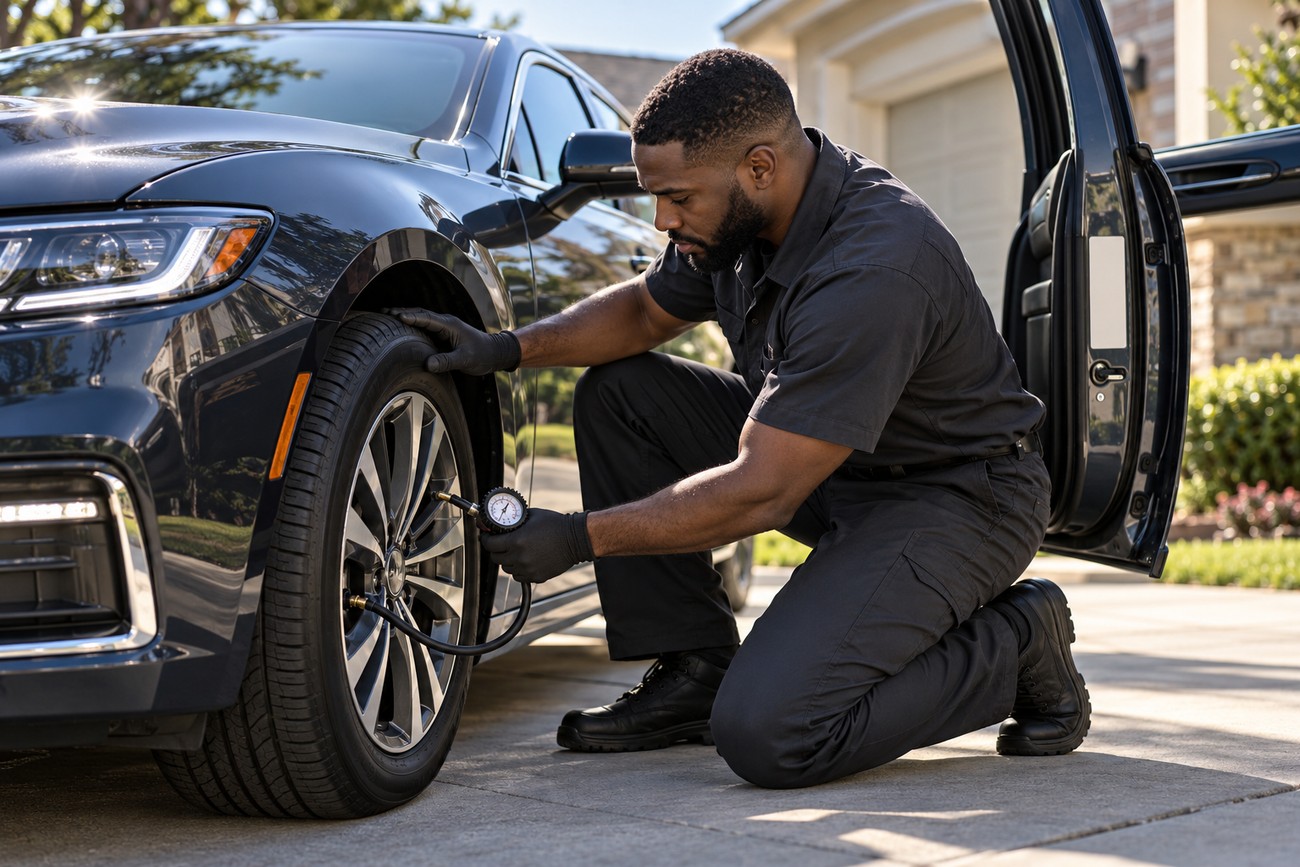
Check both front-tire pressures using the specification on the vehicle placard, usually found near a door opening, and correct them as directed. The number molded into a tire sidewall is not the vehicle’s recommended pressure. Look for visible tire damage as well; do not inflate above the placard specification to make the wheel feel lighter.
Next, identify the assist system in the owner’s manual. A conventional hydraulic system has fluid-related checks, while conventional electric power steering, or EPS, has no power-steering fluid reservoir. Some vehicles use elector-hydraulic assistance, so confirm the configuration instead of assuming it from the steering feel.
If the vehicle has hydraulic steering, follow the manual’s procedure for checking reservoir level; markings and checking conditions vary. Look for visible wetness around accessible hoses, connections, and the pump without reaching near moving parts. Inspect an accessible drive belt only with the engine off, and keep hands and clothing clear when the engine is running. A full reservoir does not establish that the pump, belt, or steering gear works correctly.
Write down whether the effort appears only at a standstill, at idle, after warming up, or throughout low-speed driving. These observations help separate engine-speed effects from the normal reduction in tire resistance once the car rolls. They are more useful than buying a pump before checking the tires and basic system condition.
Fixing hydraulic power-steering problems without masking a leak
A conventional hydraulic system uses pump-driven fluid to assist steering. If the reservoir is low, check the owner’s manual before adding anything: fluids sold as “power-steering fluid” are not universally interchangeable. Use only fluid that meets the vehicle manufacturer’s specification, and have the reason for the low level investigated.
If a top-up improves steering briefly and the stiffness returns, treat the improvement as evidence to follow up, not a completed repair. A technician may need to inspect hoses, connections, the pump, a cooler where fitted, and the rack boots for signs of escaping fluid. Repeated top-ups can hide an ongoing leak and leave assistance unreliable.
Foam or bubbles after a top-up can point to air entering through the pump’s suction-side plumbing, even when no fluid drips onto the ground. A whine that changes with engine speed strengthens the case for checking air entry alongside fluid level.
A slipping belt, restricted reservoir or filter, or weak pump can reduce assistance even when the reservoir looks full. If steering becomes easier as engine speed rises while the car remains at low speed, pump output and its drive deserve investigation; that response does not prove which component is at fault. Leave belt-drive diagnosis near moving parts and hydraulic pressure or flow testing to a technician.
The steering gear can also create excessive effort. Proper testing distinguishes inadequate hydraulic assistance from a restriction elsewhere before parts are replaced. A full reservoir of specified fluid cannot compensate for a binding gear or a pump that fails to deliver adequate pressure.
What to check when the car has electric power steering
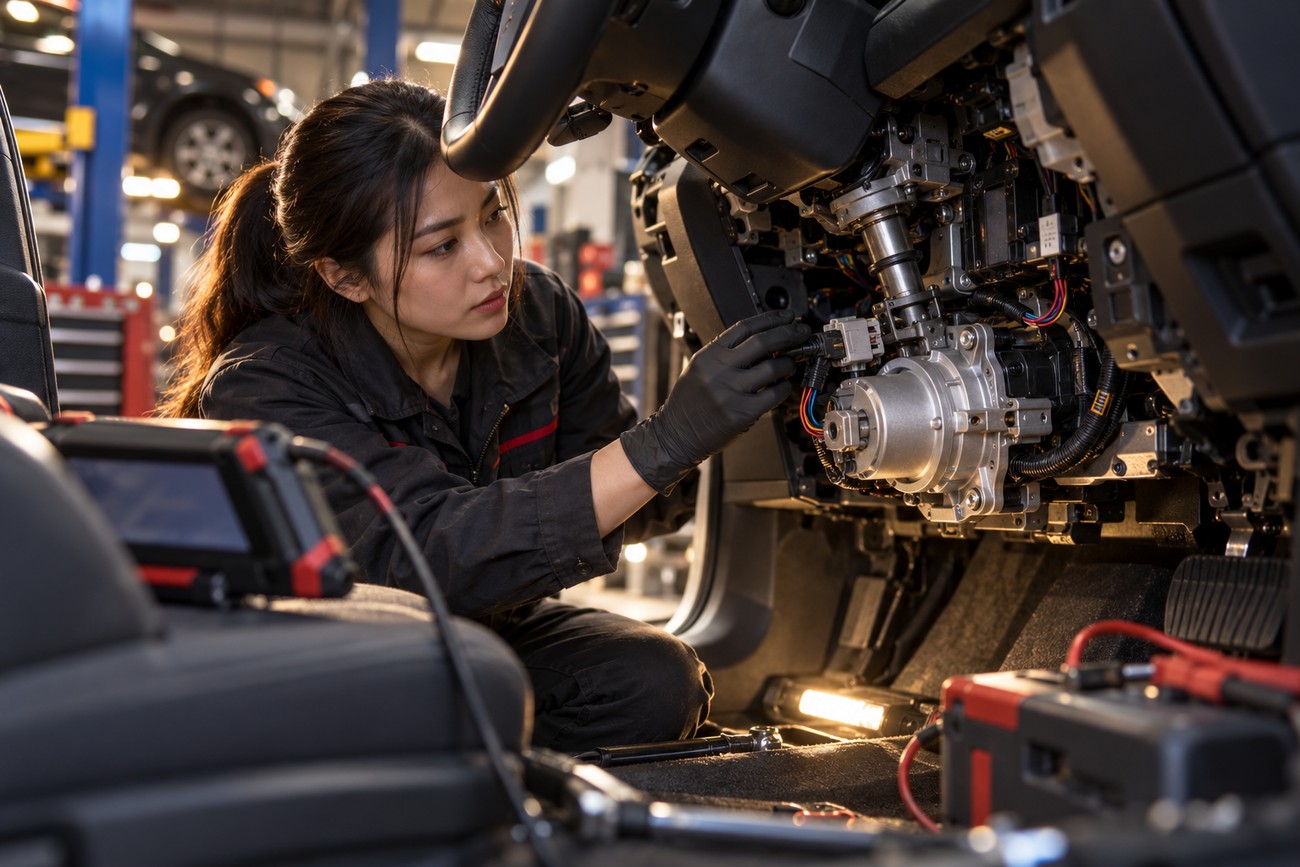
Conventional EPS provides assistance with an electric motor and has no power-steering fluid reservoir. A stiff wheel may result from a motor, control-module, torque- or angle-sensor, or low-voltage fault. Adding fluid because the steering feels heavy will not fix conventional EPS; check the vehicle’s configuration first, since elector-hydraulic systems also exist.
An EPS warning alongside heavy steering calls for fault-code diagnosis. A battery warning can point toward a charging or voltage problem that affects electric assistance, but it does not prove the EPS motor has failed. If either warning appears with a significant change in steering effort, avoid treating the car as safe simply because the warning later goes out.
With the vehicle parked and off, you can observe whether battery terminals appear loose or heavily corroded without attempting electrical repairs. Battery condition, charging output, wiring, stored fault codes, and assist operation are better checked with suitable equipment by a technician. Intermittent stiffness without noise still matters, so pass along the conditions under which it occurs.
When the problem is binding, not the power assist
Reduced assistance often makes steering heavier in both directions. Catching, grinding, or markedly different effort turning left and right raises a separate concern: a part may be physically resisting movement. A steering rack, tie rod, joint, or strut mount may need inspection, but the sensation alone cannot identify the part.
Notice whether the wheel sticks at a particular point in its travel or feels uneven as you turn it back. Do not keep forcing it or drive to reproduce the symptom. A hands-on inspection can locate the restriction and establish what needs repair.
If the change began after steering or suspension work, mention that timing to the technician. Incorrect wheel alignment can contribute to increased effort or a pull, and the repair work may also need checking. Alignment is a consideration, rather than an explanation to assume before inspecting the components.
Adding hydraulic fluid or raising tire pressure above the vehicle specification will not free a binding joint or steering gear. Address the restriction first; only then can the repair be verified without masking the original symptom.
Choose the repair from the evidence, not the easiest guess
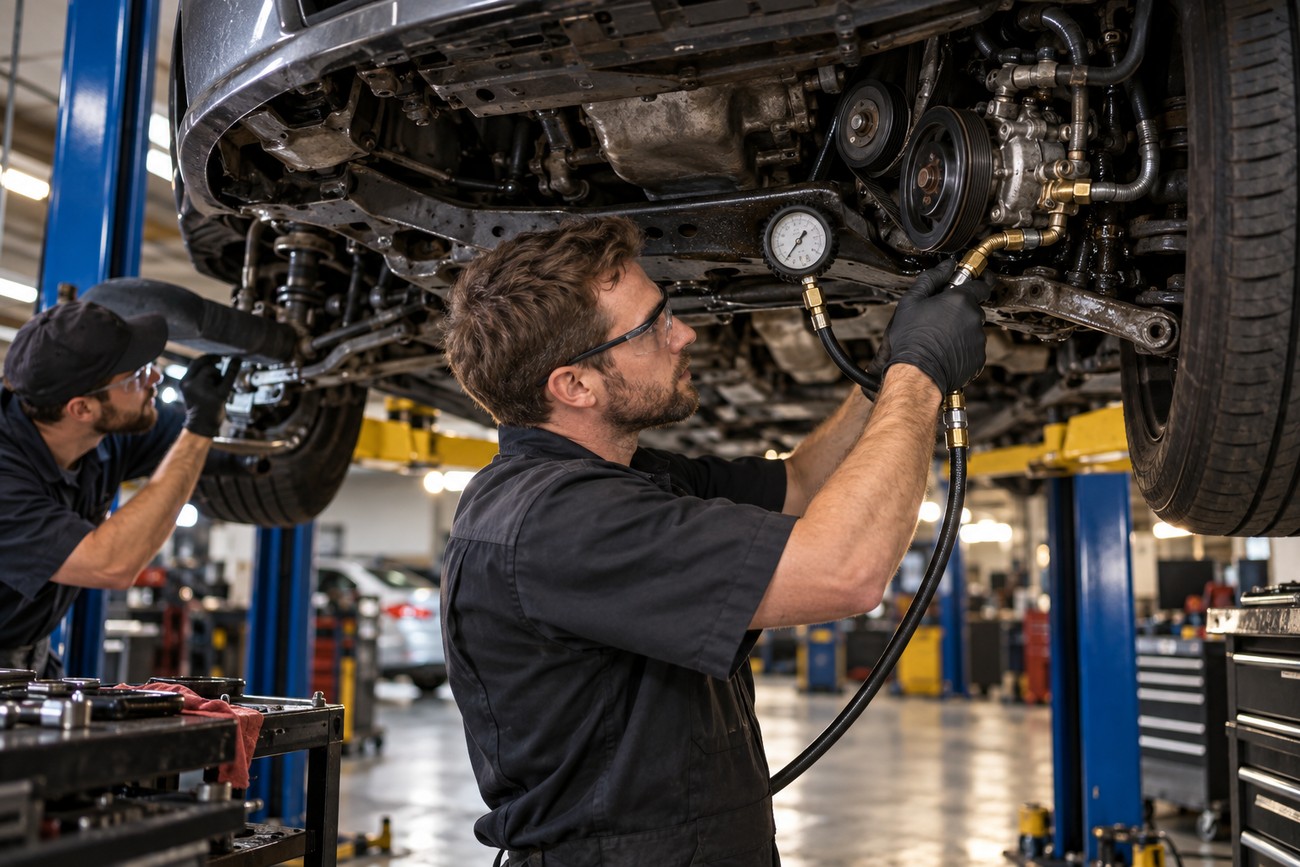
Start with the findings you can verify. Correct tire pressure to the vehicle placard specification. If hydraulic fluid is low, use only the specified fluid and arrange leak diagnosis; if air is entering, that cause also needs repair rather than repeated filling.
Have a technician check belt drive, restrictions, and pump performance when hydraulic symptoms point that way. For EPS, fault codes and charging-system tests help distinguish an assist fault from inadequate voltage. Catching, grinding, or unequal left-right effort calls for a physical inspection of steering and suspension parts.
Replacing a pump solely because parking takes more effort can waste money and delay the right repair. A full reservoir does not rule out inadequate pump pressure, and a quiet system can still have an electrical fault or mechanical binding. Use the pattern of symptoms to choose the test, then choose the part only after the fault is established.
Once the steering works normally, avoid holding a hydraulic system against full lock while stationary. That position puts high load on the system and pump; turn away from the stop rather than keeping pressure on the wheel.
Frequently asked questions
These distinctions can help you describe the problem accurately, especially when it appears only under certain conditions. If the wheel binds or suddenly becomes difficult to control, prioritize a safe stop over further checks.
Why is the steering wheel hard to turn when the engine is off?
On a vehicle with an engine-driven hydraulic pump, turning the engine off removes hydraulic assistance, so substantially higher steering effort can be normal. Compare the feel only after the engine is running and the system is operating. A new, marked increase in effort while the engine runs needs investigation.
What should I record if the steering only gets stiff sometimes?
Note whether the engine was running, whether it happened at idle or higher engine speed, and whether the car was cold or warmed up. Record the turning direction, any noise, and any EPS or battery warning light. Give the technician that short log, including occasions when the steering felt normal, rather than repeatedly driving to trigger the problem.
Why is my steering stiff at low speeds?
Nearly stationary tires resist turning more than rolling tires, making low tire pressure, reduced assistance, or binding easier to notice. First check pressure against the vehicle placard. If the stiffness is new or remains after correction, note whether it is equal in both directions and have the relevant assist and steering components checked.
Why is my steering wheel hard to turn when I slow down?
As the car slows, tire resistance during a turn becomes more noticeable; that change should not cause a marked new steering problem. Note whether the effort appears only near a stop or also while moving slowly, and whether an engine-speed change affects it. Those details help a technician separate tire resistance from an assist fault.
What are the five possible causes for hard steering?
Five broad possibilities are low front-tire pressure, a hydraulic fluid or air problem, a hydraulic pump or belt-drive fault, an EPS or voltage fault, and mechanical binding in the steering or suspension. They are categories to investigate, not five parts to replace. Warning lights, fluid condition, noise, and left-right differences help determine which check comes next.