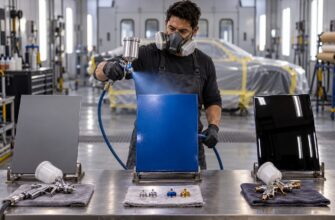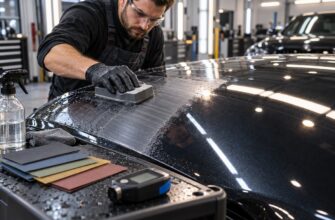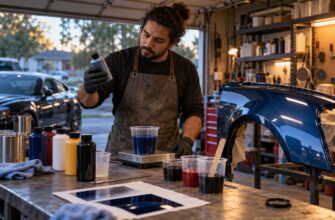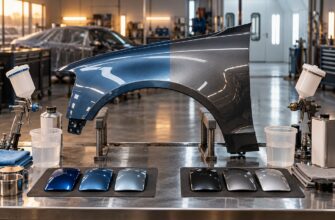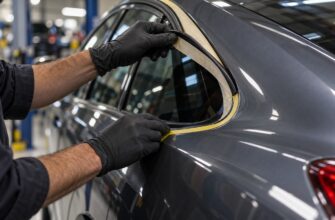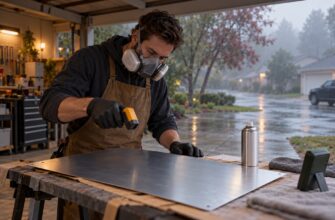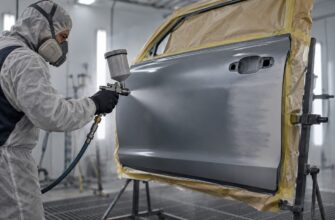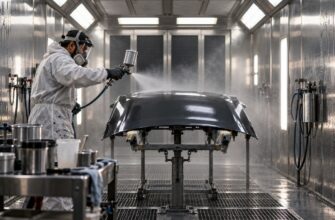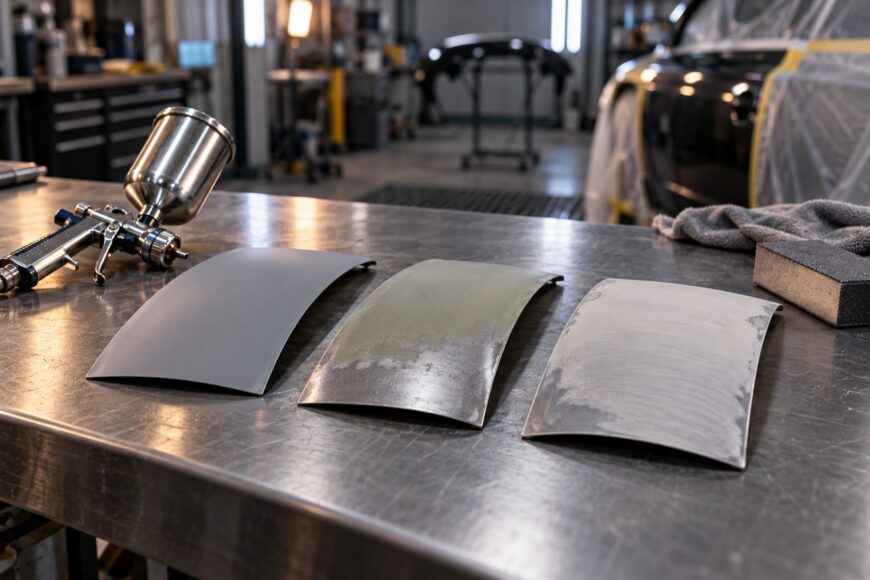
A repair panel can need two things at once: adhesion and corrosion protection where sanding has exposed metal, and a level surface where scratches or minor repair marks remain. Choosing a can simply because it says “primer” can leave the metal poorly protected or allow defects to show through the paint.
Epoxy primer, self-etching primer, and 2K urethane primer surfacer do different jobs. The right choice starts with the exposed substrate, then accounts for how much leveling is needed and which layers the coating system permits.
- Epoxy, etch, and urethane surfacer: which job fits each?
- Epoxy primer: the barrier beneath the repair
- Self-etching primer: adhesion without the build
- 2K urethane surfacer: the layer you block-sand
- Layer order: start with the substrate, then check the system
- Why a primed repair still peels, rusts, or shows scratches
- Frequently asked questions
- What safety precautions matter when spraying 2K urethane surfacer?
- What if I cannot identify the primer already on a panel?
- What are the three types of primers?
- What is the difference between a primer surfacer and an etch primer?
- Which is better, etching primer or epoxy primer?
Epoxy, etch, and urethane surfacer: which job fits each?
Use this as a job guide, then confirm approved substrates and next layers in the specific product system.
| Product | Primary job | Substrate considerations | Does not replace | Typical next layer |
|---|---|---|---|---|
| Epoxy primer | Adhesion and a corrosion-resistant barrier | Properly prepared, approved substrates, commonly bare metal | High-build surfacing | Approved surface or finish |
| Self-etching primer | Thin adhesion-promoting layer | Approved bare metals only | A complete corrosion-protection system or surface | Only a coat approved over that etch product |
| 2K urethane primer surfacer | Build and sandability for minor defects | Approved prepared layers; bare metal only if explicitly permitted | An approved metal primer or exposed finish | Approved sealer or finish after preparation |
Epoxy primer: the barrier beneath the repair
Automotive epoxy primer commonly combines a resin and hardener. Applied at the specified film thickness over properly prepared, approved metal, it provides adhesion and a corrosion-resistant barrier beneath the rest of the repair. Its value is protection within a coating system, rather than a thick layer to shape by sanding.
That barrier depends on contact with a sound substrate. Oil, sanding residue, corrosion, or moisture left on the panel can interfere with adhesion, regardless of the primer’s chemistry. Clean and prepare the metal as the product instructions require before mixing.
Epoxy may cover fine texture, but it is not a substitute for high-build primer surfacer when scratches or minor repair irregularities need leveling. If the panel still has visible sanding marks, use an approved surfacing step and check the result before applying color.
Nor should epoxy generally remain as the long-term exposed finish. Sunlight can affect its appearance, and an automotive epoxy primer is intended to sit beneath an approved finishing system. Observe its recoat window; waiting longer may change the preparation needed for the next layer.
Self-etching primer: adhesion without the build
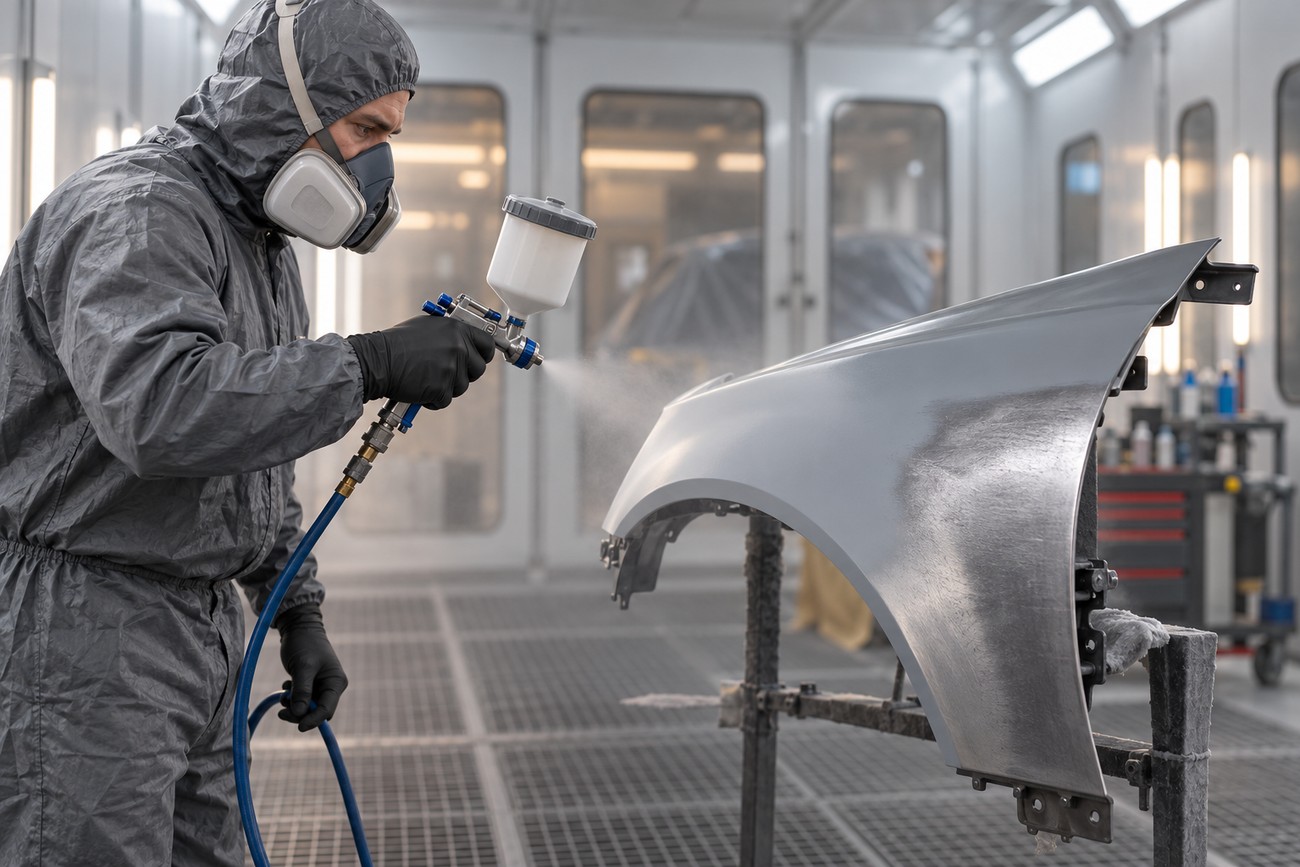
Self-etching primer is a thin adhesion-promoting layer for approved bare metals. Its metal-focused role makes it useful in certain refinishing systems, but a thin etch coat cannot fill sanding scratches or straighten a repair area. Film thickness and suitable metals vary by product.
Its purpose also differs from epoxy’s corrosion-resistant barrier. Treating self-etching primer as the entire corrosion-protection system can leave a repair short of the protection specified by the coating system. Check what must cover it and how soon that coat must be applied.
Layer compatibility is a common trap. Do not assume epoxy primer or polyester body filler can be applied over self-etching primer: some combinations are prohibited or require a different preparation sequence. The technical data sheets for the actual products determine which route is acceptable.
Keep etch primer confined to the surfaces for which it is approved. Spraying a broad area merely because a small spot has bare metal can complicate the next operation on adjacent existing paint or filler.
2K urethane surfacer: the layer you block-sand
A 2K urethane primer surfacer combines its specified components to form a buildable, sandable layer. It helps level sanding scratches and minor repair irregularities before color. Once cured as directed, block-sanding can reveal remaining low spots and produce a more even surface for finishing.
Build has limits. Deep damage still needs appropriate metalwork or repair materials; piling on surface can leave an uneven finish or require excessive sanding. Apply the permitted coats and film thickness, allow the specified flash and cure, then sand with the abrasive sequence required for the next layer.
Urethane surface is not automatically a direct-to-metal corrosion primer. Even if it adheres to a small exposed spot, bare-metal use requires explicit approval from its manufacturer. Where the system calls for a separate metal primer, surface goes over the approved prepared layer.
The word “urethane” can also mislead. UV resistance associated with some polyurethane topcoats does not make automotive 2K urethane primer surfacer suitable as an exposed outdoor finish. Protect the prepared repair with the intended sealer and paint system.
Layer order: start with the substrate, then check the system
A mixed repair may contain bare metal, sound existing paint, and an area that needs leveling. Identify and prepare each surface rather than treating the whole panel as one substrate. Remove contamination, deal with corrosion, and feather sound coating edges according to the materials being used.
Choose a metal-primer route approved for the exposed areas. Epoxy may provide the specified barrier; self-etching primer may be the adhesion step in a different approved system. Neither choice establishes a universal epoxy-over-etch sequence, and polyester body filler over etch must never be assumed acceptable.
Overspray can carry self-etching primer beyond a bare-metal spot and onto an area intended for body filler. Masking that boundary can prevent a compatibility problem even when the planned coat is correct for the metal itself.
Add 2K urethane surfacer where the repaired surface needs build, provided the preceding layer is approved for it. Sand after the specified cure, inspect the panel under suitable light, and address remaining defects before the approved sealer or finish. Sound existing paint may need a different preparation path from newly primed metal.
Read the technical data sheets as a connected set of instructions. They govern substrate approval, mix ratio, temperature, flash and recoat windows, sanding, and intercoat compatibility. For two-component products, mix only what you can use within the stated working time; temperature can substantially change both that time and the cure.
Why a primed repair still peels, rusts, or shows scratches
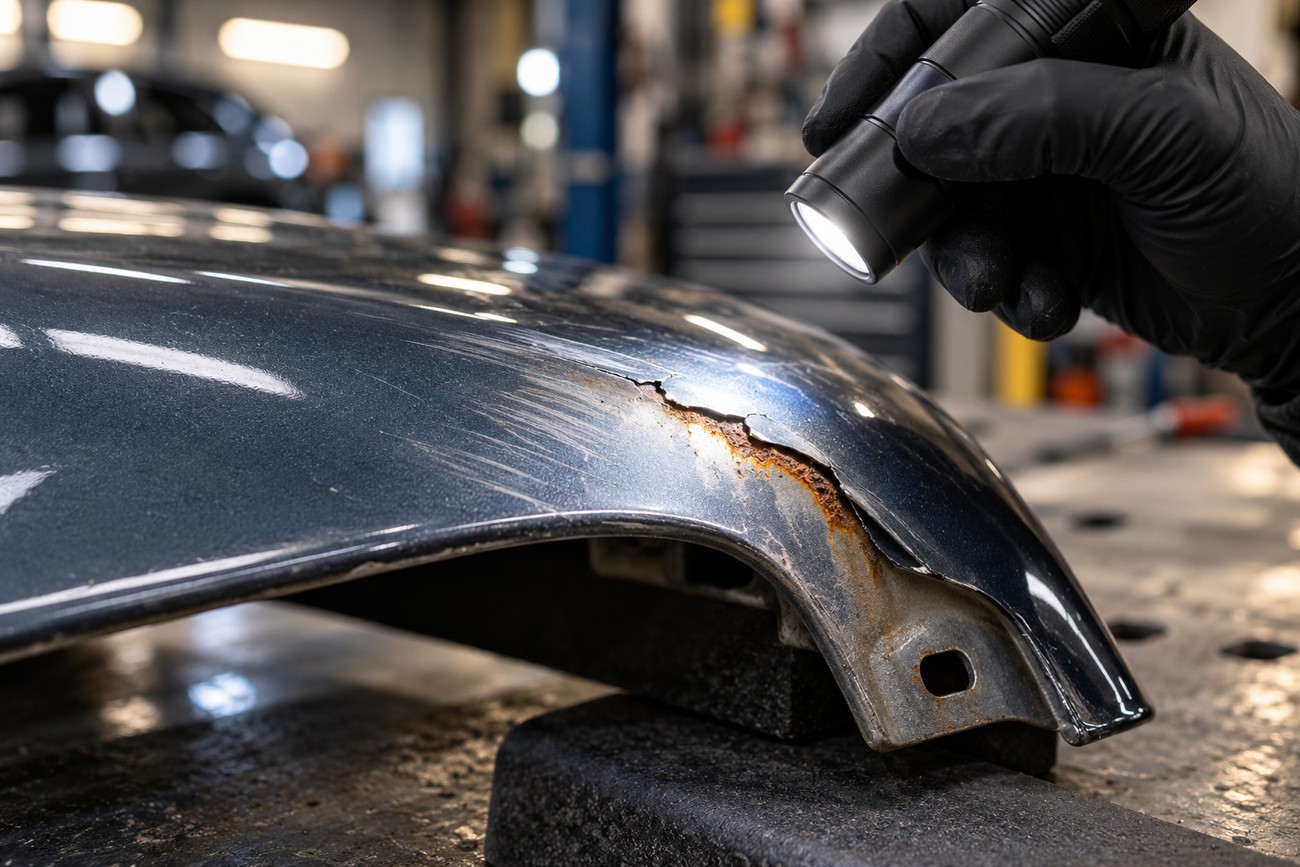
Peeling often points to a break in adhesion rather than a need for a supposedly stronger primer. Check whether the substrate was clean, dry, sound, and prepared to the specified profile. Then trace every layer back through the technical data sheets, including any body filler or unknown old coating.
Rust returning at a repair edge deserves a look at the complete coating path. A thin self-etching coat alone is not a complete corrosion-protection system, and gaps or poorly prepared metal can undermine an otherwise suitable primer. Check coverage, application thickness, and how the repaired edge was finished.
Scratches visible after paint indicate a leveling problem. Epoxy’s barrier role does not make it a high-build surfacer, while urethane surfacer can only level defects within its intended range. Inspect the panel after block-sanding; correct remaining marks before the finish makes them more apparent.
Slow cure or a mix that becomes unusable early calls for a check of ratio, induction instructions where applicable, material temperature, and shop conditions. Cold can delay cure; heat can shorten usable working time. Follow the product’s stated limits rather than relying on a universal number of hours.
A primer name alone guarantees none of these outcomes. Adhesion, corrosion resistance, and final appearance depend on preparation, film application, environmental conditions, and compatible layers working together.
Frequently asked questions
Primer labels describe broad roles, while the technical data sheet defines a product’s actual limits. These answers cover common decisions that arise before spraying or when an earlier repair is uncertain. Check the documentation for every material in the stack.
What safety precautions matter when spraying 2K urethane surfacer?
Follow the product’s safety documentation for ventilation, skin and eye protection, and respiratory protection. Two-component hardeners can present serious inhalation hazards during spraying; an ordinary dust mask should not be assumed adequate. Keep unprotected people out of the spray area, and follow the specified precautions during mixing and cleanup as well as application.
What if I cannot identify the primer already on a panel?
Do not guess which new coat will adhere to an unknown primer. Check whether the existing material is sound, consult the new product’s instructions for coating-over-coating requirements, and perform an adhesion and compatibility test in a small area where the manufacturer permits one. If the coating softens, lifts, or has doubtful adhesion, remove suspect material and rebuild the repair on a known substrate.
What are the three types of primers?
In this comparison, they are epoxy primer, self-etching primer, and 2K urethane primer surfacer. These are three common automotive refinishing categories, not a complete list of every primer sold. A product’s specific formulation and technical data sheet determine its approved uses.
What is the difference between a primer surfacer and an etch primer?
A primer surfacer adds sandable film to level minor defects; a self-etching primer goes on approved bare metal as a thin adhesion-promoting layer. If a repair has both exposed metal and sanding marks, one product should not be presumed to do both jobs. Select the metal-primer and surfacing steps from a compatible system.
Which is better, etching primer or epoxy primer?
Neither is better for every repair. Epoxy is generally chosen when the approved system calls for an adhesion and corrosion-resistant barrier; self-etching primer serves a thin, metal-focused adhesion role in systems designed around it. Base the decision on the metal, the next planned coat, and the products’ approved sequence—not on whether one label sounds more protective.